Home Blog Page 8

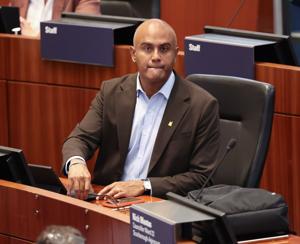
Toronto Councillor Parthi Kandavel Files for Re-Election While Under OPP Investigation

0

The nomination papers were filed quietly, on a Friday — a routine administrative act that carries anything but routine weight. Parthi Kandavel, the first-term Toronto city councillor representing Scarborough Southwest, has registered to seek re-election to Ward 20, even as an Ontario Provincial Police investigation into his conduct with property developers remains active and unresolved.

Kandavel has denied any wrongdoing. He has said publicly that he expects the investigation to exonerate him, and nothing in Canadian law or Toronto’s municipal rules prevents a person under police investigation from standing for elected office. He has not been charged with any crime. Still, the decision to register for another term places him at the centre of what is shaping up to be a closely watched race in one of Scarborough’s most contested wards.

Nine other candidates have also filed in Scarborough Southwest.

Among them is Kevin Rupasinghe, an engineer who finished second to Kandavel in the 2023 Scarborough Southwest byelection that first brought the councillor to office. Policy professional Sharmina Nasrin has also registered, adding another credible name to a field that reflects genuine community interest in the seat’s future.

The investigation itself was launched by the OPP’s anti-rackets branch, a specialized unit that handles complex financial crime and corruption cases. While the force has not publicly detailed the allegations, the probe appears to have originated from a complaint filed to the city’s integrity commissioner in July 2025. That complaint has not been made public. Under the rules governing the commissioner’s office, however, a referral to law enforcement is required when there are “reasonable grounds” to believe a criminal offence has been committed — a threshold that implies the complaint was treated with considerable seriousness.

On July 30, the OPP confirmed to journalists that the investigation “remains ongoing,” with a police spokesperson declining to offer any further detail on its scope or timeline.

Reporting by the Toronto Star has added texture to what is otherwise a tightly held investigation. The Star found that police have sought information about, or made contact with individuals connected to, at least three separate properties located within Kandavel’s ward. Two sources with direct ties to development projects in Scarborough Southwest alleged that the councillor requested the proponents of those projects make six-figure payments to third parties. Both sources spoke on condition of anonymity, citing concern about the potential consequences for their development files.

The sources were careful to note that Kandavel did not explicitly threaten to obstruct their projects. Yet the implicit understanding, they said, was clear: without the payments, their developments risked delays significant enough to impose serious financial costs. That kind of pressure — unspoken but structurally embedded in the relationship between a ward councillor and the developers who need city approvals — is precisely what anti-corruption investigations are designed to examine.

Kandavel’s decision to run again forces Scarborough Southwest voters into an uncomfortable position that is, in its own way, a test of democratic norms. Municipal elections in Toronto are decided by residents, not by the outcomes of police files. The investigation may conclude before voting day, or it may not. Either way, the ward’s constituents will have to weigh what they know, and what remains unresolved, when they mark their ballots.

For a community like Scarborough Southwest — diverse, politically engaged, and accustomed to being treated as an afterthought by city hall — the stakes feel personal. The 2023 byelection that sent Kandavel to council was itself a signal of a ward asserting its voice. What happens next will say something, in turn, about how that voice chooses to be heard.


Canadian Asking Rents Drop 4% in July, but Stabilization Signs Emerge

0

The average national asking rent fell four per cent in July compared with the same month last year, landing at $2,037 — marking the 22nd consecutive month of year-over-year declines, according to the latest monthly analysis from Rentals.ca and Urbanation released this week.

A Long Slide, With a Slowing Pace

Asking rents have now declined 7.5 per cent over the past two years. Yet July’s annual drop was the smallest recorded since February, and month-over-month prices continued to inch upward — rising 0.2 per cent from June, the fourth straight monthly increase.

Urbanation president Shaun Hildebrand struck a cautious note in assessing the data. “Canada’s rental market is showing signs of stabilizing, but not yet recovering,” he said in a news release accompanying the report. He attributed the recent monthly gains largely to seasonal momentum tied to the back-to-school period, noting that annual declines persist across most of the country.

Toronto Emerges as a Market to Watch

Among Canada’s major urban markets, Toronto is drawing particular attention from analysts. Apartment and condo rents in the city rose 1.6 per cent from June to reach $2,577, while the year-over-year decline narrowed to just 0.6 per cent — the smallest annual drop of any major Canadian market.

The Rentals.ca and Urbanation report described this as “a further step towards an emerging turnaround” in Toronto’s rental market, pointing to tightening supply as fewer new condominium units come to market, alongside pent-up demand being released as affordability improves relative to recent peaks. Hildebrand flagged Toronto as a potential leading indicator for broader national trends.

City-by-City Breakdown

Vancouver retained its standing as the most expensive municipal rental market in Canada, with an average asking rent of $2,677 for apartments and condos — down 4.5 per cent year-over-year and 1.4 per cent from June alone.

Other major cities recorded the following year-over-year changes in average asking rents:

By Property Type

Nationally, purpose-built apartments saw asking rents fall 2.6 per cent year-over-year to an average of $2,041 in July. Condominium apartments recorded a steeper annual decline of 6.3 per cent, averaging $2,063. Secondary market units — including houses and townhouses — experienced the sharpest drop of all property types, falling 7.5 per cent annually to an average of $2,007.

Alberta’s New Integrated ID Cards Are Creating Long Lines and Leaving Some Residents Behind

0

The rollout has been anything but smooth.

Since July 2, when Alberta began issuing its new integrated driver’s licences and identification cards — documents that now carry citizenship status and health information — registries across the province have been overwhelmed with residents seeking renewals or first-time applications. Lines have snaked out the doors of urban locations, and frustration has mounted steadily as the weeks have passed.

A significant part of the problem is documentation. Under the new system, Albertans must bring proof of their legal entitlement to be in Canada — a passport, birth certificate, permanent residency card, or citizenship certificate — along with photo ID and an existing health care card. Many residents are arriving at registries unaware of these requirements, only to discover after hours of waiting that they must return with different paperwork. Alberta NDP MLA Court Ellingson, who has himself spent long stretches in line at two separate registries, described the experience plainly: “It’s not fun.”

“Residents simply don’t know,” Ellingson said. “So they get to the registrar, and they’ve already been waiting for two hours, and then they find out they don’t have the right documentation and have to come back.”

When the System Leaves People Behind

The frustration runs deeper than inconvenience for some families. Matthew Randolph, a resident of Shawnessy in Calgary, visited the same registry five times in July in an effort to update his elderly father’s identification. His father, who immigrated from the United States in 1969 and became a Canadian citizen in 1975, cannot travel to the registry himself due to mobility limitations. When Randolph presented his father’s citizenship certificate — a legitimate document issued by the Canadian government — he was told it was too old to be accepted under the new requirements.

Randolph is now navigating a certificate of birth abroad application through Service Canada, a process that can take up to nineteen months to complete. In the meantime, his father remains without valid, up-to-date identification. “It’s been keeping me up,” Randolph said. “I just thought that if I keep at it, it would work out. And I still hope it will.” He added that something needs to be done to make what he called an urgent process more accessible to Albertans in difficult circumstances.

His situation points to a broader tension in the rollout: the new system’s requirements, however well-intentioned, were not designed with equal attention to the realities faced by elderly residents, those with limited mobility, or long-established Canadians whose documentation predates modern standards.

The Province Acknowledges Growing Pains

Service Alberta Minister Dale Nally acknowledged on Friday that delays were a foreseeable consequence of introducing a more complex process. “This is a new process, and we’re hearing that it’s taking longer because there are additional steps,” he said, framing the disruption as short-term pain for long-term gain. Once the citizenship marker is embedded in the card, he argued, it will remain permanently and simplify future interactions with provincial services. Nally also noted that the province processed 126,000 driver’s licence renewals in July, up from 95,000 the previous month, suggesting that many Albertans are proactively seeking the new card ahead of their renewal dates.

For those who cannot immediately provide acceptable proof of legal status in Canada, the province has established a grace period — though accessing it still requires an in-person visit to a registry and the payment of a fee, conditions that may themselves pose barriers for the very people who need flexibility most. Nally was firm on one point: “Nobody is going to get fined or lose health care.” He also committed to reaching out directly to Randolph to address his father’s situation, an acknowledgment that the system, as currently implemented, has gaps that individual cases can fall through.

The province encourages Albertans to consult its website before visiting a registry to confirm which documents are required, and asks that residents treat registry agents with patience — workers who are themselves learning a new process while managing an unusually high volume of clients.

Andrés Giménez Launches Solo Home Run to Give Blue Jays Early Lead

0

Andrés Giménez wasted no time making his presence felt, belting a solo home run to right field on the very first pitch of his at-bat in the top of the second inning, giving the Toronto Blue Jays a 1–0 lead.

The ball sailed high and deep toward right field, where Philadelphia’s Bryce Harper tracked it to the warning track — only to watch it clear the fence. It was Giménez’s eighth home run of the season, and it arrived in the most decisive fashion possible: a first-pitch ambush of Phillies starter Zack Wheeler.

Wheeler is the kind of pitcher who demands respect and patience, but Giménez offered neither, instead sitting on a fastball early in the count and driving it out of the park before Wheeler could establish any rhythm. It was precisely the aggressive, opportunistic approach that analysts argue is necessary against an ace of Wheeler’s calibre — attack him before he can attack you.

The swing put the Blue Jays on the board first and set an assertive tone for the inning, reminding the Phillies that even their most formidable starters remain vulnerable when hitters come to the plate with a clear, disciplined plan.

Ontario Byelections Put Doug Ford’s Political Standing to the Test

0

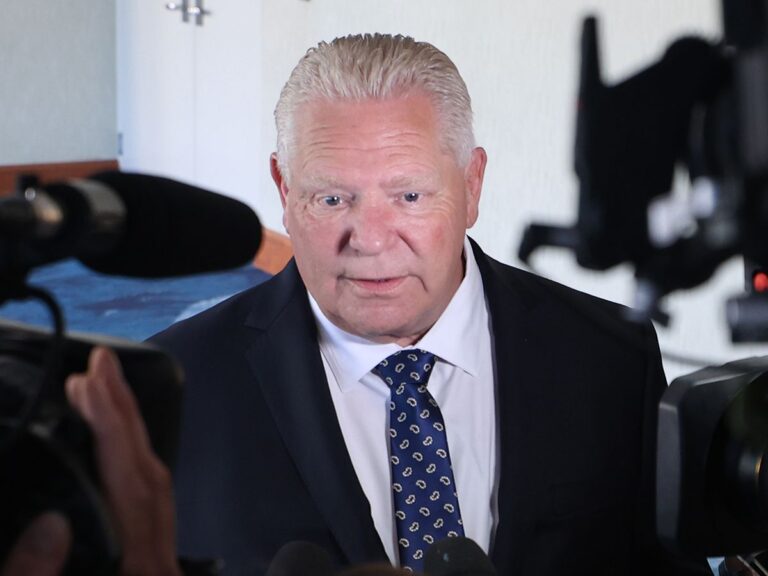
Ontario Premier Doug Ford faces an imminent electoral reckoning. Three provincial byelections are set to measure whether his government’s public support remains as solid as he has claimed, even as spending scandals have clouded his administration’s recent record.

The agency reviews signal that the Ford government is at least aware of the political exposure these byelections represent, and is moving to shore up its fiscal image before the votes are counted. Whether that repositioning arrives in time — and whether voters find it convincing — is a question the results will answer plainly.

For now, the byelections offer a rare, low-stakes-but-telling moment in Ontario politics: a chance for Ford’s critics to register dissatisfaction and for his supporters to demonstrate that the controversies have not eroded the coalition that returned him to Queen’s Park.

Vancouver’s Housing Market Stumbles Again in July, Falling Well Below Seasonal Norms

0

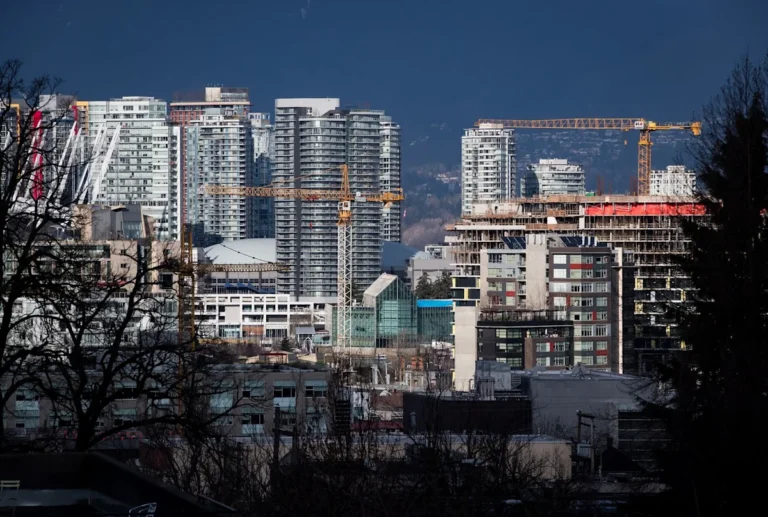
The Greater Vancouver housing market delivered a familiar disappointment in July 2026, with sales declining nearly 10 per cent compared to the same month a year earlier — erasing the modest optimism that June’s figures had briefly generated. The pattern, as the region’s own chief economist acknowledges, is one of persistent stagnation: one step forward, one step back, with no sustained recovery yet in sight.

Greater Vancouver Realtors reported 2,061 home sales in July, representing a 9.8 per cent year-over-year decline and, more strikingly, a shortfall of 18.6 per cent below the 10-year seasonal average. That second figure matters more than the first. A single bad month can reflect noise; falling nearly one-fifth below a decade-long benchmark suggests something structural is weighing on buyer confidence across the region.

Andrew Lis, the board’s chief economist and vice-president of data analytics, described the June-July sequence as a textbook illustration of the back-and-forth dynamic that has characterized the market for several years now. The brief June uptick, in other words, was not a turning point — it was a blip.

Prices have followed sales downward. The composite benchmark price for all residential property types in Greater Vancouver stood at $1,088,800 in July, a 6.2 per cent drop from July 2025 and a further 0.9 per cent decline from June 2026. For a region where housing affordability has long been a defining political and social challenge — one that strains household budgets, drives out younger residents, and concentrates wealth unevenly — a benchmark price still well above one million dollars offers little comfort to prospective buyers, even as it signals mounting pressure on current owners and investors.

The supply picture is equally ambiguous. New listings totalled 4,991 in July, down 11.5 per cent year-over-year but broadly in line with the 10-year average — suggesting sellers are not flooding the market in panic, but neither are they withdrawing en masse. Total inventory, meanwhile, fell four per cent annually to 16,476 active listings, yet that figure remains 26.8 per cent above the long-term average. The market, in short, carries a meaningful overhang: more homes are available relative to historical norms than buyers are willing or able to absorb.

The territory covered by Greater Vancouver Realtors spans a wide and varied geography — from the dense urban core of Vancouver and Burnaby to suburban municipalities like Coquitlam, Maple Ridge, and Richmond, and extending to communities as distinct as Squamish, Whistler, and the Sunshine Coast. Conditions across these areas are not uniform, and aggregate figures inevitably obscure local variation. But the broad trend is consistent enough to draw a clear conclusion.

What July’s data ultimately reveals is a market caught between forces that show no sign of resolving quickly: elevated prices that suppress demand, interest rate uncertainty that discourages commitment, and an inventory level that gives buyers options without giving them urgency. Until those tensions ease — through sustained rate relief, meaningful affordability policy, or a significant correction in benchmark prices — the one-step-forward, one-step-back pattern Lis describes is likely to continue defining the region’s housing landscape.

Former Sydney Swans Coach John Longmire Voices Deep Regret Over Failure to Better Protect Adam Goodes

0

Former Sydney Swans head coach John Longmire has publicly acknowledged his regret for not doing more to shield two-time Brownlow medallist Adam Goodes from what he describes as “diabolical, almost unforgivable” treatment during the final years of the Indigenous footballer’s AFL career, writing candidly about the episode in an autobiography released this week.

A Belated Reckoning

In the memoir, titled Pain, Perspective & Premierships, Longmire reflects on the sustained, targeted booing that Goodes endured from opposition crowds — treatment that intensified after Goodes called out a 13-year-old Collingwood supporter for directing a racial slur at him during a match in 2013. “Adam Goodes was not just a champion footballer, he was a leader and a man of immense courage,” Longmire writes. “What he endured was diabolical, almost unforgivable.”

Longmire led the Swans for more than a decade, having won the 2012 AFL premiership in his second season as head coach. He had served as an assistant coach while Goodes was emerging as one of the country’s finest players, and stepped into the top role with Goodes at the peak of his powers as a midfielder-forward. He resigned from the position in 2024.

The booing of Goodes by opposition fans was condemned by many at the time, yet the AFL itself did not issue an unreserved apology until 2019 — four years after Goodes’s retirement in 2015. That institutional delay has since become part of a broader reckoning with racism in Australian sport.

What Longmire Wishes He Had Done

“In hindsight, I should have threatened to pull our players off the ground if the booing didn’t stop,” Longmire writes. “It might not have changed anything but it would have brought the matter to a head and forced the industry — and the community — to consider what this continued behaviour was doing to one of the game’s greats.”

He acknowledges the gravity of such a step while standing by its logic. “It would have been an extreme act — but then what was happening to Adam was extreme too.”

Longmire traces the escalation of the booing to two specific moments: the 2013 Collingwood match itself, and the days that followed, when then-Magpies president Eddie McGuire suggested on radio that Goodes could be used to promote the musical King Kong — a remark widely condemned as racist. McGuire had initially apologised on behalf of the club after the match, but, as Longmire puts it, “torched that apology with an insensitive comment on radio a few days later that cut to the core.” McGuire subsequently offered a personal apology directly to Goodes and publicly to the media.

Goodes and the Weight of Casual Racism

In the 2019 documentary The Australian Dream, Goodes recounted taking McGuire’s phone call with measured clarity. “When I finally took his call, I just said ‘you’re not a friend,'” Goodes said. “He just forgot where he was, he forgot that he was on radio, and it was just an off-the-cuff thing that he would say at a barbecue, at a bar, and it just highlighted my point. That casual racism is there, it’s alive and it’s flourishing in our communities.”

McGuire, for his part, described the remark in the same documentary as “just a mistake, it was a misspoken moment.”

The booing intensified again in 2014 after Goodes was named Australian of the Year — an honour that appeared to deepen the hostility directed at him from sections of football crowds rather than generate broader solidarity. Longmire reflects on that painful irony: “It saddens me to know that the place Adam once felt most comfortable — on the football field, showing his skills to the world — ended up being the place where he felt most uncomfortable.”

Longmire’s Career Since the Swans

Longmire’s professional life has continued on a more difficult trajectory since his departure from Sydney. Last month, he missed out on the head coaching position at the newly established Tasmania Devils, with Ken Hinkley appointed to the role instead. After the 2012 premiership, Longmire went on to contest four further grand finals without winning any of them — a record that frames much of the reflective tone his autobiography adopts.

The book’s release has nonetheless drawn the most attention for its treatment of Goodes, whose experience remains one of the most discussed and painful chapters in recent Australian sporting history.

WestJet Strike Ends After One Day as CUPE Reaches Tentative Agreement with Airline

0

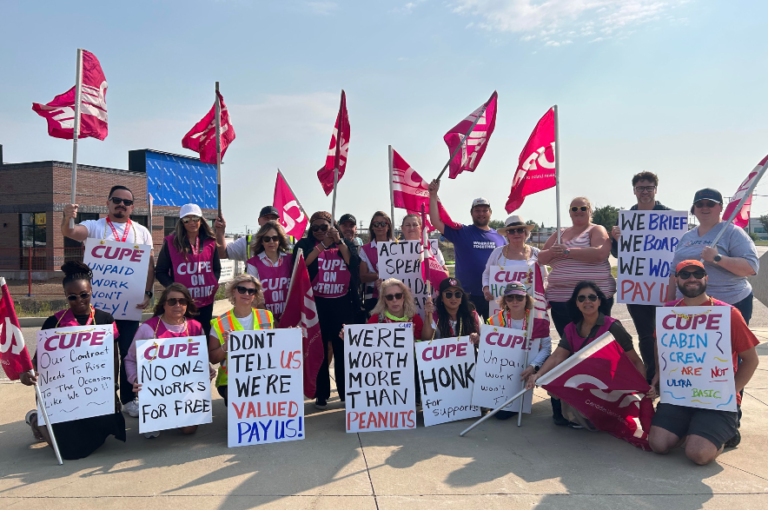
It lasted less than a day. Early Monday morning, at 4:15 a.m. Mountain time, WestJet and the Canadian Union of Public Employees reached a tentative agreement that ended a strike by the airline’s 4,400 flight attendants — a work stoppage that had rippled through the summer travel season, stranding passengers and cancelling hundreds of flights across the country.

The dispute had been building for some time. CUPE Local 8125, which represents cabin crew at the Calgary-based carrier, had pushed for a fundamental change to how flight attendants are compensated — specifically, that they be paid from the moment they check in to the moment they clock out, rather than primarily for the time their aircraft is in motion. That gap between clock-in and wheels-up, familiar to anyone who has ever watched a flight crew prepare a cabin, represents real labour that had long gone unrecognized in the existing credit system.

The tentative agreement will now go to membership for a ratification vote, which must take place within 30 days. Details remain under wraps. CUPE 8125 president Alia Hussain said at a Calgary news conference Monday that her team intends to present the agreement to union members before releasing specifics to the public — a standard and sensible sequencing that respects workers’ right to hear the terms first.

“This tentative agreement represents meaningful progress on the issues we brought to the table,” Hussain said. She added that WestJet’s longstanding flight credit system will be expanded to recognize more of the work cabin crew are required to perform, and that compensation for that work will increase. She was careful to frame it not as a victory lap, but as a step in an ongoing process.

Before the strike began, WestJet had tabled a proposal that included a 13% wage increase in October, annual increases of 2.5% each January for the following three years, retroactive pay to last January, additional compensation for all hours worked, and improvements to other benefits. Whether the tentative deal tracks closely to that offer, or reflects meaningful movement on both sides, will only become clear once members are briefed.

WestJet CEO Alexis von Hoensbroech expressed regret for the disruption. “We know this disruption has been frustrating for our guests and WestJetters and we’re sorry for that,” he said in a statement, adding that the airline’s teams are working to restore service and return passengers to their destinations as quickly as possible. The airline confirmed it has entered a “recovery phase” and is rebuilding its flight schedule, though full restoration will take time.

Minister of Jobs and Families Patty Hajdu welcomed the news, noting that the federal government was pleased the parties had reached a deal at the bargaining table — without government intervention. That matters. Collective bargaining works best when workers and employers resolve their differences themselves, and this outcome, however imperfect its details may prove, suggests that process held.

The strike touched something real. Flight attendants are among the most visible workers in Canadian aviation, yet their compensation structures have often failed to account for the full scope of their duties — the safety briefings, the boarding management, the hours of preparation that happen before a single passenger fastens a seatbelt. The core demand here was not extravagant. It was a claim for recognition of work already being done.

The agreement still needs ratification. Members may embrace it, or they may push back. Either outcome is legitimate. For now, though, the flights are returning, the passengers are moving, and a workforce that walked off the job on a Sunday morning in the middle of summer has returned to work knowing that what they do — all of it — is at least somewhat more visible than it was before.

Two Storms in One Week Leave St. Catharines Flooded, Grieving, and Without Provincial or Federal Aid

0

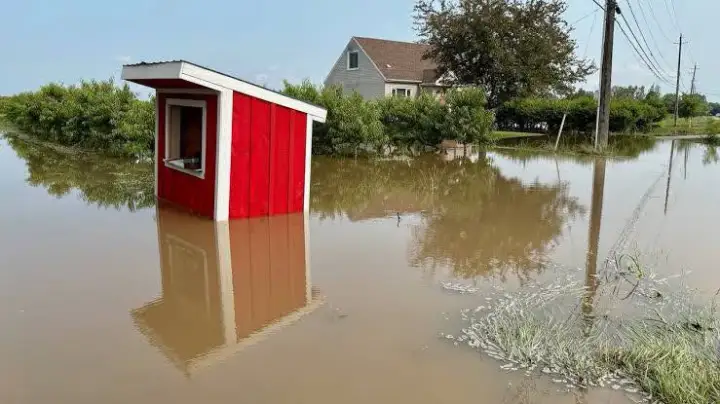
St. Catharines is in shock. Within the span of ten days, three extraordinary rainstorms have battered this Niagara-region city, overwhelming its infrastructure, gutting basements, and leaving residents to drag the waterlogged remnants of their lives to the curb — with no disaster relief from either Queen’s Park or Ottawa in sight.

The sequence of events has been relentless. The first storm struck on July 21. A second, more punishing system moved through from July 27 to 28, triggering widespread flooding across St. Catharines and neighbouring Niagara-on-the-Lake. Then, before residents had finished cleaning up, a third storm hit on Sunday, prompting Mayor Mat Siscoe to declare a state of emergency. The nearby Town of Lincoln, also battered by the back-to-back storms, issued its own declaration under Mayor Sandra Easton. Together, the events dumped a combined 250 millimetres of rain on parts of the region — roughly a quarter of the area’s typical annual precipitation, compressed into just three days.

The human toll is written in soggy drywall and destroyed keepsakes. Billy Hammond took a day off from his job at Canada Post to haul bags of ruined photo albums and family mementos to the curb after sewage backed up into his basement for the second time in less than a week. “We need this garbage out of here because it’s traumatizing to look at,” he said. “It’s like you’re reliving the grief over and over again.” For Hammond and many others, the cruelty of the situation is compounded by its repetition: just as one cleanup neared completion, the second storm arrived to undo it entirely.

Mitch St. Hilaire’s mother and stepfather, who live in the Port Weller area, saw their home flood on July 28 and again on Sunday. Firefighters, meanwhile, have been responding not only to flooded properties but to people trapped in their vehicles by rising water. The city’s emergency operations centre has been running continuously since last Tuesday morning, co-ordinating response efforts, clearing catch basins clogged with debris, and removing obstructions from waterways. Crews are also bracing for additional rainfall forecast later this week.

Mayor Siscoe has been direct about what the city needs and what it has not received. On Sunday night, he posted a video of his own flooded basement to Facebook, describing “a hurricane’s worth” of rain falling in a single evening. By Tuesday, he was standing before reporters with a sharper message: “There has been no disaster relief assistance offered by either the provincial or the federal government. The city has been left to fend for itself.” He is calling on both levels of government to provide immediate assistance and to help municipalities fund the kind of critical stormwater infrastructure upgrades that events like these make unmistakably necessary.

That call touches on a structural tension familiar to many Canadian cities: the gap between the scale of climate-related infrastructure challenges and the fiscal capacity of municipalities to address them alone. Stormwater systems, roads, and sewer networks are largely a local responsibility, yet the storms reshaping Canada’s weather patterns respect no jurisdictional boundary. In St. Catharines, roads, sewer systems, and stormwater infrastructure were all overwhelmed, with significant damage extending to homes, businesses, city facilities, and shoreline areas on both private and public land. The declaration Siscoe issued Monday acknowledged that “Sunday’s storm extended those impacts to even more neighbourhoods across St. Catharines” — meaning the crisis is still widening even as the cleanup begins.

What St. Catharines is living through is not simply a local emergency. It is a signal — arriving with unusual force and unusual frequency — that the infrastructure Canadians depend on was not designed for the weather now bearing down on their communities. The grief Billy Hammond described, the shock spreading across neighbourhoods hit twice in a week, the mayor’s unanswered calls for help: these are not abstract policy problems. They are the lived reality of a city that found itself, in the span of ten days, entirely on its own.

From Sacramento State to Georgia Southern: CFN’s Bottom 38 College Football Preseason Rankings for 2026

0

College Football Network has released the bottom tier of its 2026 preseason rankings, covering teams 101 through 138, and this stretch of the list carries more intrigue than usual heading into the fall season. Sacramento State makes its FBS debut in the MAC, Northern Illinois begins a new chapter in the Mountain West, and a cluster of Sun Belt programs enter the year with genuine conference title ambitions. Taken together, these 38 teams represent a wide range of circumstances — rebuilds, fresh starts, and programs quietly positioning themselves for a breakthrough.

At the very bottom of the rankings sits Sacramento State (No. 138), the newest FBS program, projected to finish 3-9 in its inaugural season. The Hornets bring a loyal fanbase and a home-field advantage that could turn heads, but thin offensive and defensive lines remain a serious concern. Joining them near the floor is UMass (No. 137), coming off a winless 2025 campaign and projected for just two wins, though a pair of FCS matchups on the schedule offer a narrow path to modest improvement. Charlotte (No. 132) finds itself in a similar predicament, projected for just one win after a disastrous 1-11 finish last season, with the 49ers needing to find any formula that produces consistent competitiveness before results can follow.

Several programs in this tier are navigating significant transitions. Northern Illinois (No. 123) moves to the Mountain West under an interim head coach, with a roster in the early stages of a rebuild and a travel schedule that will stretch across four time zones — a genuine logistical and competitive challenge for a program still finding its footing. UTEP (No. 129) also joins the Mountain West, entering with more optimism: a lively offence and a favourable mid-season home stretch give the Miners a realistic shot at outperforming their projected 2-10 record. Louisiana Tech (No. 103) completes its own move, departing Conference USA for the Sun Belt, where its offence is expected to rank among the division’s best.

The Sun Belt West emerges as one of the more competitive sub-stories in this portion of the rankings. Arkansas State (No. 102), Louisiana (No. 105), and Louisiana Tech (No. 103) are each projected for six or seven wins, with road-game performance in the back half of their schedules likely to determine which program claims the division title. Georgia Southern (No. 101), the highest-ranked team in this group, enters at 7-5 projected, leaning on a reliable passing game while hoping its defence takes a meaningful step forward. The Sun Belt East is projected to be equally demanding, with Old Dominion (No. 108) and App State (No. 120) both facing pressure to return to relevance after disappointing recent campaigns.

A few teams in the middle of this range stand out as potential overachievers. Kennesaw State (No. 111) enters as the defending Conference USA champion and is projected for an 8-4 record, with a controlled, disciplined style of play that makes the Owls a consistent threat. WKU (No. 107) is similarly well-regarded, projected at 8-4 despite a punishing early schedule that includes trips to Georgia and Indiana. Central Michigan (No. 119) is identified as one of the MAC’s genuine wildcard teams, with a strong offensive backfield and coaching staff capable of competing for a conference title. CFN also flags Jacksonville State (No. 112) with a note of self-correction, acknowledging it significantly underestimated the Gamecocks in 2025, when the program went 9-5 — a caution worth keeping in mind as the season approaches.

At the MAC level, Bowling Green (No. 122) under Eddie George is projected to struggle early before the schedule softens, while Eastern Michigan (No. 127) is seen as a bounce-back candidate after slipping to 4-8 last year, buoyed by an improved passing attack and a more reliable offensive line. Kent State (No. 125) draws praise for head coach Mark Carney, described as a rising star in the profession, even as the Golden Flashes are projected to fall short of a winning record due to ongoing roster limitations. Further down, Ball State (No. 124) faces the structural difficulty of five road games in its first seven weeks, making any late-season bowl push an uphill climb from the opening whistle.

Rounding out the rankings, FIU (No. 109) is positioned as a potential Conference USA breakthrough team under Willie Simmons, with a capable passing game and defensive secondary that could push for a title. Temple (No. 110) draws an enthusiastic note about head coach KC Keeler, whose track record suggests the Owls could punch above their weight in the American Athletic Conference. Across the board, this tier of college football reflects the sport’s structural realities — limited recruiting budgets, brutal scheduling, and the constant churn of the transfer portal — but also the genuine unpredictability that makes the bottom half of the rankings worth watching every fall Saturday.