
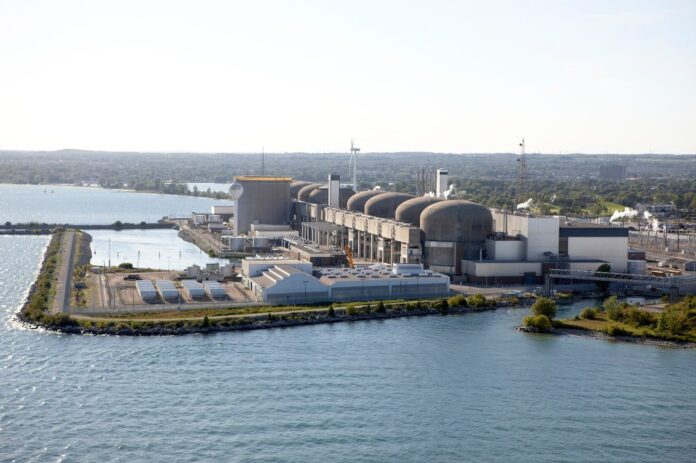
Ontario has launched one of the largest infrastructure undertakings in its history, committing $26.8 billion to refurbish four nuclear reactors at the Pickering Nuclear Generating Station east of Toronto. The scale of the project reflects a clear provincial bet on nuclear power as the answer to a coming electricity crunch — and it raises serious questions about cost, governance, and what ratepayers will ultimately shoulder.
The four reactors being refurbished — Units 5 through 8, collectively known as Pickering B — are CANDU reactors dating to the early 1980s. They are coming off-line by the end of September, with hands-on refurbishment work set to begin in January. Each unit will remain out of service for roughly a decade, but once returned, the plant’s operational life would extend by up to 38 years, generating enough electricity to power 2.2 million homes.
The technical scope is formidable. The project involves replacing 1,520 fuel channels and 48 boilers, and constructing a new 1.5-kilometre deep-water intake. Ontario Power Generation, the Crown corporation executing the project, received formal provincial authorization before work began. Energy Minister Stephen Lecce has emphasized that the project will support 30,500 jobs, with the bulk of spending remaining within Ontario — a genuine economic benefit worth noting, even as it serves an obvious political purpose.
What the government has not said is equally significant. Officials declined to specify whether the refurbishment will affect household electricity bills. That silence is not reassuring. Large nuclear projects in Ontario have a documented history of cost overruns — the Darlington refurbishment, now underway, has already seen its budget revised upward — and Pickering’s $26.8 billion estimate should be treated as a floor, not a ceiling.
A Coherent Strategy With Unanswered Accountability Questions
The broader context does lend the project genuine strategic logic. Ontario’s electricity demand is forecast to rise sharply over the coming decades, driven by the electrification of transportation, industrial expansion, and the growth of data centres. Nuclear power produces large volumes of carbon-free baseload electricity, and extending existing plants is generally cheaper and faster than building new ones from scratch. On those terms, the Pickering refurbishment fits coherently into what amounts to Canada’s largest-ever nuclear expansion.
Yet a project of this magnitude — funded largely through a provincial Crown corporation and ultimately backstopped by Ontario taxpayers and ratepayers — demands rigorous independent oversight, transparent cost reporting, and a clear public accounting of rate impacts. The Ford government’s framing has leaned heavily on job creation and energy security, both legitimate considerations, while leaving the harder fiscal questions for later. That asymmetry deserves scrutiny from legislators and from the independent bodies that regulate Ontario’s electricity system.
The Pickering refurbishment is not, in itself, an unreasonable policy choice. Nuclear energy’s role in a low-carbon grid is well established, and the province’s electricity needs are real and growing. The thesis here is simpler and more pressing: a $26.8 billion public commitment, affecting millions of Ontario households, requires more than a jobs announcement. It requires a full and honest conversation about who pays, how much, and who is watching.

