Home Blog

Ottawa Freezes $50-Million in Funding for Canada Health Infoway Over Governance Failures

0

Federal government withholds entire annual budget of digital health agency following collapse of $300-million PrescribeIT program

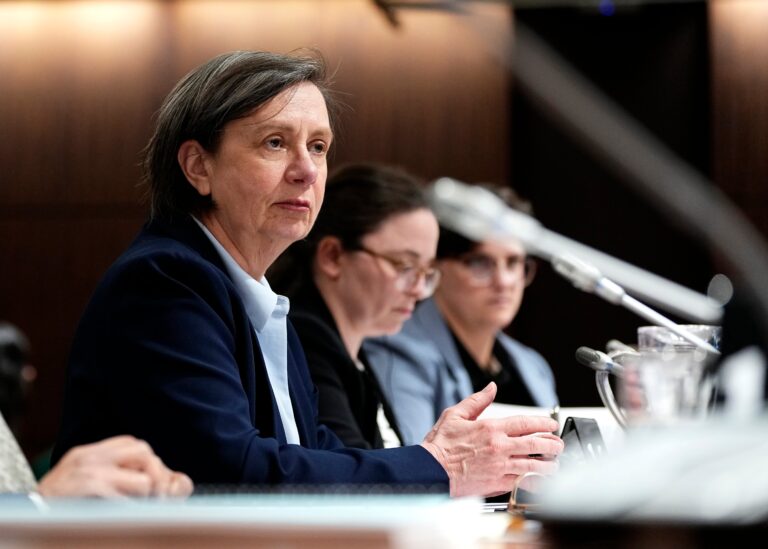
Health Minister Marjorie Michel has put $50-million in federal funding for Canada Health Infoway on hold, citing unresolved governance concerns at the organization responsible for the failed PrescribeIT electronic prescribing program, which consumed nearly $300-million in public money before being shut down across most of the country last month.

The funding freeze represents the organization’s entire federal budget for the current fiscal year, which began April 1. Michel’s office confirmed Tuesday that the minister has not yet signed the contribution agreements required to release the funds.

A Program That Reached Almost No One

Canada Health Infoway is a federally funded non-profit that administers digital health initiatives on behalf of the federal government. It launched PrescribeIT in 2017 as part of so-called “axe the fax” efforts to replace outdated fax-based prescription systems with digital alternatives.

Despite nearly eight years of operation and close to $300-million in federal investment, the program was wound down in most provinces last month after fewer than five per cent of prescriptions were processed through it.

The organization’s board dismissed its long-serving chief executive officer in late April following a damaging committee appearance and a series of media reports highlighting the program’s poor performance and high expenses — including the departing CEO’s annual compensation of nearly $900,000.

Governance Under Scrutiny

During Monday’s Question Period, Michel acknowledged “governance issues” at the organization and said corrective steps were underway.

“The CEO has left, and we have an acting director right now,” Michel said. “The people involved are currently reviewing the mandates together to see how we can do a better job of solving the governance issues.”

She said the board would report back to her by the end of the summer. Canada Health Infoway announced last week that executive vice-president Abhinav (Abhi) Kalra had been named interim CEO and president.

Parliament Threatens Contempt Finding

Separately, the chair of the House of Commons health committee issued a formal warning to Canada Health Infoway on Tuesday, urging it to comply with an April request for documents or risk being found in contempt of Parliament.

Liberal MP Sukh Dhaliwal, who chairs the committee, wrote that the organization is weeks overdue in producing contracts and agreements with technology vendors, including Telus Health, as well as details of spending on consultants.

Telus Health, the program’s primary technology vendor, has disclosed it received $98-million of the total $298-million in federal funds spent on PrescribeIT.

“The power to send for persons, papers and records is rooted in the Constitution and is constitutional in nature,” Dhaliwal wrote. “It is not subject to statutory and contractual restrictions and supersedes other privileges, such as commercial and third-party contractual agreements.”

The letter warned that failure to comply “could result in the committee reporting the situation to the House of Commons, which in turn, could lead the House to find Canada Health Infoway in contempt of Parliament.”

Canada Health Infoway told The Globe and Mail last week it was working through a large volume of records and had concerns about the secure transmission of files. The organization did not respond to requests for comment Tuesday.

Political Friction Stalls Committee Work

The health committee’s investigation has been largely paralyzed over the past month due to procedural clashes. Conservative and Bloc Québécois MPs have repeatedly moved to compel Minister Michel to testify before the committee — motions that Liberal MPs have blocked.

Conservative health critic Dan Mazier said the lack of transparency undermined any case for continued public investment in the organization.

“If this organization cannot be transparent about where taxpayers’ money went, Canadians should have no confidence in its ability to oversee another dollar of public funding until the Health Minister answers for the mismanagement,” Mazier said.

Uncertain Future for Digital Health Standards Work

Despite the collapse of PrescribeIT, Canada Health Infoway has been involved in developing national standards for electronic health records and has contributed to the development of Bill S-5, federal legislation introduced earlier this year to improve the sharing of health data between patients and providers — a concept known in the industry as interoperability.

Alexandre Bergeron, spokesperson for Minister Michel, said the organization’s future role has not yet been determined.

“While its work on interoperability has informed the development of S-5, the development of the regulations associated with the bill will be determined once the bill has been adopted,” Bergeron said.

Toronto Defends Reselling World Cup Tickets for Profit, Citing Property Tax Relief

0

Toronto Defends Reselling World Cup Tickets for Profit, Citing Property Tax Relief

The City of Toronto is defending its decision to resell FIFA World Cup tickets at a profit, with Mayor Olivia Chow’s office saying the practice helps “avoid spending property tax dollars” on a tournament that has exceeded its original budget — and kicks off this Friday.

City Confirms Ticket Resale Strategy

Shirven Rezvany, a spokesperson for Mayor Chow’s office, confirmed Monday that Toronto was selling its allocated share of World Cup tickets as “one of several avenues pursued by the City to avoid spending property tax dollars.”

Rezvany added that FIFA offered the same opportunity to all host cities to help offset hosting costs, and that his understanding was that “many, if not all” of them had done the same.

FIFA controls ticket sales for the tournament and allows host cities to purchase a portion of ticket packages before they become available to private resellers.

Vancouver Also Selling Tickets at a Profit

Contrary to claims made by Toronto city councillor and mayoral candidate Brad Bradford — who accused Chow of “scalping” tickets and alleged Toronto was the only city doing so — Vancouver confirmed it is pursuing the same strategy.

“The great majority of the tickets held by the City are being sold via the FWC26 Sponsorship Program, in order to raise net revenues to offset the cost of event hosting,” Vancouver’s World Cup host committee said in a statement to CBC News.

More Than 3,500 Tickets Purchased for Resale

Toronto officials put the plan in motion last year, using host city privileges to purchase more than 3,546 general admission tickets to the six international matches taking place at Toronto Stadium — formerly BMO Field — at a cost of $10.7 million.

Fifty-two tickets were set aside for a public sweepstakes. The city also purchased additional hospitality tickets, described as part of “a revenue generation strategy.”

As of the latest update, fewer than 70 tickets remained unsold, with the city saying those are expected to be allocated through Host City Donor agreements before the tournament ends. Officials confirmed the initial investment has already been recovered, though they declined to specify total projected revenues.

A Tournament Already Over Budget

Toronto will host six matches between June 12 and July 2, featuring countries including Germany, Senegal and Croatia.

The total cost of hosting is currently estimated at $380 million, funded by federal, provincial and municipal governments. The City of Toronto is carrying the largest share of that burden.

The overall budget has grown beyond initial projections, adding pressure on city officials to find ways to offset municipal expenditures without drawing further on property tax revenues.

Saskatchewan NDP accuses Marshals Service of draining officers from RCMP and municipal police

0

Opposition says new provincial police force is reshuffling existing officers rather than addressing shortages

Saskatchewan’s NDP Opposition is accusing the newly created Saskatchewan Marshals Service of recruiting officers away from municipal police departments and RCMP detachments, arguing the practice is straining local law enforcement rather than solving the province’s policing shortage.

Nicole Sarauer, the NDP’s justice and community safety critic, made the allegations at a news conference on Tuesday, saying multiple municipalities have raised concerns with the Official Opposition — though she declined to name them specifically.

Most marshals transferred from existing forces

Of the Marshals Service’s current 27 officers, Sarauer said only two are newly recruited. The remaining 25 were drawn from other law enforcement agencies already operating in Saskatchewan.

“Poaching police officers from one police force in this province to another isn’t addressing policing shortages,” Sarauer said. “Moving an officer down the highway and giving them a new hat is simply a coverup for Moe’s inability to meaningfully address crime.”

Sarauer also raised financial concerns. Under the existing federal-provincial agreement, the province covers 70 per cent of the cost of each new RCMP officer, with Ottawa funding the remainder along with infrastructure and resources. Provincial marshals, by contrast, are funded entirely by Saskatchewan taxpayers.

“Instead of real solutions, we see a government trying to hide their own mismanagement by shifting around already existing resources and pretending that they’ve created something new, all the while costing taxpayers more,” she said.

The Saskatchewan RCMP declined to address the poaching allegations directly, citing privacy considerations around what officers “may do after retirement or resignation.”

Province defends the marshals program

Michael Weger, Saskatchewan’s community safety minister, pushed back against the NDP’s characterization, telling reporters in Saskatoon that the marshals serve as a supplement to existing police services rather than a replacement.

“The RCMP still remain the police of jurisdiction. This is just an added connection,” Weger said.

Weger acknowledged that recruitment remains a challenge across all police services in the province. He noted that candidates must complete a six-month training program at the police college before becoming a marshal.

In a follow-up statement Tuesday afternoon, Weger announced that training capacity at the Saskatchewan Police College is being expanded, with recruit training positions for 2026 increasing to 96 — up 50 per cent from the historical annual average. The province also launched a national advertising campaign earlier this year to attract candidates to policing careers in Saskatchewan.

Significant policing investments cited

Weger outlined the province’s broader policing expenditures for the current year, including:

Marshals Service still well short of its target

The Saskatchewan government announced plans for the Marshals Service in 2023, proposing a force of 70 officers to work alongside RCMP and other law enforcement to combat rural crime, gangs, illegal weapons and drugs, and to apprehend high-risk offenders with outstanding warrants. With 27 officers currently in place, the province says it is still working to fill the remaining 43 positions.

The service is also establishing formal agreements with First Nations communities. As of April, the marshals had signed band council resolutions or received expressions of interest from 21 First Nations across the province. Weger described those resolutions as “essentially an invitation to the marshals to attend on their traditional land.”

Sarauer argued the marshals are currently being deployed too broadly, from security at music festivals to assisting in manhunts, and said the service needs a more focused mandate. “What they are now has become a bit of a catch-all to address any sort of issue that seems to crop up in terms of public safety in Saskatchewan,” she said.

Second German Utility Eyes Canadian LNG Supply as Ksi Lisims Project Nears Key Decision

0

Second German Utility Eyes Canadian LNG Supply as Ksi Lisims Project Nears Key Decision

A second major German energy company has moved to secure liquefied natural gas from a proposed northern British Columbia export terminal, as the project’s partners inch closer to a final investment decision on the $10-billion Ksi Lisims LNG facility.

Düsseldorf-based Uniper and Ksi Lisims LNG announced Monday they have signed a letter of interest that could see Uniper purchase two million tonnes of LNG per year, with deliveries beginning as early as 2032.

A Strategic Move Away from Russian Gas

The deal reflects a broader European push to diversify energy supply following Russia’s 2022 invasion of Ukraine, which severed what had been the continent’s dominant source of natural gas. Germany, in particular, has scrambled to secure alternative suppliers.

Uniper operates 18.5 gigawatts of power generating capacity and is one of northwestern Europe’s largest LNG importers, with core markets in Germany, the United Kingdom, Sweden and the Netherlands. The German government took over the company during the 2022 energy crisis but is now in the process of privatizing it.

Uniper CEO Michael Lewis framed the letter of interest as part of a deliberate strategy to strengthen supply resilience. “Canada offers an attractive environment with significant gas resources, strong political stability and reliable regulatory frameworks,” he said in a news release.

Project Details and Indigenous Partnership

The Ksi Lisims project would be built on Pearse Island, near the Alaska border, on the territory of the Nisga’a Nation, which holds a partnership stake in the venture. The floating liquefaction plant is designed to export up to 12 million tonnes of LNG per year.

Houston-based Western LNG leads the project alongside Rockies LNG, a consortium of Canadian natural gas producers, and the Nisga’a Nation. The project has received regulatory approval, but partners have not yet issued a final investment decision — a milestone that depends heavily on securing long-term supply agreements.

Western LNG CEO Davis Thames said the European interest demonstrates that “energy security, climate responsibility, and community-focused economic development can be achieved together.”

Growing European Appetite for B.C. LNG

The Uniper announcement follows a similar deal signed late last month, when Securing Energy for Europe (SEFE) — a German government-owned company — agreed to purchase one million tonnes of LNG per year from Ksi Lisims under a preliminary agreement spanning up to 20 years.

British Columbia Energy Minister Adrian Dix called Monday’s announcement a “significant step forward” that “shows the continuing potential for the industry here.”

LNG is natural gas chilled into liquid form so it can be transported by sea aboard specialized tankers — a technology that has made geographically distant suppliers like Canada viable alternatives for European buyers cut off from Russian pipeline gas.

P.E.I. Earns D+ in National Poverty Report Card, With Failing Grades on Food Security and Housing

0

P.E.I. Earns D+ in National Poverty Report Card, With Failing Grades on Food Security and Housing

Food Banks Canada has given Prince Edward Island an overall grade of D+ in its 2026 poverty report card — the highest mark among Atlantic provinces, but still a score that includes failing grades for food insecurity and housing affordability.

The report, released last week, highlights both modest progress and persistent gaps in the province’s efforts to support its most vulnerable residents.

Where P.E.I. Improved

The Island recorded measurable gains in several categories between 2025 and 2026:

Despite those improvements, P.E.I. received failing grades on the food insecurity rate and the proportion of residents spending more than 30 per cent of their income on housing — two indicators closely tied to basic quality of life.

Government Says Progress Is Underway

The Department of Social Development and Seniors and the Department of Housing and Communities issued a joint statement acknowledging the challenges while pointing to ongoing efforts. “Efforts continue to increase supply, improve affordability, and support those most in need through the provincial housing strategy,” the statement reads.

The province did not specify timelines or targets for improvement.

Food Banks Seeing Growing Demand

On the ground, the picture remains difficult. The Southern Kings and Queens Food Bank has seen an increase in demand, with more clients visiting more frequently.

A representative from the food bank called on Islanders and policymakers to abandon the stigma associated with using food bank services. “We’re all human. This world we’re living in is very difficult to navigate through,” she said.

She urged government officials to treat the report’s findings as a human issue, not a statistical one. “I really hope that when the government officials see this, they actually take it to heart, because this is people’s lives — this is livelihoods, this is your brother, your sister, your child, your parent that this is all affecting.”

Advocates Call for Deeper Policy Changes

Bill Campbell, president of the Kings Square Affordable Housing Corporation, said the cost of food, housing, and medication is “crippling” the quality of life for Islanders — particularly children.

“It’s sad because they’re the ones that suffer the most,” Campbell said. He praised the work of food banks but argued that charitable stopgaps are not enough. “To give people a chance to reach their full potential, we have to do more than we’re doing.”

Campbell also called for policy reforms that would give frontline workers and organizations greater decision-making authority in shaping poverty-reduction efforts.

Poilievre Urges Compassion Over Condemnation in Calgary Unity Speech

0

Conservative Leader Calls for Federal Reform to Counter Alberta Separatism

Conservative Leader Pierre Poilievre delivered a keynote address in Calgary on Monday, urging Canadians not to treat Albertans drawn to separatism as enemies, but to offer them hope through concrete federal policy changes.

Speaking at a Royal Canadian Legion in downtown Calgary, Poilievre argued that Alberta’s frustration is directed at Ottawa, not Canada itself — and that federalist reform, not demonization, is the path to national unity.

A Vote on Alberta’s Future

The speech comes ahead of an October referendum in which Albertans will be asked whether the province should remain in Canada or whether the provincial government should begin the process of holding a second vote on leaving Confederation.

Separatist sentiment has grown in Alberta amid longstanding grievances over federal energy policy, equalization payments, and what many in the province view as systemic neglect by Ottawa.

‘Not Our Enemies’

“As we debate the fight for a united Canada, we must remember that those who are choosing separation from Canada are not our enemies,” Poilievre told the crowd. “They are our fellow citizens, family members, loved ones, business partners, neighbours and friends.”

He warned against inflammatory rhetoric, saying that “name-calling, fearmongering and ostracizing will only worsen and broaden the divide.”

“Demonizing people who have lost hope in Canada is no way to restore it,” he added.

Policy, Not Separation

Poilievre framed the separatist impulse as a policy failure rather than a fundamental rejection of Canada, delivering what amounted to his central argument of the evening.

“We do not need a different country, Alberta. We need different government policies in Ottawa,” he said.

He blamed the federal Liberal government for allowing separatist sentiment to fester and called on Canadians from other provinces to actively listen to Alberta’s grievances rather than dismiss them.

Building a Cross-Provincial Coalition

Poilievre pointed to Saskatchewan, Newfoundland and Labrador, Ontario, and Quebec as potential allies in pushing for federal reform, arguing that shared grievances could form the basis of a united front.

“Both Quebeckers and Albertans — and probably many others — agree that the provincial governments that pay for the social services and housing of newcomers must have more control over who comes in and how many enter the country,” he said.

“Locking arms with other provinces is a practical, realistic path to a stronger Alberta within a united Canada,” Poilievre added.

Personal Ties to Alberta

Poilievre, who grew up in Alberta before moving to Ottawa to pursue a career in federal politics, invoked the province’s contributions to the country — including the Albertans who served in both world wars and Calgary’s distinction as the first Canadian city to host the Olympic Winter Games.

He currently represents the Alberta riding of Battle River-Crowfoot.

He urged Canadians elsewhere to reach out directly to Albertans: “Tell them how much you appreciate and love them, really listen to them.”

Conservatives Mobilizing on Unity

Last month, Poilievre pledged to campaign across Alberta to encourage the province to “stay as part of the Canadian family,” and vowed that the effort would not be his alone. “All Conservatives will be campaigning for Canadian unity in Alberta,” he said.

On Friday, Alberta Premier Danielle Smith made her own pitch for remaining in Canada to a sold-out crowd of more than 2,000 United Conservative Party supporters — a sign that even within Alberta’s governing party, the federalist case is actively being made.

Ottawa Councillor Tim Tierney Elected President of Federation of Canadian Municipalities

0

Ottawa Councillor Tim Tierney Elected President of Federation of Canadian Municipalities

Ottawa City Councillor Tim Tierney was acclaimed president of the Federation of Canadian Municipalities (FCM) on Sunday at the organization’s annual conference in Edmonton, becoming the first Ottawa-based leader of the national municipal body in more than 80 years.

Tierney succeeds Vancouver Councillor Rebecca Bligh, who moves into the role of past president. His term runs until June 2027.

Priorities: Infrastructure, Housing and Community Safety

Tierney outlined three core priorities for his presidency: infrastructure investment, housing, and community safety. He pledged to press the federal government on all three fronts through what he described as the FCM’s “collaborative efforts.”

“Together, we will tackle infrastructure gaps, build more housing, address homelessness and strengthen Canada’s future,” Tierney said in a statement following his acclamation.

He emphasized the need for “stable, predictable funding” for municipalities and promised to champion what he called the “non-sexy” but essential infrastructure priorities — including sewers — that underpin housing construction.

“Let’s start digging because we need those sewers in place to be able to build all these homes that the federal government wants to achieve,” he said in an interview.

A National Mandate from an Ottawa Base

Tierney acknowledged that his Ottawa location places him close to federal decision-makers — a proximity he intends to use. He said he plans to raise municipal priorities with MPs, cabinet ministers and senators at every opportunity, “whether it’s testifying at a parliamentary committee, at a reception or in a restaurant, or even seeing them on the street.”

Despite his Ottawa base, Tierney stressed he would remain “focused on the needs of the entire country.”

New Board Members and Vice-Presidents Elected

Delegates at the Edmonton conference also elected three new vice-presidents to the FCM executive:

New members were also elected to the FCM’s Board of Directors, which is composed of elected municipal officials from communities of all sizes and regions across Canada.

About the FCM

The Federation of Canadian Municipalities represents the interests of member municipalities on policy and program matters within federal jurisdiction. Its board carries municipal priorities directly to the federal government on behalf of communities from coast to coast to coast.

Carney Brushes Off Trump’s ’51st State’ Taunt as CUSMA Talks Loom

0

Prime Minister deflects annexation rhetoric as trade deal review approaches

U.S. President Donald Trump revived his “51st state” taunt against Canada on Monday night, posting the phrase on Truth Social alongside an article about Canada’s economy entering a technical recession. Prime Minister Mark Carney responded with deliberate calm — a strategic posture that one political expert links directly to upcoming trade negotiations.

“We’re not going to respond or react to everything that he posts,” Carney told reporters Tuesday, dismissing Trump as an “exceptionally active user of social media” and waving off the remark.

A calculated silence ahead of CUSMA review

Trump’s post was reshared Tuesday morning by U.S. Ambassador to Canada Pete Hoekstra, amplifying its reach. When asked whether Canada should expel the ambassador over the move, Carney rejected the suggestion, saying Ottawa must continue working with U.S. representatives.

The more restrained tone from Carney — who ran an “elbows up” campaign against Trump’s rhetoric — reflects shifting political priorities, according to Daniel Béland, a political scientist and professor at McGill University.

“During the campaign, it was elbows up and it was politically expedient to push back against Trump’s rhetoric in a more frontal way,” Béland told Yahoo News Canada. “As this deadline in terms of the review of CUSMA is looming, I think there’s a sense that it’s better not to provoke Trump.”

The Canada-United States-Mexico Agreement (CUSMA) is scheduled for review next month, a high-stakes process that will shape Canadian trade for years to come.

“I think now the focus is on getting things done, or at least not to hurt what’s happening behind closed doors with regard to CUSMA,” Béland said.

Rhetoric as leverage, not policy

Trump first floated the idea of Canada becoming the 51st state in late 2024, during a meeting with then-prime minister Justin Trudeau at Mar-a-Lago. What began as a provocative aside quickly became a recurring theme in speeches, interviews, and social media posts.

Béland argues the annexation talk serves a strategic purpose for Washington. “There is certainly something here about calling into question the sovereignty of Canada,” he said. “It’s a way to symbolically weaken Canada and say it’s not a real country, it’s not a country that could defend itself without the United States.”

While Béland considers actual annexation unrealistic, he says the rhetoric has already reshaped how many Canadians perceive their southern neighbour — transforming the United States, in his words, “from an ally to an adversary of Canada.”

He also cautioned against Ottawa engaging in a public war of words. “Trying to start an argument about Trump would just exacerbate this kind of childish behaviour and rhetoric,” he said.

Canadians push back — but opinions are divided

While Carney chose restraint, many Canadians on social media did not. Reactions ranged from fierce declarations of independence to a smaller contingent willing to entertain the idea.

The range of responses reflects the complexity of the Canada-U.S. relationship at a moment of unusual strain. As the 51st state rhetoric enters its second year, the dominant sentiment among Canadians remains a firm defence of the country’s sovereignty — even as their government opts to keep its powder dry ahead of critical trade talks.

‘Justice for Jaali’: Family Demands Accountability After Indigenous Mother Dies in Saskatoon Hospital

0

Over 100 march in Saskatoon calling for investigation into death of Jaali Sutherland-Weenie, who died hours after a pre-eclampsia diagnosis went untreated

More than 100 people took to the streets of Saskatoon on Sunday to demand accountability for the death of Jaali Sutherland-Weenie, a 24-year-old Indigenous mother from Beardy’s & Okemasis Cree Nation who died at Jim Pattison Children’s Hospital on April 26 following what her family describes as hours of neglect after a serious pregnancy complication.

The “Justice for Jaali” walk — held the day before what would have been Sutherland-Weenie’s 25th birthday — began at White Buffalo Youth Lodge, proceeded along 20th Street West, and ended at Kiwanis Park downtown. Speakers called for a full independent investigation into her death and for an end to what they described as systemic racism in Saskatchewan’s health-care system.

What Happened

Sutherland-Weenie was 36 weeks pregnant when she began experiencing severe back pain and vomiting on April 25. She first sought care at the Rosthern hospital before being transferred to Saskatoon, according to her family.

At approximately 9:30 p.m. that evening, she was diagnosed with pre-eclampsia — a serious, potentially life-threatening pregnancy condition requiring urgent medical attention. According to a statement from Beardy’s & Okemasis’ Cree Nation leadership, she remained in an observation room for more than 26 hours after her diagnosis before being moved to Labour and Delivery at 3:44 p.m. on April 26.

She died at 5:15 p.m. Her baby survived and is now in the care of the father.

‘Her Concerns Were Dismissed’

Family spokesperson Jaye Cameron said Sutherland-Weenie’s death reflects a broader pattern of health-care failures and systemic racism facing Indigenous women. “Jaali’s concerns were dismissed and the warning signs of pre-eclampsia were clear,” Cameron said. “A known treatable condition of pre-eclampsia was ignored and resulted in death.”

Cameron said family members — including Sutherland-Weenie’s mother, partner, and sister — all tried to advocate for her without success. “She was struggling, and she wasn’t heard,” she said. “Health care is not safe for Indigenous people until it’s free from racism.”

Cameron added that she and Jaali’s father, Wilson Sutherland, are working with the First Nations Health Ombudsperson’s Office and the Federation of Sovereign Indigenous Nations to escalate the case to the national level. “Justice for Jaali is not only about one case — it’s about ending the pattern,” she said.

At the time of her death, Sutherland-Weenie had completed all requirements for a Bachelor of Indigenous Social Work degree at First Nations University of Canada and was looking forward to her convocation, according to Cree Nation leadership.

Calls for Independent Investigation

The Federation of Sovereign Indigenous Nations (FSIN) has called for an independent investigation, describing Sutherland-Weenie’s death as “a stark and painful reminder of the systemic failures that continue to exist within the healthcare system — failures that disproportionately impact Indigenous women and families.”

Both the FSIN and the First Nations Health Ombudsperson Office have said her death was the result of systemic failures, ignorance, and discrimination.

The Saskatchewan Health Authority confirmed it is investigating the death as a critical incident, as it does with all maternal deaths during labour or delivery. It declined to comment on specific details, but said its clinical leadership has met with the family and that its First Nations and Métis health team has been engaged to support “culturally respectful and compassionate communication.”

The family said they have not yet received the results of an autopsy and do not know the official cause of death.

A Systemic Gap in Data

The Saskatchewan Coroners Service and eHealth Saskatchewan have both acknowledged they do not actively track maternal mortality rates in relation to Indigenous women or pre-eclampsia — a gap that advocates say makes it harder to identify and address systemic failures.

“Justice for Jaali is justice for all women and all mothers and all babies,” a family member said at Sunday’s event. Organizers emphasized that the walk was not only for Sutherland-Weenie, but for every Indigenous mother who has been dismissed or failed by a Canadian hospital.

NFG Step Forward Foundation Launches as a Quiet, Governance-First Philanthropic Model

0

NFG Step Forward Foundation Creates a Dedicated Framework for Long-Term Community Investment

Organizations often face a common challenge when social initiatives grow over time: how can programs that begin as individual projects be structured in a way that ensures continuity, oversight, and long-term development?

For NFG Group, the answer has taken the form of the NFG Step Forward Foundation, officially launched in 2026 as a dedicated institution responsible for overseeing a range of educational and community-focused initiatives that the organization says it has supported for several years.

According to NFG, those activities date back to at least 2017 and have included educational programs in Namibia, support for students facing financial barriers, and assistance for employees and communities during periods of hardship. While the projects themselves are not new, the foundation introduces a formal structure designed to coordinate and support them as they continue to evolve.

Building an Institution Around Existing Programs

The creation of a foundation represents more than an administrative change. It establishes a dedicated framework through which programs can be managed, developed, and expanded over time.

To support that objective, the NFG Step Forward Foundation will operate under the oversight of an independent Board of Trustees. Dr. Kathryn Devos and Cecilia Rague-Kaisha will serve as Ambassadors, while Shaunte Stapleton has been appointed Corporate Manager and Troylin Evelyn will serve as Secretary. The organization has also indicated that additional trustees are expected to join as activities continue to grow.

By establishing independent oversight and dedicated administration, the foundation creates a structure intended to support long-term planning while maintaining a clear focus on its stated objectives.

Practical Support Through Education and Community Programs

The foundation’s activities remain focused on a defined set of priorities.

Education continues to be one of the central pillars of its work, alongside nutritional support and community assistance initiatives. Programs supported by NFG have included funding teacher salaries, helping students continue their education, and providing material assistance to children and families facing economic challenges.

Rather than pursuing a broad range of activities, the organization has concentrated its efforts on areas where sustained support can contribute to educational opportunity and community well-being.

Partnerships as a Model for Growth

Collaboration with community organizations also plays an important role in the foundation’s approach.

A recent example can be found in Kenya, where NFG SA supported a Lenivan Foundation initiative that distributed more than 300 pairs of school shoes while contributing to broader educational and community programs. The project demonstrated how partnerships can combine local knowledge with additional resources to deliver targeted support where it is needed most.

Looking ahead, NFG has stated that future growth will be supported through donations, strategic collaborations, and referrals from community organizations and external partners. This model allows the foundation to work alongside existing institutions while identifying opportunities to expand its impact across different regions.

As the NFG Step Forward Foundation enters its first years of operation, its role is clear: to provide a dedicated institutional framework for programs that have already been active for years and to support their continued development through governance, partnerships, and long-term community engagement.