
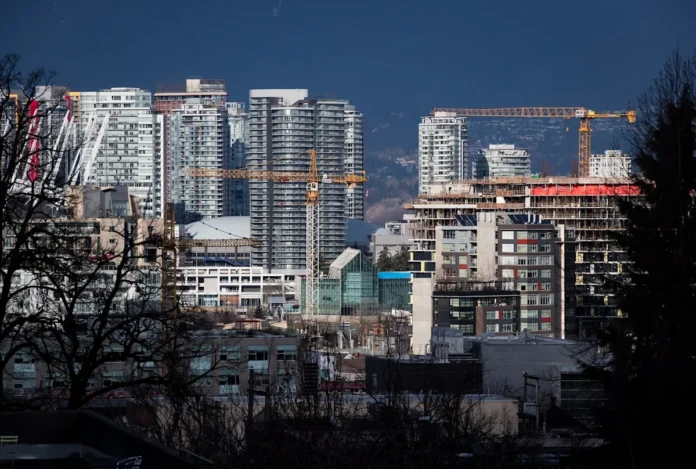
The Greater Vancouver housing market delivered a familiar disappointment in July 2026, with sales declining nearly 10 per cent compared to the same month a year earlier — erasing the modest optimism that June’s figures had briefly generated. The pattern, as the region’s own chief economist acknowledges, is one of persistent stagnation: one step forward, one step back, with no sustained recovery yet in sight.
Greater Vancouver Realtors reported 2,061 home sales in July, representing a 9.8 per cent year-over-year decline and, more strikingly, a shortfall of 18.6 per cent below the 10-year seasonal average. That second figure matters more than the first. A single bad month can reflect noise; falling nearly one-fifth below a decade-long benchmark suggests something structural is weighing on buyer confidence across the region.
Andrew Lis, the board’s chief economist and vice-president of data analytics, described the June-July sequence as a textbook illustration of the back-and-forth dynamic that has characterized the market for several years now. The brief June uptick, in other words, was not a turning point — it was a blip.
Prices have followed sales downward. The composite benchmark price for all residential property types in Greater Vancouver stood at $1,088,800 in July, a 6.2 per cent drop from July 2025 and a further 0.9 per cent decline from June 2026. For a region where housing affordability has long been a defining political and social challenge — one that strains household budgets, drives out younger residents, and concentrates wealth unevenly — a benchmark price still well above one million dollars offers little comfort to prospective buyers, even as it signals mounting pressure on current owners and investors.
The supply picture is equally ambiguous. New listings totalled 4,991 in July, down 11.5 per cent year-over-year but broadly in line with the 10-year average — suggesting sellers are not flooding the market in panic, but neither are they withdrawing en masse. Total inventory, meanwhile, fell four per cent annually to 16,476 active listings, yet that figure remains 26.8 per cent above the long-term average. The market, in short, carries a meaningful overhang: more homes are available relative to historical norms than buyers are willing or able to absorb.
The territory covered by Greater Vancouver Realtors spans a wide and varied geography — from the dense urban core of Vancouver and Burnaby to suburban municipalities like Coquitlam, Maple Ridge, and Richmond, and extending to communities as distinct as Squamish, Whistler, and the Sunshine Coast. Conditions across these areas are not uniform, and aggregate figures inevitably obscure local variation. But the broad trend is consistent enough to draw a clear conclusion.
What July’s data ultimately reveals is a market caught between forces that show no sign of resolving quickly: elevated prices that suppress demand, interest rate uncertainty that discourages commitment, and an inventory level that gives buyers options without giving them urgency. Until those tensions ease — through sustained rate relief, meaningful affordability policy, or a significant correction in benchmark prices — the one-step-forward, one-step-back pattern Lis describes is likely to continue defining the region’s housing landscape.

