Home Blog Page 7

Sault Ste. Marie Council to Consider Freeze on AI Data Centre Approvals Pending New Rules

0

Sault Ste. Marie city council will debate a motion Monday that would halt approvals of new artificial intelligence data centres until the city establishes a proper planning and regulatory framework.

The motion, brought forward by Councillor Angela Caputo and seconded by Councillor Lisa Vezeau-Allen, follows growing public concern over a data centre already approved last December. That facility, a joint venture between cybersecurity firm Protexxa and Missanabie Cree Business LP, is slated for the city’s west end. An online petition raised concerns about the project’s potential negative effects on the surrounding community, prompting the councillors to act. Mayor Matthew Shoemaker has pushed back on some of those concerns, arguing the Sault’s approved centre is not the kind of high-consumption facility drawing scrutiny in other Canadian cities.

The motion would prohibit council from approving any further data centres until a comprehensive review is completed, covering a wide range of potential impacts.

A full report would be due by the second quarter of 2027, with an interim report — covering the cost of external consultants, the Indigenous consultation plan, and the public engagement strategy — expected the following year. The motion also directs staff to prepare, for the August 31 council meeting, an interim control bylaw that would formally prohibit new data centre development in the city while the review proceeds. That bylaw would give the moratorium legal teeth while the longer policy work gets underway.

The debate arrives at a moment when municipalities across Canada are grappling with how to manage the rapid expansion of data infrastructure — balancing economic opportunity against real questions about energy demand, environmental impact, and community input. Sault Ste. Marie’s approach, if adopted, would place it among the first mid-sized Canadian cities to impose a formal pause while it builds a regulatory foundation.

Alberta’s Judicial Appointment Referendum: Democratic Reform or Threat to Judicial Independence?

0

A Question Albertans May Not Have Seen Coming

When Albertans head to the polls this October for Premier Danielle Smith’s wide-ranging referendum, they will confront no fewer than nine questions — some familiar, some not. Immigration policy and the spectre of separation have dominated headlines, but one question has received comparatively little attention despite its potentially far-reaching constitutional consequences: who should appoint the judges sitting on Alberta’s superior courts?

The referendum will ask Albertans whether their province should work with other willing provinces to transfer the power of appointing judges to provincial King’s Bench and Court of Appeal positions from the federal government to provincial governments. It is a question that cuts to the heart of how judicial independence, democratic accountability, and federalism intersect in Canada — and it has drawn sharp responses from the legal community.

Smith’s Case: Values, Politics, and Provincial Voice

Premier Smith has made her position clear and repeated it often. In a January 2026 open letter to Prime Minister Mark Carney, she argued that the current federal appointment process fails to reflect Alberta’s values or what she describes as the province’s distinct legal traditions. Her proposed remedy was concrete: a new advisory committee with equal federal and provincial representation, whose recommendations would require joint ministerial approval before any appointment could proceed.

Smith also cited data she says shows that approximately 80 per cent of judges who made political donations gave to the Liberal Party, arguing this demonstrates the process is far from politically neutral. To reinforce her demands, she backed them with a financial threat — withholding provincial funding for any new positions on Alberta’s Court of King’s Bench — and pointed to existing vacancies on the court, as well as the approaching retirement of a Supreme Court of Canada justice from Alberta.

Alberta Justice Minister Mickey Amery framed the issue in terms of provincial voice. “Provinces lack a strong, meaningful voice in the appointment of superior court judges,” he wrote in a public statement, presenting the referendum as an opportunity for Albertans to weigh in on a structural imbalance they have long endured.

What Legal Experts and the Bar Actually Say

The legal community has not been persuaded. Former judges and constitutional scholars have pushed back firmly, questioning both the factual basis and the implications of Smith’s framing. A former Calgary judge took particular issue with the notion of Alberta’s distinct legal traditions, pointing out that provinces and territories across Canada operate within a broadly shared legal framework — one that has been deliberately harmonized over more than a century to facilitate the free movement of goods and people across the country.

Legal scholars have drawn a clear distinction between Alberta’s grievances and Quebec’s constitutionally entrenched civil law tradition, which genuinely represents a separate legal system rooted in a different historical and cultural inheritance. Alberta’s claim, they argue, rests less on a fundamentally distinct legal order and more on concerns about ideological distance from federal governments and a desire for greater democratic accountability over the courts. These are legitimate political concerns — but they are not the same thing.

The Canadian Bar Association, which represents 40,000 lawyers, judges, and legal professionals across the country, expressed concern that Smith’s proposal compromises judicial independence and risks casting doubt on the integrity of sitting judges. Groups representing lawyers and other legal professionals echoed that concern, warning that entangling provincial governments more directly in the selection of judges who must rule on provincial government decisions creates an obvious structural conflict.

One constitutional expert offered a nuanced take. Criticism of courts and judges is not only legitimate but sometimes necessary in a democracy, he acknowledged — if the judiciary overreaches, that too poses a risk to democratic governance. But there is a line, he cautioned. A respected, non-partisan judiciary whose decisions are consistently followed remains an essential pillar of the rule of law, and politicians must take care not to erode that foundation in the name of accountability.

A Long-Standing Federal Grievance

Provincial frustration with Ottawa’s control over superior court appointments is not new. The issue surfaced prominently during the Meech Lake accord negotiations in the late 1980s, when formal provincial consultation on judicial appointments was among the proposals tabled — and ultimately lost when the accord failed to be ratified. That history matters. It situates Smith’s referendum question within a decades-long tension between provincial governments seeking meaningful input into institutions that operate on their territory and a federal appointment power that the Constitution assigns squarely to Ottawa.

The Constitution Act, 1867 grants the federal government authority to appoint judges of the superior, district, and county courts in each province. Changing that arrangement in any meaningful way would require navigating the constitutional amendment formula — a formidable undertaking that goes well beyond what a provincial referendum can accomplish on its own. A successful vote in October would give Smith a political mandate to press the issue with other provinces and with the federal government, but it would not, by itself, alter a single appointment.

What the Referendum Can and Cannot Do

This distinction matters enormously, and it is one that public debate has not always made plain. Alberta’s referendum is a consultative exercise. It can signal provincial opinion, strengthen a premier’s negotiating hand, and potentially attract like-minded provinces into a coalition pressing for reform. It cannot unilaterally restructure the federal appointment process.

The question of whether provincial governments should have a more formal role in selecting the judges who hear cases in their courts is, at its core, a legitimate constitutional debate. Provincial governments do have interests in the composition of courts that adjudicate disputes arising under provincial law, regulate provincial institutions, and shape the legal environment in which provincial policy operates. Acknowledging those interests does not require accepting every element of Smith’s framing.

What the referendum will ultimately test is how many Albertans share their premier’s conviction that the current system is broken — and how many are persuaded that the cure she proposes would preserve, rather than compromise, the independence of the courts they depend on.

Stollery Children’s Hospital Receives $100,000 Boost for Pediatric Cancer Research

0

A ceremony held Tuesday morning in Edmonton marked a meaningful moment for one of western Canada’s most vital medical institutions. The Stollery Children’s Hospital Foundation received a $100,000 grant directed specifically at pediatric oncology research — a field that, as those working within it will quickly tell you, carries its own distinct and urgent demands.

Sue McCoy, the foundation’s vice president of philanthropy, was direct about why this area of medicine deserves dedicated attention and resources. “Kids struggling with cancer is different than adults,” she said following the ceremony. “They’re not just little adults; there is special care when it comes to pediatric oncology.” That distinction matters enormously. Children’s bodies respond differently to treatment. Their developmental needs are different. The research required to treat them well cannot simply be borrowed from adult oncology — it must be built on its own terms.

The Stollery is the second largest children’s hospital in Canada and the most specialized children’s hospital in all of western Canada, serving patients drawn from Alberta and well beyond its borders. McCoy noted that the funding will allow the hospital to sustain and deepen research that has already begun attracting international expertise. “We’ve got specialists from around the world that are coming and contributing to the body of knowledge that we have at the Stollery,” she said. That kind of collaborative pull — drawing global talent to Edmonton — speaks to the institution’s standing and to what continued investment can produce.

The money comes through the Hyundai Hope on Wheels program, a corporate philanthropy initiative through which a portion of every new Hyundai vehicle sold is directed toward pediatric cancer research. Kirk Merrett, Hyundai’s director of customer experience and dealer performance, confirmed that the manufacturer plans to distribute $4.1 million to sixteen hospitals across Canada this year. The Stollery’s $100,000 grant represents one piece of that national commitment.

The program originated in the United States in 1998, with its Canadian chapter launching in 2025. It positions routine consumer transactions — car purchases — as a mechanism for sustained medical funding, threading philanthropy into commerce in a way that accumulates meaningfully over time.

For a hospital system that depends on a combination of public funding and private philanthropy to push the boundaries of what pediatric medicine can accomplish, grants like this one are not incidental. They are the difference between research that stalls and research that moves. At the Stollery, they represent another step in the long, careful work of giving seriously ill children a better chance.

AC/DC Brings ‘PWR/UP’ Tour to Edmonton, Drawing Over 50,000 Fans to Commonwealth Stadium

0

A Landmark Night for Edmonton’s Live Music Scene

Rock legends AC/DC drew a capacity crowd of 50,047 fans to Commonwealth Stadium in Edmonton on Sunday, delivering a sold-out performance as part of their global PWR/UP Tour. The show marked one of the largest live music events the Alberta capital has hosted in recent memory, with the stadium filled to its limits for an act whose catalogue spans more than five decades.

The scale of the operation behind the scenes matched the spectacle on stage. More than 510 security guards were deployed across the venue, alongside 115 ushers and customer service staff and 125 City of Edmonton event personnel. Edmonton Police Services, Edmonton Transit Services, and dedicated medical teams were also present throughout the evening to maintain public safety.

City Officials Highlight the Economic and Cultural Stakes

Heather Seutter, Director of Commonwealth Stadium, underscored the significance of attracting a tour of this magnitude to the city. “We are very excited that Edmonton was chosen to host AC/DC’s PWR/UP Tour,” she said in a statement released Monday. “These mega stadium tours and world-class artists choosing Edmonton as a stop on their tours have an incredible impact on our city.”

Seutter pointed to the broader ripple effects of sold-out shows of this scale, arguing that the “tremendous energy and excitement” they generate flows directly into local businesses and reinforces what she described as Edmonton’s cultural vibrancy. Events of this profile also draw visitors from across the region and beyond, contributing to the city’s hospitality and retail sectors in ways that a single evening’s attendance figures alone do not capture.

Logistics, Transit, and the Realities of a Mega-Concert

Concertgoers were encouraged in advance to use public transit and to arrive early, a standard precaution for events of this size at a stadium embedded in a residential and commercial neighbourhood. The city confirmed that 139 parking tickets were issued in surrounding streets on Sunday, and 17 vehicles were towed — figures that, while not negligible, suggest the logistics operation held together reasonably well given the volume of attendees.

The coordination required to move tens of thousands of people safely in and out of a single venue in a matter of hours places significant demands on municipal services, from transit scheduling to traffic management. That the evening proceeded without reported major incident reflects both careful advance planning and the accumulated experience Edmonton has built in hosting large-scale events at Commonwealth Stadium.

What Comes Next at Commonwealth Stadium

The AC/DC concert is not a one-off moment for the venue this summer. Guns N’ Roses are scheduled to take the stage at Commonwealth Stadium on August 26, extending what is shaping up to be a notable season for live rock music in Edmonton. Tickets for that performance remain available through Ticketmaster.

The back-to-back booking of two of rock’s most enduring acts at the same venue within weeks of each other speaks to Edmonton’s growing profile as a destination on major North American touring circuits — a development that city officials and local businesses alike have reason to watch closely.

Second Montreal-Area Cat Tests Positive for Raccoon Rabies as Quebec Cases Surge in 2026

0

New Exposure Cases Confirmed

Quebec public health officials have confirmed a second cat infected with raccoon rabies in the Montérégie region, prompting three additional people to receive emergency preventative treatment for potential rabies exposure, the Montérégie Public Health Department announced Monday.

The newly confirmed animal was found in Saint-Anicet. A departmental spokesperson confirmed to media that the three individuals now receiving treatment are separate from those affected in late July, when Quebec first reported raccoon rabies in a domestic cat in the municipality of Godmanchester — also in Montérégie.

That initial July 29 confirmation triggered post-exposure prophylaxis for three people who had been in contact with the Godmanchester cat. The treatment involves a multi-dose vaccine series. Officials emphasize that administering such preventative care is not unusual when potential exposure occurs.

A Sharp Rise in Confirmed Cases

The numbers are stark. Quebec has recorded 139 confirmed cases of raccoon rabies so far in 2026, compared to 93 cases across the entire province in 2025. The Montérégie region accounts for roughly 80 per cent of this year’s cases — a concentration that underscores the geographic pressure the region is facing.

“This new case serves as a reminder that rabies continues to spread among wild animals and that domestic animals can also be infected,” public health officials stated, urging residents to remain vigilant and to report any dead, injured, disoriented, paralyzed, or unusually aggressive animals to the appropriate authorities.

What the Public Should Know

Health authorities are calling on pet owners to act now. Keeping pets’ vaccinations current is the single most direct protective measure available. Officials also urge residents to prevent pets from roaming outside unsupervised, to avoid any contact with wild or unknown animals — including carcasses — and to consult a veterinarian promptly if a pet has interacted with wildlife.

Any pet showing symptoms consistent with rabies — excessive drooling, paralysis, or unusual aggression — should be isolated immediately. Residents are also advised to avoid practices that attract wildlife near the home, such as leaving food scraps accessible outdoors.

The province’s public health network continues to monitor the situation closely as the outbreak extends deeper into the 2026 season.

Asterisk Talley Wins the U.S. Women’s Amateur in Dominant Fashion, Cementing Her Place Among Golf’s Rising Stars

0

A Championship Claimed Through Tears and Tenacity

When Asterisk Talley glanced toward her father Jim on the final green at The Honors Course in Ooltewah, Tennessee, he was already in tears. She joined him — and then, through blurred vision, rolled home a putt that settled the matter in two strokes. With that, the 17-year-old from Chowchilla, California, claimed the 126th U.S. Women’s Amateur, the oldest women’s amateur golf championship in the world, in a performance that left little room for debate.

The thesis of Talley’s week was written in the numbers: an 8-and-6 victory over fellow 17-year-old Anna Iwanaga of Japan, a co-medalist and the tournament’s No. 1 seed. Talley did not simply win — she dismantled a formidable opponent, winning nine of the final 21 holes after Iwanaga had briefly seized a 1-up lead at the turn in the morning session. From that moment forward, the championship belonged to Talley.

A Pattern of Excellence, Interrupted and Resumed

To understand what Sunday’s result means, it helps to trace the arc of Talley’s short but already substantial career. Two years ago, she captured the U.S. Women’s Amateur Four-Ball — her first USGA title — before finishing runner-up in both the U.S. Girls’ Junior and the U.S. Women’s Amateur at Southern Hills. That runner-up finish at the Women’s Amateur stung, but it also established her as a player capable of competing at the highest level of the amateur game before most of her peers had found their footing.

Last year at Bandon Dunes, she shared co-medalist honours in stroke play, only to fall in the Round of 64 — an early exit that underscored how unforgiving match play can be, regardless of form. Earlier this year, she carried the solo lead into the final round of the Augusta National Women’s Amateur, then faltered. Her visible emotional response in that moment resonated widely, not as weakness, but as evidence of how deeply she competes and how honestly she carries both ambition and disappointment.

Sunday at The Honors Course was the resolution of that arc.

Dominance That Demanded Recognition

Iwanaga is no ordinary opponent. The Japanese teenager has won professional events and demonstrated the kind of consistent excellence that earns a top seed in a field of this calibre. Her morning performance — taking a 1-up lead through nine holes — suggested a genuine contest was underway. What followed was something else entirely.

Talley’s power and precision over the afternoon session transformed the match into a demonstration. Winning nine of the next 21 holes in a format that rewards consistency and nerve, she closed out the match with six holes to spare. The margin was not a fluke of fortune or a collapse by her opponent — it was the product of sustained, purposeful golf.

Her first name, Asterisk, derives from the Greek word for “little star.” At 17, with two USGA titles and a résumé that already includes Augusta, Southern Hills, and Bandon Dunes, the name has stopped feeling like a curiosity and started feeling like a forecast.

What Comes Next

The U.S. Women’s Amateur is the most prestigious trophy in women’s amateur golf, and Talley now holds it. That fact carries weight beyond the symbolic. Past champions have used the title as a launching point toward professional careers of lasting significance, and there is every reason to expect Talley’s trajectory to follow a similar path.

For now, though, the image that endures is simpler than any statistical summary: a father and daughter on a final green in Tennessee, both in tears, the biggest championship of her young life decided, the long road from runner-up to champion finally complete.

Fierté Montréal Marks 20th Annual Pride Parade with Calls for Solidarity and Remembrance

0

Downtown Montréal came alive on Sunday as tens of thousands of spectators lined René-Lévesque Boulevard for Fierté Montréal’s 20th annual Pride parade — a milestone that captured both the distance the 2SLGBTQIA+ community has travelled and the ground that remains to be won. Running from 1 p.m. to 4 p.m., the parade stretched from Robert-Bourassa Boulevard to Atataken Street, closing out a week of celebrations that ran from July 31 to August 9.

This year’s theme, “Let’s Shine Together,” was chosen to mark progress on 2SLGBTQIA+ rights while insisting that solidarity — across identities, across communities — remains the animating force of the movement. That spirit of collective recognition took its most solemn form in a moment of silence observed during the parade, honouring those lost prematurely to transphobia, lesbophobia, homophobia, biphobia, and AIDS, as well as missing and murdered Indigenous 2SLGBTQIA+ individuals. The explicit inclusion of Indigenous lives in that act of remembrance reflects a growing acknowledgment that the struggles of 2SLGBTQIA+ communities and Indigenous peoples are not parallel concerns but deeply intertwined ones.

The political attendance was notable. Montréal Mayor Soraya Martinez Ferranda was present, as were Quebec Liberal Party leader Charles Milliard and Québec solidaire spokesperson Ruba Ghazal — a cross-partisan showing that, whatever their differences at the National Assembly, these figures chose to stand visibly alongside the community on its most prominent day.

Security was tightened this year, and the reasons were concrete. Interim Executive Director Higino Monteiro told CTV News that enhanced measures were put in place following a deadly attack at Berlin Pride that left one person dead and several others injured. The threat was real, and organizers responded accordingly — a reminder that Pride, for all its celebratory energy, continues to occupy contested public space in a world where anti-2SLGBTQIA+ violence has not receded.

Festivities were set to continue after the parade, with celebrations extending into the Village and onto the Olympic Park Esplanade. Twenty years in, Fierté Montréal has grown into one of the largest Pride events in North America — and Sunday’s parade made clear that its purpose is as urgent as its scale is impressive.

B.C. First Nations Chiefs Demand Halt to West Coast Pipeline, Citing Climate Crisis and Flawed Consultation

0

The Union of British Columbia Indian Chiefs formally called on Prime Minister Mark Carney and Alberta Premier Danielle Smith on Sunday to stop advancing the proposed West Coast oil pipeline, arguing that expanding fossil fuel production will deepen the climate crisis and that Indigenous communities have not been meaningfully consulted on a project that is already well into its planning stages.

In a letter addressed directly to both leaders, the UBCIC — an organization representing numerous First Nations across the province — drew a direct line between fossil fuel expansion and the intensifying disasters already reshaping Canadian landscapes. “The destructive and disastrous consequences of expanding fossil fuel production extend far beyond any single territory,” the letter states. “From catastrophic wildfires to destructive floods and rising seas, the impacts of climate change are already being felt across this country. Every new fossil fuel project deepens that crisis.” The chiefs released the letter on the International Day of the World’s Indigenous Peoples, a timing that underscored the organization’s intent to frame its opposition in terms of both constitutional rights and global environmental responsibility.

At the heart of the UBCIC’s objection lies a procedural grievance with significant constitutional weight. The organization argues that the federal and provincial governments have already determined the project’s corridor, identified prospective development partners, and publicly made the economic case for the pipeline — effectively treating consultation as a formality rather than a genuine process. Meaningful consultation, the group insists, cannot occur when First Nations are invited only to discuss how a predetermined project will unfold, not whether it should proceed at all. This distinction matters under Canadian constitutional law, where the Crown’s duty to consult is well established but its depth and timing remain contested terrain.

The proposed pipeline is a substantial infrastructure undertaking. Running approximately 1,250 kilometres from Bruderheim, Alberta, to a port near Delta, British Columbia, it would carry upwards of one million barrels of crude oil per day for shipment to international markets. The Alberta government is listed as the project’s proponent, while ownership would be shared among Trans Mountain, the Alberta Petroleum Marketing Commission, and Pembina Pipeline Corporation. The project is also linked, by agreement between Ottawa and Edmonton, to a carbon capture initiative known as the Pathways project — the two being conditionally dependent on each other.

The federal government took a significant step last week toward granting the pipeline a national interest designation under the Building Canada Act, a designation that would allow Ottawa to fast-track the project and bypass certain environmental review requirements. The government has opened a public comment period on the designation, accepting feedback until mid-September. The Building Canada Act, which passed with support from the Conservatives more than a year ago, has so far been used to advance three other projects toward national interest status: the Grays Bay road and port project in Nunavut, the Mackenzie Valley Highway in the Northwest Territories, and the Nuclear Waste Management Organization’s deep geological repository in northern Ontario.

Neither Carney’s nor Smith’s offices responded to a request for comment on Sunday. Alberta’s Ministry of Indigenous Relations, however, defended the project in an emailed statement, arguing that the pipeline would deliver long-term economic benefits and energy security to Indigenous communities. Press secretary Karah Folk noted that the pipeline submission is currently under review by the Major Projects Office, which she said “will consult with Indigenous communities as part of determining whether the project is in the national interest.” The ministry added that the government remains committed to ongoing dialogue with First Nations and other partners as the review continues — a characterization the UBCIC flatly rejects as insufficient given the project’s current state of advancement.

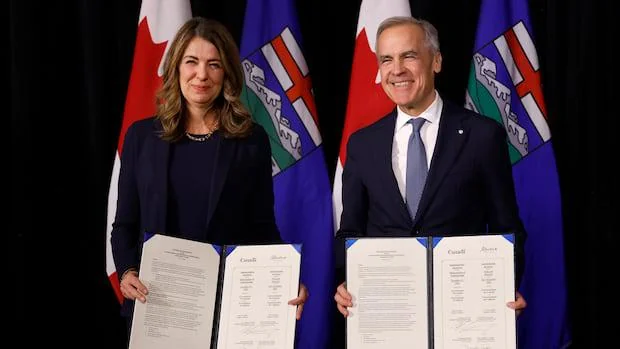
Carney and Smith jointly announced the proposed pipeline in Calgary on July 2, 2026, framing it as a nation-building project intended to strengthen Canadian economic autonomy in a shifting global trade environment. Ottawa has described the Major Projects Office, headquartered in Calgary, as a vehicle for advancing projects of national interest that also advance Indigenous economic participation and meet Canada’s climate commitments — a balancing act the UBCIC argues is fundamentally incompatible with approving new fossil fuel infrastructure at this scale.

Jalapeño-Linked Salmonella Outbreak Spreads Across 27 U.S. States — What Canadians Need to Know

0

The Outbreak at a Glance

A salmonella outbreak tied to jalapeño peppers has sickened at least 345 people across 27 U.S. states, prompting a product recall and investigations by both the U.S. Centers for Disease Control and Prevention and the Food and Drug Administration. Canadian health authorities say they are monitoring the situation — but have found no evidence the affected peppers crossed the border.

The FDA is still working to determine whether recalled jalapeños were sold through grocery retail channels in the United States, meaning the investigation remains active and the full scope of the outbreak is not yet established.

Canada’s Exposure: Limited, But Monitored

Health Canada confirmed to CBC News that the Public Health Agency of Canada is not currently investigating any salmonella cases connected to this outbreak. The Canadian Food Inspection Agency echoed that position, stating plainly that “at this time, there is no evidence that products implicated in this outbreak were distributed in Canada.”

CBC attempted to reach Coast Citrus Distributors directly on Thursday but received no comment before publication. The distributor’s Canadian distribution footprint, if any, remains unclear from public disclosures.

Both Chipotle and Qdoba operate locations in Canada. Neither chain has publicly indicated that Canadian restaurants received jalapeños from the implicated supplier, and the FDA’s statements on ongoing risk focused specifically on U.S. locations after the supplier switch.

What Is Salmonella — and How Does It Spread?

Salmonella is a bacterium that causes salmonellosis, an infection of the intestinal tract. Transmission most commonly occurs through food or water contaminated with fecal matter carrying the bacteria. Fresh produce is a well-established vehicle, particularly when contamination occurs at the farm level.

“The contamination usually happens at the level of the farm, but technically you can introduce a contaminant at any point,” said Dr. Isaac Bogoch, an infectious diseases specialist at Toronto General Hospital. That means the supply chain — from field to distributor to kitchen — carries risk at multiple junctures.

Symptoms and Who Is Most at Risk

Not everyone infected with salmonella will feel sick. Those who do typically develop diarrhea, nausea, stomach cramps, vomiting, and fever. Symptoms generally appear between six hours and six days after exposure and can persist for four to seven days, according to the CDC.

Young children, older adults, and people with compromised immune systems face a higher risk of severe illness. For these groups, salmonellosis can require hospitalization — as the 36 U.S. cases in this outbreak illustrate.

What to Watch For

Canadian authorities have not issued any advisories or recalls related to this outbreak. The situation remains fluid, however, as U.S. investigators have not yet determined whether recalled jalapeños reached grocery store shelves. Anyone who develops symptoms consistent with salmonellosis after consuming jalapeños — particularly at quick-service Mexican-style restaurants — should contact a health care provider.

Health Canada and the CFIA have not ruled out further investigation should new evidence emerge. Canadians can monitor updates through the CFIA’s food recall and allergy alert system, which publishes notices as they become available.

WNBA Commissioner Issues Memo to Teams as Debate Over Transgender Athletes in Women’s Basketball Intensifies

0

WNBA commissioner Cathy Engelbert sent a memo to all league teams on Friday addressing the growing public discourse around transgender athlete participation in women’s basketball, as the league prepares to discuss the matter formally at a scheduled meeting next week involving team presidents and general managers.

The memo, obtained by both The Associated Press and ESPN, outlined three principles guiding the league’s approach: that it would handle the topic “thoughtfully, respectfully, and in alignment with the longstanding values of our league”; that player eligibility rules in the WNBA are, unlike those of many other sports organizations, collectively bargained with the Players Association; and that “preserving the integrity of our game and ensuring fair competition will always remain among the league’s highest priorities.”

Engelbert also acknowledged the volume of questions teams have been fielding and expressed appreciation for the measured way in which those questions had been handled publicly.

A Dispute With No Trans Players at Its Centre

The debate has unfolded in notable absence of any transgender players currently in or entering the WNBA. The league’s collective bargaining agreement already stipulates that “only players who are women are eligible to play in the WNBA.” The controversy nonetheless intensified last month after Indiana Fever guard Sophie Cunningham publicly supported barring transgender athletes from women’s sports in an ESPN feature, a statement that triggered a wave of reaction both inside and outside the league.

Anti-transgender protests subsequently appeared outside Fever away games. One confrontation escalated to the point where a minority owner of the Seattle Storm received a five-game suspension from the league following a verbal altercation with Cunningham supporters. Several coaches and players have spoken out in favour of inclusion in the weeks since. Engelbert’s memo marks the first time the league office itself has formally entered the conversation, beyond that earlier disciplinary action.

Also on Friday, the WNBA Players Association released its own statement, drawing a firm line against hostility directed at any group. “Hate, abuse, and demonization of any person or group of people, including transgender people, only fuel fear, division, and harm,” the statement read, before closing with a pointed declaration: “We will not be used as political pawns.”

The league has indicated it will continue consultations with teams and the Players Association in the weeks and months ahead.