
Home Blog Page 8

B.C. First Nations Chiefs Demand Halt to West Coast Pipeline, Citing Climate Crisis and Flawed Consultation

0

The Union of British Columbia Indian Chiefs formally called on Prime Minister Mark Carney and Alberta Premier Danielle Smith on Sunday to stop advancing the proposed West Coast oil pipeline, arguing that expanding fossil fuel production will deepen the climate crisis and that Indigenous communities have not been meaningfully consulted on a project that is already well into its planning stages.

In a letter addressed directly to both leaders, the UBCIC — an organization representing numerous First Nations across the province — drew a direct line between fossil fuel expansion and the intensifying disasters already reshaping Canadian landscapes. “The destructive and disastrous consequences of expanding fossil fuel production extend far beyond any single territory,” the letter states. “From catastrophic wildfires to destructive floods and rising seas, the impacts of climate change are already being felt across this country. Every new fossil fuel project deepens that crisis.” The chiefs released the letter on the International Day of the World’s Indigenous Peoples, a timing that underscored the organization’s intent to frame its opposition in terms of both constitutional rights and global environmental responsibility.

At the heart of the UBCIC’s objection lies a procedural grievance with significant constitutional weight. The organization argues that the federal and provincial governments have already determined the project’s corridor, identified prospective development partners, and publicly made the economic case for the pipeline — effectively treating consultation as a formality rather than a genuine process. Meaningful consultation, the group insists, cannot occur when First Nations are invited only to discuss how a predetermined project will unfold, not whether it should proceed at all. This distinction matters under Canadian constitutional law, where the Crown’s duty to consult is well established but its depth and timing remain contested terrain.

The proposed pipeline is a substantial infrastructure undertaking. Running approximately 1,250 kilometres from Bruderheim, Alberta, to a port near Delta, British Columbia, it would carry upwards of one million barrels of crude oil per day for shipment to international markets. The Alberta government is listed as the project’s proponent, while ownership would be shared among Trans Mountain, the Alberta Petroleum Marketing Commission, and Pembina Pipeline Corporation. The project is also linked, by agreement between Ottawa and Edmonton, to a carbon capture initiative known as the Pathways project — the two being conditionally dependent on each other.

The federal government took a significant step last week toward granting the pipeline a national interest designation under the Building Canada Act, a designation that would allow Ottawa to fast-track the project and bypass certain environmental review requirements. The government has opened a public comment period on the designation, accepting feedback until mid-September. The Building Canada Act, which passed with support from the Conservatives more than a year ago, has so far been used to advance three other projects toward national interest status: the Grays Bay road and port project in Nunavut, the Mackenzie Valley Highway in the Northwest Territories, and the Nuclear Waste Management Organization’s deep geological repository in northern Ontario.

Neither Carney’s nor Smith’s offices responded to a request for comment on Sunday. Alberta’s Ministry of Indigenous Relations, however, defended the project in an emailed statement, arguing that the pipeline would deliver long-term economic benefits and energy security to Indigenous communities. Press secretary Karah Folk noted that the pipeline submission is currently under review by the Major Projects Office, which she said “will consult with Indigenous communities as part of determining whether the project is in the national interest.” The ministry added that the government remains committed to ongoing dialogue with First Nations and other partners as the review continues — a characterization the UBCIC flatly rejects as insufficient given the project’s current state of advancement.

Carney and Smith jointly announced the proposed pipeline in Calgary on July 2, 2026, framing it as a nation-building project intended to strengthen Canadian economic autonomy in a shifting global trade environment. Ottawa has described the Major Projects Office, headquartered in Calgary, as a vehicle for advancing projects of national interest that also advance Indigenous economic participation and meet Canada’s climate commitments — a balancing act the UBCIC argues is fundamentally incompatible with approving new fossil fuel infrastructure at this scale.


Jalapeño-Linked Salmonella Outbreak Spreads Across 27 U.S. States — What Canadians Need to Know

0

The Outbreak at a Glance

A salmonella outbreak tied to jalapeño peppers has sickened at least 345 people across 27 U.S. states, prompting a product recall and investigations by both the U.S. Centers for Disease Control and Prevention and the Food and Drug Administration. Canadian health authorities say they are monitoring the situation — but have found no evidence the affected peppers crossed the border.

The FDA is still working to determine whether recalled jalapeños were sold through grocery retail channels in the United States, meaning the investigation remains active and the full scope of the outbreak is not yet established.

Canada’s Exposure: Limited, But Monitored

Health Canada confirmed to CBC News that the Public Health Agency of Canada is not currently investigating any salmonella cases connected to this outbreak. The Canadian Food Inspection Agency echoed that position, stating plainly that “at this time, there is no evidence that products implicated in this outbreak were distributed in Canada.”

CBC attempted to reach Coast Citrus Distributors directly on Thursday but received no comment before publication. The distributor’s Canadian distribution footprint, if any, remains unclear from public disclosures.

Both Chipotle and Qdoba operate locations in Canada. Neither chain has publicly indicated that Canadian restaurants received jalapeños from the implicated supplier, and the FDA’s statements on ongoing risk focused specifically on U.S. locations after the supplier switch.

What Is Salmonella — and How Does It Spread?

Salmonella is a bacterium that causes salmonellosis, an infection of the intestinal tract. Transmission most commonly occurs through food or water contaminated with fecal matter carrying the bacteria. Fresh produce is a well-established vehicle, particularly when contamination occurs at the farm level.

“The contamination usually happens at the level of the farm, but technically you can introduce a contaminant at any point,” said Dr. Isaac Bogoch, an infectious diseases specialist at Toronto General Hospital. That means the supply chain — from field to distributor to kitchen — carries risk at multiple junctures.

Symptoms and Who Is Most at Risk

Not everyone infected with salmonella will feel sick. Those who do typically develop diarrhea, nausea, stomach cramps, vomiting, and fever. Symptoms generally appear between six hours and six days after exposure and can persist for four to seven days, according to the CDC.

Young children, older adults, and people with compromised immune systems face a higher risk of severe illness. For these groups, salmonellosis can require hospitalization — as the 36 U.S. cases in this outbreak illustrate.

What to Watch For

Canadian authorities have not issued any advisories or recalls related to this outbreak. The situation remains fluid, however, as U.S. investigators have not yet determined whether recalled jalapeños reached grocery store shelves. Anyone who develops symptoms consistent with salmonellosis after consuming jalapeños — particularly at quick-service Mexican-style restaurants — should contact a health care provider.

Health Canada and the CFIA have not ruled out further investigation should new evidence emerge. Canadians can monitor updates through the CFIA’s food recall and allergy alert system, which publishes notices as they become available.

WNBA Commissioner Issues Memo to Teams as Debate Over Transgender Athletes in Women’s Basketball Intensifies

0

WNBA commissioner Cathy Engelbert sent a memo to all league teams on Friday addressing the growing public discourse around transgender athlete participation in women’s basketball, as the league prepares to discuss the matter formally at a scheduled meeting next week involving team presidents and general managers.

The memo, obtained by both The Associated Press and ESPN, outlined three principles guiding the league’s approach: that it would handle the topic “thoughtfully, respectfully, and in alignment with the longstanding values of our league”; that player eligibility rules in the WNBA are, unlike those of many other sports organizations, collectively bargained with the Players Association; and that “preserving the integrity of our game and ensuring fair competition will always remain among the league’s highest priorities.”

Engelbert also acknowledged the volume of questions teams have been fielding and expressed appreciation for the measured way in which those questions had been handled publicly.

A Dispute With No Trans Players at Its Centre

The debate has unfolded in notable absence of any transgender players currently in or entering the WNBA. The league’s collective bargaining agreement already stipulates that “only players who are women are eligible to play in the WNBA.” The controversy nonetheless intensified last month after Indiana Fever guard Sophie Cunningham publicly supported barring transgender athletes from women’s sports in an ESPN feature, a statement that triggered a wave of reaction both inside and outside the league.

Anti-transgender protests subsequently appeared outside Fever away games. One confrontation escalated to the point where a minority owner of the Seattle Storm received a five-game suspension from the league following a verbal altercation with Cunningham supporters. Several coaches and players have spoken out in favour of inclusion in the weeks since. Engelbert’s memo marks the first time the league office itself has formally entered the conversation, beyond that earlier disciplinary action.

Also on Friday, the WNBA Players Association released its own statement, drawing a firm line against hostility directed at any group. “Hate, abuse, and demonization of any person or group of people, including transgender people, only fuel fear, division, and harm,” the statement read, before closing with a pointed declaration: “We will not be used as political pawns.”

The league has indicated it will continue consultations with teams and the Players Association in the weeks and months ahead.

Toronto Councillor Parthi Kandavel Files for Re-Election While Under OPP Investigation

0

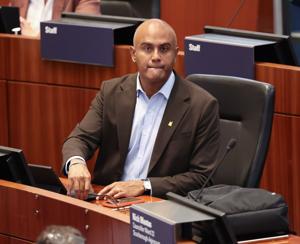
The nomination papers were filed quietly, on a Friday — a routine administrative act that carries anything but routine weight. Parthi Kandavel, the first-term Toronto city councillor representing Scarborough Southwest, has registered to seek re-election to Ward 20, even as an Ontario Provincial Police investigation into his conduct with property developers remains active and unresolved.

Kandavel has denied any wrongdoing. He has said publicly that he expects the investigation to exonerate him, and nothing in Canadian law or Toronto’s municipal rules prevents a person under police investigation from standing for elected office. He has not been charged with any crime. Still, the decision to register for another term places him at the centre of what is shaping up to be a closely watched race in one of Scarborough’s most contested wards.

Nine other candidates have also filed in Scarborough Southwest.

Among them is Kevin Rupasinghe, an engineer who finished second to Kandavel in the 2023 Scarborough Southwest byelection that first brought the councillor to office. Policy professional Sharmina Nasrin has also registered, adding another credible name to a field that reflects genuine community interest in the seat’s future.

The investigation itself was launched by the OPP’s anti-rackets branch, a specialized unit that handles complex financial crime and corruption cases. While the force has not publicly detailed the allegations, the probe appears to have originated from a complaint filed to the city’s integrity commissioner in July 2025. That complaint has not been made public. Under the rules governing the commissioner’s office, however, a referral to law enforcement is required when there are “reasonable grounds” to believe a criminal offence has been committed — a threshold that implies the complaint was treated with considerable seriousness.

On July 30, the OPP confirmed to journalists that the investigation “remains ongoing,” with a police spokesperson declining to offer any further detail on its scope or timeline.

Reporting by the Toronto Star has added texture to what is otherwise a tightly held investigation. The Star found that police have sought information about, or made contact with individuals connected to, at least three separate properties located within Kandavel’s ward. Two sources with direct ties to development projects in Scarborough Southwest alleged that the councillor requested the proponents of those projects make six-figure payments to third parties. Both sources spoke on condition of anonymity, citing concern about the potential consequences for their development files.

The sources were careful to note that Kandavel did not explicitly threaten to obstruct their projects. Yet the implicit understanding, they said, was clear: without the payments, their developments risked delays significant enough to impose serious financial costs. That kind of pressure — unspoken but structurally embedded in the relationship between a ward councillor and the developers who need city approvals — is precisely what anti-corruption investigations are designed to examine.

Kandavel’s decision to run again forces Scarborough Southwest voters into an uncomfortable position that is, in its own way, a test of democratic norms. Municipal elections in Toronto are decided by residents, not by the outcomes of police files. The investigation may conclude before voting day, or it may not. Either way, the ward’s constituents will have to weigh what they know, and what remains unresolved, when they mark their ballots.

For a community like Scarborough Southwest — diverse, politically engaged, and accustomed to being treated as an afterthought by city hall — the stakes feel personal. The 2023 byelection that sent Kandavel to council was itself a signal of a ward asserting its voice. What happens next will say something, in turn, about how that voice chooses to be heard.

Canadian Asking Rents Drop 4% in July, but Stabilization Signs Emerge

0

The average national asking rent fell four per cent in July compared with the same month last year, landing at $2,037 — marking the 22nd consecutive month of year-over-year declines, according to the latest monthly analysis from Rentals.ca and Urbanation released this week.

A Long Slide, With a Slowing Pace

Asking rents have now declined 7.5 per cent over the past two years. Yet July’s annual drop was the smallest recorded since February, and month-over-month prices continued to inch upward — rising 0.2 per cent from June, the fourth straight monthly increase.

Urbanation president Shaun Hildebrand struck a cautious note in assessing the data. “Canada’s rental market is showing signs of stabilizing, but not yet recovering,” he said in a news release accompanying the report. He attributed the recent monthly gains largely to seasonal momentum tied to the back-to-school period, noting that annual declines persist across most of the country.

Toronto Emerges as a Market to Watch

Among Canada’s major urban markets, Toronto is drawing particular attention from analysts. Apartment and condo rents in the city rose 1.6 per cent from June to reach $2,577, while the year-over-year decline narrowed to just 0.6 per cent — the smallest annual drop of any major Canadian market.

The Rentals.ca and Urbanation report described this as “a further step towards an emerging turnaround” in Toronto’s rental market, pointing to tightening supply as fewer new condominium units come to market, alongside pent-up demand being released as affordability improves relative to recent peaks. Hildebrand flagged Toronto as a potential leading indicator for broader national trends.

City-by-City Breakdown

Vancouver retained its standing as the most expensive municipal rental market in Canada, with an average asking rent of $2,677 for apartments and condos — down 4.5 per cent year-over-year and 1.4 per cent from June alone.

Other major cities recorded the following year-over-year changes in average asking rents:

By Property Type

Nationally, purpose-built apartments saw asking rents fall 2.6 per cent year-over-year to an average of $2,041 in July. Condominium apartments recorded a steeper annual decline of 6.3 per cent, averaging $2,063. Secondary market units — including houses and townhouses — experienced the sharpest drop of all property types, falling 7.5 per cent annually to an average of $2,007.

Alberta’s New Integrated ID Cards Are Creating Long Lines and Leaving Some Residents Behind

0

The rollout has been anything but smooth.

Since July 2, when Alberta began issuing its new integrated driver’s licences and identification cards — documents that now carry citizenship status and health information — registries across the province have been overwhelmed with residents seeking renewals or first-time applications. Lines have snaked out the doors of urban locations, and frustration has mounted steadily as the weeks have passed.

A significant part of the problem is documentation. Under the new system, Albertans must bring proof of their legal entitlement to be in Canada — a passport, birth certificate, permanent residency card, or citizenship certificate — along with photo ID and an existing health care card. Many residents are arriving at registries unaware of these requirements, only to discover after hours of waiting that they must return with different paperwork. Alberta NDP MLA Court Ellingson, who has himself spent long stretches in line at two separate registries, described the experience plainly: “It’s not fun.”

“Residents simply don’t know,” Ellingson said. “So they get to the registrar, and they’ve already been waiting for two hours, and then they find out they don’t have the right documentation and have to come back.”

When the System Leaves People Behind

The frustration runs deeper than inconvenience for some families. Matthew Randolph, a resident of Shawnessy in Calgary, visited the same registry five times in July in an effort to update his elderly father’s identification. His father, who immigrated from the United States in 1969 and became a Canadian citizen in 1975, cannot travel to the registry himself due to mobility limitations. When Randolph presented his father’s citizenship certificate — a legitimate document issued by the Canadian government — he was told it was too old to be accepted under the new requirements.

Randolph is now navigating a certificate of birth abroad application through Service Canada, a process that can take up to nineteen months to complete. In the meantime, his father remains without valid, up-to-date identification. “It’s been keeping me up,” Randolph said. “I just thought that if I keep at it, it would work out. And I still hope it will.” He added that something needs to be done to make what he called an urgent process more accessible to Albertans in difficult circumstances.

His situation points to a broader tension in the rollout: the new system’s requirements, however well-intentioned, were not designed with equal attention to the realities faced by elderly residents, those with limited mobility, or long-established Canadians whose documentation predates modern standards.

The Province Acknowledges Growing Pains

Service Alberta Minister Dale Nally acknowledged on Friday that delays were a foreseeable consequence of introducing a more complex process. “This is a new process, and we’re hearing that it’s taking longer because there are additional steps,” he said, framing the disruption as short-term pain for long-term gain. Once the citizenship marker is embedded in the card, he argued, it will remain permanently and simplify future interactions with provincial services. Nally also noted that the province processed 126,000 driver’s licence renewals in July, up from 95,000 the previous month, suggesting that many Albertans are proactively seeking the new card ahead of their renewal dates.

For those who cannot immediately provide acceptable proof of legal status in Canada, the province has established a grace period — though accessing it still requires an in-person visit to a registry and the payment of a fee, conditions that may themselves pose barriers for the very people who need flexibility most. Nally was firm on one point: “Nobody is going to get fined or lose health care.” He also committed to reaching out directly to Randolph to address his father’s situation, an acknowledgment that the system, as currently implemented, has gaps that individual cases can fall through.

The province encourages Albertans to consult its website before visiting a registry to confirm which documents are required, and asks that residents treat registry agents with patience — workers who are themselves learning a new process while managing an unusually high volume of clients.

Andrés Giménez Launches Solo Home Run to Give Blue Jays Early Lead

0

Andrés Giménez wasted no time making his presence felt, belting a solo home run to right field on the very first pitch of his at-bat in the top of the second inning, giving the Toronto Blue Jays a 1–0 lead.

The ball sailed high and deep toward right field, where Philadelphia’s Bryce Harper tracked it to the warning track — only to watch it clear the fence. It was Giménez’s eighth home run of the season, and it arrived in the most decisive fashion possible: a first-pitch ambush of Phillies starter Zack Wheeler.

Wheeler is the kind of pitcher who demands respect and patience, but Giménez offered neither, instead sitting on a fastball early in the count and driving it out of the park before Wheeler could establish any rhythm. It was precisely the aggressive, opportunistic approach that analysts argue is necessary against an ace of Wheeler’s calibre — attack him before he can attack you.

The swing put the Blue Jays on the board first and set an assertive tone for the inning, reminding the Phillies that even their most formidable starters remain vulnerable when hitters come to the plate with a clear, disciplined plan.

Ontario Byelections Put Doug Ford’s Political Standing to the Test

0

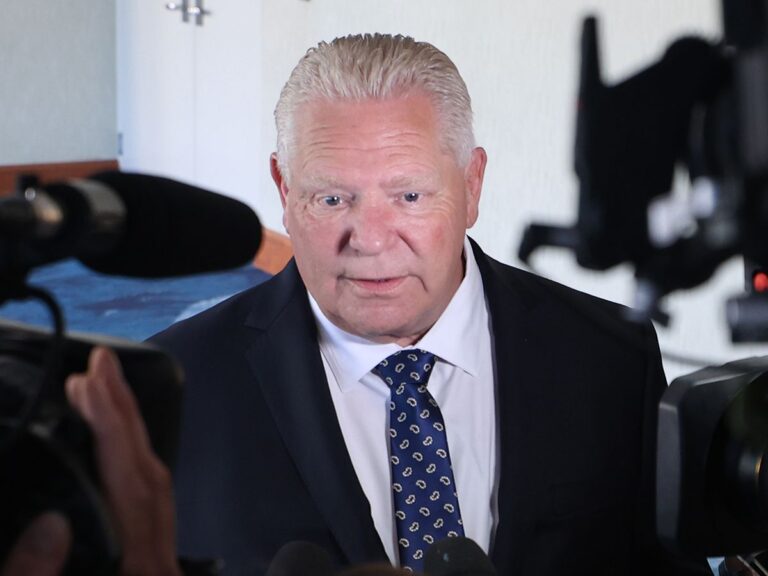
Ontario Premier Doug Ford faces an imminent electoral reckoning. Three provincial byelections are set to measure whether his government’s public support remains as solid as he has claimed, even as spending scandals have clouded his administration’s recent record.

The agency reviews signal that the Ford government is at least aware of the political exposure these byelections represent, and is moving to shore up its fiscal image before the votes are counted. Whether that repositioning arrives in time — and whether voters find it convincing — is a question the results will answer plainly.

For now, the byelections offer a rare, low-stakes-but-telling moment in Ontario politics: a chance for Ford’s critics to register dissatisfaction and for his supporters to demonstrate that the controversies have not eroded the coalition that returned him to Queen’s Park.

Vancouver’s Housing Market Stumbles Again in July, Falling Well Below Seasonal Norms

0

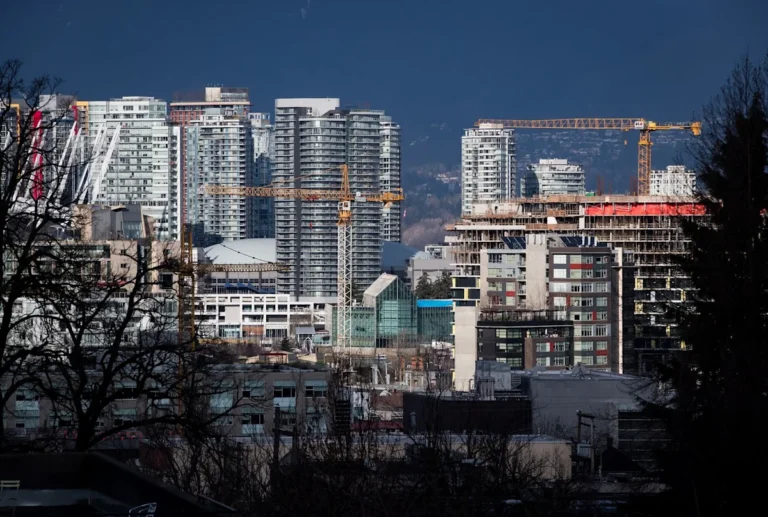
The Greater Vancouver housing market delivered a familiar disappointment in July 2026, with sales declining nearly 10 per cent compared to the same month a year earlier — erasing the modest optimism that June’s figures had briefly generated. The pattern, as the region’s own chief economist acknowledges, is one of persistent stagnation: one step forward, one step back, with no sustained recovery yet in sight.

Greater Vancouver Realtors reported 2,061 home sales in July, representing a 9.8 per cent year-over-year decline and, more strikingly, a shortfall of 18.6 per cent below the 10-year seasonal average. That second figure matters more than the first. A single bad month can reflect noise; falling nearly one-fifth below a decade-long benchmark suggests something structural is weighing on buyer confidence across the region.

Andrew Lis, the board’s chief economist and vice-president of data analytics, described the June-July sequence as a textbook illustration of the back-and-forth dynamic that has characterized the market for several years now. The brief June uptick, in other words, was not a turning point — it was a blip.

Prices have followed sales downward. The composite benchmark price for all residential property types in Greater Vancouver stood at $1,088,800 in July, a 6.2 per cent drop from July 2025 and a further 0.9 per cent decline from June 2026. For a region where housing affordability has long been a defining political and social challenge — one that strains household budgets, drives out younger residents, and concentrates wealth unevenly — a benchmark price still well above one million dollars offers little comfort to prospective buyers, even as it signals mounting pressure on current owners and investors.

The supply picture is equally ambiguous. New listings totalled 4,991 in July, down 11.5 per cent year-over-year but broadly in line with the 10-year average — suggesting sellers are not flooding the market in panic, but neither are they withdrawing en masse. Total inventory, meanwhile, fell four per cent annually to 16,476 active listings, yet that figure remains 26.8 per cent above the long-term average. The market, in short, carries a meaningful overhang: more homes are available relative to historical norms than buyers are willing or able to absorb.

The territory covered by Greater Vancouver Realtors spans a wide and varied geography — from the dense urban core of Vancouver and Burnaby to suburban municipalities like Coquitlam, Maple Ridge, and Richmond, and extending to communities as distinct as Squamish, Whistler, and the Sunshine Coast. Conditions across these areas are not uniform, and aggregate figures inevitably obscure local variation. But the broad trend is consistent enough to draw a clear conclusion.

What July’s data ultimately reveals is a market caught between forces that show no sign of resolving quickly: elevated prices that suppress demand, interest rate uncertainty that discourages commitment, and an inventory level that gives buyers options without giving them urgency. Until those tensions ease — through sustained rate relief, meaningful affordability policy, or a significant correction in benchmark prices — the one-step-forward, one-step-back pattern Lis describes is likely to continue defining the region’s housing landscape.

Former Sydney Swans Coach John Longmire Voices Deep Regret Over Failure to Better Protect Adam Goodes

0

Former Sydney Swans head coach John Longmire has publicly acknowledged his regret for not doing more to shield two-time Brownlow medallist Adam Goodes from what he describes as “diabolical, almost unforgivable” treatment during the final years of the Indigenous footballer’s AFL career, writing candidly about the episode in an autobiography released this week.

A Belated Reckoning

In the memoir, titled Pain, Perspective & Premierships, Longmire reflects on the sustained, targeted booing that Goodes endured from opposition crowds — treatment that intensified after Goodes called out a 13-year-old Collingwood supporter for directing a racial slur at him during a match in 2013. “Adam Goodes was not just a champion footballer, he was a leader and a man of immense courage,” Longmire writes. “What he endured was diabolical, almost unforgivable.”

Longmire led the Swans for more than a decade, having won the 2012 AFL premiership in his second season as head coach. He had served as an assistant coach while Goodes was emerging as one of the country’s finest players, and stepped into the top role with Goodes at the peak of his powers as a midfielder-forward. He resigned from the position in 2024.

The booing of Goodes by opposition fans was condemned by many at the time, yet the AFL itself did not issue an unreserved apology until 2019 — four years after Goodes’s retirement in 2015. That institutional delay has since become part of a broader reckoning with racism in Australian sport.

What Longmire Wishes He Had Done

“In hindsight, I should have threatened to pull our players off the ground if the booing didn’t stop,” Longmire writes. “It might not have changed anything but it would have brought the matter to a head and forced the industry — and the community — to consider what this continued behaviour was doing to one of the game’s greats.”

He acknowledges the gravity of such a step while standing by its logic. “It would have been an extreme act — but then what was happening to Adam was extreme too.”

Longmire traces the escalation of the booing to two specific moments: the 2013 Collingwood match itself, and the days that followed, when then-Magpies president Eddie McGuire suggested on radio that Goodes could be used to promote the musical King Kong — a remark widely condemned as racist. McGuire had initially apologised on behalf of the club after the match, but, as Longmire puts it, “torched that apology with an insensitive comment on radio a few days later that cut to the core.” McGuire subsequently offered a personal apology directly to Goodes and publicly to the media.

Goodes and the Weight of Casual Racism

In the 2019 documentary The Australian Dream, Goodes recounted taking McGuire’s phone call with measured clarity. “When I finally took his call, I just said ‘you’re not a friend,'” Goodes said. “He just forgot where he was, he forgot that he was on radio, and it was just an off-the-cuff thing that he would say at a barbecue, at a bar, and it just highlighted my point. That casual racism is there, it’s alive and it’s flourishing in our communities.”

McGuire, for his part, described the remark in the same documentary as “just a mistake, it was a misspoken moment.”

The booing intensified again in 2014 after Goodes was named Australian of the Year — an honour that appeared to deepen the hostility directed at him from sections of football crowds rather than generate broader solidarity. Longmire reflects on that painful irony: “It saddens me to know that the place Adam once felt most comfortable — on the football field, showing his skills to the world — ended up being the place where he felt most uncomfortable.”

Longmire’s Career Since the Swans

Longmire’s professional life has continued on a more difficult trajectory since his departure from Sydney. Last month, he missed out on the head coaching position at the newly established Tasmania Devils, with Ken Hinkley appointed to the role instead. After the 2012 premiership, Longmire went on to contest four further grand finals without winning any of them — a record that frames much of the reflective tone his autobiography adopts.

The book’s release has nonetheless drawn the most attention for its treatment of Goodes, whose experience remains one of the most discussed and painful chapters in recent Australian sporting history.