
Home Blog Page 17

Trump Opts for Iran Diplomacy While Keeping Military Options in Reserve

0

A Fragile Ceasefire, an Uncertain Path

President Donald Trump has decided, at least for now, to pursue diplomatic negotiations with Iran rather than resume large-scale military strikes — but he has not taken that option off the table. The Wall Street Journal reported Tuesday that Trump held several recent conversations with Defense Secretary Pete Hegseth and Air Force General Dan Caine, chairman of the Joint Chiefs of Staff, about whether to abandon talks with Tehran and return to full-scale attacks. Some officials described that course of action as “finishing the job.”

Despite those internal deliberations, Trump has told aides he believes a renewed military campaign could derail diplomacy and undermine any chance of permanently dismantling Iran’s nuclear program. The decision reflects a calculated, if uneasy, bet on negotiation over confrontation.

The Memorandum of Understanding: What Was Agreed

The backdrop to these discussions is a memorandum of understanding signed two weeks ago between Washington and Tehran, ending hostilities that began February 28 with joint U.S.-Israeli airstrikes on Iran’s political leadership and military infrastructure. The MOU established a 60-day framework during which both sides are expected to work toward a permanent agreement.

Under its terms, Iran committed to making its best efforts to ensure safe passage for commercial vessels through the Strait of Hormuz. In return, the United States agreed to lift its naval blockade of Iranian ports. The arrangement is narrow, transactional, and explicitly temporary — a ceasefire in structure, if not always in practice.

Trump has also signalled he is comfortable allowing nuclear negotiations to extend beyond the August 18 deadline, giving diplomats additional time to reach an agreement — a notable concession of flexibility from an administration that initially pushed hard deadlines.

A Weekend of Skirmishing and a Deconfliction Channel

The MOU’s fragility became apparent last weekend when an Iranian drone damaged a commercial vessel in the Strait of Hormuz, triggering a round of back-and-forth strikes. Trump responded with what he described as a “one-off” reprisal — a targeted action rather than a broader escalation. He has told aides he is satisfied with this calibrated approach to Iranian violations, at least for now.

Vice President JD Vance reinforced that posture Tuesday on Fox News, saying Trump wants to see where negotiations lead. “And if it doesn’t lead to a successful resolution on the diplomatic side, we still have a lot of optionality,” Vance said. He also confirmed last week, in an interview with the British outlet UnHerd, that Washington and Tehran have agreed to establish a deconfliction communication channel in Doha, Qatar, linking representatives from U.S. Central Command and Iran’s Islamic Revolutionary Guard Corps.

Some officials pointed to that crisis line as evidence of improving relations. Others cautioned that it remains in its earliest stages.

Doha Talks: Proximity Without Direct Contact

U.S. special envoy Steve Witkoff and White House adviser Jared Kushner arrived in Doha on Tuesday for a new round of negotiations. Qatari officials confirmed the two sides communicated through mediators rather than directly — a format that reflects the depth of mutual distrust even as both parties remain nominally committed to reaching a deal. Technical experts from both countries were similarly scheduled for indirect talks this week.

Two major sticking points have emerged. Iran is insisting on charging billions of dollars in transit fees for commercial vessels passing through the Strait of Hormuz — a demand Washington flatly rejects, arguing ships should transit freely as they did before the conflict. Tehran has also pushed back on any severe restrictions on its nuclear program, despite Trump’s public assertions that Iran has already committed to such limits.

The Military Option Remains Real

Hegseth and Caine have provided the White House with options for resuming large-scale airstrikes on Iranian military sites, officials told the Journal. The fact that those plans are being actively briefed — rather than simply existing in a drawer — underscores that the military track is a live consideration, not a theoretical fallback.

Suzanne Maloney, vice president for foreign policy studies at the Brookings Institution and a longtime Iran analyst, told the Journal that Trump retains other instruments of pressure short of war. Washington could slow-roll Iran’s access to billions of dollars in frozen funds that Tehran urgently wants, or continue raising the cost of Iran’s efforts to control the strait.

“This middle ground strategy has real limitations,” Maloney said, noting that Trump appears unwilling to restart a full-scale war and that Iran retains genuine capacity to disrupt maritime traffic. “But the combination of predictable U.S. reprisals and conditioning economic incentives on compliance could persuade Tehran not to overplay its hand.”

The Stakes of Stalemate

The broader diplomatic stalemate carries a particular political risk for the Trump administration. Some officials acknowledged privately that resuming large-scale conflict would amount to a tacit admission that the much-publicized MOU had failed — an uncomfortable concession after weeks of presenting the ceasefire as a diplomatic achievement.

What emerges from the Journal‘s reporting is a White House navigating a narrow corridor: unwilling to accept Iranian defiance, reluctant to restart a war, and searching for leverage that can move Tehran without triggering a new round of escalation. Whether that corridor stays open depends, in large part, on what happens in Doha.
West Coast Oil Pipeline Lacks a Private Backer

0

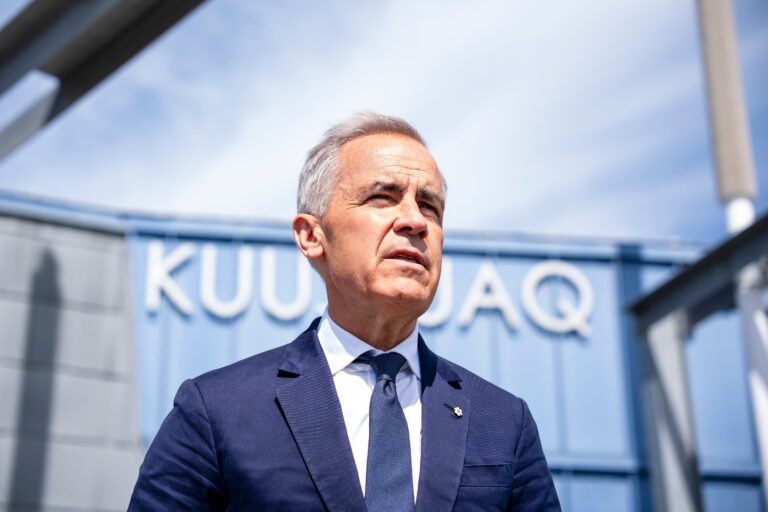
No private-sector company has yet agreed to build a new oil pipeline from Alberta to the West Coast. Prime Minister Mark Carney confirmed as much on Tuesday, even as he insisted the broader process is proceeding on schedule.

What exactly did Carney say?

Speaking with reporters in Kuujjuaq, Que., Carney addressed the gap directly. “I’m waiting for there to be a private-sector proponent,” he said in French. “That was the deal. It was in the memorandum of understanding.” He added that his team speaks with Alberta’s government frequently, and that Premier Danielle Smith’s government remains on track to submit a formal pipeline proposal “on or around” July 1 — a deadline set in the MOU the two leaders signed on November 27.

The MOU explicitly references “private sector constructed and financed pipelines,” with co-ownership and economic benefits flowing to Indigenous peoples. The absence of a confirmed proponent heading into that deadline is therefore not a procedural footnote — it goes to the heart of what the agreement requires.

Alberta is slated to announce the details of its pipeline application in Edmonton on July 2, the day after Canada Day, when Carney also plans to be in the city.

Which companies were approached, and why haven’t they committed?

The pattern across all three companies is consistent: technical participation, yes; financial exposure and proponent status, not yet. The commercial conditions that would make such a project viable — stable long-term contracts, regulatory certainty, resolved route questions — have not materialized.

What are the route and regulatory complications?

Alberta’s application is expected to include multiple route options and potential marine terminal locations along B.C.’s northern coast. That region carries significant political and legal weight. A federal moratorium currently prohibits oil tankers from loading and unloading along the northern B.C. coastline — a ban that Coastal First Nations and the B.C. provincial government want kept firmly in place.

Premier Smith has stated a preference for a northern route over a southern alternative, partly because it would reduce sailing time to Asian markets. But that path would require the federal legislation underpinning the tanker ban to be eased or revoked — a move that would face fierce opposition from First Nations along the coast and the provincial government in Victoria. Several B.C. First Nations have already voiced opposition to the draft route maps Alberta released.

Even if Alberta submits its proposal on July 1, Carney made clear that the timeline extends well beyond that date. “There’s a process that takes a few months until October before a decision is made whether or not to refer to the Major Projects Office,” he said, noting that a range of stakeholders must be engaged along the way. The federal government’s recently passed Building Canada Act, under which three northern projects were fast-tracked last week, would likely apply to any approved pipeline — but that designation itself requires a consultation period before a national interest determination can be made.

Is this pipeline connected to other energy deals?

Yes — and Carney was explicit about it. The November MOU committed both the federal and Alberta governments to complete a separate agreement with the Oil Sands Alliance, a group of major energy companies, to fund a large carbon-capture project in the oil sands known as Pathways. That agreement was written into the MOU as a “prerequisite” to any pipeline approval.

“Pathways, the reforms to the carbon market, a potential pipeline, a series of other measures — all aspects of the implementation agreement are linked,” Carney said Tuesday. He did not directly answer when asked whether he had already seen Alberta’s pipeline proposal, saying only: “We’ll wait until the process goes forward.”

What does this mean for Canada’s emissions commitments?

Also on Tuesday, Carney released a 17-minute YouTube video titled Forward Guidance: Canada’s Energy Future, in which he laid out a broader shift in the federal government’s approach to energy policy. He acknowledged plainly that Canada will not meet the short-term greenhouse gas emissions targets set under his predecessor, Justin Trudeau.

“We can’t afford to restrain the growth of an important part of our energy mix — oil and gas — to meet a short-term goal,” Carney said in the video. “The changes we have made will mean that our emissions will be higher in the next few years than they were projected to be under the previous government’s plan.” He argued that Trudeau’s plan would have been too costly for consumers, too damaging to trade relationships, and too politically divisive to sustain.

Canada’s emissions targets are enshrined in the Canadian Net-Zero Emissions Accountability Act and tied to the country’s commitments under the Paris Agreement. Carney’s remarks signal that the federal government is recalibrating how it balances those long-term climate obligations against the immediate economic and political pressures of expanding conventional energy infrastructure — a tension that the West Coast pipeline question makes unavoidably concrete.

More Than 100 Wildfires Burning Across Quebec as Northern Communities Bear the Brunt

0

A Province Under Smoke

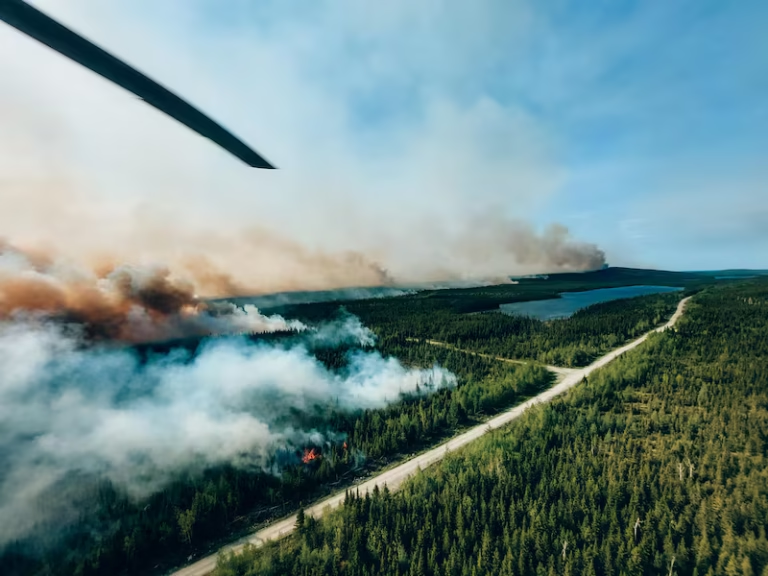
Quebec is contending with a significant wildfire emergency, with more than 100 active fires recorded across the province as of Monday afternoon. The crisis is concentrated overwhelmingly in the north, stretching across vast stretches of boreal forest and placing several remote and Indigenous communities under acute pressure. The scale of the situation reflects a pattern that has become increasingly familiar to Canadians in recent summers — and one that demands both immediate response and longer-term reckoning.

According to data from SOPFEU — the Société de protection des forêts contre le feu, Quebec’s wildfire prevention and suppression agency — 88 fires were burning in the northern zone as of 3 p.m. on Monday, June 29, while a further 19 were recorded in the intensive zone, which encompasses the central and southern regions of the province. That distinction matters: the intensive zone receives more active suppression resources, while fires in the vast northern territory are often monitored rather than directly fought.

Chisasibi Cut Off: A Cree Community in the Crosshairs

The most immediate human consequence of the fires has fallen on Chisasibi, a Cree community situated near James Bay in northern Quebec. The access road to the community has been closed until further notice, effectively isolating residents from ground-level supply and evacuation routes while emergency operations continue. Residents and visitors have been formally asked not to attempt to enter or leave the community.

Chisasibi is home to several thousand members of the Cree Nation of Eeyou Istchee, a community whose relationship with the land and whose vulnerability to environmental disruption carries a significance that extends well beyond the immediate emergency. The closure of the access road is not merely a logistical inconvenience — it is a reminder of how thinly serviced many northern Indigenous communities remain, and how quickly a wildfire season can sever the connections that sustain them.

Air Quality and the Coming Days

Simon Legault, a meteorologist with Environment and Climate Change Canada (ECCC), has warned that residents across affected areas may experience eye discomfort and very poor air quality as smoke disperses from the active fire zones. He has encouraged people to take precautions when going outside, particularly those with respiratory conditions or other vulnerabilities.

The forecast offers a measure of ambiguity rather than clear relief. Legault noted that some rainfall in the coming days could help “clean” the air and ease pressure on certain fires — but that same precipitation carries the risk of thunderstorm activity, which can in turn ignite new blazes through lightning strikes. “That might create some other wildfires,” he said plainly. “It really depends where you are and when that rain will be falling.”

That conditional forecast captures something essential about wildfire management: the natural systems that might offer respite can simultaneously introduce new hazards, and the margin for optimism is rarely uncomplicated.

SOPFEU’s Response: Monitoring and Active Suppression

SOPFEU spokesperson Mélanie Morin confirmed that the agency is employing a differentiated approach to the fires currently burning across the province. Some fires are under active suppression, with crews and aerial resources deployed to contain and extinguish them; others, particularly in the remote northern zone, are being monitored for behaviour and trajectory rather than directly fought — a standard and resource-driven practice when fires burn far from populated areas or critical infrastructure.

The distinction between monitored and actively fought fires is one that can be difficult for the public to parse, but it reflects the operational reality of managing wildfire across a province as geographically vast as Quebec. SOPFEU’s capacity, like that of wildfire agencies across Canada, is finite, and prioritization is unavoidable.

A Broader Context

Quebec’s current situation is part of a wider national pattern. Canadian wildfire seasons have grown longer, more intense, and more geographically unpredictable over the past decade, a trend that climate scientists link directly to rising temperatures, shifting precipitation patterns, and the accumulation of dry fuel across the boreal forest. The 2023 season, which saw record-breaking fire activity across much of the country, placed enormous strain on provincial and federal suppression resources alike and prompted renewed debate about long-term preparedness.

The fires burning today across Quebec’s north are a continuation of that story — one that implicates federal and provincial governments, Indigenous communities whose territories are most directly affected, and the broader public whose air quality, infrastructure, and sense of security are all touched by what burns in the boreal.

The $80 Billion World Cup Promise: What the Numbers Actually Tell Us

0

FIFA says the 2026 World Cup will generate $80 billion in global economic output. That figure deserves a hard look.

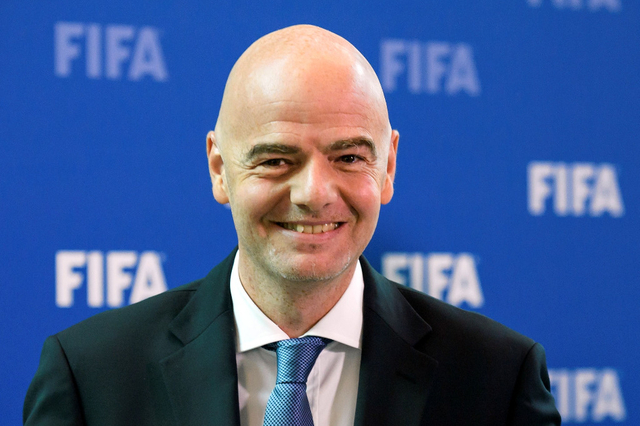
FIFA President Gianni Infantino has repeated this claim at venues as prominent as the World Economic Forum in Davos, presenting the tournament as a transformative windfall for host nations and the broader global economy. To lend the projection added credibility, he has consistently attributed the figure not to FIFA itself but to the World Trade Organization. The distinction matters — and it also obscures something important about how the estimate was produced.

The number originates from a report prepared by the consultancy OpenEconomics under a joint FIFA-WTO initiative. FIFA highlights the WTO’s involvement, but FIFA is also one of the organizations that commissioned the research in the first place. That dual role raises legitimate questions about the report’s independence. OpenEconomics, for its part, has previously produced economic analyses supporting other Infantino priorities, including a proposed biennial World Cup and the expanded Club World Cup — a pattern worth noting when evaluating the methodology and conclusions.

The report projects that the United States alone could see a $17.2 billion boost to GDP and the creation of roughly 185,000 full-time equivalent jobs. Those figures rest heavily on assumptions about international tourism: visitors are expected to stay approximately ten days and spend around $500 per day. If those assumptions hold, the numbers are plausible. If they don’t, the projections unravel quickly.

Many economists who study mega-events argue that models of this kind routinely overstate the benefits. Hotels, restaurants, and transit systems operate with finite capacity, so a surge in demand tends to push prices upward rather than generate genuinely new economic activity. The employment projections raise similar concerns. A tournament lasting just over a month is far more likely to produce seasonal hires and overtime shifts than durable, full-time positions — a distinction that matters enormously when assessing the real labour-market impact.

The report goes further still, attempting to assign monetary value to social outcomes such as improved wellbeing, healthier lifestyles, and stronger community engagement — a methodology known as Social Return on Investment. These effects may well be real. The problem is that measuring them reliably requires subjective assumptions that most economists regard with considerable skepticism, and the resulting figures can be calibrated to produce almost any result the analyst desires.

Tourism itself introduces another complication. Major sporting events attract enormous crowds, but they also deter regular visitors who prefer to avoid the congestion and inflated prices that accompany them. A portion of the spending credited to the World Cup may therefore simply substitute for tourism that would have occurred anyway — producing a displacement effect rather than a net gain.

Independent research points in a different direction. Analysis by German economist Matthias Fett, conducted for Der Spiegel, suggests the United States could actually experience a net economic loss once broader costs and opportunity costs are factored in. Long-term projections of this kind carry their own uncertainties, but they serve as a useful counterweight to the headline optimism of the commissioned report.

None of this means the 2026 World Cup will leave host cities worse off. Major tournaments generate real activity — construction, hospitality, media, logistics — and the attention they attract can have lasting reputational value for a city or region. What is far less certain is whether that activity translates into anything approaching the $80 billion figure FIFA has placed at the centre of its public case. FIFA itself expects to earn roughly $11 billion during the tournament cycle, a figure that reflects the organization’s own commercial success more than the economic fate of the communities that absorb the costs of hosting. The gap between those two numbers is worth keeping in mind.

Supreme Court of Canada Nominee Set to Face Parliamentary Scrutiny

0

A Rare Public Moment in Canada’s Judicial Appointment Process

The nomination of a new justice to the Supreme Court of Canada is always a significant constitutional moment, and the prospect of that nominee appearing before members of Parliament to answer questions marks one of the more transparent steps in a process that has historically unfolded largely behind closed doors. While Canada does not subject its judicial nominees to the kind of high-stakes confirmation hearings familiar to observers of the American system, the parliamentary appearance represents a meaningful opportunity for elected representatives — and, through them, the public — to engage with the person being considered for one of the country’s most powerful and consequential positions.

How the Supreme Court Appointment Process Works

The Supreme Court of Canada sits at the apex of the country’s judicial system, serving as the final court of appeal in all areas of law, including constitutional matters that touch directly on the division of powers between federal and provincial governments, the Canadian Charter of Rights and Freedoms, and the rights of Indigenous peoples. Its nine justices — three of whom must, by statute, come from Quebec, reflecting that province’s distinct civil law tradition — serve until the mandatory retirement age of 75. Appointments are made by the Governor General on the advice of the Prime Minister, meaning the executive branch holds formal authority over who joins the court.

In recent years, successive federal governments have introduced varying degrees of process reform in an effort to bring greater openness to what critics long described as an opaque and politically convenient system. These reforms have included the creation of independent advisory panels to screen candidates and produce shortlists, as well as the parliamentary appearance now associated with the final nominee. The appearance is not a confirmation vote — Parliament does not ratify Supreme Court appointments — but it does create a public record and signals a commitment to at least a degree of accountability.

What MPs Can — and Cannot — Ask

The parliamentary hearing format raises genuine questions about its scope and limits. Nominees are generally expected to decline answering questions that could prejudge cases likely to come before the court, a convention rooted in the principle of judicial independence. This constraint is not unique to Canada; courts in most Westminster-style democracies operate under similar norms. The result is that exchanges between MPs and nominees can sometimes feel carefully circumscribed, with broad questions about judicial philosophy eliciting measured, cautious responses.

That said, the appearance still serves real purposes. It allows parliamentarians to probe a nominee’s understanding of constitutional law, their approach to interpreting the Charter, their views on the role of the court in a federal system, and their awareness of the legal traditions — including Indigenous legal orders — that the court is increasingly called upon to engage with. Regional representation on the court has also been a recurring point of discussion, given the statutory Quebec requirement and the long-standing expectation, though not legal obligation, that other regions of the country maintain some presence on the bench.

The Stakes for Canadian Federalism and Rights

Every Supreme Court appointment carries weight well beyond the individual. The court’s decisions shape the practical meaning of Confederation — defining the boundaries of federal and provincial jurisdiction, interpreting treaty rights and the constitutional status of Indigenous nations, and determining how the Charter applies across an enormous range of circumstances. A new justice can shift the court’s balance on questions that matter deeply to provinces, territories, and communities across the country, from resource development and environmental regulation to language rights and criminal procedure.

Quebec’s relationship with the court deserves particular attention. The three guaranteed Quebec seats reflect not only the province’s civil law system but also its broader constitutional distinctiveness. Francophone Quebecers across the political spectrum — federalists and nationalists alike — have historically scrutinized appointments closely, attentive to whether the court demonstrates genuine familiarity with Quebec’s legal culture and its place within the Canadian constitutional order. Those concerns are legitimate and deserve to be taken seriously in any discussion of the court’s composition.

Indigenous Legal Orders and the Court’s Evolving Role

One of the most consequential dimensions of contemporary Supreme Court jurisprudence involves Indigenous rights and sovereignty. Landmark decisions on treaty rights, land title, and the duty to consult have reshaped the legal landscape in ways that continue to reverberate through federal-provincial-Indigenous relations. The court has recognized Aboriginal title as a living constitutional matter, not a historical footnote, and nominees are increasingly expected to demonstrate awareness of Indigenous legal traditions as distinct systems of law — not simply as interests to be accommodated within a Euro-Canadian framework.

This evolution reflects broader shifts in Canadian constitutional understanding, including the ongoing implementation of the United Nations Declaration on the Rights of Indigenous Peoples and the unfinished work of reconciliation. How a nominee approaches these questions — their familiarity with the case law, their understanding of the political and human stakes — is a legitimate subject of parliamentary inquiry, even within the constraints of judicial independence norms.

Why Transparency in Judicial Appointments Matters

Canada’s democratic institutions depend on public trust in the judiciary, and that trust is reinforced when the process of selecting judges is at least partially visible. The parliamentary appearance of a Supreme Court nominee does not transform the appointment into a democratic exercise in the electoral sense, nor should it — an independent judiciary requires insulation from political pressure. But transparency and independence are not in conflict. A process that allows Canadians to hear directly from a nominee, and that gives their elected representatives a structured opportunity to ask questions, strengthens rather than undermines the legitimacy of the court.

The appearance before MPs is, in this sense, a modest but meaningful institutional practice — one worth preserving and, arguably, worth strengthening further as Canadians continue to think carefully about how their most important judicial institution is constituted and held to account.

Canada’s World Cup Moment: Can 2026 Finally Transform Soccer Into a Mainstream Sport?

0

Toronto’s Front Street was alive with it all week — Croatian jerseys, Brazilian colours, a street vendor getting scolded for selling Blue Jays gear when someone wanted Croatia merchandise. But across the street, six women’s soccer players in Northern Super League uniforms stared down from the CBC’s headquarters, a quiet reminder that Canadian soccer, with all its domestic ambitions and institutional growing pains, exists beneath the spectacle too.

That contrast captures the central tension of this World Cup for Canada. While the United States and Mexico have dominated the headlines as co-hosts, Canada is the only first-time host among the three nations. Mexico is staging its third World Cup; the United States its second. Canada, by contrast, arrives at this moment with everything still to prove — and, arguably, far more to gain. The hope, shared openly by those building the sport here, is that 2026 does for Canadian soccer what 1994 did for the American game: crack it open.

“This World Cup is our coming out party,” said Tosaint Ricketts, a long-time Canada men’s national team forward who now works with the Vancouver Whitecaps and served on the hiring committee that brought Jesse Marsch in as national team manager. “The stakes are massive.”

An Institution Rebuilding Itself

The Canadian Soccer Association arrives at this moment with real momentum, but also with the weight of a difficult recent history. The organization has spent years navigating dysfunction, a lack of transparency, and internal structural upheaval — problems Ricketts does not shy away from naming. “Over the years, we’ve gone through our fair bit of controversy, a little bit of lack of transparency, and changes within the organizational structure of Canada Soccer,” he said. “But that is all behind us and now we’re steady on the path of growth, the path of creating a foundation.”

The foundation he describes has tangible markers. The men’s national team qualified for the 2022 World Cup in Qatar — their first appearance since 1986, and only their second ever. The women’s program has been even more consistent, winning three consecutive Olympic medals between 2012 and 2020, including gold at Tokyo. These are not small achievements for a country whose dominant sporting culture remains centred on hockey, and whose broader sporting landscape is crowded and competitive.

Yet a striking gap persists. Soccer is, by participation numbers, the most popular sport in Canada — over one million registered players across the country. Corporate investment, professional infrastructure, and elite development pathways have not kept pace with that grassroots reality. “I’m not sure people know that it’s the most participated-in sport,” Ricketts said. “The next step is to get the corporations investing in the game, improve the infrastructure so these million participants have the facilities and resources to grow and get better.”

The Legacy Question

James Johnson, commissioner of the Canadian Premier League — the country’s eight-team domestic professional circuit now in its eighth season — frames the opportunity in deliberately long-term terms. “I think the biggest opportunity is not just the five weeks hosting and participating in the tournament,” he said. “It’s really in the legacy that the tournament leaves behind, which can be transformation for soccer in this country.”

The analogy Johnson reaches for is instructive: Major League Soccer emerged as the institutional legacy of the 1994 World Cup in the United States, transforming from a condition attached to hosting rights into a genuinely significant professional league over the following three decades. Johnson wants the Canadian Premier League to occupy that same position after 2026. “How can we position the CPL as really the legacy story of the 2026 World Cup, just as Major League Soccer was the legacy story coming out of the 1994 World Cup?” he asked.

Achieving that requires sponsors drawn in by World Cup visibility to remain engaged once the tournament ends — a notoriously difficult conversion. “We want to bring investment in,” Johnson said. “We want to scale and we want to take advantage of the momentum the World Cup creates. We want to increase our marketing spend for the Canadian Premier League, to increase the playing time on the pitch and our clubs’ infrastructures to develop better players. It requires investment. It’s positioning the sport in the mainstream and making sure when the World Cup comes and goes, people can still see soccer in Canada on billboards and on linear TV.”

The men’s national team’s performance shapes all of this. Having already secured Canada’s first-ever World Cup point, first win, and first run to the knockout rounds, Les Rouges extended their tournament with a victory over South Africa in the round of 32, setting up a last-16 fixture against the winner of Netherlands versus Morocco. Every additional match deepens the connection between new fans and the sport. “The legacy for a sport is very heavily influenced by the performance of the national team,” Johnson said. “The longer the host nation stays in the tournament, the deeper the connection new fans have with the sport.”

Ricketts, looking ahead with the measured optimism of someone who has watched this sport struggle and grow for decades, put it plainly: “All this history is going to create a legacy and inspire the next generation. Kids are going to talk about this for the next four years and beyond.” The World Cup, he suggested, is not a destination for Canadian soccer — it is a runway. “It really feels like we have the foundation now to really grow and take this game even further in Canada. We’ve been in it for a while, but it really feels like it’s just the beginning.”

MacKenzie Scott Gave Away $7 Billion Last Year. Critics Say It’s Not Enough or Not Right.

0

MacKenzie Scott gave away roughly $7 billion in charitable donations last year. That single figure accounted for about one-third of every large-scale philanthropic gift made across the United States in 2024 — a concentration of private generosity with few precedents in modern history.

The scale is almost difficult to hold in mind. According to data from Giving USA and the Indiana University Lilly Family School of Philanthropy, total so-called “megagift” donations across the country reached $19.2 billion last year. Scott’s contributions alone drove a substantial portion of that growth, bringing her cumulative charitable giving over the past five years to $26.2 billion. Other major donors in the same tier included former New York City Mayor Michael Bloomberg, Warren Buffett, and Bill Gates — figures whose own philanthropic footprints are anything but modest. Yet Scott stood apart, by a considerable margin.

Her giving flows primarily through Yield Giving, the organization she founded after pledging to distribute her fortune “until the safe is empty.” That fortune originated with her 2019 divorce from Amazon founder Jeff Bezos, which left her holding approximately $35.6 billion in Amazon stock — one of the largest divorce settlements ever recorded — and propelled her onto the short list of the world’s wealthiest individuals. She had met Bezos in 1992 at the New York hedge fund D.E. Shaw, married him after three months, and spent more than two decades building a life alongside the company that would make them both extraordinarily rich. When the marriage ended, she chose a different kind of ambition. “My approach to philanthropy will continue to be thoughtful,” she wrote in 2019. “It will take time and effort and care. But I won’t wait.”

She has not waited. But the sheer volume of her giving has not insulated her from criticism — and the nature of that criticism is worth taking seriously, even when its expression on social media tends toward the blunt. Some observers argue that directing billions toward established non-profits, universities, and large institutions does relatively little to improve the material conditions of ordinary working people. One commenter on X put it plainly, if crudely: donating to non-profits and colleges, in their view, amounts to little more than buying naming rights on buildings. Others raised concerns about overhead, accountability, and the gap between what large NGOs receive and what actually reaches the communities they claim to serve. A third voice asked the harder structural question: if more than $19 billion flows into charitable causes in a single year, why do measures of poverty, housing insecurity, and global need continue to worsen?

These are not frivolous objections. The debate over how private wealth should be redistributed — and whether philanthropy, however generous, can substitute for robust public institutions — is a genuine and unresolved one in democratic societies. The argument that large charitable gifts often reinforce the priorities of the donor rather than the needs of the recipient has been made seriously by scholars and policy advocates for years. At the same time, Giving USA Foundation Vice Chair Gabe Cooper noted that last year was broadly positive for charitable giving, with “virtually all categories of recipient organizations achieving solid or better growth at the aggregate level” — suggesting that the money is, at least in aggregate terms, reaching a wide range of causes.

Scott’s approach has been notably different from the donor-directed, high-profile model associated with many of her peers. Yield Giving has emphasized unrestricted grants to organizations — particularly those led by and serving historically marginalized communities — allowing recipients to decide how funds are used rather than imposing conditions from above. Whether that model adequately addresses the accountability concerns raised by critics is a fair question. Whether any private philanthropic model can do what only sustained public investment historically has done is a fairer one still.

What is clear is that MacKenzie Scott has made a set of choices — about wealth, obligation, and urgency — that are unusual in their consistency and their scale. The criticisms directed at her reflect something real about the limits of private charity as a mechanism for social change, limits that exist regardless of how sincerely or intelligently the giving is done. That tension does not resolve neatly, and it probably should not. A society that relies on the conscience of billionaires to fill the gaps left by underfunded public systems is a society with a structural problem that no megagift, however large, can fully paper over. Scott’s giving is remarkable. The conversation it provokes may be more important still.

Hundreds March in Vancouver Against AI Data Centres as Environmental Concerns Mount

0

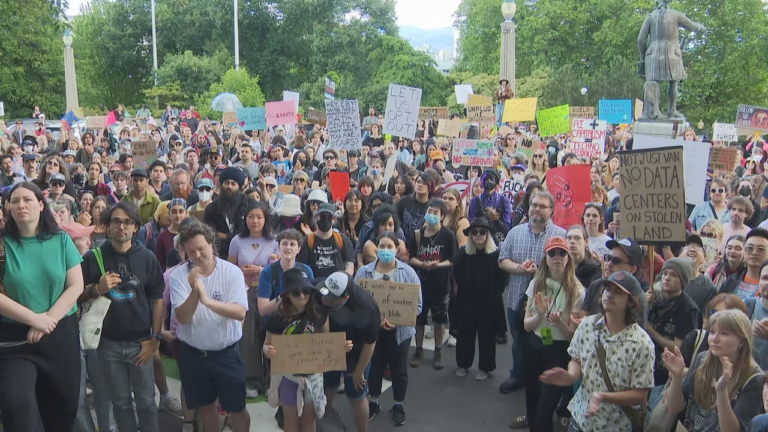
On a Saturday in late June, hundreds of Vancouverites left the steps of the Art Gallery and walked to City Hall with a single, clear demand: stop building AI data centres in their city. It was the second such march in less than two months. The first, in May, had drawn comparable crowds. Something is clearly not settling.

The protests target two facilities planned as part of Ottawa’s Enabling Large-Scale Sovereign AI Data Centres initiative, a partnership between the federal government and Telus. One centre is slated for the former Hootsuite headquarters in Mount Pleasant and is expected to come online before the end of this year. The second, planned for 150 West Georgia Street, is projected for completion in 2029. Together with an expanded Telus facility in Kamloops, the three-site British Columbia network is designed to eventually reach more than 60,000 graphics processing units and 150 megawatts of computing capacity by 2032.

The scale is significant. So is the anxiety it is producing. Protester Greenlee Welsh told CBC News that she simply doesn’t believe the trade-off is worth it, pointing specifically to water consumption and energy use as her primary concerns. These are not abstract worries in Metro Vancouver. The region is already operating under Stage 3 water restrictions, and demonstrators are acutely aware of what additional industrial demand could mean for a system already under pressure.

The numbers behind that concern are sobering. A recent International Energy Agency study estimated that data centres consumed 140 billion litres of water globally in 2023 alone. Organizer Guerric Haché put the local stakes plainly: “Even if it’s a small drain on the water supply, it’s going to make things worse — population growth is already straining our water supply.” Small percentages, in a stressed system, are not small problems.

Telus and its federal partners push back on this framing. The company says the centres will run on 98 per cent clean hydroelectric power and use 90 per cent less water than a conventional data centre. Telus also claims that recycled waste heat from the sites could warm roughly 150,000 homes. Federal Artificial Intelligence Minister Evan Solomon has argued the project will expand Canada’s sovereign computing capacity and help domestic researchers and businesses compete internationally. Vancouver Mayor Ken Sim has called the facilities world-class.

Those assurances have not quieted the opposition. B.C. Green Party leader Emily Lowan, who attended the June 27 rally, said she remains skeptical that projects of this scale can be built sustainably. She argued that politicians appear to be “blindly chasing the AI bubble,” and that the land involved could more usefully serve housing or other community needs — a pointed observation in a city where housing pressure is chronic and visible.

A petition calling for the projects to be halted had collected roughly 15,000 signatures before the march. That is not a fringe signal. Both the City of Vancouver and the provincial government have endorsed the builds, yet a meaningful portion of the public is clearly unconvinced by the case being made from above.

The federal government has clarified that no funding has yet been committed or distributed to the initiative. A spokesperson for Solomon’s office acknowledged that residents’ questions about energy use, water consumption, noise, grid impacts, and local benefits remain part of the ongoing federal assessment. That assessment, in other words, is still open. The marchers seem determined to keep it that way. They have already promised to return.

Canada’s Men’s Soccer Team Reaches the Round of 16 for the First Time in World Cup History

0

There are moments in a country’s sporting life that arrive quietly and then detonate. For decades, Canadian men’s soccer existed in a kind of permanent almost — close enough to the world stage to feel its heat, never quite close enough to stand in its light. Sunday afternoon in Los Angeles, that changed.

Canada defeated South Africa 1–0 in the round of 32 at the 2026 FIFA World Cup, advancing to the final 16 of a men’s World Cup for the first time in the country’s history. The goal came in the 92nd minute of extra time, from a chest trap and a driven shot by midfielder Stephen Eustáquio, and it landed in the net with the particular weight of things that have been a long time coming.

The path to that moment was anything but clean. For most of the match, Canada looked exactly like what it was: a talented but tightly wound side operating under unfamiliar pressure, against a South African team that offered little but conceded less. Chances came and went — a Jonathan David hesitation, a Derek Cornelius header, a Moïse Bombito header, a Tajon Buchanan blast — each one swallowed by the match without consequence. Penalties loomed like a verdict no one wanted to hear.

Then, in the 76th minute, Alphonso Davies entered the pitch for his first appearance of the tournament. His effect was immediate and electric — a jolt of pace and confidence that shifted the game’s texture without quite shifting its score. Bombito, playing his first 60 minutes of competitive football since October, departed to a deserved ovation, replaced by Luc de Fougerolles, who was flawless in the time he had. The match was still searching for its resolution when substitute Niko Sigur found Jacob Shaffelburg with a graceful touch, and Shaffelburg’s cross arrived at Eustáquio’s chest two minutes into added time. The ball bounced once on the turf. Eustáquio drove it with purpose. It skidded into history.

What followed on the pitch was the kind of release that doesn’t perform itself — it simply happens. Canada coach Jesse Marsch gathered his players and delivered words that will be replayed for some time. “You guys are Canadian heroes! Canadian heroes! Canadian heroes for the future children of this country who play this sport!” he shouted. “This sport has a big future because of you guys.”

Marsch is not wrong to reach for that register, because what Eustáquio’s goal represented was not only a result. It was a culmination. It carried with it every youth program run on a soggy municipal field on a Saturday morning, every coach — many of them Canadians with foreign accents and deep football knowledge — who put in the unglamorous hours. It carried the investment made over years in both the men’s and women’s national programs, and it is worth pausing here to acknowledge John Herdman, who built much of the infrastructure that made this moment possible, and Christine Sinclair, who watched the final minutes of this match on video and wiped away tears.

It also carried something harder to quantify but impossible to ignore: the stories of the players themselves. Many are the children of immigrants who left their home countries and brought football with them to Canada, trusting that Canada would offer them opportunity and safety in return. Eustáquio’s parents came from Portugal; he returned to Portugal as a child and came back to Canada. When asked on TSN about his parents — both of whom died in recent years — he had to visibly steady himself. He said that when he struck that ball, he felt as though everyone had shot it with him. That is not a small thing to say, and it is not a small thing to hear.

That is a country, is what that is.

Across Canada, people watched this unfold together — at watch parties, in bars, in living rooms, in communal garages, on phones pulled out in airports. One widely shared image showed a passenger tracking the match’s final minutes while their flight descended into Ottawa. The goal went in at the 92nd minute. The plane had landed at 4:45 p.m. The timing was not staged. It did not need to be.

Now comes the harder question of what comes next. Canada will face either the Netherlands (ranked seventh in the world) or Morocco (ranked sixth) in the round of 16 on July 4. That is a formidable obstacle by any measure, and the absence of injured midfielder Ismaël Koné narrows the options further. Bombito and Davies will be available in some capacity, but their fitness remains a variable. Marsch framed the next match as a free hit — a chance to test Canada against one of the tournament’s genuine powers without the crushing weight of expectation. “I feel like it’s a free hit, and we’re going to go after it and do everything we can to see if we can find a way,” he said.

South Africa coach Hugo Broos, gracious in defeat, offered his own assessment from Los Angeles. “I think they have a chance,” he said of Canada. “Because they play good football, they are powerful, there is speed in the team, so it’s a rather modern team. And with the mentality that is in that team, yeah, they can make a surprise in the next round, certainly.”

Whether Canada advances further or not, Sunday’s result has already altered something. Football has long been described as a sleeping giant in this country — a sport with deep roots in immigrant communities and youth participation, perpetually waiting for a national team capable of giving it a face. That team now exists. The final 16 of a World Cup, expanded format or not, is a place Canadian men’s soccer could barely imagine for generations. It is no longer imaginary. The before is over. The after has begun.

Curaçao Faces Ivory Coast in High-Stakes World Cup Group E Showdown

0

Curaçao Faces Ivory Coast in High-Stakes World Cup Group E Showdown

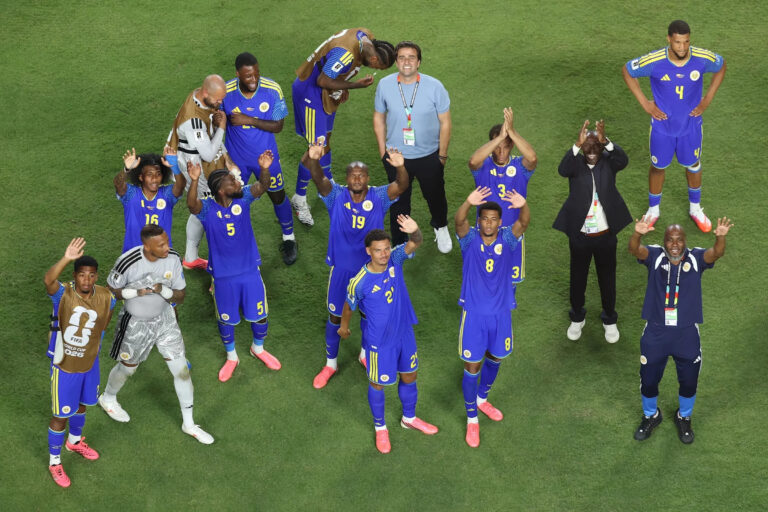
Curaçao takes on Ivory Coast at Philadelphia’s Lincoln Financial Field tonight in a must-win World Cup group stage match that could produce one of the tournament’s greatest upsets. A victory for the tiny Caribbean island nation would send them through to the round of 32 at the expense of the West African giants.

From Disaster to Contention

Few predicted Curaçao would be in this position. The Blue Wave opened their World Cup debut with a 7–1 defeat to Germany, but a gutsy draw against Ecuador — anchored by goalkeeper Eloy Room — kept their qualification hopes alive.

Only a win will do tonight. A draw would leave Curaçao level on points with fellow debutants Cape Verde, who currently hold eighth place among the best third-placed teams — but Cape Verde hold a superior head-to-head record and a significantly better goal difference.

Historic Stakes for the World’s Smallest World Cup Nation

Should manager Dick Advocaat‘s side advance, it would rank among the most stunning results in World Cup history. Curaçao is the smallest nation ever to compete at the tournament, with a population of approximately 156,000 — less than half that of Leicester, England, and a land area smaller than the city of Doncaster.

Curaçao’s Key Players

Goalkeeper Room remains central to the team’s chances, while Livano Comenencia keeps his place after scoring against Germany and impressing against Ecuador. The Bacuna brothers — Leandro and Juninho — anchor the midfield.

Tahith Chong, the only native Curaçaoan in a squad largely composed of players born abroad, starts on the left flank. Former Brighton striker Jürgen Locadia leads the attack, looking to find his form after an inconsistent spell with club side Miami FC.

Ivory Coast Hungry After Opening Stumble

Ivory Coast arrive at this match motivated by disappointment. In their first World Cup appearance in 12 years, Les Éléphants surrendered a lead against Germany — Franck Kessié had put them ahead after 30 minutes, only for Denis Undav to score twice in the final half-hour to hand the West Africans a defeat.

Kessié starts again alongside Nottingham Forest’s Ibrahim Sangaré in midfield. Leipzig’s Yan Diomandé will look to build on strong recent showings, while Manchester United winger Amad Diallo seeks to bounce back after a difficult performance against Germany.

Inter Milan youngster Ange-Yoan Bonny retains his starting spot up front alongside former Arsenal forward Nicolas Pépé.

Match Details