
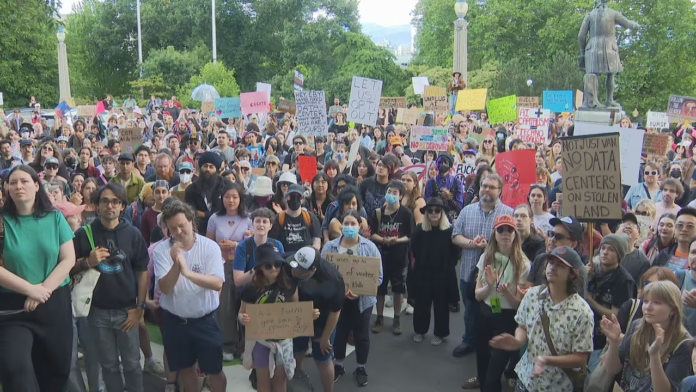
On a Saturday in late June, hundreds of Vancouverites left the steps of the Art Gallery and walked to City Hall with a single, clear demand: stop building AI data centres in their city. It was the second such march in less than two months. The first, in May, had drawn comparable crowds. Something is clearly not settling.
The protests target two facilities planned as part of Ottawa’s Enabling Large-Scale Sovereign AI Data Centres initiative, a partnership between the federal government and Telus. One centre is slated for the former Hootsuite headquarters in Mount Pleasant and is expected to come online before the end of this year. The second, planned for 150 West Georgia Street, is projected for completion in 2029. Together with an expanded Telus facility in Kamloops, the three-site British Columbia network is designed to eventually reach more than 60,000 graphics processing units and 150 megawatts of computing capacity by 2032.
The scale is significant. So is the anxiety it is producing. Protester Greenlee Welsh told CBC News that she simply doesn’t believe the trade-off is worth it, pointing specifically to water consumption and energy use as her primary concerns. These are not abstract worries in Metro Vancouver. The region is already operating under Stage 3 water restrictions, and demonstrators are acutely aware of what additional industrial demand could mean for a system already under pressure.
The numbers behind that concern are sobering. A recent International Energy Agency study estimated that data centres consumed 140 billion litres of water globally in 2023 alone. Organizer Guerric Haché put the local stakes plainly: “Even if it’s a small drain on the water supply, it’s going to make things worse — population growth is already straining our water supply.” Small percentages, in a stressed system, are not small problems.
Telus and its federal partners push back on this framing. The company says the centres will run on 98 per cent clean hydroelectric power and use 90 per cent less water than a conventional data centre. Telus also claims that recycled waste heat from the sites could warm roughly 150,000 homes. Federal Artificial Intelligence Minister Evan Solomon has argued the project will expand Canada’s sovereign computing capacity and help domestic researchers and businesses compete internationally. Vancouver Mayor Ken Sim has called the facilities world-class.
Those assurances have not quieted the opposition. B.C. Green Party leader Emily Lowan, who attended the June 27 rally, said she remains skeptical that projects of this scale can be built sustainably. She argued that politicians appear to be “blindly chasing the AI bubble,” and that the land involved could more usefully serve housing or other community needs — a pointed observation in a city where housing pressure is chronic and visible.
A petition calling for the projects to be halted had collected roughly 15,000 signatures before the march. That is not a fringe signal. Both the City of Vancouver and the provincial government have endorsed the builds, yet a meaningful portion of the public is clearly unconvinced by the case being made from above.
The federal government has clarified that no funding has yet been committed or distributed to the initiative. A spokesperson for Solomon’s office acknowledged that residents’ questions about energy use, water consumption, noise, grid impacts, and local benefits remain part of the ongoing federal assessment. That assessment, in other words, is still open. The marchers seem determined to keep it that way. They have already promised to return.

