Home Blog Page 6

OC Transpo Faces a Crucial Fall Test — Riders Are Watching, but Trust Is Thin

0

What is actually changing this fall?

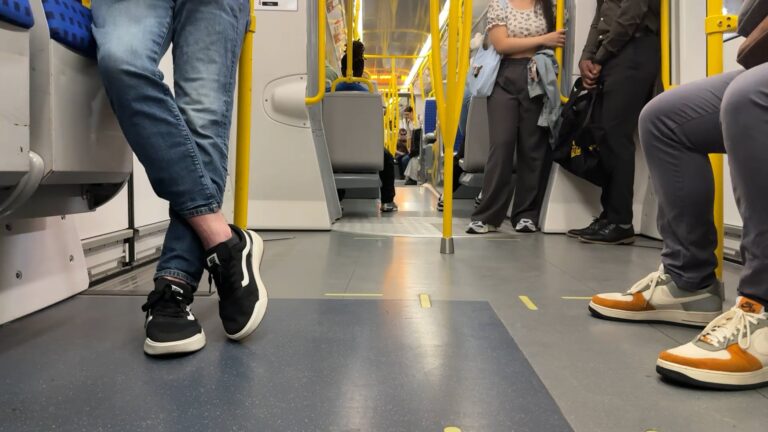
Ottawa’s public transit system is about to face one of its most significant stress tests in years. Starting August 31, OC Transpo will roll out seven new express bus routes linking transit stations with park-and-rides and major employment hubs across the city. Schedules on 30 of the city’s busiest bus routes are also being adjusted, with the stated goal of producing more accurate and reliable service. The agency frames these changes as a meaningful upgrade — not a patch job, but a structural improvement designed to hold up under pressure.

The pressure, in this case, is considerable. Federal public servants are returning to the office in larger numbers this fall, and students are heading back to school at the same time. That convergence of demand is not a minor fluctuation. It represents a sharp, simultaneous spike in ridership that will stress every node of the network at once — buses, trains, and the connections between them.

On the rail side, OC Transpo is also increasing weekday service on Line 1. Rush-hour trains will run every four minutes instead of five, and midday service will jump from every ten minutes to every six. Line 2 will begin service earlier, with trains running from 6 a.m. Those are real, measurable improvements — if the system delivers on them.

Why are riders still skeptical?

The short answer: they have been here before. Ottawa transit riders have absorbed years of service disruptions, mechanical failures on the O-Train, and chronic unreliability on bus routes. That history doesn’t evaporate because a new schedule is posted. “They said that they’re improving, like the buses are going to show up when they’re supposed to. Whatever. We’ll see what happens,” said Philippe Poirier, capturing a sentiment that is widespread and entirely understandable given recent experience.

For Katie Kerrivan, a student who uses the system daily, the issue is almost disarmingly basic: the bus needs to actually show up. “Even the bus that I took this morning to get to the train was 15 minutes late and I’m at the beginning of the route,” she said. Being at the start of a route is supposed to mean the most predictable service — the vehicle hasn’t accumulated delays yet. A 15-minute gap at that point signals something more systemic than bad luck.

Kerrivan says she believes the network can absorb the fall influx, but she doesn’t pretend it will be seamless. “I think as long as it’s fairly staggered and there’s enough support for trying to get people into the right areas, that’ll be fine. But I do feel like it’ll be a challenge one way or another.” That measured optimism — conditional, hedged, earned through experience — is about as much goodwill as OC Transpo can reasonably expect right now.

Who bears the heaviest cost when the system fails?

Transit unreliability is not a uniform inconvenience. It falls hardest on riders with the fewest alternatives — people without cars, people travelling to medical appointments, people who cannot simply expense a cab. Adela Polacek describes trips to appointments that stretch well over two hours, and a fare system that has sometimes charged her twice. “If the buses were more reliable, there would be less traffic because people would be able to rely on the bus and take the bus,” she said. “So one affects the other and it’s a vicious cycle.” She is describing, with precision, the feedback loop that undermines every public transit system that fails to reach a reliability threshold: riders leave, ridership drops, service cuts follow, more riders leave.

The stakes here extend beyond individual frustration. Ottawa is a city with a significant federal workforce, a large student population, and a stated commitment to reducing car dependency. A transit system that people cannot trust doesn’t just inconvenience them — it actively pushes them back into their cars, adding to the congestion and emissions that better transit is supposed to reduce. The social and environmental case for getting this right is not abstract.

What about the O-Train’s eastern extension?

Beacon Hill-Cyrville Councillor Tim Tierney has flagged the long-awaited eastern extension of the O-Train as a potential relief valve — but the timing remains genuinely uncertain. “The English school board and federal government workers both coming back at the same time, you know, it’s going to be pure chaos,” Tierney said bluntly. He added, however, that he now believes the extension will open this fall, citing testing activity and assurances from OC Transpo’s general manager. “I’ve never ever believed it. I believe it this time, this fall, we will see the train service in the east,” he said — a statement that is notable precisely because of its candour about past skepticism.

If the eastern extension does open on schedule, it would meaningfully expand rail access for communities in the city’s east end that have long relied on buses alone. That matters both for daily commuters and for the broader argument that Ottawa’s transit network is capable of growing in step with the city. But “if” is doing a lot of work in that sentence. Ottawa residents have watched transit timelines slip before, and Tierney’s own admission that he previously doubted the timeline is a reminder that optimism here requires evidence, not just announcements.

What would it actually take to rebuild trust?

Trust in a transit system is not rebuilt by a press release or a new schedule. It is rebuilt trip by trip, day by day, through consistent and verifiable performance. Riders like Kerrivan, Poirier, and Polacek are not asking for perfection — they are asking for a system that does what it says it will do, on a regular basis, across the full network. That is a reasonable ask. It is also, historically, a bar that OC Transpo has struggled to clear.

OC Transpo has made real commitments. The service improvements on Lines 1 and 2 are concrete and measurable. The new express routes reflect a genuine attempt to rethink connectivity. Whether those commitments translate into the kind of daily reliability that turns skeptical riders into regular ones is a question that only the fall will answer. Riders say they are willing to give the system another chance. That willingness is not unlimited, and it is not unconditional. It is, for now, an open door — and OC Transpo’s job is not to close it again.
Wildfire Smoke Lingers Over B.C. Interior as Evacuees Begin Coming Home

0

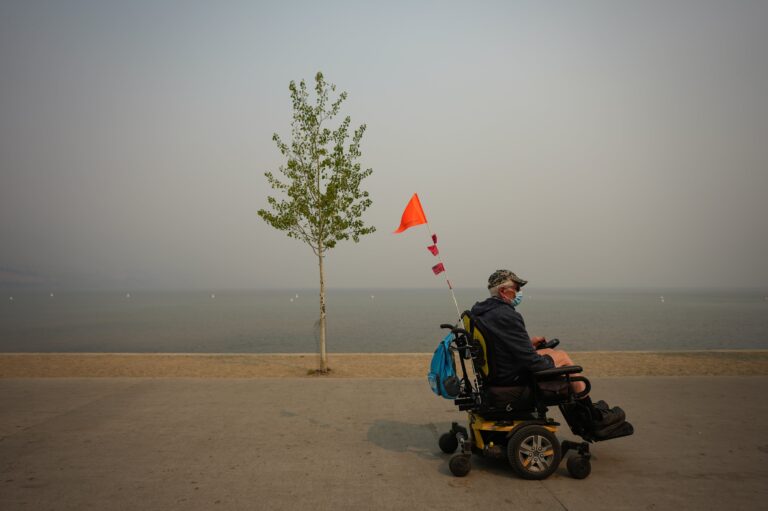
The smoke is still there. For thousands of British Columbians returning to their homes in the Interior after days of evacuation, that haze hanging over the landscape is at once a relief and an unsettling reminder of how much remains unresolved.

What is the situation on the ground right now?

Erin Trainer, deputy mayor and councillor in Summerland, made it back to her home in Trout Creek on Saturday morning, only to find most of the town still under evacuation order. The fire, she says, remains very much active. She spent her first morning home not unpacking or resting, but cleaning ash from her property — a scene playing out across dozens of communities in the B.C. Interior this weekend.

Many residents near Summerland and West Kelowna have been permitted to return following the downgrading of evacuation orders tied to the Bald Range and Quilpituk Creek wildfires. That downgrade is meaningful progress, but it does not mean the danger has passed. The fires are still burning, and the conditions around them continue to shift from day to day.

Why is smoke being described as potentially helpful?

It seems counterintuitive, but the BC Wildfire Service has noted that smoke drifting back into central areas of the province over the weekend could actually work in firefighters’ favour. A thicker smoke layer reduces the amount of radiant heat reaching the landscape below, which in turn can moderate fire behaviour — slowing the rate at which vegetation dries out and limiting the intensity of active burning. That is not a reason to welcome poor air quality, but it does explain why the return of smoke is a genuinely mixed signal rather than a straightforwardly bad one.

On the temperature side, the wildfire service expects a slight rise across central and southern regions of the province, while areas to the northwest should see a modest dip. Neither shift is dramatic, but in wildfire management, even marginal changes in heat and humidity can matter considerably.

How many fires are burning, and how serious is the overall picture?

The scale of the situation deserves to be stated plainly. More than 120 wildfires are currently burning across British Columbia, and roughly 39 per cent of them are classified as out of control. That means crews are not yet able to contain or direct the behaviour of those fires, leaving communities in affected regions to live with ongoing uncertainty about when and whether conditions might deteriorate again.

The Interior of B.C. has long been vulnerable to wildfire season, and the pattern of evacuations, returns, and re-evacuations that many residents have experienced in recent years has become a defining feature of summer life in the region. That reality carries real weight — economic, psychological, and practical — for the people who live there, and it deserves to be taken seriously as a matter of public policy, not just emergency management.

What resources are available to people returning home?

The provincial government has made N95 masks available at no cost to residents in Interior communities, recognizing that wildfire smoke poses genuine health risks — particularly for children, the elderly, and people with respiratory conditions. Residents are encouraged to contact their local governments to find out where clean-air locations have been established nearby, as these designated spaces offer refuge from outdoor smoke exposure for those who need it most.

For anyone returning home this weekend, the practical advice is to limit time outdoors when smoke is heavy, keep windows closed where possible, and use those N95 masks when venturing outside. The situation remains fluid, and staying connected to local emergency alerts is the most reliable way to track any changes in evacuation status or fire behaviour in the days ahead.

Canada-U.S. Trade Talks Race Against Wednesday Tariff Deadline — With Autos, Lumber, and Retaliation All on the Table

0

A Weekend of High-Stakes Bargaining

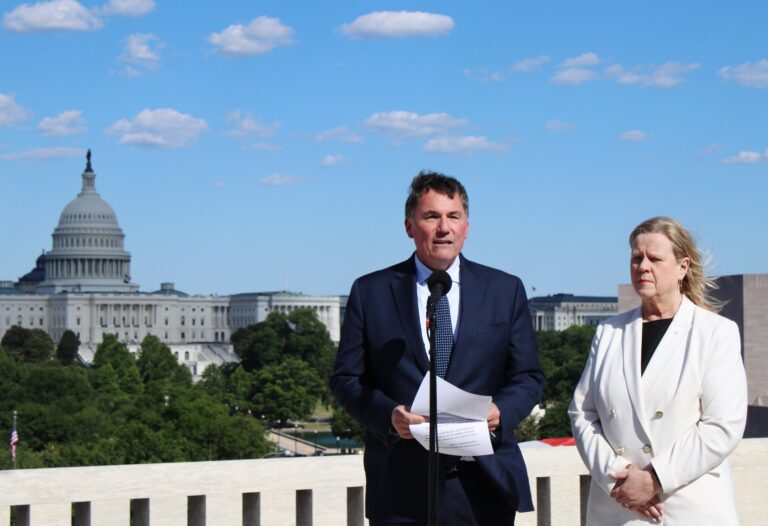
Canada and the United States spent the weekend in intensive trade negotiations, with Ottawa scrambling to prevent a new round of punishing tariffs scheduled to take effect on Wednesday. The talks came to a head Sunday afternoon when Canada-U.S. Trade Minister Dominic LeBlanc held a virtual meeting with U.S. Trade Representative Jamieson Greer, joined by Canada’s lead negotiator, Janice Charette. LeBlanc’s office confirmed the hour-long session was “constructive” and that discussions would continue, but offered no indication that a deal was imminent. LeBlanc remained in Washington through the weekend and planned to stay into Monday as the clock ticked down. Prime Minister Mark Carney, who had initially been reported to be vacationing in Italy until Monday, returned to Canada on Sunday and was expected in St. John’s on Monday.

The legal architecture of this dispute matters. Canada is trying to negotiate an agreement that would prevent new tariffs under Section 338 of the Smoot-Hawley Tariff Act of 1930 — a Depression-era statute that the Trump administration has threatened to invoke on Wednesday. Ottawa is simultaneously pushing to reduce existing levies on steel, aluminum, automobiles, and lumber imposed last year under Section 232 of the Trade Expansion Act of 1962. These are two distinct legal mechanisms with different political histories, and disentangling them has proven enormously complex.

The Auto Sector: Margins, Content, and an Existential Threat

Five sources briefed on the negotiations told The Globe and Mail that Section 232 tariffs on autos and lumber remain the central sticking points. The United States has proposed reducing auto tariffs to 15 per cent — a figure Canada considers unworkable. Two sources said Canada has argued that such a rate would render the industry non-viable, given that profit margins in auto manufacturing sit in the single digits. The math is straightforward and brutal: a 15 per cent tariff applied to vehicles with razor-thin margins does not leave room for the industry to absorb costs without cutting production or jobs.

Canada has countered with a proposal that would exempt the full value of all content originating within the United States-Mexico-Canada Agreement (USMCA) zone from the tariff, meaning the levy would apply only to components sourced from outside North America. The U.S. position, by contrast, would exempt only American-origin content. One source said this distinction — not the precise tariff percentage — is actually the larger unresolved issue. It reflects a fundamental disagreement about whether North American supply chains should be treated as integrated or whether the U.S. is seeking to gradually pull production southward.

Eric Miller, a trade adviser and president of the Rideau Potomac Strategy Group, said the American proposal is designed to embed structural incentives that would steadily reduce the use of Canadian content in auto manufacturing. He described it as creating an “existential fear” for Canadian car and auto parts manufacturers — one that would erode the industry north of the border and deal a significant blow to both the Canadian and Ontario economies over time.

Forestry: A Sector Left Without Cover

The outlook for Canada’s forestry sector is even bleaker at the negotiating table. Three sources said the U.S. has refused to offer any reduction of Section 232 tariffs on lumber. Instead, American negotiators have argued that Canada should wait for a separate U.S. Department of Commerce review expected to reduce a different set of softwood lumber tariffs. One source said Canada fears Washington would simply raise the Section 232 tariffs to compensate if the Commerce Department lowers the others — leaving the industry no better off. The best outcome Canada might realistically secure, one source noted, is an American commitment to discuss forestry tariffs further at a later date.

For British Columbia, the stakes are particularly severe. The province’s forestry industry already faced countervailing and anti-dumping duties before the Section 232 tariffs were layered on top, compounding the damage. Kim Haakstad, interim president of the B.C. Lumber Trade Council, said Sunday she is worried that if the 232 tariffs remain, more mills will close — and that closures ripple outward, shuttering secondary facilities that depend on primary manufacturing. The council’s position is that Canadian and American lumber producers serve different construction markets and do not genuinely compete, making the tariffs a cost imposed on American consumers rather than a protection of American producers. Miller, however, noted that the U.S. Lumber Coalition sees it differently and is lobbying “all out” to keep the 232 tariffs in place.

Provincial Premiers Draw Their Lines

The trade file is not Ottawa’s alone to manage. Both B.C. Premier David Eby and Ontario Premier Doug Ford have made clear they will only agree to return American alcohol to provincial store shelves — a concession Washington has sought — if there is meaningful tariff relief for their hardest-hit industries. Ford has said he is open to lifting Ontario’s ban on U.S. alcohol, but only as part of a genuinely fair deal. Eby has taken a similar position, anchoring any concession on alcohol to real movement on lumber and autos.

This dynamic illustrates the federal-provincial complexity woven into Canadian trade policy. Liquor sales fall under provincial jurisdiction; the premiers are not merely stakeholders offering opinions, but actors with genuine constitutional authority over key elements of the Canadian response. Ottawa cannot simply deliver concessions on alcohol without provincial buy-in, and the premiers have been explicit about their conditions.

If Wednesday Arrives Without a Deal

The consequences of failure are substantial. If the Trump administration proceeds with its threatened Section 338 tariffs, a 50 per cent duty would be applied to an estimated US$20 billion worth of Canadian exports — including electronics, dairy, alcohol, wood products, and other goods — stacked on top of tariffs already in place. Charette has warned U.S. negotiators that the imposition of these tariffs would represent a “cliff” in the negotiations: Ottawa would be compelled to retaliate. Carney has said all options remain on the table, with one explicit exception — he has ruled out using Canadian oil exports as a retaliatory lever.

Ottawa is actively preparing retaliation plans, according to two sources familiar with the discussions. The shape of that response has not been disclosed, but the signal being sent to Washington is deliberate: Canada will not absorb new tariffs passively.

No Good Options — Only Bad Choices

Former Quebec Premier Jean Charest, who sits on Carney’s advisory committee on Canada-U.S. economic relations, offered a candid assessment in a Sunday interview. “There’s only bad choices in this world,” he said. He acknowledged Carney’s argument that Canada still enjoys better market access to the United States than most countries, but noted the limits of that framing: “It’s a difficult argument to make to a person who’s lost their job.” Any deal that involves accepting even reduced tariffs will be a hard sell with Canadians who have little appetite for what they perceive as concessions, Charest said. And if no deal is reached, he warned, Canada will deliver a “strong response” — one the U.S. should expect and be prepared for.

The week ahead will test not only the durability of the Canada-U.S. trade relationship but also the capacity of Canadian institutions — federal and provincial — to act in concert under pressure. The outcome will be felt from auto assembly lines in Windsor to lumber mills in the B.C. Interior, and the window to avoid it is closing fast.

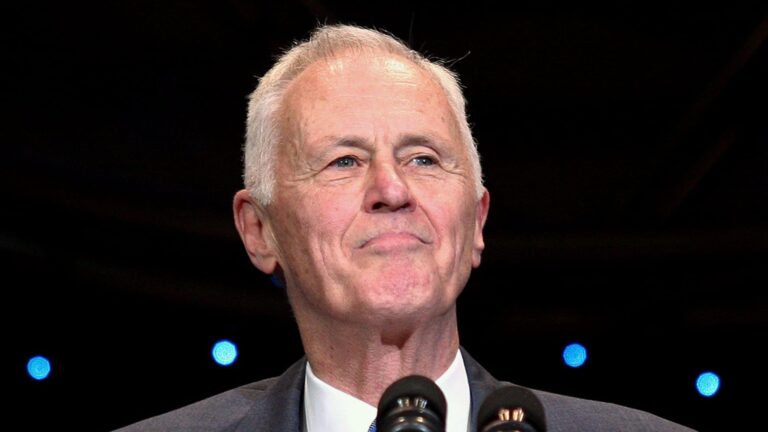
John Hamm, Matt Minglewood and Eight Others Named to 2026 Order of Nova Scotia

0

What is the Order of Nova Scotia?

The Order of Nova Scotia is the province’s highest civilian honour. Established in June 2001, it recognizes Nova Scotians who have made exceptional contributions to their communities and to the province as a whole. Since its founding, 146 people have been invested into the order.

The order operates under a clear structure. Up to ten people can be appointed each year. The lieutenant-governor, who serves as chancellor of the order, makes appointments based on recommendations from an independent advisory council — keeping the process at arm’s length from elected government.

Who are the 2026 appointees?

Lieutenant-Governor Mike Savage released the names of the ten newest members on Friday. The cohort spans a wide range of fields: the arts, human rights, public service, health, and education. Two names stand out immediately.

The remaining eight appointees represent contributions across education, health, and community service, though their names were not detailed in the initial announcement.

What did the lieutenant-governor say?

Savage marked the announcement with measured but clear language. “These remarkable individuals have each enriched our province through exceptional leadership, service and achievement,” he said. The statement points to a theme running through this year’s cohort: impact that outlasts any single role or moment.

“Their dedication has strengthened our communities, inspired countless others, and helped shape a stronger, more vibrant Nova Scotia for generations to come.” It is the kind of recognition the order was designed to confer — broad, lasting, and grounded in actual public contribution.

When and where will the investiture take place?

The official ceremony will be held in the fall at Government House in Halifax. At that event, Savage will present each appointee — or their representatives, in the case of posthumous honours — with their insignia and appointment scroll. The investiture transforms a nomination into a formal, permanent part of the province’s civic record.

Why does this recognition matter?

Provincial honours like the Order of Nova Scotia serve a function beyond ceremony. They signal what a society chooses to value. Recognizing figures from the arts alongside those from medicine and public service reflects a broad understanding of what builds a province.

Nova Scotia is a small province with deep regional identities — from Cape Breton to the South Shore — and an order that draws honorees from across those communities reinforces that provincial belonging is not confined to Halifax. That breadth, year after year, is part of what gives the order its weight.

Venus Williams’ Singles Skid Hits 13 as Arango Dominates in Cincinnati

0

A Losing Streak That Raises Hard Questions

Venus Williams’ singles losing streak has now reached 13 consecutive matches, and Friday’s first-round exit at the Cincinnati Open offered little reason to expect a swift reversal. The seven-time Grand Slam champion fell 6-2, 6-2 to Emiliana Arango — a 25-year-old Colombian qualifier ranked 95th in the world — in just over an hour on the grandstand court at Lindner Tennis Center in Mason, Ohio.

The result is not simply a bad week. Williams, now 46 years old, has not won a singles match since July 2025, when she defeated Peyton Stearns in Washington. That span of defeats raises a legitimate question about what, exactly, wild-card entries into major WTA events are meant to accomplish — for the player, and for the sport.

The Match Itself

Arango wasted little time establishing control. She broke Williams’ serve in the opening game and never relinquished the advantage, converting four of five break-point opportunities while winning 71 percent of her own first-serve points. Williams, by contrast, converted none of her break opportunities and managed just 41 percent on first-serve points — a statistical portrait of a player unable to impose her game.

Arango described the early break as crucial to settling her nerves. “That kind of eased my nerves a little bit of having maybe a little bit of breathing room,” she said. “And then I think I just did a good job of staying on it, trying to make her play as much as possible.” The Colombian will now face No. 7 seed and defending Cincinnati champion Iga Swiatek in the second round — a considerably sterner test.

Williams, making her 11th appearance at this tournament, offered a measured self-assessment. “I think that at all times I was really controlling the point, but unfortunately didn’t finish it the way I wanted to,” she said. “The encouraging part is that I’m controlling the shots, but I have to just get a little more consistent on that last part.” The gap between controlling a point and winning it, however, is precisely where elite tennis is decided.

The Doubles Chapter Ahead

Williams will remain in Cincinnati, where she and her sister Serena received a wild-card entry into the doubles draw. The two have not played doubles together since the 2022 U.S. Open, and their planned reunion at Wimbledon this year was derailed by a Serena injury. Their first-round opponents in Cincinnati will be Marta Kostyuk and Peyton Stearns, with the doubles competition beginning Sunday.

There is genuine warmth in the Williams sisters’ continued presence on tour, and their doubles partnership carries real historical weight. Yet the singles trajectory is harder to frame optimistically. Thirteen consecutive losses, a wild-card entry into a WTA 1000 event, and a scoreline of 6-2, 6-2 against a qualifier — these are facts that speak plainly. The question facing Venus Williams is not whether she belongs in the sport’s history books, where her place is unassailable, but whether continued singles competition serves her legacy or gradually complicates it.

Detroit Automakers Warn CUSMA Revamp Could Cost Billions as Trade Pressure Mounts

0

The trouble began accumulating long before any renegotiation talks were formally scheduled. Over the past year, the Trump administration rolled out a sweeping series of tariffs that landed hard on North American automotive supply chains — levies on steel and aluminum, on vehicle parts, and on finished cars crossing the borders from Mexico and Canada. Detroit’s three major automakers, General Motors, Ford, and Stellantis, absorbed those costs as best they could, even as executives privately noted that their rivals from Japan, South Korea, and Europe faced a comparatively lighter tariff burden of a flat 15 per cent on exports into the United States.

By the time the administration began floating proposals ahead of a fourth round of U.S.-Mexico trade talks scheduled for next month, the automakers were already operating under significant financial strain. General Motors projected gross tariff-related expenses of between US$2.5 billion and US$3.5 billion for the current year alone — a figure that could represent more than 20 per cent of the company’s operating profit. Ford, for its part, estimated its net tariff hit at roughly US$1 billion for 2025. These were not abstract projections; they reflected real pressure on margins, investment capacity, and the companies’ ability to compete globally.

Into that already difficult environment came a fresh set of demands from Washington. Among the most contentious was a proposal — first reported by Reuters in May — that vehicles contain at least 50 per cent U.S.-made content in order to qualify for lower tariff rates. A separate proposal called for raising the overall North American content threshold above the current 75 per cent level set under the Canada-United States-Mexico Agreement. Executives at two of the Detroit automakers estimated that these requirements, taken together, would add at least US$2 billion in annual costs per company — costs that would compound the tariff burdens already in place.

The U.S. Trade Representative’s office did not respond to a request for comment on those figures. Administration officials have consistently framed their tariff strategy as a mechanism to drive factory investment and job creation inside the United States, and Commerce Secretary Howard Lutnick expressed optimism that more automakers would follow the example already being set by Ford and GM. “We worked together to get it right,” Lutnick said in a joint interview with Reuters.

Ford moved first and most visibly. On Wednesday, the company announced it would shift production of Lincoln models destined for the U.S. market from China to American factories, explicitly citing the Trump administration’s tariffs as the deciding factor. Ford CEO Jim Farley acknowledged to Reuters that the company had perhaps underestimated, early on, just how serious the administration was about reshoring automotive production. “It dawned on us very quickly, ‘Hey, look, we need to make some changes here,'” Farley said. Ford already builds a larger share of its U.S.-sold vehicles domestically than either GM or Stellantis, which gave it a degree of credibility in signalling its commitment to the White House.

Even so, the competitive imbalance with Asian and European automakers continued to rankle. The American Automotive Policy Council, which represents Ford, GM, and Stellantis, pointed in a late-June statement to the structural disadvantage facing domestic producers. GM CEO Mary Barra addressed the issue directly on the company’s July earnings call, saying the company was focused on “making sure that the U.S. automakers are going to be able to compete and win when we look at what the tariff rates are for Europeans, the Japanese and the Koreans.” One senior U.S. auto executive, speaking without attribution, offered a blunt explanation for why South Korea and Japan had secured more favourable terms more quickly: those governments could advocate for their automakers directly, as part of broader national-security-framed trade negotiations. “We don’t have a president or a prime minister who can call up Trump on our behalf,” the executive said.

The concern is not limited to the Detroit companies. Jennifer Safavian, president of Autos Drive America — a trade group representing foreign automakers operating in the United States, including Toyota and Hyundai — noted that international manufacturers with significant North American production footprints are also being harmed by the current trade environment. “Our American and North American-made vehicles use significant amounts of U.S. content and international automakers are also being harmed by the current trade environment with Mexico and Canada,” Safavian said in a statement, underscoring that the stakes of the CUSMA renegotiation extend well beyond the Big Three.

As of this week, Canadian trade officials were meeting with their U.S. counterparts in an effort to head off a new round of tariffs on Canadian goods set to take effect next week — a parallel pressure track running alongside the Mexico negotiations. GM told Reuters that vehicles with substantial U.S. and North American content “should receive better treatment than vehicles that do not,” while Stellantis said it was working with all three governments “to ensure that we can build and sell affordable vehicles across the region.” The fourth round of U.S.-Mexico talks remains scheduled for next month, and Detroit’s automakers intend to make their case clearly: that the administration’s content proposals, however well-intentioned as industrial policy, risk imposing costs that would weaken the very companies they are meant to strengthen.

Katharine Berkoff Sets American Record in 50 Backstroke to Claim Pan Pacific Gold on Night Two

0

The second night of competition at the 2026 Pan Pacific Swimming Championships produced the kind of racing that reminds you why the sport commands attention far beyond Olympic years. At the centre of it all stood Katharine Berkoff, who touched the wall in 26.90 to win gold in the women’s 50 backstroke — a new American record, and her second consecutive victory over world-record holder Regan Smith in as many nights.

Smith, the dominant force in backstroke swimming for the better part of this decade, again settled for silver. Australia’s Iona Anderson claimed bronze. Back-to-back head-to-head wins over a swimmer of Smith’s calibre is not a footnote — it is a genuine statement about where Berkoff stands in the global hierarchy of the event.

But Berkoff’s record-breaking swim was only one piece of a full and consequential evening. Across the pool, in events ranging from the individual medley to the freestyle relays, the night delivered championship records, an unexpected upset, and at least one quietly remarkable human story.

Summer McIntosh arrived at the 400 individual medley with something to prove. The Canadian had suffered a rare defeat in the 200 freestyle on opening night — a result that, by all visible accounts, stung. The world record holder in the 400 IM answered with authority, blowing away the field in 4:28.01, a new championship record. Australia’s Jenna Forrester finished second in 4:31.50, Argentina’s Agostina Hein took bronze in 4:32.54, and American Alex Walsh placed fifth in 4:33.73. McIntosh’s response was measured in both time and temperament: composed, dominant, and entirely in keeping with her standing as one of the most complete swimmers in the world.

On the men’s side of the 400 IM, Japan’s Tomoyuki Matsushita edged American Carson Foster in a race that stayed close through every stroke. Matsushita won in 4:06.75, a championship record, with Foster just four hundredths behind in 4:07.11. Bobby Finke, fresh from a silver medal in the 800 freestyle the previous night, rounded out the podium in third — a strong showing that underscores American depth in the distance events.

The women’s 100 freestyle final produced the evening’s most dramatic finish. Gretchen Walsh, the fastest qualifier out of the heats and the winner of the 50 butterfly on opening night, led at the 50-metre turn. Australia’s Meg Harris, however, had other ideas. Harris found another gear over the back half of the race, out-touching Walsh at the wall — 52.60 to 52.78. Olivia Wunsch completed a 1-3 finish for Australia, claiming bronze in 52.98. It was Walsh’s first defeat of the meet, a reminder that even the sharpest form can be matched on any given night.

Jack Alexy left little doubt in the men’s 100 freestyle. The American record holder, who had raced unrested at U.S. Nationals specifically to conserve his peak for Pan Pacs, broke his own championship record to win in 47.14. Brazil’s Gui Caribe led early but could not hold off Alexy’s surge. Patrick Sammon backed up his domestic form with a runner-up finish in 47.62, Caribe held on for third in 47.89, and Chris Guiliano — racing in the consolation final — posted a 47.16, just two hundredths off the winning time. That depth of performance in a non-championship heat is worth noting.

McKenzie Siroky continued her breakout season with gold in the women’s 100 breaststroke, winning in 1:05.32. Siroky, who upset Kate Douglass by two hundredths at U.S. Nationals, again proved that result was no fluke. China’s Tang Qianting and Japan’s Satomi Suzuki joined her on the podium. Douglass, the 2025 national champion and world championship silver medalist in the event, finished fourth in 1:05.81 — a result that will sharpen her focus heading into the rest of the season.

Van Mathias, whose trajectory from former Indiana swimmer to director of operations to professional competitor reads like something a novelist might invent, won the men’s 100 breaststroke in 58.02, breaking his own championship record and narrowly missing his American record in the process. Japan’s Shin Ohashi took silver in 54.54 — a new world junior record — with Australia’s Samuel Williamson third in 59.34. Mathias’s story keeps accumulating chapters.

Quintin McCarty, who took the 50 backstroke at U.S. Nationals, delivered again on the international stage, breaking the championship record to win in 24.51. Australia’s Isaac Cooper, the top qualifier from prelims, was second in 24.59. American Will Modglin, coming off a world-record mixed medley relay performance the night before, claimed bronze in 24.66.

The relay events closed out the evening with contrasting results for the United States. The American men won the 4×200 freestyle in 6:49.37, a championship record, with Luke Hobson, Aaron Shackell, Patrick Sammon, and Gabriel Jett combining for an impressive performance. Australia’s Charlie Hawke made things interesting on the third leg, but Jett’s final turn sealed the result. Australia took silver in 7:01.10, Japan bronze in 7:02.74. Three of the four American legs were individually under the pace required to threaten the world relay record — a detail that illustrates just how difficult it is to synchronize peak performances across a team, even when the individual talent is plainly there.

In the women’s 4×200 freestyle, Australia edged the United States for gold, winning in 7:42.40 — another championship record — with the Americans seven-tenths back in 7:43.10. Katie Ledecky anchored hard but could not close the gap. Canada claimed bronze in 7:52.74, a result that will register with satisfaction across a country that has watched its swimming program build steadily through this generation of athletes.

Day three begins Friday, August 14, with heats at 1 p.m. ET and finals at 9 p.m. ET. The session is available in the United States on Peacock and in Canada on CBC Sports. On the schedule: the 400 freestyle, 100 butterfly, 200 backstroke, and 50 breaststroke for both women and men, along with the 4×100 freestyle relays. After two nights of championship records and genuine surprises, the competition has earned the attention it is about to receive.

Kluane First Nation Citizen Keeps Traditional Knowledge Alive Through Art and Community Workshops

Sharon Kabanak, a citizen of the Kluane First Nation, is working to ensure that Indigenous traditional knowledge does not fade with her generation — passing it on through hands-on workshops near Haines Junction, Yukon, that welcome children, families, and visitors from a wide range of cultural backgrounds.

Knowledge Rooted in Community and Mentorship

Kabanak learned traditional practices over years of guidance from her mother, mentors, and elders within her community. That foundation of intergenerational transmission now shapes her own approach to teaching. Rather than treating traditional knowledge as a fixed cultural artifact, she treats it as a living practice — something that must be actively shared and exercised to survive. Her workshops reflect that philosophy, offering participants direct, hands-on engagement with techniques and materials drawn from Kluane heritage.

Workshops at a Shared Cultural Space

A recent workshop took place at the Thechàl Dhâl’ Visitor Centre, a collaborative space jointly operated by Kluane First Nation and Parks Canada, located near Silver City, north of Haines Junction. At that session, Kabanak guided participants through the making of necklaces and medicine bags, using beads and plastic bone-shaped pieces inspired by traditional styles. The workshop drew participants across generations and cultures, reflecting Kabanak’s intent to open this knowledge to anyone willing to engage with it respectfully. Among those attending was Marilou Roy, a master’s student, into whose handmade medicine bag Kabanak placed yarrow — the medicinal plant known scientifically as Achillea — demonstrating the practical, living dimension of the tradition.

Transmission as an Act of Sovereignty

The work Kabanak does sits within a broader context of Indigenous cultural continuity that carries constitutional and political weight in Canada. For First Nations communities across the country, the transmission of traditional knowledge — whether through language, ceremony, or craft — represents an assertion of ongoing sovereignty and self-determination. In the Yukon, where modern land claims agreements have given First Nations governments significant jurisdictional authority, cultural programming of this kind complements formal governance by reinforcing the social and spiritual fabric of the community. Kabanak’s workshops, modest in setting but significant in purpose, embody that connection between cultural practice and community resilience.

By opening her sessions to people from outside the Kluane Nation, Kabanak also builds bridges across cultural lines — inviting understanding without surrendering ownership of the knowledge she carries. Her stated goal is straightforward: to make sure what she learned from her elders continues to live on, long after her.

Ontario Bars Undocumented Residents and Temporary Visa Holders from Social Assistance

0

A tribunal ruling quietly changed everything. Ontario is now moving to close a gap in its social assistance rules — one that a provincial adjudicator had found allowed undocumented residents to receive benefits.

The sequence of events began when a tribunal adjudicator reviewed the case of a man who had arrived in Canada decades ago on a temporary work permit, stayed after it expired, and applied for Ontario Works payments. The adjudicator concluded that the existing Ontario Works legislation did not explicitly require applicants to hold legal immigration status, provided they did not fall within three specifically excluded categories. The ruling was legally defensible on its face — but it set off a political chain reaction.

Media coverage of the decision reached Premier Doug Ford. He responded swiftly and publicly, writing on social media that his government would always support people who had fallen on hard times, but that this support did not extend to, in his words, “people living in Canada illegally.” He committed to changing provincial regulations to make the law’s intent unambiguous.

Regulations Amended on the Same Day as the Announcement

Weeks later, on August 13, 2026, Minister of Children, Community and Social Services Michael Parsa made it official. The province announced amendments to the regulations governing both Ontario Works and the Ontario Disability Support Program. The changes took effect immediately — the same day they were announced.

The amended regulations specify two distinct groups who are now ineligible for social assistance. The first are individuals present in Canada without legal authorization. The second are those authorized to remain only on a temporary basis, a category that explicitly includes holders of student visas and work permits. Both groups are now barred from accessing either program.

The changes also introduce a documentation requirement. Applicants must now provide proof of their citizenship or immigration status as part of the eligibility process — a procedural step designed to enforce the new rules at the point of application rather than after the fact.

What the Government Says It Is Protecting

Minister Parsa framed the amendments in terms of fiscal stewardship. The province stated the changes would ensure that taxpayer dollars remain focused on people facing genuine financial hardship who are legally permitted to live in Canada. The language was deliberate: the government positioned the move as a clarification of intent rather than a break from existing policy.

The original tribunal ruling, however, had exposed a real ambiguity. The adjudicator had not invented a loophole — they had applied the law as written. The legislation simply had not addressed the question of undocumented status in explicit terms, beyond three narrow exclusions. That gap is now closed.

Broader Implications Worth Watching

The speed of the change — announced and enacted on the same day — reflects how politically charged the issue became once it entered public view. Social assistance eligibility rules sit at the intersection of provincial jurisdiction, immigration law, and constitutional protections, and the long-term legal durability of the new regulations may yet face scrutiny.

The implications extend beyond the individual case that triggered the review. Temporary foreign workers and international students — many of whom contribute to Ontario’s labour market and tax base — now face an explicit statutory bar from accessing provincial safety-net programs, regardless of their personal circumstances. Disability advocates and legal aid organizations may examine whether the ODSP exclusion, in particular, raises questions under the Canadian Charter of Rights and Freedoms.

For now, the rules are in force. Ontario has drawn a clear line.

Sault Ste. Marie Council to Consider Freeze on AI Data Centre Approvals Pending New Rules

0

Sault Ste. Marie city council will debate a motion Monday that would halt approvals of new artificial intelligence data centres until the city establishes a proper planning and regulatory framework.

The motion, brought forward by Councillor Angela Caputo and seconded by Councillor Lisa Vezeau-Allen, follows growing public concern over a data centre already approved last December. That facility, a joint venture between cybersecurity firm Protexxa and Missanabie Cree Business LP, is slated for the city’s west end. An online petition raised concerns about the project’s potential negative effects on the surrounding community, prompting the councillors to act. Mayor Matthew Shoemaker has pushed back on some of those concerns, arguing the Sault’s approved centre is not the kind of high-consumption facility drawing scrutiny in other Canadian cities.

The motion would prohibit council from approving any further data centres until a comprehensive review is completed, covering a wide range of potential impacts.

A full report would be due by the second quarter of 2027, with an interim report — covering the cost of external consultants, the Indigenous consultation plan, and the public engagement strategy — expected the following year. The motion also directs staff to prepare, for the August 31 council meeting, an interim control bylaw that would formally prohibit new data centre development in the city while the review proceeds. That bylaw would give the moratorium legal teeth while the longer policy work gets underway.

The debate arrives at a moment when municipalities across Canada are grappling with how to manage the rapid expansion of data infrastructure — balancing economic opportunity against real questions about energy demand, environmental impact, and community input. Sault Ste. Marie’s approach, if adopted, would place it among the first mid-sized Canadian cities to impose a formal pause while it builds a regulatory foundation.