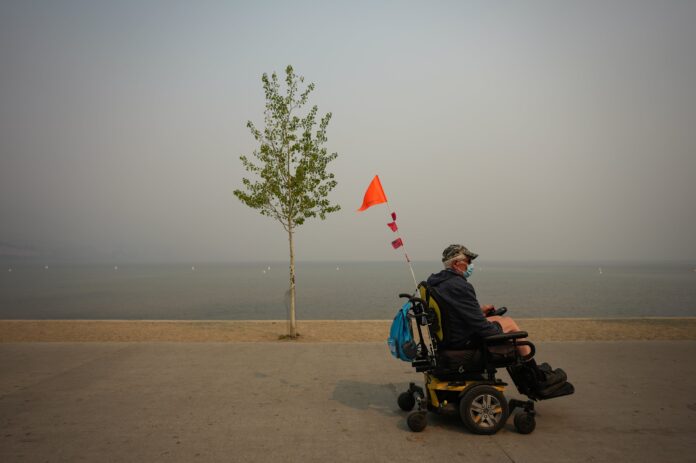
The smoke is still there. For thousands of British Columbians returning to their homes in the Interior after days of evacuation, that haze hanging over the landscape is at once a relief and an unsettling reminder of how much remains unresolved.
What is the situation on the ground right now?
Erin Trainer, deputy mayor and councillor in Summerland, made it back to her home in Trout Creek on Saturday morning, only to find most of the town still under evacuation order. The fire, she says, remains very much active. She spent her first morning home not unpacking or resting, but cleaning ash from her property — a scene playing out across dozens of communities in the B.C. Interior this weekend.
Many residents near Summerland and West Kelowna have been permitted to return following the downgrading of evacuation orders tied to the Bald Range and Quilpituk Creek wildfires. That downgrade is meaningful progress, but it does not mean the danger has passed. The fires are still burning, and the conditions around them continue to shift from day to day.
Why is smoke being described as potentially helpful?
It seems counterintuitive, but the BC Wildfire Service has noted that smoke drifting back into central areas of the province over the weekend could actually work in firefighters’ favour. A thicker smoke layer reduces the amount of radiant heat reaching the landscape below, which in turn can moderate fire behaviour — slowing the rate at which vegetation dries out and limiting the intensity of active burning. That is not a reason to welcome poor air quality, but it does explain why the return of smoke is a genuinely mixed signal rather than a straightforwardly bad one.
On the temperature side, the wildfire service expects a slight rise across central and southern regions of the province, while areas to the northwest should see a modest dip. Neither shift is dramatic, but in wildfire management, even marginal changes in heat and humidity can matter considerably.
How many fires are burning, and how serious is the overall picture?
The scale of the situation deserves to be stated plainly. More than 120 wildfires are currently burning across British Columbia, and roughly 39 per cent of them are classified as out of control. That means crews are not yet able to contain or direct the behaviour of those fires, leaving communities in affected regions to live with ongoing uncertainty about when and whether conditions might deteriorate again.
The Interior of B.C. has long been vulnerable to wildfire season, and the pattern of evacuations, returns, and re-evacuations that many residents have experienced in recent years has become a defining feature of summer life in the region. That reality carries real weight — economic, psychological, and practical — for the people who live there, and it deserves to be taken seriously as a matter of public policy, not just emergency management.
What resources are available to people returning home?
The provincial government has made N95 masks available at no cost to residents in Interior communities, recognizing that wildfire smoke poses genuine health risks — particularly for children, the elderly, and people with respiratory conditions. Residents are encouraged to contact their local governments to find out where clean-air locations have been established nearby, as these designated spaces offer refuge from outdoor smoke exposure for those who need it most.
For anyone returning home this weekend, the practical advice is to limit time outdoors when smoke is heavy, keep windows closed where possible, and use those N95 masks when venturing outside. The situation remains fluid, and staying connected to local emergency alerts is the most reliable way to track any changes in evacuation status or fire behaviour in the days ahead.

