
Home Blog Page 23

Tim Hortons Pledges 10,000 Local Hires as It Scales Back Temporary Foreign Worker Program

0

Tim Hortons Pledges 10,000 Local Hires as It Scales Back Temporary Foreign Worker Program

Tim Hortons has committed to hiring 10,000 local employees across Canada, marking a significant shift away from its reliance on the federal Temporary Foreign Worker (TFW) program — a move that comes as youth unemployment climbs to its highest levels in years.

Hiring Events Already Underway

The coffee chain says 400 hiring events have already taken place throughout March and April, with the local recruitment drive set to continue for the remainder of the year.

Tim Hortons communications director Michael Oliveira pushed back on the perception that the chain has been heavily dependent on foreign labour. “Our restaurant owners have always been committed to local hiring. We think one of the biggest misperceptions about Tim Hortons is how the TFW program has been used,” Oliveira told CBC News.

A Narrow But Contested Reliance on Foreign Workers

According to the company, only 4,000 employees — roughly 3.6 per cent of its restaurant workforce — are currently employed through the TFW program, and only in communities with documented labour shortages.

Tim Hortons turned to the program following the COVID-19 pandemic, citing a national worker shortage that emerged in 2021. The federal government temporarily doubled the allowable proportion of temporary foreign workers from 10 to 20 per cent of a business’s workforce in 2022, with food service operators permitted to go as high as 30 per cent. Ottawa rolled that cap back to 10 per cent in 2024.

The chain’s parent company, Restaurant Brands International, had actively lobbied the federal government to preserve the program. Federal lobbying registry records show the company was engaging Ottawa on TFW-related immigration policy as recently as 2025.

The company’s use of temporary foreign labour had drawn criticism from both Conservative and NDP politicians. Tim Hortons now says that lobbying is no longer necessary, and current registry records show immigration policy has been dropped from Restaurant Brands’ government discussions.

Rising Youth Unemployment Reshapes the Labour Market

The shift reflects a changed economic landscape. Youth unemployment rose to 14.3 per cent in April, according to Statistics Canada, more than double the overall national unemployment rate of 6.9 per cent.

Expansion Plans and New Competition

The hiring announcement comes alongside significant growth plans. Tim Hortons said Friday it intends to open 80 new restaurants across Canada before year’s end, while renovating another 400 existing locations.

Ontario will receive the largest share of new outlets, with 26 new locations planned, followed by Alberta with 17 and Quebec with 14.

The expansion is backed by 340 restaurant owners investing a combined $270 million, with the corporation contributing an additional $130 million. Tim Hortons currently operates 4,000 restaurants across Canada through approximately 1,500 franchisees.

The moves come as Tim Hortons faces renewed competition. Montreal-based Foodtastic announced earlier this month that it has reached a deal to bring Dunkin’ back to the Canadian market, six years after the American chain exited the country in 2018. Foodtastic CEO Peter Mammas told CBC News the first location could open within six months, with hundreds more to follow.
Caroline Mulroney Resigns from Ontario Cabinet, Leaving Ford Government Short a Key Ally

0

Caroline Mulroney Resigns from Ontario Cabinet, Leaving Ford Government Short a Key Ally

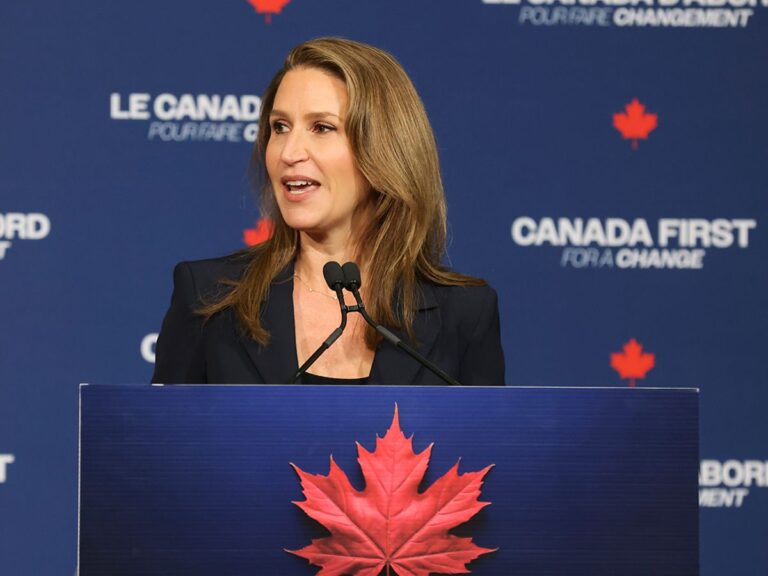
Ontario cabinet minister Caroline Mulroney announced Monday she is resigning her seat at Queen’s Park, citing a desire to begin a new chapter in her life — a departure that leaves Premier Doug Ford without one of his most prominent ministers amid a string of government controversies.

A Long-Serving Cabinet Veteran Steps Down

Mulroney, daughter of the late prime minister Brian Mulroney, was first elected in 2018 as part of Ford’s inaugural majority government. Over seven years, she held several high-profile portfolios, including attorney general, transportation, Francophone affairs, and most recently, president of the Treasury Board.

In a public letter released Monday, Mulroney cited the death of her father two years ago and the transition to an empty nest as factors in her decision. “Together, they have led me to the conclusion that now is the right time to step back from elected life and begin a new chapter, one I am genuinely excited about,” she wrote.

Mulroney told reporters at Queen’s Park — standing alongside her daughter Thea — that she had made the decision months ago but waited until the spring budget process and parliamentary session concluded before making it public. Her resignation takes effect June 5, when the Ontario legislature rises for the summer.

Transition and By-Elections

Ford has named Finance Minister Peter Bethlenfalvy as interim Treasury Board president, effective June 5. Long-Term Care Minister Natalia Kusendova-Bashta will assume the Francophone affairs portfolio.

Mulroney’s departure triggers a by-election in her riding of York-Simcoe, north of Toronto. Ford must also call a by-election in Scarborough Southwest, vacated when former NDP deputy leader Doly Begum resigned to run for the federal Liberals — a second contest that must be held by the end of summer.

A cabinet shuffle is expected at a later date.

Departure Comes Amid Government Controversy

Mulroney’s exit arrives at a difficult moment for the Ford government, which has faced mounting criticism over the purchase and rapid sale of a $28.9-million provincial jet and changes to freedom-of-information legislation.

Opposition parties had directly questioned Mulroney’s role in those decisions, arguing that as Treasury Board president she would have been required to approve major government expenditures, including the aircraft. Mulroney told reporters she is proud of the government’s record.

Ontario NDP Leader Marit Stiles said she takes Mulroney at her word about her personal reasons for leaving, but suggested the departure signals deeper dysfunction. “She had a massive responsibility. And I do feel, like I have for some time now, that the wheels are coming off this bus,” Stiles said.

Interim Ontario Liberal Leader John Fraser thanked Mulroney for her service while noting she never fully answered questions about the jet purchase. He said the PC caucus appears to be in low spirits.

What Comes Next for Mulroney?

When asked whether she might seek federal leadership at some point, Mulroney was careful with her wording. “I’m ruling out any steps into elected politics over the next few years,” she said — a formulation that stops well short of a permanent exit from public life.

Mulroney endorsed federal Conservative Leader Pierre Poilievre during last year’s federal election. Ford, for his part, said in a statement that “politics is in Caroline’s blood” and predicted the conservative movement would continue to benefit from her ideas.

Mulroney reflected warmly in her letter on her tenure as Francophone affairs minister — a role she held across all eight years in government, though it began with controversy in 2018 when her office presided over funding cuts to French-language services, sparking significant backlash from Ontario’s Francophone communities.

Arbitration Board Dismisses Nate Erskine-Smith’s Challenge to Ontario Liberal Nomination Loss in Scarborough Southwest

0

Arbitration Board Dismisses Nate Erskine-Smith’s Challenge to Ontario Liberal Nomination Loss in Scarborough Southwest

Federal Liberal MP Nate Erskine-Smith has lost his appeal of a provincial party nomination vote in Scarborough Southwest, after an arbitration board rejected his allegations of “serious irregularities” in the May 9 contest. The board confirmed the victory of businessman Ahsanul Hafiz, who will now carry the Ontario Liberal banner in an anticipated summer byelection.

Board Finds No Evidence of Wrongdoing

The three-member arbitration board, chaired by former Liberal cabinet minister and lawyer David Zimmer, issued its 17-page ruling Sunday night. “Having carefully reviewed all of the evidence, we find that there were no irregularities in the conduct of the meeting that affected the result of the vote or that call the meeting’s integrity into question,” the decision read.

“We are satisfied that the party’s rules were followed and that Ahsanul Hafiz was the true winner of the vote. The appeal is dismissed.”

Concerns Raised Too Late, Board Says

The board noted that Erskine-Smith and his team failed to raise concerns during the voting process itself. “They had opportunities throughout the day to dispute the propriety of conduct in the voting room. The returning officer’s evidence is that they never did this,” wrote Zimmer.

Jack Siegel, a lawyer representing Hafiz and former general counsel to the election campaigns of Dalton McGuinty and Kathleen Wynne, echoed that finding. “The entire process is built on this is where you make your case,” he said.

What Erskine-Smith Had Alleged

In his notice of appeal, Erskine-Smith raised several concerns about the conduct of the nomination meeting, including:

The board reviewed these allegations at a hearing held the previous Wednesday evening but found them insufficient to overturn the result.

Party Turns Focus to Byelection

Interim Ontario Liberal leader John Fraser called on the party to move forward. “Our focus is on the voters of Scarborough Southwest. They have an important decision ahead, and we will work to earn their trust,” he said.

Hafiz, who owns 30 Domino’s Pizza outlets, will run as the Liberal candidate in the byelection Premier Doug Ford is expected to call this summer. The seat has been vacant since New Democrat Doly Begum resigned in February to join the federal Liberals, winning a federal byelection on April 13.

Erskine-Smith’s Political Future Uncertain

Erskine-Smith, who has represented the neighbouring federal riding of Beaches-East York since 2015, sought the provincial nomination as part of a planned transition to Ontario politics and a potential run for the Ontario Liberal leadership. Following his nomination loss, he pledged to resign his federal seat after Parliament rises for the summer recess and indicated he was less inclined to pursue the provincial leadership race, leaving his political future in question.

Erskine-Smith did not comment before publication deadline.

Unionized Metro Vancouver Workers Launch Job Action

0

Unionized Metro Vancouver Workers Launch Job Action

Unionized workers in Metro Vancouver have begun job action, escalating a labour dispute that could affect services across the region.

Details of the dispute, including which bargaining unit is involved and the specific nature of the job action, are central to understanding the scope of the disruption for residents and commuters in the area.

Labour actions in Metro Vancouver have historically had significant ripple effects across the region’s transit, municipal, and public service networks, making the development one to watch closely in the coming days.

This article is being updated as more information becomes available.

South Korea Brings Submarine to Victoria in Bid to Win Canada’s $-Billion Naval Contract

0

Hanwha Ocean Docks KSS-III Submarine in B.C. as Ottawa Weighs Two Competing Bids

A South Korean submarine and its escort warship arrived in Victoria, B.C., on Saturday in a high-stakes display of naval hardware, as Seoul-based defence contractor Hanwha Ocean makes its case to build Canada’s next fleet of submarines.

The ROKS Dosan Ahn Changho submarine and the ROKS Daejeon frigate sailed into port after a two-month journey from South Korea’s Jinhae Naval Base. The visit is part of Hanwha’s aggressive campaign to secure what could be one of the largest defence procurement contracts in Canadian history.

A Decision Expected in June

Canada has received two competing bids for the submarine contract: one from South Korea’s Hanwha Ocean and one from Germany’s ThyssenKrupp Marine Systems (TKMS). Both bidders have been told to expect a government decision in June, with first delivery targeted for 2032.

Rear Adm. David Patchell, commander of Maritime Forces Pacific and Joint Task Force Pacific, welcomed the South Korean vessels and underscored the urgency of the acquisition.

“I need them yesterday,” Patchell said. “Canada needs a navy. We are the largest maritime, the longest coastline in the world — 244,000 kilometres stretched across three oceans.”

Canada is seeking a total of 12 submarines, a fleet Patchell said would make the country a “submarine nation.”

Hanwha’s Pitch: Speed, Industry, and Visibility

The KSS-III submarine now docked in Victoria is the same model Hanwha is proposing to deliver to the Royal Canadian Navy. The company has paired its naval pitch with a broader economic offer, pledging to manufacture military vehicles on Canadian soil in partnership with the domestic auto sector — including mobile howitzers, rocket launch systems, and infantry fighting vehicles.

“What we’ve heard loud and clear is to deliver the first four submarines as quickly as possible with no modifications,” said Glenn Copeland, CEO of Hanwha Canada.

Hanwha has also mounted a visible public relations campaign, with advertisements for its KSS-III submarine appearing on YouTube, billboards, and other media as the company works to raise its profile in Ottawa.

Germany Counters with NATO Partnership Argument

TKMS, the German competitor, is taking a different approach. Its bid is backed by the governments of Germany and Norway, which are positioning the offer as a deeper partnership with NATO allies rather than a straight commercial transaction.

TKMS spokesperson Nils Beyer said in April that the strength of the German bid lies in its “depth of government-backed engagement,” including targeted investment mechanisms, strategic infrastructure supports, and long-term financial frameworks.

TKMS has also worked to embed Canadian companies in its supply chain, announcing partnerships with Bombardier and Lockheed Martin Canada. The company declined to comment further on specific aspects of the bid while the government’s assessment is ongoing.

Canada’s Aging Submarine Fleet

The procurement comes as Canada’s existing submarine fleet — four Victoria-class vessels acquired second-hand from the United Kingdom in the 1990s — continues to age. The Royal Canadian Navy has faced persistent operational challenges with the aging boats, which have spent significant periods out of service.

Patchell struck an optimistic tone about the broader naval build-up underway, noting that Canada is also acquiring new destroyers and supply ships alongside the submarine program.

“It’s excitement about the Royal Canadian Navy that we are building,” he said. “We are building the navy Canada needs to defend all three of our oceans.”

Brantford Calls on Ontario to Crack Down on Copper and Scrap Metal Theft

0

Brantford Calls on Ontario to Crack Down on Copper and Scrap Metal Theft

The City of Brantford is urging the Ontario government to take provincial action to combat a rising wave of copper and scrap metal thefts, according to a report published Wednesday by CTV News Kitchener.

Municipal officials are pressing Queen’s Park to introduce or strengthen measures that would make it harder for thieves to profit from stolen metal — a problem that has cost communities across the province millions of dollars in damaged infrastructure and disrupted services.

A Growing Problem for Ontario Municipalities

Copper theft has long plagued municipalities, utilities, and construction sites across Canada. Stolen copper wire and piping can disrupt electrical systems, telecommunications networks, and public infrastructure, with repair costs far exceeding the street value of the stolen material.

Brantford’s call to the province reflects a broader frustration among Ontario cities that local enforcement alone is insufficient to deter organized theft rings that target scrap metal for resale.

What Municipalities Are Asking For

While full details of Brantford’s specific proposals were not available at time of publication, municipal advocates have historically called for measures such as:

Several Canadian provinces have introduced scrap metal dealer regulations in recent years in response to similar concerns, with varying degrees of success.

Province Has Yet to Respond

The Ontario government had not publicly responded to Brantford’s request as of the time of the report. The issue is expected to draw attention from other municipalities facing comparable challenges across the province.

Pentagon Suspends Defence Talks With Canada, Citing Spending Gaps and F-35 Delays

0

Pentagon Suspends Defence Talks With Canada, Citing Spending Gaps and F-35 Delays

The United States has suspended its participation in a landmark bilateral defence body, with a senior Pentagon official warning on Thursday that Canada has failed to take the steps necessary to become a “credible” security partner — pointing specifically to lagging military spending and an unresolved review of a major fighter jet purchase.

A Historic Body Put on Hold

The Pentagon announced on May 18 that it was “pausing” its involvement in the U.S.-Canada Permanent Joint Board on Defense (PJBD), the senior advisory body on North American continental defence that has existed since 1940. The suspension marks a significant diplomatic signal from Washington at a time of already strained relations between the two countries.

“Canada has yet to make the hard decisions and tradeoffs needed to put it on track to become a credible partner in the mutual defense of our continent and hemisphere,” the Pentagon official said, speaking on condition of anonymity.

Spending Targets and Fighter Jet Delays

The official said Canada must develop a concrete, resource-backed plan to raise its core defence spending from 2% to 3.5% of GDP by 2035 — a target significantly higher than the NATO benchmark of 2%.

The Pentagon also took direct aim at Canada’s prolonged review of its plan to purchase 88 Lockheed Martin F-35 fighter jets. That review was expected to conclude around September 2025 but remains incomplete.

Complicating matters, Canada has floated the possibility of splitting its future fighter fleet — acquiring some F-35s while also purchasing Gripen jets from Swedish manufacturer Saab. The idea has emerged against a backdrop of deepening trade tensions with Washington.

“The Canadian government’s delays and lack of transparency around its ongoing F-35 review are just one example of the prioritization of politics over our shared responsibility for North America’s defense,” the official said. “The Department welcomes a rapid conclusion to this review.”

The Canadian government did not immediately respond to a request for comment.

A Relationship Under Pressure

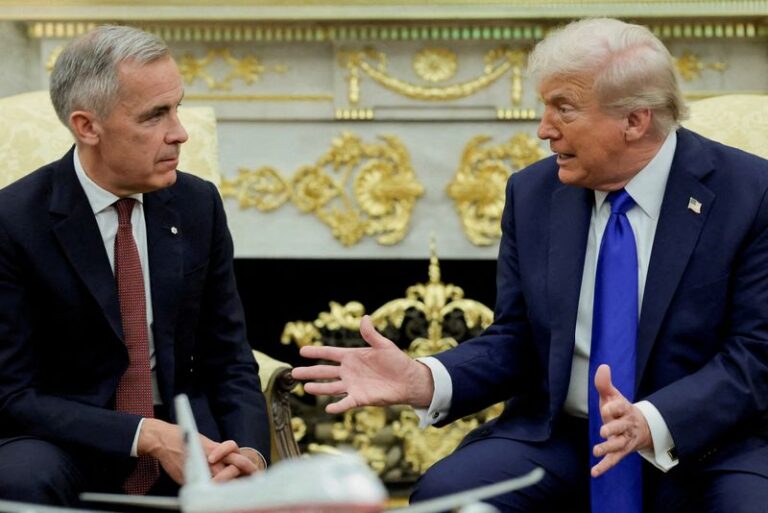
The dispute over defence spending is unfolding within a broader deterioration of Canada-U.S. relations. President Donald Trump and Prime Minister Mark Carney have clashed repeatedly over trade policy, as well as Trump’s stated interest in acquiring Greenland and his suggestion that Canada could become the 51st American state.

Meanwhile, the Pentagon has identified the Arctic as an increasingly critical zone for U.S. national security and economic interests, and has been pressing NATO allies to meaningfully strengthen their own defence capabilities.

Carney has publicly acknowledged that Canada’s historically close ties to the United States, once considered an asset, have become a source of vulnerability. He has moved to deepen relationships with what he describes as “middle powers”, positioning Canada within a coalition of allies less dependent on Washington.

Despite the Pentagon’s move, Carney has sought to play down the significance of the PJBD suspension, framing it as one episode within a broader and ongoing relationship.

Toronto Voters May Get a Say on Billy Bishop Airport’s Future This October

0

Toronto Voters May Get a Say on Billy Bishop Airport’s Future This October

When Torontonians head to the polls in October to elect a new mayor, they could also be asked to weigh in on one of the city’s most contentious infrastructure debates: the future of Billy Bishop Toronto City Airport. The question comes as Ontario’s provincial government moves to wrest control of the island airport away from the City of Toronto — a move city hall is fighting back against.

What Ontario Is Proposing

Ontario Transportation Minister Prabmeet Sarkaria has introduced legislation that would allow the province to take over the City of Toronto’s role in the tripartite agreement governing the airport lands. That agreement currently sits between the city, the federal government, and the Toronto Port Authority, a federal agency.

The bill is part of a broader provincial push to expand Billy Bishop to accommodate jet aircraft — a significant upgrade from the turboprop planes that currently serve the airport.

City Hall Pushes Back

Toronto Mayor Olivia Chow has been vocal in her opposition, calling the legislation a “unilateral action to grab city land without consulting Torontonians.” Chow told city councillors that the province did not consult the city at any point before tabling the bill.

Toronto city council passed an urgent motion to formally oppose the provincial move. Ontario NDP Leader Marit Stiles also criticized Premier Doug Ford, saying he was picking an unnecessary fight with the city at a time when affordability, health care, and jobs should be the priority.

Concerns About Housing and Parkland

The proposed legislation raises several additional concerns beyond the airport itself. The bill could see the province appropriate one-third of Little Norway Park, a waterfront green space near the airport. Transportation Minister Sarkaria was not clear on the specific reason for including the parkland, other than to support airport expansion.

Councillors and residents have also raised alarms about building height restrictions that typically surround airports. Similar restrictions around Pearson International Airport have long constrained development in surrounding neighbourhoods, and there are fears that an expanded Billy Bishop could threaten housing proposals along Toronto’s waterfront.

Toronto city staff have been directed to study whether a jet-capable expansion of the airport would limit future housing development in the waterfront area — a particularly sensitive issue as the city grapples with an ongoing housing crisis.

Federal Questions Remain Unanswered

The federal dimension of the dispute remains unresolved. A federal MP has raised questions about the expansion, noting there is currently no plan in place for how it would proceed. A federal agency has stated that taxpayers would not be on the hook for the proposed expansion costs, though critics have noted that an Ontario government economic impact assessment underpinning the project was based on an incomplete study.

What Comes Next

Whether Toronto voters will formally weigh in on the airport’s future through a ballot question this October remains to be determined. What is clear is that the fight over Billy Bishop has become a flashpoint in a broader tension between the province and Canada’s largest city — touching on questions of municipal autonomy, waterfront development, and democratic consultation.

Saskatchewan to sell Crown registry corporation for $1.2 billion, netting province $277 million for health infrastructure

0

Saskatchewan to sell Crown registry corporation for $1.2 billion, netting province $277 million for health infrastructure

The Saskatchewan government announced Tuesday it will sell Information Services Corporation (ISC), the Crown corporation that manages the province’s land titles, business filings, and property registries, to a subsidiary of Plenary Americas — an infrastructure investment arm of Quebec’s Caisse de dépôt et placement du Québec — in an all-cash deal valued at approximately $1.2 billion.

The province expects to receive roughly $277 million from the transaction before fees and closing costs, with proceeds earmarked for health-care infrastructure. Further details are expected within the coming week.

A premium price for a province-wide registry

Plenary Americas will acquire 100 per cent of ISC’s Class A Limited Voting Shares — including those held by the Crown Investments Corporation of Saskatchewan (CIC) — at $51 per share. That price represents a 55 per cent premium over ISC’s unaffected closing share price before the company launched its strategic review in September 2025.

ISC’s board of directors and a special committee of independent directors unanimously approved the deal. The special committee reviewed outreach to a broad pool of potential buyers and evaluated multiple acquisition proposals before selecting Plenary Americas.

“The agreement delivers value for shareholders while preserving ISC’s Saskatchewan roots,” said Dion Tchorzewski, chair of the special committee.

What ISC does — and what changes

Every parcel of farmland and every property with a home or business in Saskatchewan is registered through ISC. The Regina-based company also provides registry technology and information management services across Canada and internationally.

Under the terms of the sale, ISC’s headquarters will remain in Regina. The provincial government will retain its Golden Share in the corporation — a mechanism that gives the government authority to ensure the company’s property and head office stay in Saskatchewan.

Crown Investments Corporation Minister Jeremy Harrison endorsed the transaction. CIC, as ISC’s largest shareholder, has committed to vote its shares in favour of the deal.

Timeline and approvals

The transaction is expected to close in the third quarter of 2026, pending shareholder, court, and regulatory approvals.

ISC was taken public by the Saskatchewan government in 2013. Plenary Americas is an infrastructure investment vehicle of La Caisse, Canada’s second-largest public pension fund manager.

Alberta Separatists Threaten to Oust Premier Smith If Referendum Uses Pro-Canada Question

0

Separatist group warns of leadership challenge if Smith backs ‘Forever Canadian’ ballot question

Alberta Premier Danielle Smith faces an open threat of a leadership challenge from separatists within her own party after it became clear she may call a fall referendum using a pro-Canada question rather than one asking Albertans whether they want to leave Confederation.

Jeffrey Rath, lawyer for the Alberta Prosperity Project, issued the warning Wednesday, saying Smith must choose between her separatist base and former MLA Thomas Lukaszuk, who spearheaded a competing petition.

“Our view is Danielle needs to make a decision: Is she going to support Mister Lukaszuk, or is she going to support her base?” Rath said. “If she abandons her base or betrays her base, there will likely be political consequences.”

Two competing referendum questions

The Alberta Prosperity Project says it collected more than 300,000 signatures on a citizen’s petition asking: “Do you agree that the province of Alberta should cease to be a part of Canada to become an independent state?” A court recently rejected that petition, however, citing a failure to consult First Nations.

Political analysts now expect Smith to instead call a referendum based on the rival Forever Canadian petition, which asks: “Do you agree that Alberta should remain within Canada?” — a question framed in the affirmative and championed by Lukaszuk, a former UCP deputy premier.

“It’s not the question that the separatists want because it’s an affirmative question,” said Duane Bratt, a political scientist at Mount Royal University. “But it’s better than having no referendum question.”

Committee meeting collapses in confusion

Alberta’s path to a fall referendum grew more chaotic Wednesday when a bipartisan committee of MLAs convened to review Lukaszuk’s question collapsed after the UCP caucus prematurely issued a news release claiming the vote had already taken place and the motion had passed.

Smith is expected to clarify her plans during a paid, province-wide television address on Thursday.

Separatists threaten a membership drive and special general meeting

Rath said separatists are already organizing a response modelled on the campaign that ousted Smith’s predecessor, Jason Kenney.

“We’re asking all of the people that signed our petition and all of our canvassers to organize themselves to sell memberships across the province,” Rath said. “If our question is not put on a ballot by the end of the month, we’re going to be organizing a special general meeting of the United Conservative Party for August.”

A party divided — and a premier under pressure

Feo Snagovsky, an assistant professor of political science at the University of Alberta, said Smith has so far managed the conflicting demands of separatists and federalists within the UCP with considerable skill — but that balancing act is now reaching a breaking point.

“We know that close to a majority, if not a majority, of UCP supporters support Alberta becoming an independent country — and the other half does not,” Snagovsky said. “She’s facing this tension between trying to stay responsive to the general electorate and the popular will, and trying to make sure she retains her job.”

Public opinion polling consistently shows that outright separation remains a minority position among Albertans as a whole, complicating Smith’s calculus as she tries to satisfy a restive party base without alienating the broader electorate.

Michael Solberg, a partner at New West Public Affairs and a self-described UCP member, acknowledged the threat is real but cautioned against underestimating the premier.

“It’s a pressure cooker and heavy is the head that wears the crown,” Solberg said. “The far fringe of her party is increasingly becoming the majority of her party, at least per the threats coming from groups like the one Jeffrey Rath is leading — but the premier is no slouch. She’s a fighter, and people who underestimate her do so at their own peril.”