Home Blog Page 18

Hundreds March in Vancouver Against AI Data Centres as Environmental Concerns Mount

0

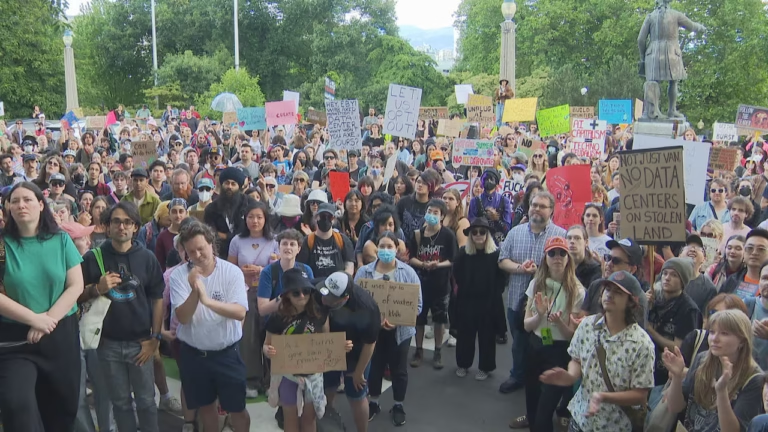
On a Saturday in late June, hundreds of Vancouverites left the steps of the Art Gallery and walked to City Hall with a single, clear demand: stop building AI data centres in their city. It was the second such march in less than two months. The first, in May, had drawn comparable crowds. Something is clearly not settling.

The protests target two facilities planned as part of Ottawa’s Enabling Large-Scale Sovereign AI Data Centres initiative, a partnership between the federal government and Telus. One centre is slated for the former Hootsuite headquarters in Mount Pleasant and is expected to come online before the end of this year. The second, planned for 150 West Georgia Street, is projected for completion in 2029. Together with an expanded Telus facility in Kamloops, the three-site British Columbia network is designed to eventually reach more than 60,000 graphics processing units and 150 megawatts of computing capacity by 2032.

The scale is significant. So is the anxiety it is producing. Protester Greenlee Welsh told CBC News that she simply doesn’t believe the trade-off is worth it, pointing specifically to water consumption and energy use as her primary concerns. These are not abstract worries in Metro Vancouver. The region is already operating under Stage 3 water restrictions, and demonstrators are acutely aware of what additional industrial demand could mean for a system already under pressure.

The numbers behind that concern are sobering. A recent International Energy Agency study estimated that data centres consumed 140 billion litres of water globally in 2023 alone. Organizer Guerric Haché put the local stakes plainly: “Even if it’s a small drain on the water supply, it’s going to make things worse — population growth is already straining our water supply.” Small percentages, in a stressed system, are not small problems.

Telus and its federal partners push back on this framing. The company says the centres will run on 98 per cent clean hydroelectric power and use 90 per cent less water than a conventional data centre. Telus also claims that recycled waste heat from the sites could warm roughly 150,000 homes. Federal Artificial Intelligence Minister Evan Solomon has argued the project will expand Canada’s sovereign computing capacity and help domestic researchers and businesses compete internationally. Vancouver Mayor Ken Sim has called the facilities world-class.

Those assurances have not quieted the opposition. B.C. Green Party leader Emily Lowan, who attended the June 27 rally, said she remains skeptical that projects of this scale can be built sustainably. She argued that politicians appear to be “blindly chasing the AI bubble,” and that the land involved could more usefully serve housing or other community needs — a pointed observation in a city where housing pressure is chronic and visible.

A petition calling for the projects to be halted had collected roughly 15,000 signatures before the march. That is not a fringe signal. Both the City of Vancouver and the provincial government have endorsed the builds, yet a meaningful portion of the public is clearly unconvinced by the case being made from above.

The federal government has clarified that no funding has yet been committed or distributed to the initiative. A spokesperson for Solomon’s office acknowledged that residents’ questions about energy use, water consumption, noise, grid impacts, and local benefits remain part of the ongoing federal assessment. That assessment, in other words, is still open. The marchers seem determined to keep it that way. They have already promised to return.


Canada’s Men’s Soccer Team Reaches the Round of 16 for the First Time in World Cup History

0

There are moments in a country’s sporting life that arrive quietly and then detonate. For decades, Canadian men’s soccer existed in a kind of permanent almost — close enough to the world stage to feel its heat, never quite close enough to stand in its light. Sunday afternoon in Los Angeles, that changed.

Canada defeated South Africa 1–0 in the round of 32 at the 2026 FIFA World Cup, advancing to the final 16 of a men’s World Cup for the first time in the country’s history. The goal came in the 92nd minute of extra time, from a chest trap and a driven shot by midfielder Stephen Eustáquio, and it landed in the net with the particular weight of things that have been a long time coming.

The path to that moment was anything but clean. For most of the match, Canada looked exactly like what it was: a talented but tightly wound side operating under unfamiliar pressure, against a South African team that offered little but conceded less. Chances came and went — a Jonathan David hesitation, a Derek Cornelius header, a Moïse Bombito header, a Tajon Buchanan blast — each one swallowed by the match without consequence. Penalties loomed like a verdict no one wanted to hear.

Then, in the 76th minute, Alphonso Davies entered the pitch for his first appearance of the tournament. His effect was immediate and electric — a jolt of pace and confidence that shifted the game’s texture without quite shifting its score. Bombito, playing his first 60 minutes of competitive football since October, departed to a deserved ovation, replaced by Luc de Fougerolles, who was flawless in the time he had. The match was still searching for its resolution when substitute Niko Sigur found Jacob Shaffelburg with a graceful touch, and Shaffelburg’s cross arrived at Eustáquio’s chest two minutes into added time. The ball bounced once on the turf. Eustáquio drove it with purpose. It skidded into history.

What followed on the pitch was the kind of release that doesn’t perform itself — it simply happens. Canada coach Jesse Marsch gathered his players and delivered words that will be replayed for some time. “You guys are Canadian heroes! Canadian heroes! Canadian heroes for the future children of this country who play this sport!” he shouted. “This sport has a big future because of you guys.”

Marsch is not wrong to reach for that register, because what Eustáquio’s goal represented was not only a result. It was a culmination. It carried with it every youth program run on a soggy municipal field on a Saturday morning, every coach — many of them Canadians with foreign accents and deep football knowledge — who put in the unglamorous hours. It carried the investment made over years in both the men’s and women’s national programs, and it is worth pausing here to acknowledge John Herdman, who built much of the infrastructure that made this moment possible, and Christine Sinclair, who watched the final minutes of this match on video and wiped away tears.

It also carried something harder to quantify but impossible to ignore: the stories of the players themselves. Many are the children of immigrants who left their home countries and brought football with them to Canada, trusting that Canada would offer them opportunity and safety in return. Eustáquio’s parents came from Portugal; he returned to Portugal as a child and came back to Canada. When asked on TSN about his parents — both of whom died in recent years — he had to visibly steady himself. He said that when he struck that ball, he felt as though everyone had shot it with him. That is not a small thing to say, and it is not a small thing to hear.

That is a country, is what that is.

Across Canada, people watched this unfold together — at watch parties, in bars, in living rooms, in communal garages, on phones pulled out in airports. One widely shared image showed a passenger tracking the match’s final minutes while their flight descended into Ottawa. The goal went in at the 92nd minute. The plane had landed at 4:45 p.m. The timing was not staged. It did not need to be.

Now comes the harder question of what comes next. Canada will face either the Netherlands (ranked seventh in the world) or Morocco (ranked sixth) in the round of 16 on July 4. That is a formidable obstacle by any measure, and the absence of injured midfielder Ismaël Koné narrows the options further. Bombito and Davies will be available in some capacity, but their fitness remains a variable. Marsch framed the next match as a free hit — a chance to test Canada against one of the tournament’s genuine powers without the crushing weight of expectation. “I feel like it’s a free hit, and we’re going to go after it and do everything we can to see if we can find a way,” he said.

South Africa coach Hugo Broos, gracious in defeat, offered his own assessment from Los Angeles. “I think they have a chance,” he said of Canada. “Because they play good football, they are powerful, there is speed in the team, so it’s a rather modern team. And with the mentality that is in that team, yeah, they can make a surprise in the next round, certainly.”

Whether Canada advances further or not, Sunday’s result has already altered something. Football has long been described as a sleeping giant in this country — a sport with deep roots in immigrant communities and youth participation, perpetually waiting for a national team capable of giving it a face. That team now exists. The final 16 of a World Cup, expanded format or not, is a place Canadian men’s soccer could barely imagine for generations. It is no longer imaginary. The before is over. The after has begun.

Curaçao Faces Ivory Coast in High-Stakes World Cup Group E Showdown

0

Curaçao Faces Ivory Coast in High-Stakes World Cup Group E Showdown

Curaçao takes on Ivory Coast at Philadelphia’s Lincoln Financial Field tonight in a must-win World Cup group stage match that could produce one of the tournament’s greatest upsets. A victory for the tiny Caribbean island nation would send them through to the round of 32 at the expense of the West African giants.

From Disaster to Contention

Few predicted Curaçao would be in this position. The Blue Wave opened their World Cup debut with a 7–1 defeat to Germany, but a gutsy draw against Ecuador — anchored by goalkeeper Eloy Room — kept their qualification hopes alive.

Only a win will do tonight. A draw would leave Curaçao level on points with fellow debutants Cape Verde, who currently hold eighth place among the best third-placed teams — but Cape Verde hold a superior head-to-head record and a significantly better goal difference.

Historic Stakes for the World’s Smallest World Cup Nation

Should manager Dick Advocaat‘s side advance, it would rank among the most stunning results in World Cup history. Curaçao is the smallest nation ever to compete at the tournament, with a population of approximately 156,000 — less than half that of Leicester, England, and a land area smaller than the city of Doncaster.

Curaçao’s Key Players

Goalkeeper Room remains central to the team’s chances, while Livano Comenencia keeps his place after scoring against Germany and impressing against Ecuador. The Bacuna brothers — Leandro and Juninho — anchor the midfield.

Tahith Chong, the only native Curaçaoan in a squad largely composed of players born abroad, starts on the left flank. Former Brighton striker Jürgen Locadia leads the attack, looking to find his form after an inconsistent spell with club side Miami FC.

Ivory Coast Hungry After Opening Stumble

Ivory Coast arrive at this match motivated by disappointment. In their first World Cup appearance in 12 years, Les Éléphants surrendered a lead against Germany — Franck Kessié had put them ahead after 30 minutes, only for Denis Undav to score twice in the final half-hour to hand the West Africans a defeat.

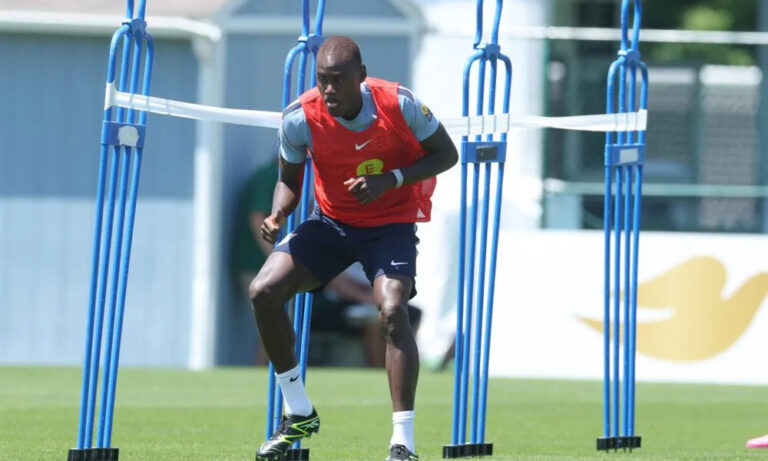
Kessié starts again alongside Nottingham Forest’s Ibrahim Sangaré in midfield. Leipzig’s Yan Diomandé will look to build on strong recent showings, while Manchester United winger Amad Diallo seeks to bounce back after a difficult performance against Germany.

Inter Milan youngster Ange-Yoan Bonny retains his starting spot up front alongside former Arsenal forward Nicolas Pépé.

Match Details

CBSA Opens Nearly 200 Extortion Investigations in Greater Toronto, Deports 17 Foreign Nationals

0

CBSA Opens Nearly 200 Extortion Investigations in Greater Toronto, Deports 17 Foreign Nationals

The Canada Border Services Agency (CBSA) has opened 196 immigration investigations in the Greater Toronto Area linked to extortion crimes, the agency announced Thursday, with 33 removal orders issued and 17 people already deported.

National Scope of the Crackdown

Across Canada, the CBSA has launched a total of 484 immigration investigations as of June 18. Authorities have issued 139 removal orders currently being enforced, and 81 individuals have been removed from the country.

Regional breakdowns show the scale of the enforcement effort. In British Columbia and Yukon, 150 investigations have been opened, 69 removal orders issued, and 46 people removed. In the Prairies, 138 probes are underway, with 37 removal orders issued and 18 individuals deported.

Extortion Wave Targets South Asian Communities

The surge in extortion activity has been a growing concern for several years, particularly in Greater Toronto and British Columbia, where South Asian communities have been disproportionately targeted.

In the Peel Region alone, police have reported at least 37 shootings since last fall, with residents facing threats of violence and demands for large sums of money, often followed by shootings at properties or arsons.

Last month, the Peel Regional Police Extortion Task Force arrested five men allegedly connected to a gang known as For Brothers, with ties to Surrey, B.C., and Edmonton.

Cross-Border Enforcement Partnerships

Since August 2024, the CBSA has intensified its immigration enforcement efforts by embedding with local police through joint task forces. Under this model, police flag individuals suspected of immigration violations and refer cases to the CBSA for investigation and potential removal.

Peel Regional Police have also partnered with law enforcement agencies across Canada and the FBI in the United States as part of a broader transnational investigation into extortion-related crimes.

Public Safety Minister Gary Anandasangaree, who oversees the CBSA, framed the crackdown in terms of public safety. “Canadians deserve to feel safe in their homes, workplaces and communities,” he said. “We continue to take strong action by strengthening enforcement, investing in our partners, and ensuring that those who exploit or endanger others are held accountable.”

How to Report Information

The CBSA is asking the public to help identify individuals who may be inadmissible to Canada. Tips can be submitted through the agency’s online tip line or by calling toll-free at 1-888-502-9060.

Saskatchewan Venezuelans Rally Support After Deadly Earthquakes Strike Home Country

0

Saskatchewan Venezuelans Rally Support After Deadly Earthquakes Strike Home Country

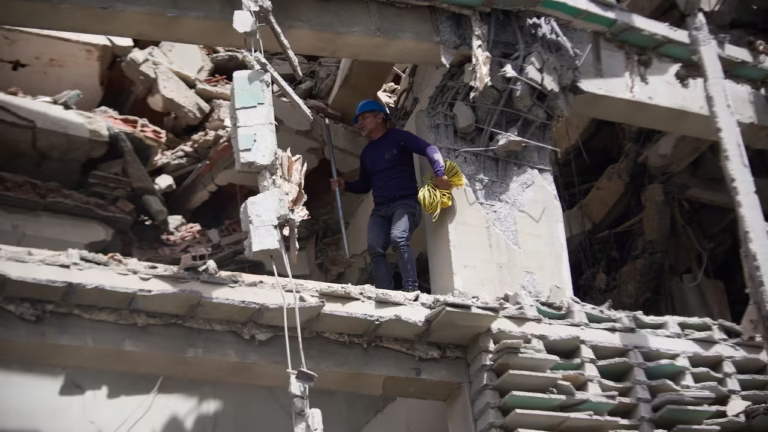
Venezuelans living in Saskatchewan are scrambling to locate missing loved ones and coordinate relief efforts after two powerful earthquakes — measuring 7.2 and 7.5 in magnitude — struck Venezuela on Wednesday, collapsing buildings in the capital Caracas and leaving thousands missing or homeless.

Diaspora Community Takes Action

Betzabeth Jaramillo, a humanitarian activist and political refugee who relocated to Saskatoon in 2023, has been working around the clock since the quakes hit. She is using social media to share missing persons information and help connect Saskatchewan’s Venezuelan community with relatives back home.

“We try to encourage the people to go outside and help the people inside the buildings,” Jaramillo said. “I try to connect to the rescue centres to find people because, you know, their communication is unstable and we need all the hands inside Venezuela and outside to try to help them to resolve the situation.”

The effort is complicated by unreliable telecommunications infrastructure in Venezuela, making it difficult to confirm the safety of friends and family members.

Canada Pledges Initial Aid

Canada’s foreign affairs minister announced the country will provide an initial $5 million in humanitarian aid to support lifesaving efforts on the ground. The funding is earmarked for emergency food, clean water, and health care.

The full scale of the disaster is still emerging, with rescue operations ongoing and the death toll expected to rise as crews work through collapsed structures across the country.

St. John’s Marks World Refugee Day with City Hall Ceremony Honouring Newcomers’ Resilience

0

St. John’s Marks World Refugee Day with City Hall Ceremony Honouring Newcomers’ Resilience

The City of St. John’s and the Association for New Canadians held a ceremony at City Hall on Tuesday to mark World Refugee Day, celebrating the contributions and resilience of refugees who have made Newfoundland and Labrador their home.

World Refugee Day, observed annually on June 20, honours the strength of people forced to flee their home countries. The event was designed to highlight refugee success stories and the ways newcomers enrich local communities.

Diversity as a Community Asset

Hussein Banisad, senior manager of the association’s Language Instruction for Newcomers to Canada program, emphasized the value refugees bring to the region.

“Diversity is very important when we see people are adding to our community in many different ways,” Banisad said at the ceremony.

Sharing Personal Stories

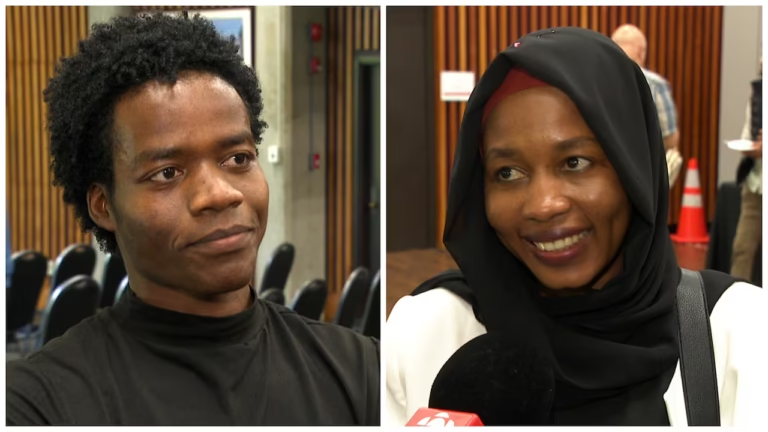
Alhafez Osman, originally from Sudan, arrived in Newfoundland and Labrador in 2022 after fleeing conflict in his home country. He told CBC News that giving refugees the space to share their experiences is essential.

Osman was among several newcomers who spoke at the event, reflecting on the journeys that brought them to Canada and the lives they are building in the province.

Russian Opposition Politician Sentenced to Seven Years in Prison for Anti-War Social Media Posts

0

Russian Opposition Politician Sentenced to Seven Years in Prison for Anti-War Social Media Posts

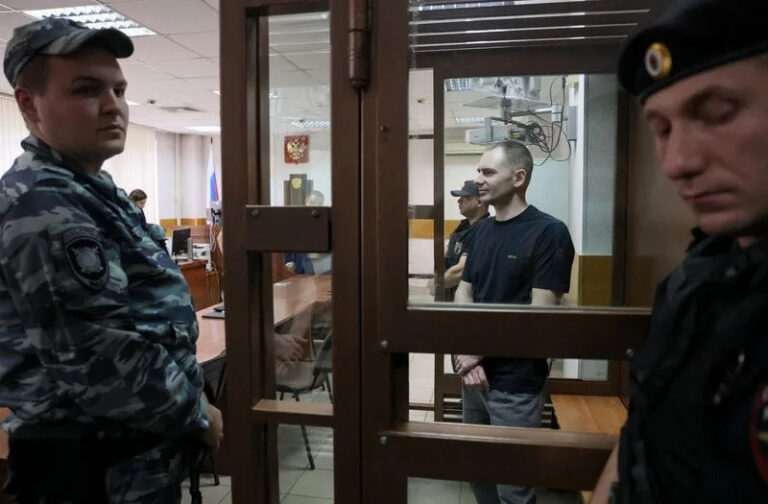
A Russian opposition politician was convicted Wednesday and sentenced to seven years in prison for two social media posts criticizing the war in Ukraine — a verdict the defendant called “a ban on dissent,” delivered just weeks before a national parliamentary election.

Who Is Maxim Kruglov?

Maxim Kruglov, 39, is the deputy leader of Yabloko, Russia’s main liberal opposition party and one of the few political forces openly opposing the war in Ukraine. He previously served as a lawmaker in Moscow’s city legislature.

Kruglov was arrested in October 2024 and charged under Russian laws criminalizing the spread of “false information” about the Russian military — laws enacted after Russia launched its full-scale invasion of Ukraine in 2022.

The Posts That Led to His Conviction

Prosecutors cited two posts Kruglov made on the messaging platform Telegram in 2022. One referenced United Nations data on casualties in the conflict; the other addressed events in Bucha, a town near Kyiv where Ukrainian authorities and Western governments say Russian forces killed civilians in March 2022. Moscow has denied responsibility, claiming the incident was staged.

Kruglov pleaded not guilty and rejected prosecutors’ claims that his posts were motivated by political hatred. “It turns out that political disagreement is tantamount to hatred,” he told the court.

A Verdict With Political Implications

The sentencing comes roughly two months before Russia’s State Duma elections, scheduled for September, in which Yabloko hopes to participate. The party, once a prominent force in post-Soviet Russian politics, currently holds no seats in the national parliament and only a handful in regional legislatures.

Yabloko leader Nikolai Rybakov condemned the verdict outside the courthouse. “If people think that such sentences are acceptable, that such sentences are normal, then they might as well not bother voting or support parties other than Yabloko,” he told reporters.

A recent survey by state pollster Vtsiom found that parties outside parliament, including Yabloko, collectively hold just 6.3% support, while more than two-thirds of respondents backed pro-Kremlin parties, including the ruling United Russia.

Kremlin Defends Censorship Laws

The Kremlin has justified sweeping censorship legislation as necessary to maintain national unity during what it describes as an existential confrontation with the West. Critics argue these laws are being used to silence legitimate political opposition.

Kruglov, speaking from the dock in a black T-shirt, said he remained opposed to the war and expressed hope for Russia’s future. “A country that its neighbours respect, rather than fear. A country where it is possible to disagree,” he said.

Como Submit Opening Bid for Chelsea Defender Trevoh Chalobah

0

Italian Club Makes Move for English Centre-Back

Serie A side Como have submitted an opening bid for Chelsea defender Trevoh Chalobah, according to transfer journalist Fabrizio Romano. Whether Chelsea will sanction the sale of the 26-year-old this summer remains uncertain, with Inter Milan also reported to be monitoring the situation.

Chalobah has two years remaining on his current contract at Stamford Bridge, with no new deal yet on the horizon — a circumstance that could prompt Chelsea to consider selling now in order to secure a transfer fee.

A Difficult Season at Stamford Bridge

Chalobah was among a number of Chelsea players who struggled for form during the 2025/26 Premier League season, failing to consistently reproduce the level he had shown toward the end of the previous campaign.

Chelsea’s defensive unit as a whole had a troubled year. Wesley Fofana was again hampered by injury, while Tosin Adarabioyo endured an inconsistent debut season at the club. Benoît Badiashile failed to build on his early promise, and new signing Mamadou Sarr is still unproven at the highest level.

Chelsea Weigh Value of Homegrown Asset

Despite his difficult season, Chalobah is considered by many observers to have outperformed several of his fellow centre-backs at the club. He is also a homegrown player — a designation that carries increasing regulatory weight under both Premier League and UEFA squad registration rules.

The interest from Como and Inter Milan underscores Chalobah’s standing in the market as a reliable, experienced defender. Notably, comparable transfer interest has not emerged for Fofana, Adarabioyo, Badiashile, or Sarr.

Chelsea’s leadership faces a decision about whether to cash in on one of their few centre-backs with demonstrable Premier League credentials and genuine resale value, or retain him as part of a defensive rebuild ahead of the coming season.

Montreal Shooting: How a Gunman Killed a Police Officer and a Civilian Before Being Shot Dead

0

Montreal Shooting: How a Gunman Killed a Police Officer and a Civilian Before Being Shot Dead

A police officer and a civilian were shot and killed in Montreal’s Côte-des-Neiges neighbourhood on Monday, June 22, 2026, after a gunman opened fire from a hotel window and then engaged officers in the street below. The suspected shooter was killed by responding officers. A second officer was critically wounded but has since stabilized.

How the Attack Unfolded

At approximately 11:35 a.m., someone called 911 to report a person pointing a gun from a window at the Hilton Garden Inn Montreal Midtown hotel. Officers arrived on scene and were immediately met with gunfire.

Cellphone videos verified by news outlets show a person dressed in fatigues-style clothing — an olive-coloured jacket and cargo pants — exchanging fire with police on the street. One officer is seen falling to the ground, crawling toward a parked car for cover, and eventually going fully prone.

Another officer takes cover behind a planter as gunfire continues. An unarmed civilian approaches the officer; a shot is heard and the person collapses. It remains unclear from the footage whether the officer or the gunman fired the fatal shot. Seconds later, the person in fatigues approaches the planter and appears to exchange fire with the officer before attempting to reload a rifle and collapsing amid continued gunfire.

The Victims

The officer killed was identified as Constable Mohamed Lamine Benredouane, 34, who joined the Service de police de la Ville de Montréal (SPVM) in 2021. The civilian killed was Michel (Michael) Moshe Mizrahi, described as a beloved member of Montreal’s Jewish community.

A second SPVM officer sustained critical injuries and was transported to hospital; her condition has since stabilized. A second civilian suffered minor injuries.

Who Was the Suspect?

Quebec’s coroner’s office identified the shooter as Seth Scott Hatfield, 25, from Lethbridge, Alberta. He was a philosophy student at the University of Lethbridge.

Investigators found a violent 104-page manifesto targeting women in his hotel room. Authorities have linked Hatfield to incel subculture — online communities associated with misogynistic ideology that have been connected to previous mass violence in Canada and elsewhere.

Quebec’s Minister of Domestic Security, Ian Lafrenière, confirmed the shooting was not classified as terrorism, a conclusion reached in consultation with multiple agencies including the Royal Canadian Mounted Police.

City on Alert

The attack triggered significant disruptions across central Montreal. Quebec’s Transport Department closed sections of the Décarie Expressway and surrounding highway network. Two metro lines were also partially shut down.

Residents near Côte-des-Neiges, Highway 40, and Queen Mary Road were ordered to shelter in place. That alert was lifted shortly after 3 p.m. — after the suspect had already been killed.

Eyewitness David Benchimol described the scene to Global News: “Right outside our window, we saw them going into the grocery store, guns drawn, hiding behind cars and SWAT team arrived shortly after. And since then, it’s been a ghost town out here.”

Political Response

Montreal Police Chief Fady Dagher noted it had been 24 years since a Montreal officer was killed in the line of duty. “It’s a very, very sad day. It’s a nightmare,” he told reporters.

Canadian Prime Minister Mark Carney issued a statement offering condolences to the victims and thanking officers for their response. Quebec Premier Christine Fréchette ordered the Quebec flag flown at half-mast. Montreal Mayor Soraya Martinez Ferrada issued the same order for City of Montreal flags.

Investigations Underway

Quebec’s police watchdog, the Bureau des enquêtes indépendantes (BEI), has opened an investigation into how officers responded to the shooting — a standard procedure whenever police use of force results in death or serious injury.

The Lethbridge Police Service confirmed it is assisting Quebec authorities with the broader investigation into the suspect’s background and motivations.

Winnipeg High School Students Bring Home International Culinary Gold from Paris

0

Gordon Bell team beats international competition after back-to-back Canadian titles

A team of four students from Gordon Bell High School in Winnipeg has won an international culinary competition in Paris, capping a remarkable run that included a second consecutive national title earlier this month.

Students Avery Van Solkema, Cailyn Olshevski, Yevhen Zinchenko and Matea Thiessen-Unger, 16, represented Canada on the world stage — and came home with top honours.

“It was kind of unreal,” said Thiessen-Unger.

From After-School Program to World Stage

The four students got their start through Kitchen Brigades, an after-school culinary education program run by La Tablée des Chefs for students aged 12 to 17.

The program consists of 25 cooking workshops designed to build practical skills and food literacy. “The goal is to teach kids how to cook responsibly,” said Van Solkema.

After completing the workshops, top students are assembled into a team and begin training together before entering the competition stream.

Back-to-Back National Titles

The Gordon Bell team secured their spot at the international competition earlier this month at the Institut de tourisme et d’hôtellerie du Québec culinary school in Montreal. They were the only Manitoba team in the finals, and took first place for the second year in a row against four other finalist teams.

Mystery Ingredients, Five Minutes to Plan

In Paris, the pressure was immediate. Competing teams were presented with a set of mystery ingredients and given just five minutes to plan before a one-hour cooking window began.

The rules required each team to incorporate one Canadian ingredient and one French ingredient. The Gordon Bell students prepared maple pan-seared vegetables and a pesto sauce made with olives and parmesan, with each team member taking responsibility for a specific part of the process.

“[The judging process] is intense. Really intense,” said Zinchenko.

Judges evaluated the dishes on taste and presentation, but also assessed teamwork, organization and cleanliness. After tasting the meals privately, they deliberated for approximately 30 minutes before announcing their decision.

What Comes Next

For some team members, the experience has opened doors to a potential culinary career. “Culinary is definitely an option for me,” said Van Solkema.

Thiessen-Unger said she does not plan to pursue cooking professionally, but values what the program gave her. “Kitchen Brigades has taught me things, like, the knowledge of what goes into a dish, and appreciating making food,” she said.

Zinchenko is already thinking about the program’s future. “Next year, we hope there are other kids who are as passionate about cooking as us, doing better than us,” he said.