Home Blog Page 19

Retired UFC Star Dustin Poirier Arrested for Public Drunkenness in Georgia

0

Retired UFC Star Dustin Poirier Arrested for Public Drunkenness in Georgia

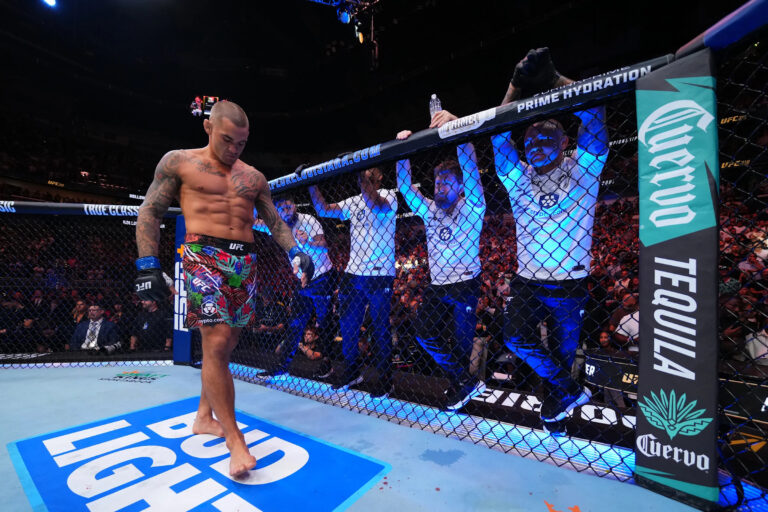
Retired UFC lightweight star Dustin Poirier was arrested on Sunday in Georgia on a charge of public drunkenness, according to multiple reports. The 37-year-old was booked at 6:38 p.m. and released a few hours later, TMZ reported.

Poirier made a court appearance the following Monday, according to MMAFighting.com. Further details surrounding the circumstances of his arrest were not immediately available.

A Misdemeanor Charge With Potential Consequences

Public drunkenness is classified as a misdemeanor under Georgia law. A conviction can carry a sentence of up to one year in jail, a fine of up to $1,000, or both.

Poirier Breaks Silence on Instagram

Earlier on Sunday — Father’s Day — Poirier had reposted an image shared by his wife on Instagram showing him with his children. By Monday, he addressed his followers directly.

“Love you all. I’m working on myself,” Poirier wrote in a brief Instagram post.

A Decorated Career in the Octagon

Poirier is widely regarded as one of the greatest lightweights in mixed martial arts history. Over 41 professional bouts, he compiled a 30-10 record with one no contest, capturing the interim UFC lightweight championship along the way.

He earned 10 Fight of the Night awards during his UFC tenure and ranks third all-time in knockout victories in the promotion.

Poirier fought for the last time earlier in 2025, losing a unanimous decision to Max Holloway in what was billed as his retirement bout. He officially retired following that defeat.

World Cup Day 7: Kane equals Lineker record, Ronaldo misfires again, and Van der Vaart apologises for racist remark

0

World Cup Day 7 Recap

Harry Kane equalled England’s all-time World Cup scoring record, Cristiano Ronaldo continued his tournament goal drought, and former Netherlands international Rafael van der Vaart apologised after making a racist remark about Japanese players — all on a packed Day 7 of the FIFA World Cup.

Kane Equals Lineker’s England World Cup Record

Harry Kane reached 10 World Cup goals for England, drawing level with Gary Lineker’s long-standing national record, after a first-half brace in a 4-2 Group L victory over Croatia.

The Bayern Munich striker opened the scoring with a retaken penalty in the 12th minute, then headed home powerfully from a Declan Rice corner just before the break. England ran out commanding winners in what proved to be a high-scoring encounter.

“Off to a winning start. Second half set the standard for us, credit to all the boys for a huge shift,” Kane wrote on social media after the match.

England top Group L with three points. Croatia, the 2018 World Cup finalists, are bottom with none.

Ghana Edge Panama in Stoppage Time

In the other Group L fixture, Ghana defeated Panama 1-0 thanks to a Caleb Yirenkyi winner deep into second-half stoppage time. The late goal puts Ghana in a strong position heading into the next round of group matches.

Ronaldo Misfires as DR Congo Frustrate Portugal

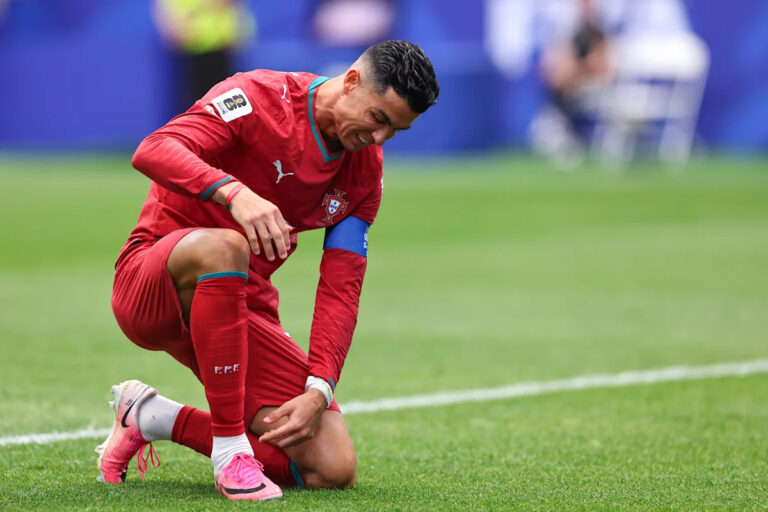
Cristiano Ronaldo’s wait for a major tournament goal continues. The 41-year-old drew a blank as Portugal were held to a 1-1 draw by the Democratic Republic of Congo in Group K — his 10th consecutive major tournament game without scoring.

Ronaldo has now had 33 shots across those 10 games without finding the net. The result came just one day after rivals Lionel Messi, Kylian Mbappé, and Erling Haaland all scored at the tournament.

France legend Thierry Henry, analysing the match for US television, was pointed in his criticism. He singled out a moment when Ronaldo chose to shoot rather than square the ball to teammate Bruno Fernandes, who was better placed to score.

“The team needs to score; not you need to score,” Henry said.

Ronaldo himself was more measured on social media: “It wasn’t the start we wanted, but this is far from over. Head up and focus on the next game.”

Portugal sit level with DR Congo on one point in Group K, behind Colombia, who defeated Uzbekistan 3-1 later in the day to take control of the group.

DR Congo’s Historic First Point

The draw was a landmark result for DR Congo, whose only previous World Cup appearance came in 1974 — when the country, then known as Zaire, lost all three group games by an aggregate score of 14-0. The point, and the goal, are both firsts in the nation’s World Cup history.

A photograph circulating widely on social media captured the moment: a small cluster of DR Congo supporters, surrounded by a sea of Portuguese fans in Lisbon, cheering their team’s equaliser.

Van der Vaart Apologises for Racist Remark About Japanese Players

Former Netherlands midfielder Rafael van der Vaart issued an apology after claiming all Japanese players “look alike” during live television coverage of the Netherlands’ World Cup opener against Japan.

The 43-year-old, working as a pundit for Dutch broadcaster NOS, made the comment while discussing a defensive lapse that led to Japan’s late equaliser. After noting that defender Micky Van de Ven had lost his man, Van der Vaart added: “They do all look alike of course, perhaps he thought that.” The remark was met with silence in the studio.

In a statement published by The Athletic, Van der Vaart said: “I understand that some people found my words hurtful. I sincerely regret that. If I have upset people because of this, I offer my apologies. That was never my intention.”

He added that he wanted to “make it clear that there was no racist or discriminatory intent” behind his statement, while acknowledging that “words can be interpreted differently.”

Cape Verde Goalkeeper’s Mother to Attend World Cup After Visa Fees Waived

Cape Verde goalkeeper Vozinha will be reunited with his mother at the World Cup after the United States government waived her visa bond payment.

The 40-year-old shot to global attention with a standout performance against Spain. He had previously revealed that his mother could not afford the bond required to obtain a US visa to attend the tournament.

Hakeem Jeffries, the Democratic leader in the House of Representatives, confirmed the US State Department had intervened to waive the fees. Vozinha’s mother is now expected to be in Miami in time for Cape Verde’s match against Uruguay.

Trump Says U.S. Would Be Better Off Without USMCA, But Leaves Door Open to Signing

0

Trump Casts Doubt on Continental Trade Deal at G7 Summit

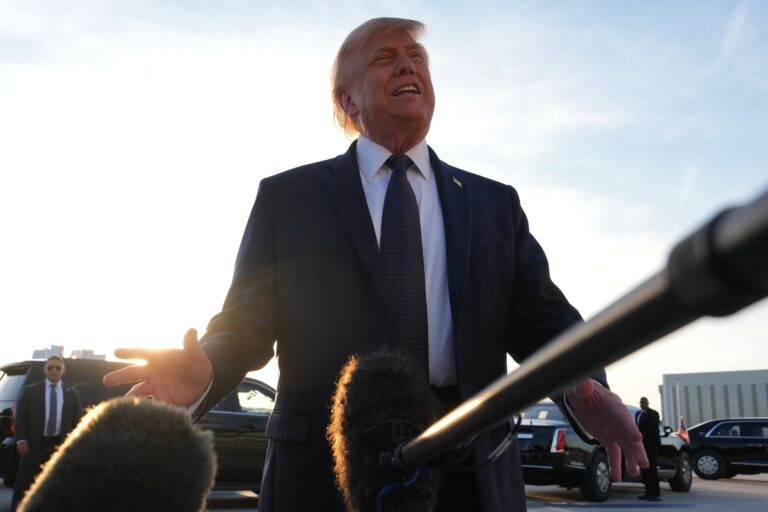
U.S. President Donald Trump declared Wednesday that America would be better off without the United States-Mexico-Canada Agreement, sending a confusing signal about the future of the trilateral trade pact that underpins much of the Canadian economy.

“We do better without that agreement,” Trump told reporters in France, where he was attending the G7 summit.

Contradictory Signals from Washington

Trump’s remarks were muddled throughout. He said he would rather “leave it unsigned” or “have it terminated,” but when pressed for clarification, he added: “I would rather not have the agreement but I may sign it.”

When pushed further on whether he intended to withdraw the U.S. from the deal or allow it to roll into annual reviews, Trump said he viewed it as “possibly expiring immediately” — while simultaneously saying he remained open to keeping it.

Trump also said he liked the agreement because it replaced the North American Free Trade Agreement — the same deal he once called the “best trade agreement ever” during his first administration.

What Happens After July 1

Known in Canada as CUSMA, the continental trade agreement is subject to a mandatory review, with July 1 serving as a key milestone. The Trump administration has signalled it will miss that date.

Missing the deadline triggers an annual rolling review that can last up to a decade, after which the agreement expires if not renewed. Both Canada and Mexico have called for a full 16-year extension.

Christopher Sands, director of Johns Hopkins University’s Center for Canadian Studies, offered perspective on what July 1 actually means. “It’s like the moment in a poker game where the players lay their cards on the table,” he said.

Sands explained that each country must signal whether it wants to renew for 16 years, withdraw entirely, or do neither — continuing under annual review. “Withdrawal is the only option that is unilateral, and renewal requires unanimous agreement,” he said.

The Stakes for Canada

The agreement currently shields Canadian and Mexican exporters from many of Trump’s tariffs — goods that comply with USMCA rules are exempt from the current global U.S. duty of 10 per cent.

Canada is nonetheless facing separate U.S. tariffs targeting steel, aluminum, automobiles, and cabinetry, underscoring how much economic pressure Ottawa is already absorbing.

Most trade experts believe the deep integration of North American industries makes a swift U.S. withdrawal from USMCA unlikely, regardless of Trump’s rhetoric.

Talks Underway — But Not with Canada

U.S. Trade Representative Jamieson Greer has said there are “pillars” of the agreement that function well and has floated the idea of two separate bilateral deals — one with Canada, one with Mexico — rather than a single trilateral pact.

Formal trade negotiations between the U.S. and Mexico have begun, but no official talks between Washington and Ottawa have yet launched.

Canada-U.S. Trade Minister Dominic LeBlanc met with Greer on the sidelines of the G7 on Tuesday, saying afterward that discussions with his American counterpart are not a “one-way conversation.”

B.C. Mother Pleads for Provincial Funding to Treat Son’s Rare Illness Abroad

0

Family Seeks Government Support for Overseas Treatment

A British Columbia mother is appealing to the provincial government for funding to send her son abroad for treatment of a rare illness, in a case that highlights the limits of Canada’s public healthcare system when patients require specialized care unavailable domestically.

The details of the family’s situation, including the specific illness and the country where treatment would be sought, were not fully available in the source material provided. This article will be updated as more information becomes available.

A Gap in Provincial Coverage

Cases like this one raise broader questions about how provincial health systems handle rare diseases that fall outside the scope of covered services. In Canada, healthcare is administered at the provincial level, meaning coverage decisions — including whether to fund out-of-country treatment — rest with provincial governments.

Families facing such circumstances often find themselves navigating a complex and emotionally exhausting appeals process, with no guarantee of a successful outcome.

What Comes Next

The mother’s public plea adds pressure on B.C. health authorities to respond. Advocates for rare disease patients have long called for clearer provincial policies governing access to experimental or overseas treatments.

This article will be updated as additional details emerge from the family and the B.C. government.

Competition Bureau Launches Probe Into Food Supply Chain to Address High Grocery Prices

0

Competition Bureau Launches Probe Into Food Supply Chain to Address High Grocery Prices

Canada’s Competition Bureau has announced a broad investigation into how competition — or the lack of it — across the entire food supply chain may be driving up grocery prices for consumers.

Three Key Areas Under the Microscope

The bureau says it will focus its examination on three critical stages of the food supply chain: production and processing, transportation and distribution, and retail pricing practices.

That means scrutinizing competition from the moment seeds are planted on farms or livestock are raised on ranches, through to processing, loading onto trucks, and delivery to wholesalers and distributors.

Retail Practices Also in the Crosshairs

The investigation will also examine how food items are priced on store shelves and how consumer-facing tools — such as loyalty programs — shape purchasing behaviour.

Not a Formal Market Study

The bureau is careful to distinguish this effort from a formal market study. Officials describe it as a broad diagnostic exercise to identify where intervention is needed and what actions policy-makers can take to improve affordability.

Jeanne Pratt, interim commissioner of competition, said the cost of food matters to all Canadians and that strong competition can help keep prices in check. She is also calling on industry stakeholders to share their experiences with the bureau.

Building on 2023 Findings

The investigation builds on the bureau’s 2023 retail grocery market study, which concluded that greater competition in the sector could help lower prices and spur innovation.

A final report, expected to be published next spring, will include findings and recommendations to governments on how competition could be improved across the full food supply chain.

EMSB Plans to Cut Over 100 Special Needs Support Positions, Drawing Backlash from Parents and Union

0

Budget Pressures Prompt Controversial Staffing Reductions

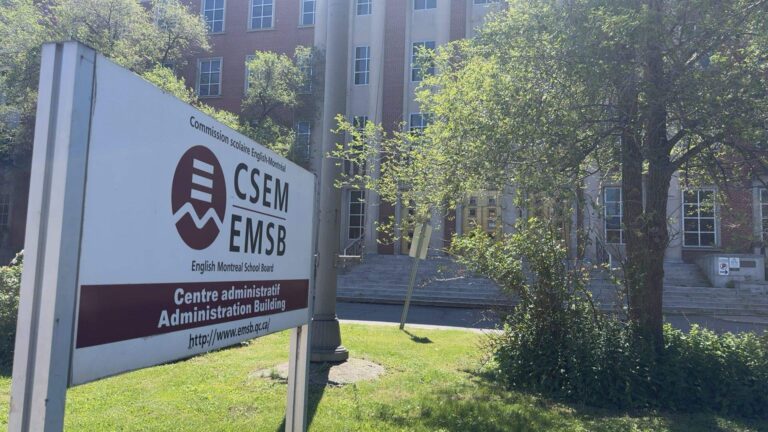
The English Montreal School Board (EMSB) is facing sharp criticism from parents and staff after proposing the elimination of more than 100 positions dedicated to supporting students with special needs, raising alarm about the impact on some of the system’s most vulnerable learners.

The union representing white-collar support workers at the board says 117 positions are slated to be abolished, including attendants and special needs technicians, though some of those roles are already vacant.

Workers Already Stretched Thin, Union Warns

Kim Watson, a vice-president at the Association professionnelle du personnel administratif, says staff are struggling even before the proposed cuts take effect.

“They are skipping their breaks, skipping their lunches, which is not OK,” Watson said. “They’re getting sick, injured, they’re feeling desperate, they’re calling us up in tears, very often. And that was before the added cuts announced this year, so I’m very concerned.”

Watson says the proposal arrives at a moment when many employees are already working beyond their limits, raising concerns about long-term mental health and workplace safety.

Parents Call Cuts ‘Unfathomable’

Vassilios Mandelos, chair of the advisory committee on Special Education Services (ACSES) and parent of a child enrolled at the EMSB, condemned the plan in stark terms.

“We all know the current challenges within the system and the lack of funding to support these special needs students,” Mandelos said. “To remove all of those roles, particularly in those areas — it’s unfathomable in terms of how we reach those conclusions.”

Board Points Finger at Quebec Government

The EMSB says the cuts are part of broader efforts to reduce spending and balance its budget, but board spokesperson Mike Cohen argues the school board’s hands are tied by the provincial government.

Cohen says the government is preventing the board from drawing on approximately $60 million in surplus funds to offset its deficit, and has also made it harder for the board to recruit international students — a key source of revenue.

“It’s like me being told by my bank, you have savings but you’re not allowed to use it,” Cohen said. “We’re not letting you take your savings out — this is our money — we earned it fair and square.”

The EMSB has not announced a final decision on the proposed cuts. Parents and union representatives say they intend to continue pressing the board and the provincial government for answers.

Carney Invites Modi to Canada as Ottawa Pursues Security Talks — But Stays Silent on Foreign Interference

0

Canada and India move toward closer ties amid unresolved allegations of transnational repression

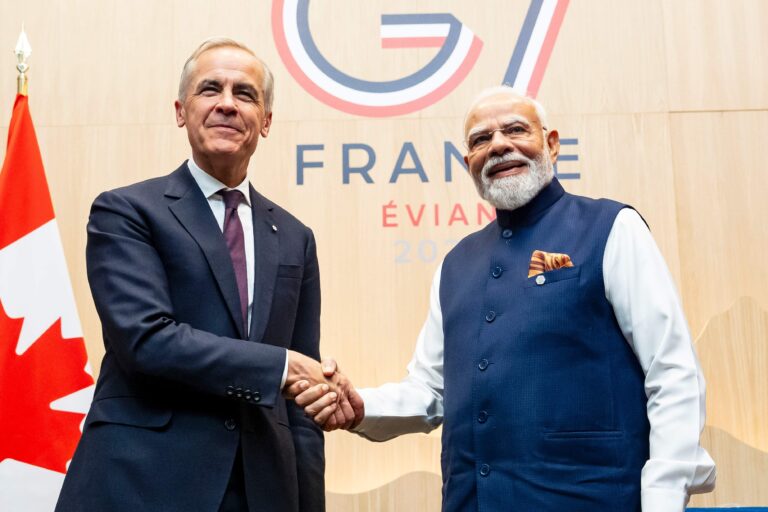
Prime Minister Mark Carney has invited Indian Prime Minister Narendra Modi to Canada for an official visit in 2026, following a bilateral meeting on the sidelines of the G7 Summit in France on Tuesday. The two leaders also agreed to launch negotiations on a General Security of Information Agreement that would facilitate the exchange of classified defence and security intelligence.

The Prime Minister’s Office readout of the meeting made no mention of foreign interference or transnational repression — allegations that have shadowed Canada-India relations since 2023.

A Relationship in Thaw

The G7 meeting is the latest step in a broader effort by Carney to repair ties with India after a dramatic diplomatic rupture. Ottawa suspended free trade negotiations with New Delhi in 2023 after the federal government accused India of involvement in the assassination of Hardeep Singh Nijjar, a Canadian Sikh activist killed in Surrey, B.C.

Carney travelled to India in late February and early March, where he and Modi agreed to resume free trade talks and signed a new energy partnership. Tuesday’s readout said both governments are looking forward to upcoming dialogues in the areas of defence, finance, and migration.

India’s rapprochement is part of a wider Canadian pivot toward new trade and security partners in response to U.S. President Donald Trump’s ongoing trade war. Canada has also sought closer ties with China — Carney visited Beijing in January and signed several agreements, including a security cooperation pact between the RCMP and China’s Ministry of Public Security that has drawn scrutiny for its lack of transparency.

The Nijjar Assassination and Its Aftermath

The RCMP believes members of the India-based Lawrence Bishnoi gang were hired by the Indian government to kill Nijjar in 2023, in what investigators describe as an act of transnational repression tied to his activism in the Khalistan movement, which advocates for an independent Punjabi state.

Modi’s government was later implicated in a second alleged assassination plot targeting a Canadian Khalistan activist living in New York. An internal RCMP report obtained by Global News described the Bishnoi group as engaging in murder-for-hire in Canada and “acting on behalf of the Indian government.”

The Bishnoi gang has also claimed responsibility for a wave of extortion-related violence across multiple provinces, threatening in a letter to a B.C. police station last year that it had 1,000 members prepared to carry out shootings in Canada. Ottawa designated the gang a foreign terrorist entity in 2024.

India denies any involvement in the Nijjar killing. Its top envoy in Ottawa, Dinesh Patnaik, told the Globe and Mail last month that Canada’s national security agencies had been “compromised.”

Carney’s Ambiguous Position

Ahead of Carney’s India trip, a senior government official told reporters that Canada was confident Indian foreign interference was “not happening anymore” — a claim that drew immediate pushback from Sikh community groups, who said they continue to receive police warnings that their lives are in danger.

Sikh organizations have protested outside Parliament, saying they feel “betrayed” by Carney’s shifting posture toward New Delhi.

When asked in Australia whether he endorsed his official’s remarks, Carney distanced himself: “I would not use those words.” But he also declined, on multiple occasions, to state directly whether India is currently interfering in Canadian democracy or targeting Sikh activists on Canadian soil.

“I will tell you that there is progress on these issues,” Carney said. “We will not tolerate foreign interference, transnational repression, by anyone — and I stress, by anyone. There’s a wide range of countries who make these efforts from time to time.”

— With files from Global News’ Stewart Bell and The Canadian Press

Canada Expected to Dodge FATF ‘Grey List’ After International Financial-Crime Review, Sources Say

0

Canada Expected to Dodge FATF ‘Grey List’ After International Financial-Crime Review, Sources Say

Canada is on track to avoid being placed on a global watchlist of countries with weak financial-crime controls, according to two sources familiar with an ongoing international review of the country’s anti-money-laundering regime. The preliminary findings come as assessors from the Financial Action Task Force (FATF) hold their plenary session in Paris this week.

What Is the FATF and Why Does It Matter?

The FATF is a 40-member intergovernmental body that sets global standards for combating money laundering and terrorist financing. It conducts in-depth evaluations of member countries and publishes the results. Canada also belongs to the Asia/Pacific Group on Money Laundering, a related 42-member regional body that is co-participating in this review.

Countries that fail FATF evaluations are placed on one of two lists. Those with serious deficiencies land on the “black list” — currently home to Iran, North Korea and Myanmar. Those with lesser but significant shortcomings are placed on the “grey list,” which currently includes more than 20 jurisdictions such as Kuwait, Monaco, the British Virgin Islands and Venezuela.

Grey-listed countries face heightened international scrutiny of their banks, legal systems and supply chains. That scrutiny can deter foreign investment, disrupt trade and negatively affect a country’s sovereign credit rating.

Preliminary Ratings Suggest Canada Is Safe — For Now

Canada’s provisional ratings, assigned by the evaluation team ahead of this week’s Paris plenary, appear sufficient to keep the country off the grey list, the sources told The Globe and Mail. The sources were not identified because they were not authorized to speak publicly about the matter.

The review has not yet concluded, and preliminary findings remain subject to change. The FATF is expected to publish its final report in September or October. Officials at the Department of Finance have received a confidential draft of the assessment’s initial findings.

Both the FATF and the Department of Finance declined to comment on specifics. “The FATF mutual evaluation process is a robust and iterative process in order to ensure a complete picture,” FATF spokesperson Stefanie Mair wrote in an email. “Conclusions should therefore not be drawn until that process is complete.”

Key Weaknesses Identified in the Review

Despite the relatively positive outlook, assessors flagged several areas of concern.

Canada Lobbying for Better Ratings

Canadian officials are expected to hold in-person discussions with the assessment team before a final draft is shared with all FATF delegations later this week. Sources say Ottawa will push to have some provisional ratings upgraded.

The government is also pointing to recent policy announcements as evidence of progress. These include the creation of a Financial Crimes Agency, a proposed ban on cryptocurrency ATMs and the development of a national anti-fraud strategy.

Enhanced Follow-Up Remains a Possibility

Even if Canada avoids the grey list, it could still face enhanced follow-up from the FATF — a less desirable outcome that requires more frequent reporting on remedial actions, though it typically has no direct impact on a country’s banks or financial system.

Canada was previously placed in the FATF’s enhanced follow-up process after its last evaluation in 2016. It returned to regular reviews in 2021 after enacting corrective measures. Securing regular reviews again is considered a point of national pride, and Finance officials are expected to resist any push for enhanced follow-up, the sources said.

The FATF plenary runs from June 17 to 19 in Paris. Canada’s evaluation will then be discussed at an Asia/Pacific Group on Money Laundering meeting in July.

With a report from Bill Curry

Smith Urges Canada to Stop ‘Panicking’ Over Trump’s Tariff Threats, Calls for Cooler Negotiating Approach

0

Alberta premier says Trump’s hardball tactics are a negotiating style, not a final position

Alberta Premier Danielle Smith is urging Canadian negotiators to stop overreacting to U.S. President Donald Trump’s tariff threats, arguing that panic undermines Canada’s ability to reach a deal that works for both countries.

Speaking Monday as a keynote speaker at the New North America Summit — a forum bringing together leaders to discuss cross-border relations and challenges — Smith offered her read of Trump’s negotiating style based on two personal meetings with the president in 2025.

A Businessman’s Playbook

“He always had a plan A, a plan B and plan C, all of which benefited him,” Smith told the summit. “He has his moon shot, but he also has a ‘this is pretty good’ and then he has an ‘I’ll settle for this.'”

Smith argued that Canada has consistently misread Trump’s opening gambits as final positions. “I don’t think we’ve understood that he always puts his moon shot out there and then we panic and freak out with ads and overwrought commentary — but that is just a negotiating style that he has,” she said.

She expressed cautious optimism that a mutually beneficial outcome remains possible. “I think we’re now beginning to settle down and realize there is a way for us to get to a win-win,” she said, “but the Americans are never going to agree to a deal where they feel they’ve lost ground.”

CUSMA’s Future Uncertain

The stakes are considerable. Trump’s second term has been marked by sweeping and sector-specific tariffs on Canadian goods, and the future of the Canada-U.S.-Mexico Agreement (CUSMA) — the pact that keeps most North American trade duty-free — remains in doubt.

Trump said last week he is “not looking to renew” the agreement ahead of a July 1 deadline to confirm a 16-year extension. A failure to renew would have significant consequences for Canadian exporters across virtually every sector.

GST a Persistent Irritant

Smith also pointed to Canada’s Goods and Services Tax (GST) as an ongoing source of friction with Washington. She said U.S. officials view the five-per-cent federal sales tax as a de facto tariff on American goods entering Canada.

“Their perspective is every American good that comes across the border the federal government gets a five per cent cut on because of GST,” Smith said. “As long as we have a national sales tax he’s going to want to do something to create some kind of parity.”

The United States has no equivalent national sales tax, which Smith said makes the GST a particular irritant for the Trump administration.

Improved Tone Under Carney

Smith said the Canada-U.S. relationship has improved since Prime Minister Mark Carney took office, contrasting the current dynamic with what she described as the “frayed” relationship between former prime minister Justin Trudeau and Trump over the past decade.

The premier’s comments reflect a broader debate within Canada about how best to manage an unpredictable trading partner that absorbs roughly three-quarters of Canadian exports.

Alberta Gas Prices Fall as U.S.-Iran Ceasefire Talks Cool Oil Markets

0

Gas prices across Alberta are trending downward, driven by diplomatic signals of a potential ceasefire between the United States and Iran that have eased tensions in global oil markets.

What’s Behind the Drop

Crude oil prices typically rise when conflict threatens supply routes in the Middle East, and fall when diplomatic progress reduces that risk. Talks between Washington and Tehran have introduced cautious optimism into energy markets, putting downward pressure on pump prices.

What It Means for Albertans

For Alberta drivers, lower gas prices offer some relief at the pump after a prolonged period of elevated fuel costs. Alberta’s economy is closely tied to energy markets, making fuel price fluctuations particularly significant for both consumers and the province’s broader fiscal outlook.

A Volatile Picture

Analysts caution that the trend could reverse quickly. Ceasefire negotiations between the U.S. and Iran remain fragile, and any breakdown in talks could send oil prices climbing again. Albertans are advised to watch developments closely before assuming sustained relief at the pumps.