
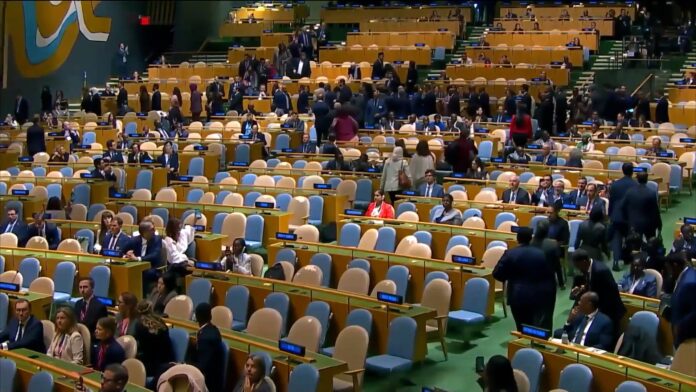
It was a striking visual. As Israeli Prime Minister Benjamin Netanyahu took the podium at the United Nations General Assembly, delegations from dozens of countries rose and left — or simply never showed up at all.
The walkouts and absences, staged in protest over Israel’s ongoing military campaign in Gaza, transformed what is typically a moment of global diplomatic attention into a pointed rebuke on the world stage. The empty seats spoke as loudly as any speech.
The UN General Assembly has long served as a forum where symbolic gestures carry real political weight. A walkout is not merely theatre — it signals where a government stands, what pressures it faces at home, and how it reads the international moment. For many of the delegations that departed, the decision reflected mounting domestic and regional pressure over the scale of civilian casualties in Gaza.
Canada has maintained a complex position throughout the conflict, supporting Israel’s right to self-defence while calling for the protection of civilian lives and the unimpeded delivery of humanitarian aid — a posture that has drawn criticism from multiple directions and reflects the genuine tension within Canadian foreign policy between its commitments to international humanitarian law and its longstanding alliance relationships.
The walkout at the UNGA is part of a broader pattern of diplomatic friction that has reshaped international forums since the Gaza conflict escalated. Several countries that departed Netanyahu’s address have also moved to recognize a Palestinian state, recalled ambassadors from Tel Aviv, or suspended arms transfers to Israel — concrete policy steps that go well beyond symbolic gestures at the General Assembly podium.
The delegations that remained in the hall were equally telling. Staying put was itself a choice, one that will be read and interpreted by governments, civil society groups, and publics around the world. Diplomacy at the UN is rarely accidental — every seat filled or vacated carries a message.
For Canada, which holds a seat at these debates and aspires to a principled multilateralism, the moment raises durable questions about where the country positions itself as the humanitarian toll in Gaza continues to mount and international consensus continues to shift.

