Home Blog Page 10

Toronto Man Charged With Hate-Motivated Threats Against Muslim Community Member in Scarborough

0

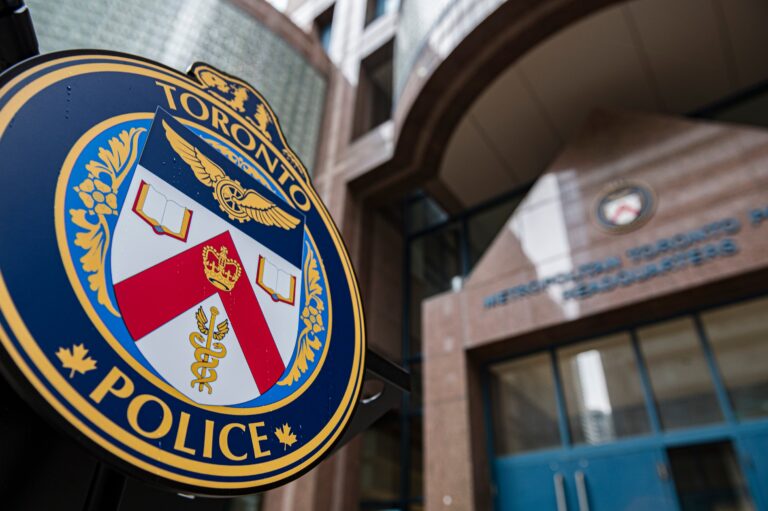
A 37-year-old Toronto man has been charged with uttering threats and intimidation following an alleged hate-motivated incident in Scarborough, after police say he sent an email threatening violence against members of the Muslim community.

According to Toronto Police Service, the incident began on July 17, when the accused became involved in an argument with another individual in the area of Orton Park Road and Brimorton Drive. Following that confrontation, investigators allege, the man sent the other person an email containing explicit threats of violence directed at members of the Muslim community. Police say the victim was targeted specifically because of their Muslim faith.

Arrest and Charges

Rohoman Leo Drepaul, 37, of Toronto, was subsequently arrested and charged with uttering threats and intimidation. The charges have not been tested in court. Drepaul was scheduled to appear before a bail court on July 20.

Toronto police have characterized the investigation as hate-motivated, a designation that reflects the alleged targeting of an individual on the basis of religious identity — a protected ground under both the Criminal Code of Canada and the Canadian Human Rights Act.

Investigation Ongoing

The investigation remains active. Toronto Police are asking anyone with additional information to contact investigators directly at 416-808-3505, or to reach out anonymously through Crime Stoppers.

Toronto Police Boost Security at Caribbean Carnival Following Deadly Festival Shooting

0

A City on Edge Before the Parade

Toronto’s Caribbean Carnival returns this weekend under a heavier security footprint. The Toronto Police Service has announced it will deploy additional officers along the parade route on Lakeshore Boulevard — a direct response to the deadly violence that struck another summer festival just weeks ago.

The parade, which kicks off Saturday morning and draws masqueraders, live music, and tens of thousands of spectators, is considered the centrepiece of the largest Caribbean festival in North America. This year, it arrives in a city still processing the shock of the July 11 shooting at the Salsa on St. Clair festival, which left two men dead, injured several others, and sent thousands fleeing in panic. The second day of that event was cancelled outright.

Police say public safety at large outdoor gatherings is their foremost concern this summer — and that events like Caribbean Carnival are not incidental to Toronto’s character, but central to it.

What the Enhanced Deployment Looks Like

Beyond a visible increase in uniformed officers along the parade corridor, the force is extending its presence into nearby restaurants and bars. Drone surveillance will also be used to monitor crowd conditions from above, giving commanders a broader operational picture in real time.

The layered approach reflects a broader reckoning with how Toronto — and Canadian cities more generally — manage the intersection of public celebration and public safety. Large festivals concentrate tens of thousands of people in open spaces, creating both the conditions for community and the conditions that complicate rapid police response.

No specific threat has been identified against Caribbean Carnival. The heightened deployment is precautionary, shaped by the proximity of the Salsa on St. Clair tragedy and the understandable anxiety it has generated among organizers, attendees, and city officials alike.

Caribbean Carnival’s Place in the City

Caribbean Carnival has roots stretching back decades in Toronto, drawing its traditions from the carnivals of Trinidad and Tobago and the broader Caribbean diaspora. It represents one of the most significant expressions of Afro-Caribbean culture in Canada, and its parade is a defining moment in the city’s summer calendar.

The festival carries real cultural weight for Toronto’s Caribbean communities — communities that have long contributed to the social, economic, and artistic fabric of the city. Framing additional security purely as a burden on the event misses the point; many participants and organizers have themselves called for greater safety measures in the wake of recent violence at public gatherings.

Afrofest Cancellation Adds to Cultural Community’s Concerns

The security situation at Caribbean Carnival is not the only difficult story facing Toronto’s cultural festival landscape this summer. On Friday, Toronto police confirmed they played no role in the decision to cancel Afrofest, the annual African music festival that has long called Woodbine Park home.

Organizers and the city were unable to agree on an alternative venue after a permit for Woodbine Park could not be secured, citing capacity issues. The cancellation leaves a gap in a summer season that already feels diminished by the Salsa on St. Clair shooting, and it raises broader questions about how the city supports — or fails to support — festivals rooted in Black and racialized communities.

These are not abstract policy questions. When beloved cultural events disappear or operate under duress, the communities they serve bear the cost most directly. Toronto’s obligation to these festivals goes beyond issuing permits; it includes the sustained institutional support that allows them to survive logistical and safety challenges year after year.

Looking Ahead

Saturday’s parade will be a test of whether enhanced policing can coexist with the joyful, open atmosphere that makes Caribbean Carnival what it is. The goal, as police have framed it, is presence without intrusion — enough visibility to deter violence, without transforming a celebration into something that feels like a security operation.

Whether that balance holds will matter not just for this weekend, but for how Toronto approaches the future of its outdoor festival culture — a culture that is, at its best, one of the things that makes this city genuinely worth celebrating.

Brighton Museum Workers Reach Deal After Contract Dispute and Strike Action

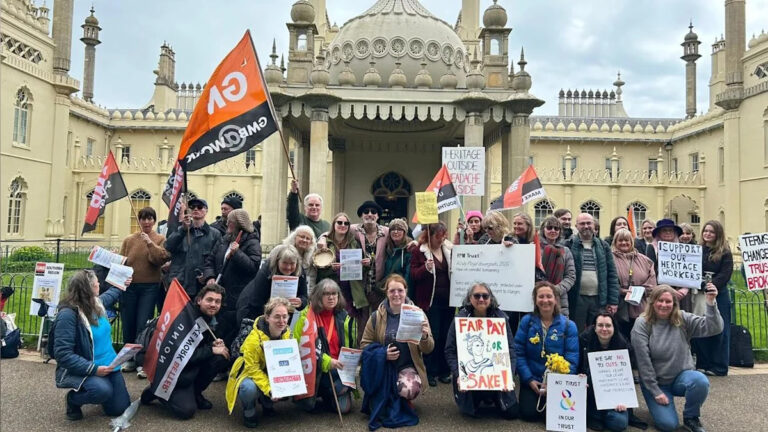
A labour dispute that had disrupted operations at the Brighton and Hove Museums Trust came to a close this month after workers and management reached a negotiated settlement, ending a standoff that had seen staff walk off the job in April over proposed changes to their employment contracts. The agreement, backed by both the Unison and GMB unions, preserves workers’ previous contractual terms and delivers a modest pay increase, bringing an end to a conflict that had threatened further disruption into the summer.

The original dispute centred on contract changes that union representatives argued left employees exposed to unilateral alterations to their working conditions. Staff walked out in April in protest, and further strike action had been scheduled for July before both sides reached an initial agreement at the board level, prompting unions to stand down the planned walkouts. The resolution now ratified by the workforce secures the maintenance of existing agreements alongside a 1% pay rise — described by union spokespeople as “limited” but meaningful in the context of preserving hard-won protections.

Jo Galloway, Unison’s south east regional secretary, framed the outcome as a genuine win for the workforce rather than a mere compromise. “The agreement works well for everyone,” she said. “It provides certainty to the workforce and it’s a positive way forward with the trust as a whole.” She was clear about where the priorities of museum staff had always lain: workers, she said, want to protect Brighton’s heritage, not spend their time in dispute — and the settlement allows them to return to the work they care about.

Oliver Cruickshank, regional organiser for GMB, echoed that sentiment, noting that members had shown real courage in taking collective action. “Our members were brave enough to take action to protect their jobs, which they care so deeply and are so passionate about,” he said — a reminder that the willingness to strike is rarely taken lightly, particularly among workers whose vocations are tied to public cultural institutions.

One of the more significant structural outcomes of the deal is the establishment of a formal collective bargaining agreement between the trust and both unions, giving Unison and GMB an ongoing mechanism to negotiate future pay and conditions. This is not a trivial development: collective bargaining rights represent a meaningful shift in the power balance between workers and management, providing a durable framework for resolving disputes before they escalate to industrial action. It transforms the relationship from one of ad hoc confrontation to one of structured, ongoing negotiation.

Brighton and Hove Museums chief executive Hedley Swain welcomed the resolution in terms that acknowledged both the workers’ concerns and the institution’s financial constraints. He described the deal as one that “protects key terms and conditions while ensuring the financial stability of the trust,” and said the organization looks forward to working constructively with the unions going forward. “With this resolution in place we can all focus on our shared priority — protecting and sharing Brighton and Hove’s extraordinary culture and heritage for our community and visitors,” he added, striking a conciliatory note that suggests the trust is prepared to treat union recognition as a feature rather than a burden.

The settlement at Brighton and Hove Museums reflects a broader pattern in publicly-oriented cultural institutions, where workers — often deeply committed to their missions — find themselves caught between genuine passion for their roles and the material realities of employment security. When contract changes threaten the stability that allows people to do that work, collective action becomes not a rejection of the institution’s values but an assertion of them. That both sides appear to have recognized this is, perhaps, the most encouraging aspect of how this particular dispute ended.

Roberto De Zerbi, Sandro Tonali, and the Brescia Roots Reshaping Tottenham Hotspur

0

North London has acquired a distinctly Brescian character this season — and the story behind it runs deeper than a transfer fee or a managerial appointment.

Roberto De Zerbi, the manager who steered Tottenham Hotspur away from relegation last season, did not arrive at the club as a neutral technician. He was shaped, in the most formative sense, by the terraces of Stadio Mario Rigamonti. His father, Alfredo, led the Brescia supporters’ clubs — coordinating away trips, liaising with players, and organizing tifos for home matches. De Zerbi has said plainly that he was “born an ultra.” Rosanna Pedrollo, who spent fifty years working in Brescia’s administration and knew Alfredo well, describes him as “a passionate, fiery character and a wonderful father — full of energy, very polite, but never afraid to say what he thought.” She remembers a four- or five-year-old Roberto serving as mascot, trailing his father to matches home and away. Those early years, according to De Zerbi’s brother Rocco, “shaped his career.”

The Brescia thread at Spurs does not end with the manager. Several key takeaways illuminate just how tightly this northern Italian city is woven into the club’s current identity.

Salim Lamrani, who wrote Football According to Roberto de Zerbi and also served as Marcelo Bielsa’s interpreter and disciplinary coach at Leeds United, argues that De Zerbi “knows exactly which side of the barricades he stands on: with the people.” That orientation is visible in how he manages — and it surfaced literally last season, when De Zerbi flashed the Brescia ‘V’ sign toward the away end as Marseille hosted Atalanta in the Champions League. For a man who describes himself as having been born “a hundred metres from the stadium,” the gesture was not performance. It was biography. As Brescia itself enters a new chapter under Union Brescia’s banner, the football culture that city produced continues to animate one of England’s most storied clubs.

Ontario Wildfires: Cautious Progress as First Nations Demand Public Inquiry

0

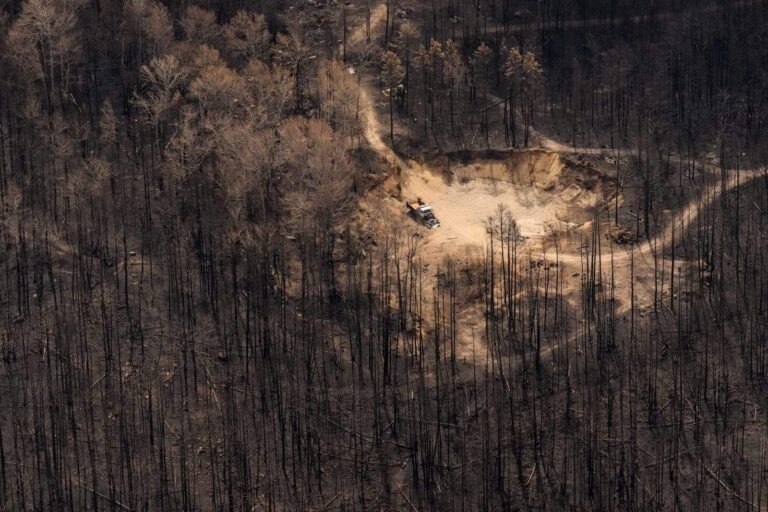
The Ontario government is describing the province’s wildfire situation as moving in a “reassuring direction,” with 80 fires extinguished over the past two weeks — a development officials attribute to cooler temperatures and timely precipitation. But the relief is fragile. As of Thursday, 159 fires continue to burn across northern Ontario, 30 of them classified as out of control, and a fresh heat warning covering large parts of the northwest threatens to reverse recent gains. Environment Canada is forecasting daytime highs of 28 to 30 degrees Celsius northwest of Thunder Bay, with humidex values climbing to 38, and a severe thunderstorm warning adds further unpredictability to an already volatile situation.

Fourteen communities have been evacuated across northern Ontario, according to Emergency Preparedness and Response Minister Jill Dunlop, and while five have since been cleared to return, approximately 2,000 people remain displaced and sheltering in host communities elsewhere in the province. The human cost of this fire season has been significant. Personnel and aircraft from Alberta, Newfoundland, New Brunswick, Yukon and Prince Edward Island have all been deployed to assist provincial crews, alongside federal teams and crews from Mexico — a scale of mutual aid that underscores just how stretched Ontario’s own resources have been.

First Nations Communities Say They Were Left Behind

The government’s cautiously optimistic framing has met sharp resistance from First Nations leaders, who held a press conference at Queen’s Park on Thursday to demand a public inquiry into the province’s wildfire response. Their core allegation is serious: that some communities were essentially left to fend for themselves during the crisis, without timely assistance from the province. Leaders said they have been unable to get meaningful answers from Premier Doug Ford, Natural Resources Minister Mike Harris, Emergency Preparedness Minister Jill Dunlop, or Indigenous Affairs Minister Greg Rickford — a list that covers the full span of ministers with direct responsibility for the emergency.

Premier Ford flatly rejected the criticism last week. When asked about the allegations, he said, “I totally disagree with that,” pointing to the province’s role in relocating roughly 2,000 people from affected First Nations communities and providing hotel accommodations, food and other support. Minister Harris acknowledged that improvements are always possible, but stopped well short of committing to a public inquiry, saying the government prefers to conduct its own internal review. “We do a very deep dive internally, and I think there’ll be lots of recommendations that will come forward,” he said, adding that the government would “see what makes sense to talk about” once those recommendations emerge — a formulation that offers communities little in the way of transparency or timeline.

When pressed directly on whether he would commit to a public inquiry, Harris deflected to the ongoing emergency. “Right now we’re very focused on direct suppression efforts and making sure that people and property are safe here in the province,” he said. He described the fire season as something “like we’ve never seen before,” and suggested the government would conduct its standard post-season review, as it does every year. That answer is unlikely to satisfy First Nations leaders who argue that an internal government review cannot credibly assess the government’s own failures — particularly when the communities most affected by those failures have Indigenous governance structures with distinct and constitutionally recognized rights that carry specific obligations for the Crown.

Indigenous Affairs Minister Greg Rickford, speaking from Kenora, offered a reminder that the situation remains unpredictable even where conditions look calm. “I’m sitting here in Kenora right now. We don’t have any smoke but by this afternoon a southeast wind could easily move into our community on a dime and put us under certain kinds of pressures,” he said. That kind of volatility — geographic, meteorological and political — defines this fire season. The fires may be calming, but the questions about how Ontario responded to its most vulnerable communities are only beginning to intensify.

CBC Identifies Canadian Woman Accused of Spying at NATO Military Headquarters in Belgium

0

Arrest at SHAPE

Belgian authorities have arrested a Canadian woman on suspicion of espionage at the Supreme Headquarters Allied Powers Europe (SHAPE), NATO’s military headquarters in Mons, Belgium — and CBC News has identified her as Biwei Zhang, a systems engineer who previously held positions at the Canadian Space Agency, Statistics Canada, the World Trade Organization, and the European Space Agency. Zhang was arrested on Friday following a search of her home and workplace at SHAPE the previous Thursday, according to a media release from the Belgian Federal Prosecutor’s Office. She faces charges of espionage and participation in a criminal organization, charges that Public Safety Minister Gary Anandasangaree has described as “quite serious.”

Who Is Biwei Zhang?

Zhang’s online professional profile describes her as a systems engineer with a background in economics. Belgian prosecutors had described the suspect only as a “Canadian national of Chinese origin” serving as an intern in SHAPE’s IT department — a description that CBC News matched to Zhang through open-source investigative techniques, including her LinkedIn, Facebook, and Threads profiles, her graduate thesis, and a federal court case. While Biwei Zhang appears to be her legal name, she is known professionally as Claire Zhang and uses the name Catina Zhang on Facebook. A security source cited by Reuters earlier this week had identified the suspect as Claire Z., consistent with CBC’s findings.

Zhang’s social media activity provided additional corroborating details. In July 2025, she posted in two separate Facebook groups seeking a room to rent in Mons, coinciding with the start of her SHAPE internship. A similar pattern appeared in 2023, when she sought housing in Geneva just before beginning an internship at the World Trade Organization — dates that align precisely with the work history listed on her LinkedIn profile. These breadcrumbs of ordinary life, cross-referenced with the Belgian prosecutor’s description, formed the basis of CBC’s identification.

The Significance of Intern Access

Former CSIS intelligence officer Dan Stanton offered context on why intern positions at institutions like SHAPE can be attractive to foreign intelligence services. Stanton noted that internships frequently serve as an “in-road” for intelligence gathering, because critical secrets are often obtained through casual conversations and incidental access rather than through direct theft of classified files. The nature of such access makes it difficult to detect in real time, yet the fact that Belgian counter-espionage services identified and acted on the suspected activity is, in Stanton’s view, evidence that existing counter-espionage processes are functioning as intended.

Institutional Responses

Belgian courts do not publicly identify defendants in criminal investigations until a trial begins, and the Federal Prosecutor’s Office declined to confirm Zhang’s identity to CBC News, citing its policy of never disclosing the identities of individuals suspected in ongoing investigations — an approach it characterized as grounded in the presumption of innocence, which must be guaranteed under all circumstances. Global Affairs Canada also declined to comment specifically on Zhang’s case, citing the ongoing investigation. Public Safety Minister Gary Anandasangaree, however, committed publicly to getting “to the bottom” of the arrest, signalling that the federal government is treating the matter with considerable seriousness.

The case raises broader questions about security vetting procedures for international interns at sensitive allied military installations, and about the extent to which Canadian institutions that previously employed Zhang — including the Canadian Space Agency and Statistics Canada — may be drawn into the investigation. Neither of those agencies has commented publicly on the matter.

Grammys CEO Defends New Asian Pop Category After BTS Announces Boycott of 2027 Awards

0

BTS Steps Back, Mason Jr. Steps Forward

Grammy Awards CEO Harvey Mason Jr. publicly defended the Recording Academy’s newly created Asian Pop category on Wednesday, after K-pop supergroup BTS announced it would not submit music for consideration at the 2027 ceremony. The statement, released on Instagram, came in direct response to the band’s decision — one that has reignited a broader debate about how major Western music institutions recognize global artists.

“I am saddened to hear that BTS has chosen not to participate in the Grammy Awards process this year, but as a music creator, I understand and respect their decision,” Mason Jr. wrote.

The Recording Academy’s Rationale

Mason Jr. framed the new category as an expansion of recognition, not a narrowing of it. The Asian Pop category, he argued, was created to “celebrate the depth, artistry coming out of Asia” — giving a dedicated spotlight to work that might otherwise compete without adequate context in broader genre fields. His core argument was direct: more categories mean more artists get recognized.

“It’s never to divide, but to expand who is recognized by our 15,000 Grammy voters,” he said.

He also moved to correct what he described as a widespread misunderstanding. Submitting to a specialized genre category — whether Asian Pop, Jazz, or Country — does not bar an artist from competing in the General Field. Record of the Year, Album of the Year, and Song of the Year remain open to any eligible submission, regardless of genre. “Recognition in a genre category and recognition in the General Field are not mutually exclusive,” Mason Jr. wrote. “An artist can absolutely pursue both.”

BTS’s Position

The seven members of BTS — Jin, Suga, J-Hope, RM, Jimin, V, and Jung Kook — announced their decision on their individual Instagram accounts roughly one month after the Asian Pop category was first unveiled. Their message was brief and pointed.

“We have decided not to submit for Grammy consideration this year,” the group wrote. “We hope our music can be heard and loved for what it is, rather than being divided by region or language. We thank Army and everyone who has always stood by us.”

The statement struck a nerve. For many fans and observers, it crystallized a longstanding tension: whether genre categories built around geography or language celebrate global music or quietly cordon it off from mainstream competition. BTS has long been one of the world’s most commercially successful acts, yet has never won a Grammy despite multiple nominations.

A Wider Conversation

The exchange between Mason Jr. and BTS points to something larger than a single awards cycle. As Asian popular music — and K-pop in particular — commands enormous global audiences, questions about institutional recognition carry real weight. The Recording Academy’s decision to create the Asian Pop category was, by its own account, an attempt to respond to that reality. Whether artists from that world see it as recognition or as segregation is, evidently, not settled.

A representative for BTS did not respond to a request for comment at the time of publication.

Carney Keeps Canada’s Trade Options Close to His Chest as U.S. Tariff Deadline Looms

0

Mark Carney is not tipping his hand.

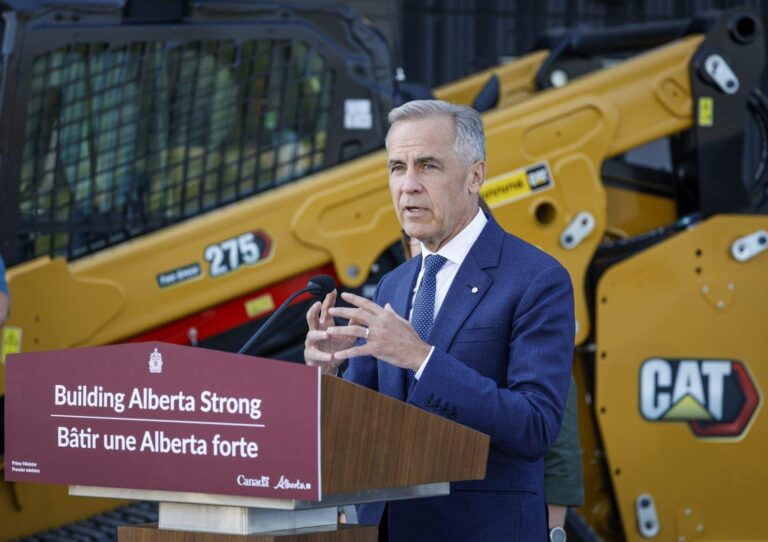
The Prime Minister, appearing in Red Deer, Alberta on Wednesday alongside Premier Danielle Smith for a housing announcement, declined to answer directly when a reporter pressed him on whether Canada would use its energy sector as leverage in ongoing trade negotiations with the United States. The question was blunt — yes or no, would Canadian energy become a bargaining chip? Carney’s answer was deliberate and carefully non-committal.

“We’re engaged in those negotiations to find a mutually beneficial solution,” Carney told reporters. “We’re only going to accept a solution that works for Canadians. We have lots of options of what we would do if that’s not there — but I’m not going to be drawn on what we’re going to do.”

The restraint is calculated. Revealing Canada’s negotiating hand before talks have concluded would weaken the country’s position, and Carney appears acutely aware of that dynamic. Still, the silence carries real weight in a province like Alberta, where the energy sector is not merely an economic abstraction but the backbone of a regional identity and a long-standing source of tension between Edmonton and Ottawa. The question of whether Ottawa would trade away energy concessions — or threaten to restrict energy exports — touches a nerve that runs deep in western Canada.

The backdrop to all of this is a hard deadline. Starting August 19th, the United States will impose 50 per cent tariffs on a range of selected Canadian imports, citing what the White House characterizes as “retaliatory and discriminatory measures” by Canada. The automotive, dairy, and alcoholic beverage sectors are among those in the crosshairs — industries that employ hundreds of thousands of Canadians from Windsor to the Fraser Valley.

Carney had signalled as recently as July 21st that Canada is “looking at all options,” and confirmed that he and President Donald Trump had agreed to intensify discussions. On Wednesday, he struck a tone that was firm without being combative, insisting that Canada would only accept terms that genuinely serve Canadian interests, while leaving the specifics of any potential response deliberately vague. “We’re going to focus now on building towards an agreement, if an agreement is possible,” he said, before adding a pointed observation: “Everybody wants to do more with Canada, except the United States.”

That line carries more than rhetorical weight. It reflects a broader strategic pivot that Carney’s government has been quietly advancing — deepening trade relationships with Europe, the Indo-Pacific, and other partners as a hedge against American unpredictability. Whether that diversification effort can move fast enough to cushion the blow of a 50 per cent tariff wall is another matter entirely. For now, with weeks left before the deadline, the Prime Minister is keeping his options open and his cards face-down.

Three MSPs Now Vying to Lead Scottish Labour as Leadership Race Takes Shape

0

Scottish Labour has been without a permanent leader since Anas Sarwar confirmed last Wednesday that he was stepping down to become Minister of State for Trade in Prime Minister Andy Burnham’s government. Sarwar, who had led the party since 2021, said he would work with his successor to continue serving people in Scotland. His departure came in the wake of a bruising May Scottish Parliament election, in which Labour won just 17 seats out of 129 — a record low for the party.

Sarwar acknowledged his share of responsibility for that result, saying he was “disappointed and sorry” for the party’s poor showing. His exit was not without controversy: King Charles confirmed Sarwar would receive a peerage to enter the House of Lords, a prospect that drew sharp criticism from opposition politicians who called it “hypocritical,” pointing to Sarwar’s own past calls to abolish the upper chamber. Sarwar did not directly address the contradiction, saying only that it had been “an honour” to serve Glasgow and Scotland.

Within days, the contest to succeed him began to take shape. Michael Marra, Scottish Labour’s finance spokesperson, was among the first to declare his candidacy. Monica Lennon, an incoming Glasgow MSP, followed him into the race shortly after. Together, they set the early terms of a contest that would soon grow more crowded.

By the end of the week, Joe Fagan — the party’s public finance and local government spokesperson and MSP for South Scotland — had entered the race as the third declared candidate. Fagan brought a distinct record to his pitch: he had led South Lanarkshire Council for four years beginning in 2022, stepping down only after winning his Holyrood seat in May. During that time, he oversaw initiatives including free swimming for children under 16 and improved pay deals for the home care workforce.

In setting out his case, Fagan pointed to Burnham’s recent by-election victory in Makerfield as evidence that Labour could rebuild trust when it remained grounded in communities. “Scottish Labour needs to learn lessons from where we have won, not just where we have lost,” he said, adding that the party needed to “stop sounding like a party talking to itself and start proving that we are on their side.”

The Scottish Executive Committee, the party’s ruling body, has set a clear timetable for the contest. Nominations will formally open on Monday, 3 August, and remain open for two weeks. A membership and supporter ballot will run from 28 August until 17 September, with the new leader expected to be in place in time for the party’s conference on 19 September.

The race now moves into its formal phase with three candidates declared, a compressed timeline, and a party that must reckon seriously with its weakest Holyrood result on record.

What Happens When Canadian ISIS Members Return Home? An Intelligence Report Explains the Threat

0

What does the intelligence report actually say?

A classified assessment produced by Canada’s Integrated Threat Assessment Centre (ITAC) in June warns that a group of Canadians currently detained overseas for alleged ISIS membership will “highly likely” pose a violent extremist threat upon returning to Canada. The report, obtained by Global News, was drafted after Iraq announced it had taken custody of an unspecified number of ISIS-affiliated individuals from Canada. Its language is direct: a potential return of these “Canadian extremist travellers” from Iraqi custody would, in the assessment’s words, “highly likely pose a violent extremist threat to Canada” — either through direct violence or by radicalizing others once back on Canadian soil.

Why is this warning surfacing now?

The report gained renewed urgency following a deadly attack at Berlin’s Pride festival on a Saturday in late June, when a 21-year-old German citizen named Abdul Ballout drove a vehicle into a crowd and attacked people with a knife, killing a Polish woman and injuring 29 others. German authorities shot and killed Ballout the following day. Prior to the attack, Ballout had travelled to Turkey and Lebanon in an attempt to join ISIS, was detained in Lebanon, and was returned to Germany in November. A German court had ordered him to attend a de-radicalization program — a measure that, in hindsight, proved insufficient. The parallel to Canada’s situation is not incidental; the ITAC report was written just a month before the Berlin attack and raises precisely the same question German authorities failed to answer correctly.

Who are the Canadians being held abroad?

The individuals in question are part of a broader wave of Canadians who left the country — from cities including Edmonton, Windsor, Montreal, and Mississauga — to join ISIS after it seized large parts of Syria and Iraq and declared a caliphate. As ISIS collapsed militarily around 2018 and 2019, U.S.-backed Syrian Kurdish fighters captured a number of these individuals. Some of the Canadian women who had joined ISIS were repatriated between 2021 and 2023; the federal government brought back nine women from British Columbia, Alberta, Ontario, and Quebec, along with their children. A third of those women have since been charged with terrorism offences, while most others were placed on terrorism peace bonds — court orders restricting their movement and online access.

The men remain abroad

The Canadian government has not repatriated any of the Canadian men captured in Syria. Among the most prominent is Muhammad Ali of Mississauga, a self-admitted ISIS sniper. Others include residents of Edmonton, Windsor, and Montreal, as well as a man who obtained Canadian citizenship through his father but has never lived in Canada. A sixth Canadian, Mohammed Khalifa, was transferred to U.S. custody in 2021, flown to Washington, D.C., and subsequently sentenced to life in prison. Meanwhile, Iraq’s Supreme Judicial Council stated in February 2026 that it was holding nearly 6,000 ISIS members from 61 countries — Canada among them — and planned to investigate and prosecute all of them within six months.

What threat do returning extremists actually pose?

Security analysts and former intelligence officials are consistent on this point: individuals who travelled abroad to join ISIS represent a qualitatively different kind of threat than those who were radicalized at home. Phil Gurski, a former analyst at the Canadian Security Intelligence Service (CSIS), points to “the experience they have, the people they met and the anger they are returning to the country with” as factors that elevate the risk. Lucas Webber, a senior threat intelligence analyst at Tech Against Terrorism, argues that even those who tried to join ISIS and failed — like Ballout — carry a lasting danger, because “their past commitment to ISIS’s cause means they carry the same latent threat: individuals who sought out the battlefield and, regardless of outcome, retain both the ideological drive and the networks to act on it later.”

The Canadians detained in Iraq went further than Ballout

Security consultant Sheryl Saperia, CEO of Pearl Strategic Counsel and a former head of an advocacy group for terrorism victims, draws a pointed distinction between the Berlin attacker and the Canadians currently in Iraqi custody. “The Canadians detained in Iraq got much further than he did,” she said. “They arrived, they lived under ISIS rule, and at least one fought for the group and publicly called for attacks here.” Saperia argues that before any repatriation occurs, Ottawa must be able to identify what admissible evidence exists to support terrorism charges in a Canadian court — and have a clear plan for cases where that evidence falls short of the legal threshold.

What is the broader threat environment in Canada?

ISIS has not disappeared. Despite being largely expelled from its Syrian territorial stronghold by 2019, the organization has persisted in what CSIS describes as an “increasingly permissive” environment. The conflict that began with Hamas’s October 7, 2023 attack on Israel has further intensified what CSIS terms religiously motivated violent extremism. In its 2025 annual report, CSIS disclosed that it had launched seven “priority investigations involving mobilization to violence” connected to that conflict. Global News also reported that Canada disrupted four “violent extremist plots against Jewish targets” since the start of the Israel-Hamas conflict — all of them linked to ISIS. The intelligence service describes ISIS as “the most significant threat to Western interests,” with an enduring goal of seizing territory to re-establish a caliphate.

What does Canada plan to do?

The ITAC report states that “Canadian authorities are actively monitoring the situation” as Iraqi courts prepare to process thousands of ISIS-affiliated detainees, including Canadians. CSIS has also warned that the evolving situation in the Middle East could “expedite timelines” associated with the return of ISIS members to Canada — meaning the question of repatriation may move from theoretical to urgent faster than expected. The intelligence service acknowledged that some returnees “would likely pose national security and public safety risks” unless Canada implements “sufficient mitigation measures,” without specifying what those measures would look like in practice. Two Canadians who had joined ISIS were convicted of terrorism offences in 2024, including the first woman successfully prosecuted after returning from Syria — but others remain in the Middle East and are actively seeking to come back, including a Montreal man imprisoned in Turkey. The legal, security, and constitutional questions surrounding repatriation remain unresolved, and the Berlin attack has made clear that the cost of getting those answers wrong can be measured in lives.