Home Blog Page 11

Atea Pharmaceuticals Reports Phase 3 Trial Success for Hepatitis C Drug Combination, But Shares Fall

0

Atea Pharmaceuticals announced positive topline results on World Hepatitis Day from its pivotal Phase 3 trial evaluating a once-daily fixed-dose combination therapy for chronic hepatitis C virus (HCV) infection — yet the company’s shares declined despite the clinical milestone.

The trial, known as C-BEYOND, enrolled 905 patients with and without cirrhosis from the United States and Canada. The drug combination — bemnifosbuvir and ruzasvir (BEM/RZR) — achieved a 93.9% sustained virologic response rate at week 24, compared to 94.8% for the current standard of care, sofosbuvir and velpatasvir (SOF/VEL, marketed as Epclusa). The study met both its primary and secondary endpoints, establishing statistical non-inferiority against the existing treatment.

Researchers describe this as the first successful head-to-head trial in a global Phase 3 program for HCV therapies. That distinction matters. It positions BEM/RZR as a potential best-in-class option, particularly as an eight-week treatment course for patients without cirrhosis — shorter than some existing regimens.

The therapy was reported as generally safe and well tolerated across all patient populations and genotypes. No drug-related serious adverse events were recorded, and no participants discontinued treatment early due to adverse effects. The trial’s enrolled population was described as reflective of the current HCV patient landscape in North America.

A public health backdrop

Up to four million people in the United States alone are living with HCV, a viral infection that, if left untreated, can progress to cirrhosis, end-stage liver disease, and liver cancer. Jean-Pierre Sommadossi, founder and chief executive of Atea, cited the World Health Organization’s goal of HCV eradication as a benchmark the company believes its regimen can meaningfully advance.

Atea also confirmed it expects to share results from C-FORWARD, a second Phase 3 trial conducted outside North America, in early 2027. That study enrolled more than 880 treatment-naïve patients across roughly 120 clinical sites in 17 countries, again measuring BEM/RZR against SOF/VEL in patients with chronic HCV infection.

Despite the encouraging clinical data, shares of Atea Pharmaceuticals (Nasdaq: AVIR) fell on the day of the announcement, reflecting a disconnect between trial outcomes and investor sentiment that has become a recurring feature of the biopharmaceutical sector.

Kelowna Gets Economic and Tourism Boost as BC Summer Games Draw Thousands of Visitors

0

The 2026 BC Summer Games brought approximately 2,600 athletes and thousands of additional visitors to Kelowna this week, generating an estimated economic impact of more than $2 million for the city over four days — and, organizers hope, a lasting tourism legacy for the Okanagan.

A Significant Influx for Local Businesses

Restaurants and retailers across Kelowna felt the effects almost immediately. Establishments such as Kelly O’Bryan’s Neighbourhood Restaurant reported a notably busy weekend as competitors, families and spectators filled the city. The games had not been held in Kelowna for 18 years, making the return a significant occasion for both the local economy and the broader regional sports community.

Devin Rubadeau, president of the 2026 BC Summer Games, emphasized that the official athlete count represented only a fraction of the total visitor numbers. “Most of these athletes have a trail of family members who will come here to cheer them on, so you could probably quadruple that number,” he said. With roughly 2,600 registered competitors, that estimate would place total attendance in the range of ten thousand people or more.

Rubadeau added that the $2 million economic impact projection drew on data from previous editions of the Summer Games, suggesting the figure may prove conservative once final tallies are in.

Wildfire Smoke Posed Early Challenges

The opening day was not without difficulty. Smoke drifting in from wildfires burning outside the Okanagan blanketed Kelowna, briefly pushing the city’s air quality among the worst recorded anywhere in the world that day. Parents of athletes expressed concern about whether outdoor events would proceed.

“At the stadium, it’s really bad … hopefully they don’t cancel it,” said Dennis Marchant, whose child was competing on opening day. Organizers made adjustments to the opening ceremonies as a precaution, but conditions improved markedly by Friday, and competition continued as scheduled through the remainder of the weekend.

A Tourism Legacy in the Making

Beyond the immediate spending boost, organizers believe the games plant seeds for repeat visits. Rubadeau framed the long-term benefit in straightforward terms:

“How many people came here for the very first Summer Games and said, ‘Hey, you know what? I think our summer plans from now on include Kelowna,'” Rubadeau said. “That’s a big deal.”

Hundreds of volunteers contributed to the event’s smooth operation, and the games were widely regarded as a success despite the early air quality concerns.

Penticton Next in Line for 2028

The Okanagan will not wait long to host the event again. Rubadeau confirmed that the 2028 BC Summer Games are slated for Penticton, with planning expected to begin in the near term. The region’s back-to-back hosting role underscores its established capacity for large-scale provincial sport events — and its growing appeal as a destination for athletes and visitors from across British Columbia.

Emergency Physicians Are Leaving the Profession as Canada’s ER Crisis Deepens, New Study Finds

0

Canada’s emergency rooms are losing the doctors who staff them.

A new study published in the Canadian Medical Association Journal (CMAJ) paints a stark portrait of an emergency medicine workforce in distress: one in ten emergency physicians have left their specialty, while nearly half of those who remain have cut their hours or stepped back from clinical work to manage burnout. The findings arrive at a moment when hospital emergency departments across the country are already straining under record overcrowding, chronic staff shortages, and wait times that have grown measurably worse with each passing year.

The study draws on a survey of 410 emergency physicians, and its language is notably unsparing. Respondents described a health-care system they consider “broken,” burdened by “unrealistic societal expectations” and “insurmountable workplace challenges.” For many, the authors write, “the future of emergency medicine was hopeless, with no possibility of recovery.” That is not the language of ordinary professional dissatisfaction. It reflects something deeper — a moral distress that the researchers say is now placing patient safety at risk.

Burnout levels among respondents remain, in the study’s own phrasing, “substantively unchanged” since the height of the COVID-19 pandemic, when emergency rooms absorbed simultaneous waves of COVID patients and seasonal respiratory illness, pushing staff and infrastructure to their limits. That the profession has not recovered from that period — that emergency physicians are, if anything, more demoralized now than they were then — speaks to the structural nature of the problem. This is not a temporary staffing shortage or a lingering pandemic hangover. It is a system struggling to meet demand it was never designed to handle at this scale.

The numbers behind the departures are worth sitting with. Of 410 survey respondents, 41 reported having left emergency medicine altogether: 25 moved to a different area of medical practice, 10 retired, and six left clinical medicine entirely, meaning they stopped treating patients. Among the 351 who completed the full survey and remained in emergency medicine, 163 — 46 per cent — said they had reduced their working hours. The researchers themselves caution that the sample size limits the degree to which these findings can be generalized to the entire emergency physician workforce, and that incomplete follow-up from the original 2020 cohort may introduce some bias. Even so, the direction of the data is clear and consistent with what emergency departments across the country are reporting on the ground.

The broader context makes those figures harder to dismiss. A 2024 CBC News investigation found that one in every five Ontario hospitals with an emergency room or urgent care centre experienced an unplanned closure that year — closures that had been rare before the pandemic. Meanwhile, a recent report from the Canadian Institute for Health Information (CIHI) found that one in ten Canadians admitted to hospital during the 2024–25 fiscal year spent more than 48 hours waiting in the emergency department, a figure that represents a 12-hour increase compared to six years earlier. CIHI attributed the deterioration to limited hospital capacity, difficulties accessing primary and community care, and the pressures of an aging population.

That last factor — the aging population — connects directly to one of the study’s specific recommendations. The CMAJ authors call on governments and health institutions to invest in specialized geriatric emergency care, a gap that has grown more consequential as older Canadians make up a larger share of emergency visits. More broadly, they argue for closing gaps in patient care across the system and expanding staffing capacity to address needs that currently funnel into the ER by default, often because there is nowhere else for patients to go. The emergency department, in this framing, is absorbing the failures of every other part of the health-care system — primary care, long-term care, community mental health — and the physicians who work there are paying a personal price for those accumulated failures.

Some provincial governments have moved to address parts of this problem. Ontario has expanded the scope of practice for pharmacists and paramedics, allowing them to treat certain patients in community settings rather than directing everyone to an already-crowded ER. British Columbia has opened dozens of new urgent and primary care centres designed to divert lower-acuity cases away from emergency departments. These are meaningful steps, and they reflect a genuine recognition at the provincial level that the status quo is unsustainable. But the CMAJ study suggests that the pace and scale of those interventions have not yet translated into relief that emergency physicians can feel in their daily working lives.

The crisis in emergency medicine does not exist in isolation. It intersects with the broader primary-care gap — millions of Canadians still lack a family doctor or nurse practitioner — and with the underfunding of long-term care that leaves elderly patients occupying acute-care beds they no longer need while others wait in hallways. Canada’s universal health-care system was built on the premise that access to medically necessary services should not depend on a person’s ability to pay, and that premise remains worth defending. But defending it requires honest reckoning with the conditions under which the people who deliver that care are working. When emergency physicians describe their profession as hopeless and leave in significant numbers, that is not a human-resources footnote. It is a warning about the system’s capacity to keep its foundational promise.

One respondent’s words, quoted in the study, leave little room for ambiguity: “This is the worst crisis that anyone could imagine. We are no longer able to provide the care that is required. Our system is inadequate.” Whether that assessment prompts the scale of response it demands — from federal and provincial governments alike — remains to be seen.


Vancouver Council Approves Rezoning for Three Towers That Would Be Tallest in the City

0

Vancouver city council voted seven to three on Monday to approve rezoning changes that would allow developer Holborn Group to build three towers in the heart of downtown Vancouver — each of which would surpass every existing high-rise in the city. The tallest of the three is proposed at 79 storeys, with the other two reaching 68 storeys. The rezoning applies to the block bounded by Dunsmuir, Richards, West Georgia, and Seymour streets.

The project would deliver more than 1,500 housing units, the majority at market rate, along with a 920-room hotel. As part of the agreement, Holborn has also committed to constructing a social housing building at Abbott Street and East Hastings, which would include an Indigenous art gallery, a childcare facility, and a publicly accessible viewing platform.

ABC Vancouver councillors backed the proposal with enthusiasm. “This is really probably one of the most significant redevelopments council has considered in many years,” said councillor Mike Klassen. His colleague Peter Meiszner called it “a once in a lifetime project for our city,” arguing it would inject new energy into a part of downtown that has struggled in recent years.

Concerns Over Process and Developer History

Not all councillors were convinced. Green councillor Pete Fry, also a mayoral candidate, criticized the timing of the vote, noting that the city had not yet completed its broader review of tall-buildings policy. “Staff had told us there was still analysis to be done on the public feedback,” Fry said after the vote. “If we’re going to do these processes, we should at least allow them to play out.”

Holborn’s track record also drew scrutiny during the public hearing, particularly its handling of the Little Mountain site. After acquiring that property in 2008, the company displaced roughly 700 social housing residents, then left the site largely vacant for nearly a decade. Fry said many residents who spoke at the hearing remained deeply frustrated by that episode. “There is an issue about the social licence to deliver this,” he said.

The timeline for the project remains uncertain. Construction could be years away, and the final design may yet change — including the possibility that NAV Canada could require the towers to be built shorter for aviation safety reasons.

Quebec Paramedics Reach Tentative Deal After Three Years Without a Contract

0

For more than three years, roughly 3,500 Quebec paramedics worked without a collective agreement — a prolonged standoff that put steady pressure on both front-line workers and the provincial government responsible for their employment. The dispute centred largely on pay, and it dragged on long enough to test the patience of a workforce that provides one of the most essential services in any province: getting critically ill and injured people to hospital alive.

The tension finally boiled over in July 2025, when workers launched strike action that would stretch across more than a year. Among those affected were over 1,000 paramedics employed by Urgences-santé, the public ambulance service that covers Montreal and Laval — two of the province’s most densely populated and demanding service areas. A prolonged strike in that context was never simply a labour dispute; it was a matter of public safety, and it kept the pressure on negotiators from both sides.

Six days of intensive negotiations ultimately broke the deadlock. By late July 2026, the union and the Quebec government had reached a tentative labour agreement, ending one of the longer collective bargaining impasses in the province’s recent public-sector history. The union announced it would present the proposed deal to its members as soon as possible, though neither the union nor the government released the specific terms of the agreement.

The office of Treasury Board President France-Élaine Duranceau offered a brief public statement, indicating that the agreement would improve paramedics’ working conditions while also helping ensure efficient and continuous ambulance services for the public — a formulation that reflects the dual obligation the province carries in any dispute of this kind: honouring the legitimate demands of workers while protecting a service that Quebecers depend on around the clock.

The details, when they emerge, will matter enormously to the membership. Paramedics have argued for years that their compensation does not reflect the physical and psychological demands of the job, nor the critical role they play within Quebec’s universal healthcare system. Whether this tentative deal meaningfully addresses those concerns remains to be seen — but after more than three years of waiting, the agreement at least marks the beginning of an answer.

Kelowna’s 2026 BC Summer Games Press On Through Wildfire Smoke

0

The torch is lit. But so, for a time, was the sky above Kelowna — choked with wildfire smoke that threatened to overshadow the opening of the 2026 BC Summer Games.

Thousands of young athletes marched into Thursday night’s opening ceremonies as Environment Canada maintained an orange air quality warning for the Central Okanagan. The agency cautioned that wildfire smoke was likely to produce significant health impacts, with people living with heart or lung conditions facing the greatest risk. Officials advised everyone to avoid strenuous outdoor activity for the duration of the warning.

Organizers did not call it off. After consulting with Environment Canada and tracking conditions through the night, BC Games Society president and CEO Alison Noble announced Friday morning that competition would proceed. “It’s sunny, the smoke has lifted, the kids are competing, buses are back on schedule, food is working, everything is back to normal,” Noble said. She added that officials would continue assessing air quality throughout the weekend.

By Friday afternoon, the skies had cleared enough that competition returned to full swing. Athletes who had travelled from across the province to compete in Kelowna were finally able to focus on the reason they came. “I’m excited to come together with this team. I want to build together,” said BC Softball athlete Sydney Langley.

Parents watching the air as closely as the action

Not everyone was fully reassured. Some parents kept one eye on the field and the other on the horizon. Jessica Wiens, who made the trip from Port Moody, said she was caught off guard by the decision to run a full day of competition. “I was a little bit surprised about the idea that we will be playing a full, long day,” she said — though she added that she trusted the coaching staff to watch over the athletes carefully.

The tension between safety and the momentum of a major provincial sporting event is not a new one for British Columbia. Wildfire smoke has become a recurring feature of Okanagan summers, and the Central Okanagan’s air quality warnings have grown more frequent in recent years as fire seasons intensify. For the athletes, families, and officials gathered in Kelowna this weekend, that reality is no longer a distant backdrop — it is part of the event itself.

Smoke conditions remain under active monitoring. For now, the Games continue.

B.C. Calls In Reinforcements as Wildfire Season Enters a Dangerous New Phase

0

A Province Under Pressure

British Columbia’s wildfire season is escalating sharply, and the province is drawing on resources from across Canada and beyond to keep pace. The B.C. Wildfire Service confirmed Sunday that more than 200 personnel from other jurisdictions are en route, a significant reinforcement that reflects both the scale of the current crisis and the strain already placed on local crews. Dozens of firefighters from Alberta and Yukon are expected to arrive this week, with more than 100 additional personnel from Mexico set to follow after the August long weekend. The move underscores how wildfire response in Canada has increasingly become a shared, intergovernmental effort — one that depends on mutual aid agreements between provinces, territories, and international partners.

Conditions Described as Explosive

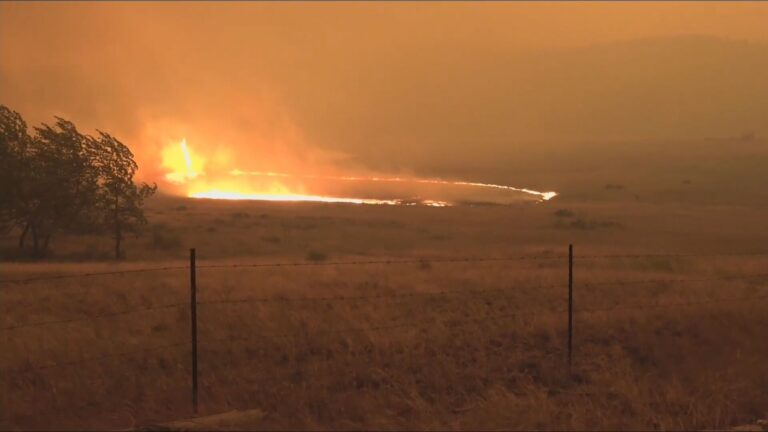
The urgency is not difficult to understand. As of Sunday morning, 145 active wildfires were burning across the province, with 69 of those classified as out of control. BCWS spokesperson Jean Strong described conditions in parts of B.C. as “conducive to more explosive growth or aggressive behaviour,” pointing to a combination of multi-year drought, hot and windy weather, and dry lightning as the key drivers. Heat warnings that blanketed much of the province last week have since been lifted, but Strong was careful not to suggest the danger has passed — tinder-dry fuels remain highly receptive to ignition, and the forecast calls for continued warm weather with little rain. “It makes it really easy for new fires to ignite, and for those fires to burn aggressively,” she said. The situation on the ground confirms that assessment, with structure losses already reported in the Boston Bar and Clinton areas and dozens of evacuation alerts and orders in effect across the province.

The current provincial response is substantial by any measure. Nearly a thousand firefighters — 974 in total — are actively deployed, supported by 162 aviation resources, 130 pieces of heavy equipment, and 248 structure protection personnel. That is a formidable mobilization, yet it is precisely because that capacity is already stretched that outside help becomes essential. Strong noted that bringing in crews from other jurisdictions does more than add bodies to the fight — it also gives exhausted local firefighters the opportunity to rest, a factor that matters enormously when a season shows no sign of relenting. “These resources are incredibly helpful,” she said.

Air Quality and Public Health Concerns

Beyond the immediate threat of fire, wildfire smoke is affecting broad swaths of the province, and Environment and Climate Change Canada issued air quality warnings that remained in effect Sunday. The federal agency’s advisory noted that smoke conditions can shift rapidly over short distances and vary considerably from hour to hour, making it difficult for residents to anticipate exposure levels. Those warnings carry particular weight for vulnerable populations — people with lung or heart conditions, pregnant individuals, infants and young children, those aged 65 and older, and anyone managing a chronic illness or acute health condition face a meaningfully elevated risk from prolonged smoke exposure. Drive BC also issued reminders early Sunday morning about wildfire-related road closures affecting travel in affected regions.

A Long Season Ahead

What is unfolding in B.C. is not an isolated spike but the continuation of a pattern shaped by years of drought and shifting climate conditions. The province’s ability to call on Alberta, Yukon, Mexico, and potentially others reflects a mature system of intergovernmental cooperation — one that Canadian federalism, at its most functional, makes possible. That cooperation matters, but it does not change the underlying reality: the fuels are dry, the weather remains warm, and the season is far from over. Residents in affected areas should follow evacuation orders and alerts without hesitation, monitor air quality advisories closely, and stay informed through official provincial and federal channels as conditions continue to evolve.

Trump’s New Tariffs: What Canadians Need to Know

0

President Donald Trump has announced a new round of tariffs, and the implications extend well beyond U.S. borders — hitting Canada’s trade-dependent economy with particular force.

Yahoo Finance Washington correspondent Ben Werschkul broke down the key details of the measures in a recent appearance on Market Domination, offering an early look at what the new tariff regime entails and which sectors face the greatest exposure.

Details on the specific rates, targeted goods, and implementation timelines remain limited from the original briefing, but the announcement signals a continued escalation of the protectionist trade posture that has defined the Trump administration’s economic agenda — one with direct consequences for Canadian exporters, manufacturers, and workers who rely on open access to the American market.

Why This Matters for Canada

Canada sends roughly three-quarters of its exports to the United States, making American trade policy not a distant geopolitical concern but an immediate domestic one. When Washington moves on tariffs, the effects ripple through auto plants in Ontario, energy corridors in Alberta, forestry operations in British Columbia, and steel facilities across the country.

The federal government has historically responded to U.S. tariff actions with a combination of retaliatory measures, negotiated carve-outs, and support programs for affected industries — tools that carry real costs and real limits. Provincial governments, particularly those with export-heavy economies, have their own stakes in how Ottawa navigates the response, and regional interests do not always align neatly with a single national strategy.

Indigenous communities with resource and land rights tied to affected industries also face distinct consequences that federal and provincial trade responses do not always adequately address.

What Comes Next

Full details of the tariff package — including which Canadian goods face new barriers, whether existing trade agreement provisions offer any shelter, and what the timelines for implementation look like — are still emerging. TBPANews will continue to follow developments closely as more information becomes available from Washington and from Canadian government officials responding to the measures.

For now, the announcement is a reminder that Canadian economic sovereignty remains bound, in significant ways, to decisions made south of the border — and that the institutions Canadians rely on, from Parliament to provincial legislatures to trade tribunals, will face fresh pressure to respond effectively.

WestJet Offers Fee-Free Rebooking as Strike Deadline Approaches

0

With a legal strike window opening as early as August 2, WestJet is giving passengers a way out — and the summer travel season hangs in the balance.

What Travellers Need to Know

The Calgary-based airline has announced that passengers holding bookings between July 30 and August 4 may make a one-time, fee-free change or cancellation to their itinerary. The move comes as WestJet’s roughly 4,400 cabin crew members, represented by CUPE Local 8125, voted 99.4 per cent in favour of strike action last week — a mandate that legally allows them to walk off the job starting August 2.

WestJet framed the flexibility offer as a gesture of goodwill. “Our team remains actively engaged in negotiations and is fully prepared to make meaningful improvements that work for cabin crew while balancing the future sustainability of WestJet,” the airline said in a statement on its website. In an email to WestJet Rewards members, the company added that it believes “an agreement can be reached while avoiding guest disruption,” while acknowledging that travel uncertainty “can be concerning.”

Broader Stakes for Canadian Travellers

The timing could hardly be more disruptive. A full work stoppage at WestJet would fall squarely in the heart of the Canadian summer travel season. John Gradek, an aviation expert at McGill University, estimates that a strike could strand between 70,000 and 75,000 passengers per day.

The prospect draws an uncomfortable parallel with last summer, when Air Canada flight attendants walked off the job, grounding approximately 700 daily flights and affecting more than half a million passengers before a resolution was reached.

Both sides say they want to avoid that outcome. Whether negotiators can bridge the gap on wages and unpaid work before the August 2 deadline will determine whether that intention holds.

Elmer MacKay, Long-Serving Nova Scotia MP and Mulroney-Era Cabinet Minister, Dies at 89

0

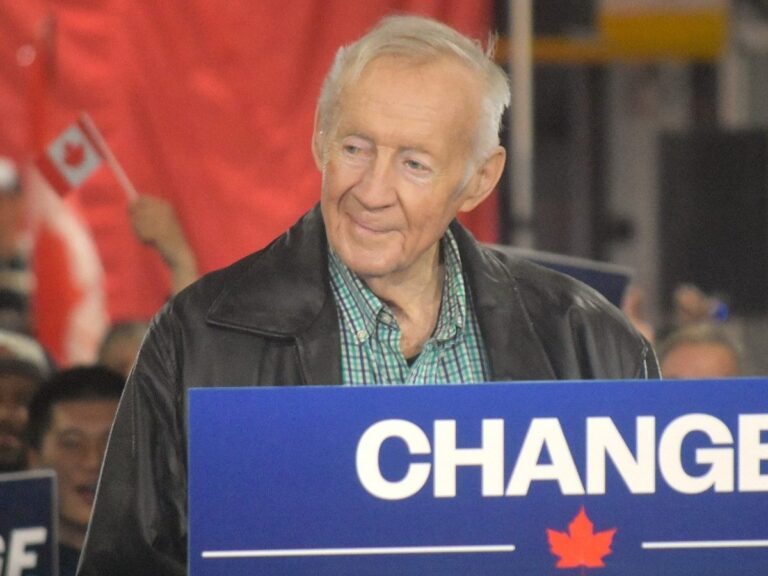
Elmer MacKay, who represented the Central Nova district in the House of Commons for more than two decades and held senior portfolios under two prime ministers, died this week at the age of 89. His son Peter MacKay, himself a former MP for the same Nova Scotia riding, confirmed the death on social media, describing his father’s life as one of “hard work and public service.”

MacKay’s political career is a study in the kind of constituency-rooted, institution-minded Toryism that once defined federal conservatism in Atlantic Canada. First elected in 1971 under the banner of the federal Progressive Conservatives, he served continuously until 1993, holding ministerial portfolios in the cabinet of Joe Clark and later under Brian Mulroney. His loyalty to Mulroney ran deep enough that in 1983 he vacated his own seat so the newly chosen PC leader could enter Parliament through a Central Nova byelection — a gesture that, whatever one makes of the politics, reflected a particular understanding of party and parliamentary duty.

That willingness to subordinate personal advantage to institutional need captures something essential about MacKay’s public life. Nova Scotia Premier Tim Houston, posting a tribute on Friday, noted that MacKay “served in the cabinets of two prime ministers and held some of the most demanding portfolios in the federal government, but he never lost sight of his Pictou County roots.” Houston added that MacKay kept his name and number listed in the phone book so constituents could reach him directly — a small but telling detail about how he understood the relationship between an elected representative and the people who sent him to Ottawa.

MacKay’s regional commitments extended beyond the symbolic. Conservative Leader Pierre Poilievre credited him with championing the Confederation Bridge and pushing for continuous ferry service between Prince Edward Island and Nova Scotia — infrastructure questions that carried real economic weight for communities along the Northumberland Strait. Poilievre also described a pattern of private generosity: MacKay reportedly arrived at the homes of low-income families before Christmas with gifts and food, consistently refusing any public recognition for the gesture.

Born Elmer MacIntosh MacKay on August 5, 1936, in Hopewell, Nova Scotia, to Laura Louise (MacIntosh) and Gordon Barclay MacKay, he is survived by five children, including Peter MacKay. His son’s tribute noted that he “loved the forest, poetry, sport, law and good debate” — a range of interests that speaks to the breadth of engagement he brought to a long life in and around public affairs. In recent years, he and his wife Sharon supported the construction of a new SPCA facility in the region.

MacKay’s career belongs to a political era that has largely passed — one in which a Progressive Conservative from rural Nova Scotia could spend twenty-two years in Parliament, serve two prime ministers, and remain genuinely embedded in his community throughout. What his life illustrates, above all, is that federal representation and local accountability need not be in tension, and that the quieter forms of public service often leave the most durable mark.