Thursday, March 5, 2026
Home Blog Page 6

Canadian death Iran: Ottawa confirms citizen died in detention

0

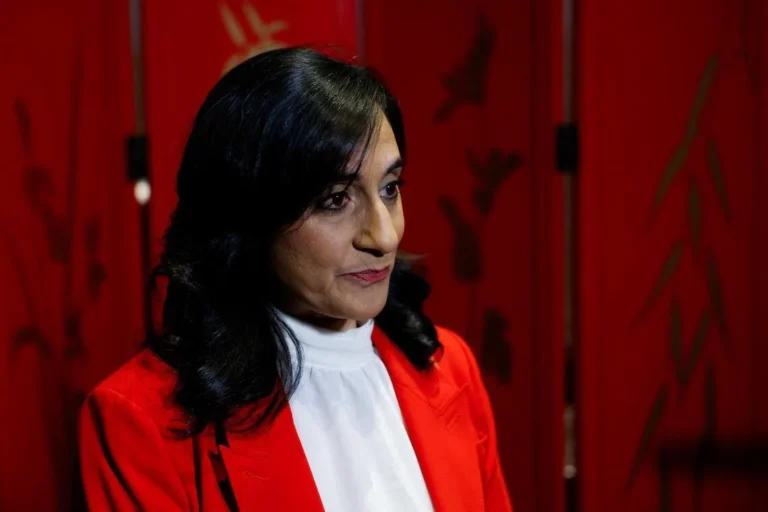
OTTAWA — The federal government says a Canadian citizen has died while in detention in Iran, after Foreign Affairs Minister Anita Anand reported the death in a public statement and said consular officials were supporting the victim’s family.

Canadian death Iran: what Ottawa said

Anand said the Canadian died “at the hands of the Iranian authorities” and that consular officials were in contact with the family in Canada. Global Affairs Canada confirmed it was aware of the death but did not release the person’s identity or provide details about the circumstances.

Iranian authorities have not publicly provided an account of the death in the Canadian statements cited by Ottawa, and the federal government has not disclosed whether the person held dual nationality.

Consular limits and Canada’s advisory for Iran

Ottawa warns Canadians to avoid all travel to Iran, citing nationwide demonstrations, the risk of arbitrary detention and the unpredictable enforcement of local laws. The government says Canada has no embassy or consulate in Iran and that its ability to provide consular services inside the country is “extremely limited.”

Canada suspended diplomatic relations with Iran and closed its embassy in Tehran in 2012, a decision the government said was driven by security concerns for Canadian diplomats and broader foreign-policy disputes.

Wider context: unrest and detentions

The confirmation comes amid continuing unrest in Iran and heightened international scrutiny of detentions and the treatment of protesters and foreign nationals. Ottawa’s travel advisory notes that Iranian authorities have detained foreign and dual nationals to exert political or diplomatic influence.

Canadian officials have not said whether the death will alter Canada’s current posture toward Iran, but they have reiterated warnings to Canadians to leave the country if they can do so safely and to monitor official advisories for updates.

Rogers revenue beat as sports media lifts fourth-quarter sales

0

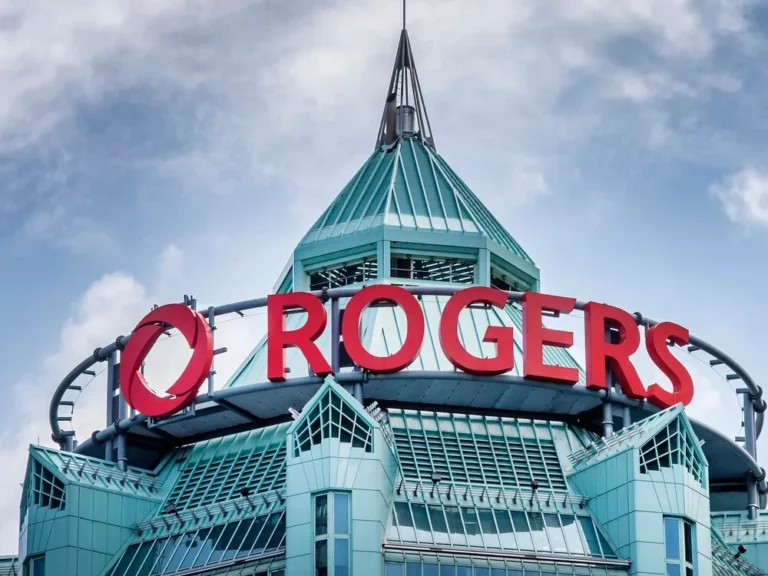
TORONTO — Rogers Communications posted fourth-quarter revenue above market expectations, driven by a sharp increase in its Media segment as the company leaned on sports programming and new channel launches to offset a slower wireless market.

Rogers reported total revenue of C$6.172 billion for the quarter ended Dec. 31, 2025, up 13% from a year earlier, while total service revenue rose 16% to C$5.250 billion.

Rogers revenue beat as sports media lifts results

Analysts had expected revenue of about C$5.98 billion, according to LSEG data cited in a report that also highlighted Media as the key driver of the quarterly upside.

Adjusted EBITDA rose 6% to C$2.689 billion. Net income attributable to Rogers shareholders increased to C$743 million, and adjusted diluted earnings per share rose to C$1.51.

Media and sports surge on Blue Jays, MLSE and new channels

Rogers said Media revenue increased 126% to C$1.236 billion, reflecting revenue from Maple Leaf Sports & Entertainment (MLSE) following the closing of the MLSE transaction on July 1, the Toronto Blue Jays’ postseason run, and higher advertising and subscriber revenue tied to the launch of Warner Bros. Discovery channels.

Media adjusted EBITDA rose to C$221 million from C$55 million a year earlier, as higher revenues outweighed increased programming and game-day costs.

Telecom results mixed as subscriber adds slow

In Wireless, Rogers reported 39,000 total mobile phone net additions in the quarter, including 37,000 postpaid subscribers, while postpaid churn improved to 1.43%. The company said wireless service revenue was in line with the prior year amid competitive pressure and a less active market.

In Cable, quarterly revenue was essentially flat at about C$2.0 billion, while adjusted EBITDA rose 1% and the segment posted 22,000 retail internet net additions.

2026 outlook points to higher cash flow and lower capex

For 2026, Rogers guided for total service revenue growth of 3% to 5% and adjusted EBITDA growth of 1% to 3%. It forecast capital expenditures of C$3.3 billion to C$3.5 billion and free cash flow of C$3.3 billion to C$3.5 billion, citing capital efficiency as it continues to invest in its networks and sports assets.

The results position Rogers to keep expanding its sports-and-media footprint while navigating a maturing telecom market where pricing and subscriber growth have become harder to sustain.

Canada and China agree to cut EV and canola tariffs in trade reset

0

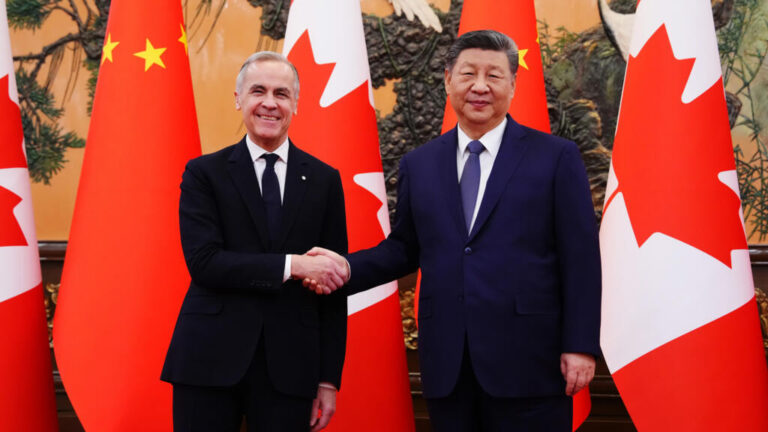
OTTAWA — Canada and China have reached a preliminary agreement-in-principle that would roll back punitive tariffs on Chinese electric vehicles and Canadian canola products, a significant thaw in a relationship that has been strained by trade retaliation and broader geopolitical tension. The tariff changes are expected to take effect by March 1, 2026, with Ottawa framing the deal as a managed reopening of trade that protects domestic industries while restoring market access for key Canadian exports.

Canada China tariffs deal: what changes on March 1

Under the agreement, Canada will allow an initial annual quota of 49,000 China-made electric vehicles to enter the Canadian market at the most-favoured-nation tariff rate of 6.1%, replacing the additional 100% tariff Canada imposed in 2024. Ottawa says the quota reflects import volumes before recent trade frictions and would represent less than 3% of Canada’s new-vehicle market.

On the agriculture side, Canada expects China to cut tariffs on Canadian canola seed to a combined rate of about 15% by March 1, down from a combined rate Ottawa puts at 84%. The federal government says the change would improve access for roughly $4 billion in annual Canadian canola seed exports to China.

Canada also expects that canola meal, lobsters, peas and crabs will not be subject to China’s “anti-discrimination” tariffs from March 1 until at least the end of 2026, a package Ottawa values at about $2.6 billion in market access for agricultural goods.

Electric vehicles: quota, pricing targets and certification

Ottawa says the EV quota is designed as “managed market entry,” with an affordability target built into the plan: the share of the quota reserved for vehicles priced at C$35,000 or less at import is expected to reach 50% by 2030. The government says it will also work with Chinese manufacturers on vehicle certification to ensure models sold in Canada meet federal motor vehicle safety standards.

China’s commerce ministry has publicly described the arrangement as ending Canada’s additional 100% tariff within the quota while keeping the 6.1% most-favoured-nation rate in place.

Canola: relief promised, but investigations still hang over trade

Canada is positioning the canola tariff rollback as one of the deal’s central commercial wins, given China’s importance to Prairie farmers and the wider oilseed supply chain. However, industry groups have noted that canola seed exports have also been affected by China’s provisional duties tied to an ongoing anti-dumping process, adding uncertainty around how quickly trade normalizes in practice.

The federal backgrounder describing the agreement says Canada expects China to accelerate the resumption of exports of Canadian beef, pet food, animal genetics and other products to China, signalling that further sector-specific discussions are still underway.

Political and industry reaction in Canada

The EV concession is expected to draw close scrutiny from automakers and unions in Ontario and across North America, where the sector is tightly integrated and competing governments have used tariffs to slow the inflow of low-cost Chinese-made EVs. General Motors CEO Mary Barra, speaking to The Wall Street Journal, criticized Canada’s decision to admit a capped number of Chinese EVs at a lower tariff, warning it could undermine regional manufacturing and supply chains.

Ottawa has argued the quota system is intended to provide predictability for Canadian manufacturers while increasing consumer choice and accelerating EV adoption, and it has linked the arrangement to an expectation of new joint-venture investment in Canada with “trusted partners.”

What comes next: review clause and broader trade agenda

Canada’s Global Affairs backgrounder describes the deal as an agreement-in-principle with a planned review of implementation and progress in three years to assess whether expected Canadian benefits have materialized. It also says the two countries agreed to continue work in coming months on additional “trade irritants” and areas of economic importance.

For Canada, the immediate test will be whether the promised agricultural relief translates into predictable access for farmers and exporters by March 1, and whether the EV quota can be implemented without triggering a new round of political friction with domestic manufacturers or Canada’s key trading partners.

Toronto Iran rally draws thousands as unrest deepens

0

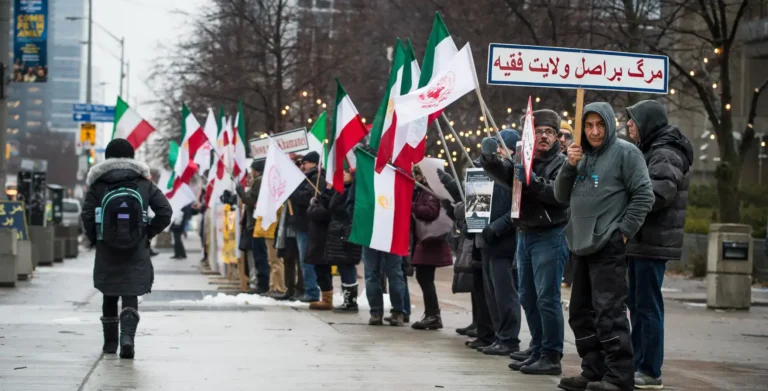
TORONTO — Thousands of people gathered in downtown Toronto on Sunday to protest Iran’s Islamic Republic and show support for Iranians killed during weeks of unrest, as Iranian Canadians urged international action and amplified calls for political change.

Toronto Iran rally fills Sankofa Square

Demonstrators packed Sankofa Square, waving Iranian flags and holding photos of victims while calling for regime change and outside pressure on Tehran, according to a Canadian Press report. Some participants said they did not want their full names published, citing safety concerns for relatives still in Iran.

Toronto police were present in and around the square, and the demonstration remained peaceful with no arrests reported.

Personal stories and demands for international action

At the rally, attendees described family members killed during protests and said Iranians inside the country face severe risks if they challenge authorities. Speakers and participants also called on Western governments to do more, including applying greater diplomatic and economic pressure.

Some protesters voiced support for Iran’s exiled crown prince, Reza Pahlavi, arguing he should be allowed to return, while others focused on broader demands for human rights and political freedoms.

What is driving the protests in Iran

The latest wave of protests began on Dec. 28, 2025, after an economic crisis and currency سقوط triggered demonstrations that later expanded into wider anti-government demands, according to reporting and official travel advisories. Iran has imposed telecommunications restrictions and internet disruptions during the unrest.

Casualty figures remain disputed. Iranian authorities have provided one set of numbers, while rights groups and opposition-linked organizations have offered substantially higher estimates, reflecting the limited independent access for verification.

Canada’s position as pressure builds

Canada, alongside G7 partners, has publicly urged Iranian authorities to end violence against demonstrators and uphold fundamental freedoms, including freedom of expression and peaceful assembly.

The Toronto rally was one of a series of demonstrations held in recent weeks across the Greater Toronto Area and elsewhere in Canada, as Iranian Canadians continue to push for sustained attention on the situation in Iran.

Alberta separatist talks with U.S. officials trigger political and constitutional fallout

0

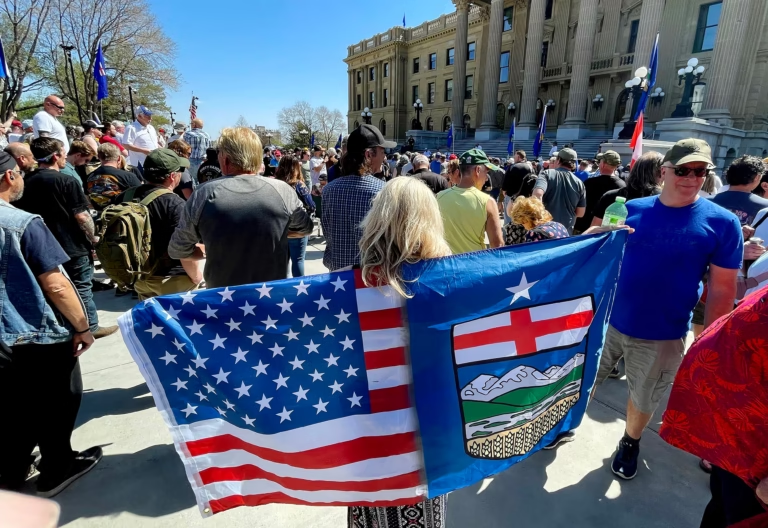
OTTAWA — Reports that Alberta separatist organizers held meetings with senior U.S. officials have set off a wave of political condemnation in Canada and renewed scrutiny of what, legally, would be required for a province to leave Confederation. The controversy has also intensified warnings from Indigenous leaders that treaty rights and constitutional protections cannot be bypassed by a citizen-led push for separation.

Alberta separatist talks with U.S. officials

The Alberta Prosperity Project (APP), an advocacy group promoting Alberta independence, met U.S. State Department officials in Washington three times since April 2025, according to reporting by the Financial Times. The group’s legal counsel, Jeff Rath, told the outlet that APP representatives were pursuing further discussions in early 2026 and intended to raise the idea of a US$500 billion credit facility that could support Alberta in the event an independence referendum were to succeed.

A U.S. State Department official, speaking on background to Canadian media, said the department regularly meets with “civil society” representatives and that no commitments were made in the APP meetings. A White House official made a similar point to the Financial Times, saying such contacts occur with many groups and that no support or commitments were conveyed.

Political backlash in Ottawa and across provinces

The meetings quickly became a flashpoint in Canadian politics. British Columbia Premier David Eby called the reported outreach “treason,” arguing it crossed a line at a time when Canada-U.S. relations are strained. Other premiers criticized the move on sovereignty grounds, while stopping short of the treason label.

Prime Minister Mark Carney said he expects the U.S. administration to respect Canadian sovereignty and noted that President Donald Trump had not raised Alberta separatism in their conversations, according to a Reuters account of his remarks. Alberta Premier Danielle Smith said she supports Alberta remaining in Canada, while acknowledging continued frustration in the province over federal policies.

The referendum drive and what it would take to proceed

The political blowback comes as organizers pursue a citizen-initiative process in Alberta aimed at triggering a provincewide constitutional referendum on independence. Alberta’s Chief Electoral Officer issued the petition for “A Referendum Relating to Alberta Independence” on January 2, 2026, starting a signature-collection period under provincial rules.

A separate analysis circulated in Ottawa policy circles and cited publicly by commentators says the proponent threshold is 177,732 signatures and that the collection window runs 120 days, from January 3 to May 2, 2026.

Constitutional hurdles and the limits of provincial action

Even if an Alberta referendum were held and produced a pro-separation result, Canada’s legal framework sets significant constraints. In its 1998 decision known as the Quebec Secession Reference, the Supreme Court of Canada found that a province cannot secede unilaterally under Canadian constitutional law, while also stating that a “clear majority” vote on a “clear question” in favour of secession would create a duty for governments to enter negotiations. The court emphasized that any move to secede would still require a constitutional amendment.

Parliament’s 2000 Clarity Act, enacted in response to that ruling, sets out a process in which the House of Commons assesses whether a proposed referendum question is clear and whether the result represents a clear expression of the will of the province’s population before the federal government would consider entering negotiations.

In practice, constitutional experts say these requirements mean that a provincial referendum, on its own, would not change Alberta’s legal status within Canada. It would be the start of a political process that must comply with constitutional rules and protect minority rights.

Indigenous leaders warn treaties cannot be sidelined

Indigenous governments in Alberta and across the Prairies have argued that separation campaigns and referendum proposals risk ignoring treaty relationships and constitutional obligations. Several First Nations have said Alberta has a duty to consult and accommodate treaty holders on any process that could affect their rights, and some have taken the issue to court.

Indigenous leaders have also criticized the reported U.S. outreach by separatist organizers, saying it adds a foreign-policy dimension to a domestic constitutional question and raises concerns about outside influence in an already polarized debate.

Foreign interference concerns and the next test for governments

While U.S. officials have denied offering commitments to separatist organizers, the revelation that meetings occurred has sharpened calls for vigilance over foreign interference and disinformation in Canadian democratic processes. The federal government has not alleged wrongdoing by the United States in this case, but the episode has added pressure on Ottawa and provincial authorities to clarify rules and responsibilities as Alberta’s petition drive continues.

For now, Canada’s constitutional architecture remains the central constraint: any attempt to separate would require a clear referendum mandate, negotiations among governments, and constitutional change, with treaty rights and minority protections explicitly in view.

Greenland sovereignty: Inuit leaders raise alarm as U.S. pressure returns

0

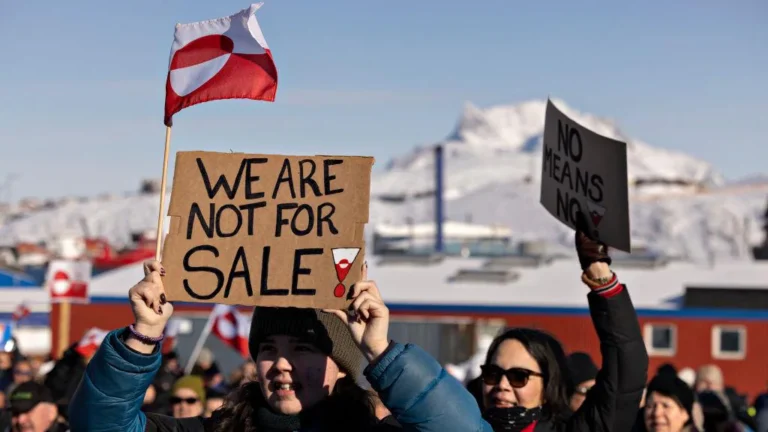
Indigenous leaders across the Arctic are warning that renewed U.S. interest in Greenland is reviving colonial-era assumptions and could sideline Inuit rights and decision-making as global powers compete for influence in the region. The concern has been amplified in recent weeks by fresh statements from U.S. President Donald Trump about U.S. control of Greenland and the diplomatic fallout that followed in Denmark and Greenland.

Greenland sovereignty and Inuit self-determination

In Canada, Inuit Tapiriit Kanatami (ITK) president Natan Obed said the arguments being used to justify U.S. pressure on Greenland could be repurposed against Canada’s Arctic, calling for greater investment in Inuit Nunangat as a practical way to strengthen sovereignty and resilience. ITK has warned that claims about defence “underinvestment” can become a pretext for outside interference in northern homelands.

Leaders of the Inuit Circumpolar Council, which represents Inuit from Alaska, Canada, Greenland and Russia’s Chukotka region, have also criticized repeated assertions that Greenland must be controlled by the United States, arguing the rhetoric reflects a view of Greenlanders and other Indigenous peoples as obstacles in geopolitical planning rather than partners with rights and authority in their own territories.

Greenland’s government rejects U.S. control language

Greenland’s Prime Minister Jens-Frederik Nielsen said on February 2 that Washington still fundamentally seeks “ownership and control” even after Trump publicly backed away from threats of using military force. Nielsen described the pressure as unacceptable and said it has contributed to anxiety among Greenlanders, including children, as the dispute has intensified.

Denmark’s foreign ministry said senior officials from the United States, Denmark and Greenland began talks last week aimed at addressing U.S. security concerns in the Arctic while respecting Danish “red lines,” as Copenhagen and Nuuk continue to insist Greenland’s future must be decided by Greenlanders.

Land, security and the strategic stakes in the Arctic

The dispute is also colliding with Greenland’s legal and cultural approach to land. Under Greenlandic law, people can own houses but not the land beneath them, reflecting Inuit traditions of collective stewardship rather than private freehold ownership—an idea highlighted by Greenlanders as incompatible with talk of “buying” the island.

Strategically, Greenland already hosts the U.S. military’s northernmost installation, Pituffik Space Base, operating under a defence agreement dating back to 1951 between the United States and Denmark. As Arctic shipping, surveillance and resource competition draw more attention, Inuit organizations say decisions about security and development must include Indigenous governments and rights-holders rather than treating the Arctic as empty space to be divided by states.

Team Canada women lead historic Milano Cortina roster

0

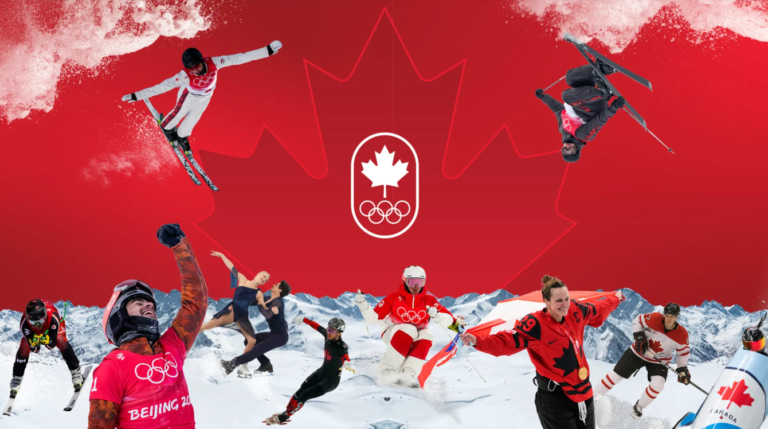
TORONTO — Canada will send 207 athletes to the Milano Cortina 2026 Olympic Winter Games, marking the first time that Canadian athletes competing in women’s events outnumber those competing in men’s events, according to the Canadian Olympic Committee.

Team Canada women make up majority

The Canadian Olympic Committee said 108 athletes will compete in women’s events, compared with 99 athletes competing in men’s events. The committee noted this is the first Olympic Winter Games where Team Canada athletes in women’s events outnumber those in men’s events.

The Games run from February 6 to February 22, 2026, with competition spread across multiple venues in northern Italy as part of the Milano Cortina 2026.

Numbers behind the delegation

Along with the athletes, the Canadian Olympic Committee said the delegation will include 231 national sport organization support staff and coaches, supported by 181 Canadian Olympic Committee mission team members.

The committee’s roster notes a wide age range, from 18-year-old snowboarders to veteran athletes in their 40s, and includes a mix of Olympic rookies and returning medalists.

Chef de Mission Jennifer Heil said the Olympic Games put a country’s character on display through its athletes, in remarks included with the team announcement.

Flag bearers and opening ceremony

The Canadian Olympic Committee has also named Olympic champions Mikaël Kingsbury and Marielle Thompson as Canada’s opening ceremony flag bearers. The committee said both are competing in their fourth Olympic Winter Games and will take part in the opening ceremony at Livigno Snow Park.

Gender balance at Milano Cortina 2026

The International Olympic Committee has said Milano Cortina 2026 is set to be the most gender-balanced Olympic Winter Games to date, with women accounting for 47% of allocated athlete quota places.

An IOC-approved event programme and quota document sets out 116 medal events for the Games, including women’s events, men’s events and mixed events, reflecting the continued expansion of women’s and mixed-gender competitions in the Winter Olympic programme.