Thursday, March 5, 2026
Home Blog Page 5

Toronto police arrests confirmed as Project South briefing set for Thursday

0

The Toronto Police Association said several of its members were arrested on Wednesday as part of an investigation that sources described as linked to organized crime and corruption, with York Regional Police scheduled to provide an update on Thursday morning.

In a statement issued Wednesday evening, the union said it was aware of the arrests and would ensure members receive due process and wellness support. It declined to comment further on the investigation or identify those involved, and said the actions of the arrested members should not reflect the broader police service.

Police have not publicly outlined allegations or charges. Sources cited by Global News said at least nine Toronto Police Service officers were arrested in connection with the case.

Project South investigation and pending police update

York Regional Police has described Project South as a lengthy investigation into organized crime and corruption. In a media advisory posted on February 4, York Regional Police said it will announce the results of the investigation at a news conference at its headquarters in Aurora at 10 a.m. Thursday.

York Regional Police Chief Jim MacSween and Deputy Chief Ryan Hogan are expected to speak, alongside Toronto Police Service Chief Myron Demkiw, according to the same advisory.

Neither York Regional Police nor the Toronto Police Service released further details ahead of the scheduled briefing, and the number of arrests has not been confirmed by police.

Union response and next steps

The Toronto Police Association said it would not comment on the investigation while it proceeds, beyond confirming arrests of members and stating it would support them through the process.

Further information on the scope of Project South, the identities of those arrested, and any charges is expected to be addressed at Thursday’s news conference.

Canada auto strategy expected as Carney prepares new measures amid U.S. tariffs

0

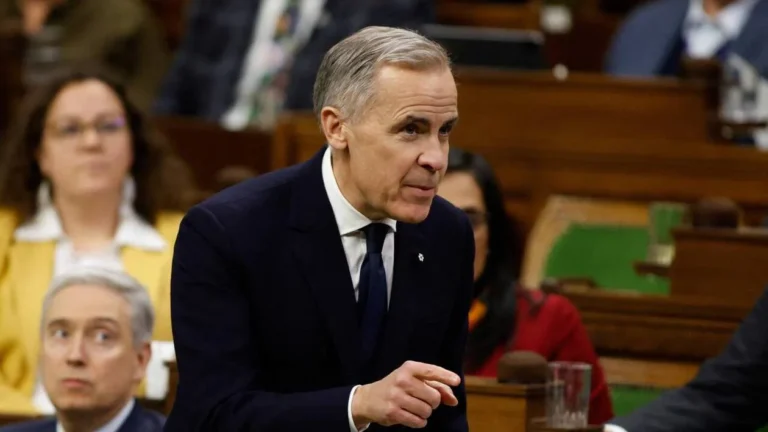
The federal government is expected to announce a new strategy for Canada’s automobile manufacturing industry on Thursday, with Prime Minister Mark Carney set to make the announcement in the Greater Toronto Area as the sector faces pressure from U.S. tariffs.

Carney’s office has billed the event as an announcement of “new measures to transform Canada’s auto manufacturing sector for the future,” as Canada’s integrated North American auto supply chain confronts a 25% U.S. tariff on Canadian vehicles and ongoing trade uncertainty.

Canada auto strategy shifts away from EV sales mandate

Government and industry sources said the strategy will scrap the electric vehicle sales mandate and replace it with new vehicle emissions standards, according to The Canadian Press.

The planned shift would mark a change in how Ottawa seeks to lower transportation emissions, moving from a sales target framework toward standards tied to vehicle emissions performance.

Industry under pressure from U.S. tariff threat

Canada’s auto industry has been bracing for sustained trade friction with Washington. The United States has imposed a 25% tariff on Canadian vehicles, and President Donald Trump has threatened further tariffs on “all goods” from Canada, citing a trade deal with China.

Automakers and parts suppliers have warned that additional tariffs could disrupt production planning, investment decisions, and cross-border supply chains that rely on frequent movement of components between Canada and the United States.

Technical briefing scheduled alongside announcement

Senior officials from Innovation, Science and Economic Development Canada, Transport Canada, and Environment and Climate Change Canada are scheduled to hold a technical briefing on the new auto strategy on Thursday morning in Ottawa, according to a federal media advisory.

The government has not publicly released full details of the strategy ahead of the announcement.

Streaming Wars in Canada: Platforms Raise Prices and Rethink Content Strategies

0

TORONTO — Canada’s streaming market is entering a new phase as major platforms adjust prices, expand ad-supported options, and tighten content spending in a bid to keep subscribers while improving profitability. The changes are reshaping how Canadians pay for TV and film, and how companies decide what to make, buy and promote.

After years of rapid growth, streamers now compete in a more crowded and cost-sensitive market. Many households juggle multiple subscriptions. They also cancel faster when bills rise or a show ends.

Price Changes Push Viewers to Cheaper Tiers and Bundles

Several large streaming services have raised monthly fees in recent years. Many now steer customers toward lower-priced plans that include advertising. Others rely on annual plans or limited-time promotions to reduce churn.

Telecom bundling also plays a bigger role in Canada than in some markets. Companies often pair streaming with wireless, internet, or TV packages. Those bundles can soften price increases. They can also lock customers into longer commitments.

Ad-Supported Streaming Becomes Core Strategy

Ad tiers have moved from an experiment to a central product. Platforms pitch them as a way to keep prices lower while generating new revenue. Advertisers see a chance to reach audiences that no longer watch traditional TV.

This shift changes the viewer experience. It also changes commissioning decisions. Streamers often back series that can run longer, attract broad audiences, and deliver consistent viewing. They rely less on expensive niche projects.

Password Sharing Limits Redefine “Household” Accounts

Platforms have also tightened rules around password sharing. Many now define account use around a single household. They offer paid add-ons for extra users.

These policies aim to convert free riders into paying customers. They also create frustration for families and students who split time between homes. Some platforms have adjusted their policies in response to complaints. Others have pushed ahead.

Content Strategies Shift Toward Franchises, Sports and Local Hits

Content spending remains high, but priorities have shifted. Platforms and broadcasters now favour proven franchises, recognizable brands, and sports rights that can drive live viewing. They also lean on reality formats and unscripted series that cost less than premium drama.

In Canada, services also compete on local relevance. They commission Canadian series, acquire Canadian films, and support French-language programming to build loyalty in Quebec and beyond. They use local originals as a marketing hook. They also use them to strengthen relationships with Canadian producers.

Regulation and Canadian Content Expectations Add Pressure

Canada’s policy environment has become part of the streaming equation. Ottawa and regulators have signalled that large online platforms must support the domestic screen sector. That debate influences planning, especially for companies that operate globally and want stable rules across markets.

Industry groups argue that Canadian projects need reliable investment and strong promotion. Platforms counter that they need flexibility to respond to audience demand and rising production costs.

What Viewers Can Expect Next

In the short term, Canadians should expect more price testing, more ad-tier refinement, and more bundling deals. They should also expect sharper competition for attention as platforms release fewer but bigger titles and concentrate marketing on a smaller set of “must-watch” shows.

The streaming wars in Canada no longer revolve around rapid expansion. They now centre on retention, value, and the content that can justify another monthly bill.

Canadian Film and TV Industry Braces for a Busy Spring Release Schedule

0

TORONTO — Canadian film and television executives are preparing for a crowded spring release period as broadcasters, streaming platforms, festivals and industry events stack premieres into a tight window. Programmers expect heavy audience demand. Producers also see a rare chance to break through with Canadian-made stories before the summer slate takes over.

The spring calendar will test marketing budgets and media attention. It will also force tough choices on viewers as multiple Canadian titles compete for the same weeks.

Broadcasters Load Up on New and Returning Canadian Series

Canadian networks have signalled an aggressive spring posture. Industry listings show public and private broadcasters positioning more than 20 original Canadian series across late winter and spring on both linear TV and streaming companions.

Programmers have also built schedules around major sports and tentpole events. That approach aims to protect key premiere nights. It also helps networks keep momentum when live events dominate the conversation.

Streamers Push Premium Titles Into the Spring Window

Canadian streaming services and premium channels plan steady drops through the spring. They want to keep subscribers engaged after winter. They also want to avoid the summer churn that hits many platforms.

This strategy creates more competition for attention. It also rewards titles with clear hooks, strong casts, or built-in fandoms. Projects that can travel internationally will draw extra focus from distributors and sales agents.

Festivals and Industry Showcases Add to the Congestion

Toronto will again anchor the spring industry calendar. Hot Docs has set its 2026 festival dates for April 23 to May 3. The event typically draws global documentary premieres, market activity and major media coverage.

Later in the season, Canadian Screen Week will run May 27 to May 31 in Toronto. The timing puts awards campaigns and industry panels inside the same high-traffic period as late-spring premieres.

Development and Funding Pipelines Point to Continued Output

Behind the scenes, industry groups are building the next wave. The Canadian Film Centre has scheduled its 2026 Comedy Series Lab through early June, with a focus on developing new series projects and writer talent.

Telefilm Canada has also published timelines for upcoming program intakes that shape production planning. Those schedules influence when projects enter financing, packaging and greenlight stages.

What the Busy Spring Means for the Industry

A dense release schedule can lift the whole market. It can also bury smaller titles that lack marketing power. Distributors and publicists will push for strategic dates and clean promotional runs.

For audiences, the packed spring will bring more choice. For the industry, it will provide a clear test of what Canadian films and series can break through when the calendar leaves little room to breathe.

Canada Soccer Reform Talks Continue as Scrutiny Builds Ahead of Major Tournaments

0

TORONTO — Canada Soccer is under renewed scrutiny as it works through governance and commercial reforms ahead of a run of major events, led by the 2026 FIFA World Cup that Canada will co-host with the United States and Mexico. Recent updates from the federation point to ongoing negotiations over commercial rights and continued efforts to modernize governance, while critics and stakeholders press for faster, clearer change.

Canada Soccer Reform Talks Centre on Governance Changes

Canada Soccer commissioned an independent governance review after the federal sport minister asked the federation in 2023 to examine its structures and practices. The final report, dated May 2024, set out recommendations on board practices, accountability, and how members exercise voting power inside the organization.

The report placed added attention on how Canada Soccer represents a wide range of stakeholders, from provincial and territorial associations to professional leagues and national teams. Reform advocates say governance changes will matter most if they also improve transparency and decision-making speed.

Commercial Rights Deal Remains the Flashpoint

The long-term commercial arrangement with Canadian Soccer Business (CSB) continues to dominate reform discussions. Canada Soccer has said it is in talks related to commercial rights and has pledged to publish details of any new agreement it reaches to support transparency and public understanding.

Public reporting has described the CSB agreement as a 10-year deal linked to the owners of Canadian Premier League clubs and structured around bundled sponsorship and media rights. The deal has faced criticism from parts of the soccer community that want clearer disclosure of revenue flows and stronger oversight.

Leadership Changes Aim to Stabilize the Federation

Canada Soccer appointed Kevin Blue as general secretary and chief executive officer in 2024, after a period of turnover and tension around finances and labour relations. Blue has described trust-building and operational stability as priorities as the federation moves through a high-stakes tournament cycle.

In January 2026, Canada Soccer also announced it had appointed Denmark’s Kenneth Heiner-Møller as sporting director for the national teams, a move the federation framed as part of strengthening long-term technical planning. Reuters reported the appointment as Canada Soccer prepared for an intense period of international competition and public attention.

Culture and Oversight Questions Add Pressure

Canada Soccer also faces reputational pressure tied to the women’s program’s drone incident at the Paris 2024 Olympics and the broader questions it raised about oversight and internal culture. Reporting and official briefing material have described the episode as a catalyst for deeper scrutiny of controls, accountability, and governance in high-performance environments.

World Cup Countdown Raises the Stakes

The federation now works against a fixed deadline. The 2026 World Cup will put Canada Soccer’s governance, commercial model, and leadership under sharper focus than at any point in its modern history. Stakeholders will watch for concrete outcomes, including clearer reporting, firmer oversight, and reform steps that last beyond the tournament cycle.

NHL Trade Deadline Watch: Canadian Teams Weigh Key Moves Ahead of Playoff Push

0

The NHL trade deadline is approaching with Canadian clubs facing diverging priorities, from adding depth for a playoff run to clearing cap space and stockpiling future assets. With the standings tightening into February and the league resuming regular play after the Olympic break later this month, front offices are under pressure to decide whether to buy, sell or hold.

The deadline is set for March 6 at 3 p.m. ET, leaving only a narrow window for teams to address roster holes, manage injuries and position themselves for the stretch drive.

NHL Trade Deadline: What Canadian Teams Need

For the Canadian teams pushing for postseason spots, the most common needs are familiar: blue-line depth, a reliable second scoring line, and insurance in goal. Contenders typically target players with term remaining or clear fit in a defined role, while bubble teams often focus on versatile, middle-of-the-lineup additions that do not cost premium futures.

This year, league-wide pricing is expected to be shaped by a limited pool of impact players and the usual premium for retention-capable sellers, making creativity—three-way trades, salary retention and prospect-heavy packages—more likely.

Eastern Canada Focus: Toronto, Ottawa and Montreal

Toronto’s priority is expected to centre on stabilizing its defensive group and adding support minutes for a playoff-style game, with injuries and inconsistency putting more emphasis on depth behind the top pairings. The Maple Leafs have also faced questions about secondary scoring and lineup balance, factors that can influence whether management targets a forward or a defenceman first.

Ottawa’s needs are likely to be tied to experience and structure—areas teams often target with a depth defenceman, a defensive-minded forward, or a proven penalty killer—depending on where the Senators sit as the deadline nears.

Montreal, if it remains in the mix, could look for pragmatic upgrades that protect its core while keeping flexibility. For teams in a transitional phase, the typical approach is to avoid spending premium picks unless the move clearly improves the roster beyond the current season.

Western Canada Focus: Edmonton, Winnipeg, Calgary and Vancouver

Edmonton is again expected to be linked to defence help and playoff-specific depth—particularly a steady, matchup-capable defenceman and a forward who can drive a third line or complement elite scorers. The Oilers’ approach often comes down to whether management sees the biggest marginal gain in preventing goals or creating more balanced offence.

Winnipeg’s priorities, if it is positioned to contend, tend to revolve around reinforcing the middle of the lineup—centre depth, a two-way winger, and defensive reliability—while keeping the top end intact.

Calgary and Vancouver face the classic decision point for teams hovering around the cut line: add for a push, or convert expiring contracts into picks and prospects. Vancouver’s recent struggles have heightened the urgency around roster clarity, while Calgary’s approach will likely depend on whether it can string together results before the market peaks.

Buyers, Sellers and the Price of “Playoff Depth”

The weeks ahead of the deadline often feature two markets: early, when teams try to land specific fits before bidding heats up, and late, when prices spike for retained-salary deals and for players with strong special-teams value. Clubs that commit to buying usually prioritize versatility—players who can move up and down the lineup, take key defensive-zone shifts, and contribute on the penalty kill.

For sellers, the opportunity is to maximize returns on expiring contracts and retained cap space, which has become a commodity of its own in a league where contenders often need creative solutions to fit an addition.

What To Watch Between Now and March 6

The clearest signals will come from roster usage and contract decisions: who gets elevated minutes, which players are scratched or moved down the lineup, and whether management begins extending pending free agents. Another tell is how teams handle their draft picks—clubs that start moving mid-round picks early are often preparing to buy more aggressively later.

With the deadline set for March 6, Canadian teams have limited time to define their direction—and in a tight playoff race, a single targeted move can be the difference between securing a spot, slipping into the wild card scramble, or pivoting toward the future.


Carbon Pricing Debate Resurfaces as Climate Targets Clash With Cost-of-Living Concerns

0

OTTAWA — Canada’s carbon pricing debate has returned to the political forefront as the federal government prepares changes to industrial carbon-pricing rules while opposition parties and some provincial leaders argue that climate policy must not worsen affordability pressures.

The renewed arguments come after Ottawa ended the consumer-facing federal fuel charge effective April 1, 2025, shifting the centre of gravity to pricing systems that apply to large industrial emitters and to provincial policies that determine how those costs are managed and passed through the economy.

Carbon Pricing Debate Shifts From Households to Heavy Industry

With the fuel charge set to zero, federal carbon policy is now primarily contested around industrial systems that cover major emitters in sectors such as power generation, oil and gas, and heavy manufacturing. Ottawa has said the intent is to keep a carbon price signal on a broad range of industrial emissions while allowing provinces flexibility in designing their own systems, provided they meet federal minimum standards.

Critics argue that even without a direct charge at the pump, carbon costs can still be reflected in electricity, home heating, transportation and the price of goods. Supporters counter that industrial pricing is designed to steer investment toward lower-emitting production and reduce longer-term economic risks tied to climate change and shifting global trade rules.

Federal Benchmark Review Reopens Provincial Friction

Environment and Climate Change Canada launched a formal engagement process in December 2025 to strengthen and update the federal benchmark for industrial carbon pricing. The benchmark sets the minimum stringency provincial and territorial systems must achieve to be considered equivalent to the federal standard.

Provincial governments that have resisted federal climate measures say tighter requirements can raise operating costs and weaken competitiveness, particularly in trade-exposed industries. Ottawa’s position is that predictable industrial carbon pricing is central to driving decarbonization investment while limiting the risk that emissions-intensive activity relocates to jurisdictions with weaker rules.

Climate Targets Raise the Stakes for Policy Choices

Canada’s federal climate framework includes a 2030 target of cutting emissions 40% to 45% below 2005 levels, and a legal commitment to reach net-zero emissions by 2050. Canada has also submitted a 2035 target range of 45% to 50% below 2005 levels.

Independent reviews and audit reports have repeatedly cautioned that meeting those targets depends on durable policy implementation across high-emitting sectors, including those governed by industrial carbon-pricing systems.

Cost-of-Living Politics and the Fight Over “Hidden” Impacts

The debate is also shaped by competing interpretations of how carbon pricing affects households. Past analysis by the Parliamentary Budget Officer of the former federal fuel charge found that direct costs and rebates could produce different outcomes across provinces and income groups, while broader economic effects and indirect price impacts remain politically contentious.

For the federal government, the challenge is to defend industrial carbon pricing as a climate and investment policy while responding to public concern about prices and to calls from opponents to dismantle carbon pricing entirely.

What Comes Next

Ottawa’s benchmark update is expected to influence industrial carbon pricing rules through the rest of the decade, including how provinces structure compliance options, set performance standards for large facilities, and recycle revenues back into households, businesses or clean investment.

As the federal consultation moves toward decisions, the carbon pricing debate is likely to remain a defining fault line in Canadian politics—testing whether governments can sustain climate policy ambition while addressing cost-of-living pressures that continue to dominate public attention.

Provinces press Ottawa to speed up housing action as affordability crunch deepens

0

Canada housing pressure is intensifying as provinces and municipalities call on the federal government to move faster on funding, approvals and construction support, arguing that housing shortages and homelessness are outpacing the rollout of Ottawa’s measures aimed at accelerating building.

The renewed push underscores a familiar tension: Ottawa is tying more federal money to reforms and measurable outcomes, while provinces and cities say timelines, rules and bottlenecks in federal programs are slowing projects that are supposed to deliver units quickly.

Canada housing pressure drives federal-provincial friction

Housing Minister Gregor Robertson has urged provinces to increase support for transitional and supportive housing, saying the federal government cannot address homelessness pressures on its own and that provincial systems play a decisive role in shelter, health and social supports tied to housing outcomes.

Provincial governments, meanwhile, have pressed Ottawa to speed up the flow of federal dollars and simplify administration, particularly for projects that depend on coordination across orders of government, including those requiring enabling infrastructure such as water and servicing.

Ottawa leans on Build Canada Homes and city-level agreements

The federal government has positioned Build Canada Homes as a key instrument for scaling up affordable housing, including through partnerships with provinces, territories, municipalities and Indigenous communities, and by using federal financing tools and public lands to accelerate construction.

Ottawa has also continued to pursue direct agreements with municipalities through the Housing Accelerator Fund, which links federal support to local reforms intended to increase density, speed permitting and unlock more housing starts.

Cities demand faster delivery and predictable infrastructure support

Municipal leaders have argued that housing targets will remain difficult to meet without more predictable and timely infrastructure funding, saying constraints in water, transit and local servicing can stall projects even when approvals are in place.

The dispute is increasingly about pace and control: provinces and cities want fewer delays and more flexibility, while the federal government is emphasizing accountability mechanisms designed to ensure funding translates into completed homes.

Building levels remain below what analysts say is required

National construction has risen, but housing supply indicators continue to show a gap between current building rates and the level widely cited as necessary to restore affordability, particularly in high-demand markets. Canada Mortgage and Housing Corporation data for 2025 showed an increase in housing starts compared with 2024, while also signalling a softer pace later in the year.

With housing affordability still dominating provincial and federal politics, the next test will be whether Ottawa and the provinces can align on faster approvals, coordinated financing and sustained building volume through 2026 as pressure mounts for visible results.

Black History Month 2026: Canada marks 30 years with new funding and nationwide events

0

OTTAWA — Canada is marking the 30th year of Black History Month with a new national theme, fresh federal funding for community-led programming, and a slate of events and initiatives running through February across the country.

Black History Month theme highlights “Black brilliance” across generations

The federal theme for 2026 is “30 Years of Black History Month: Honouring Black Brilliance Across Generations — From Nation Builders to Tomorrow’s Visionaries,” a framing the government says is intended to recognize historical contributions while spotlighting emerging leaders and innovators. Canadian Heritage has also released a digital toolkit and educational resources to support public institutions, schools, and community organizations promoting Black History Month programming.

Federal funding targets community celebrations and cultural programming

As part of the 2026 launch, the Minister of Canadian Identity and Culture, Marc Miller, announced more than $280,000 in funding for nine Black History Month projects in Atlantic Canada, spanning theatre and festivals, workshops, and community events. The funded projects listed by Canadian Heritage include recipients in Nova Scotia, New Brunswick, Prince Edward Island, and Newfoundland and Labrador.

Carney points to entrepreneurship and mental health supports

In a Black History Month statement dated February 1, Prime Minister Mark Carney highlighted the October 2025 renewal of the Black Entrepreneurship Program with $189 million, saying the program has supported more than 24,000 Black entrepreneurs since launch. Carney also said the federal government is supporting community-based, Black-led initiatives focused on mental health and well-being.

National initiatives broaden the policy focus beyond February

Federal program pages list several ongoing measures positioned as supports for Black communities and Black-led organizations, including the Black-led Philanthropic Endowment Fund, the Mental Health of Black Canadians Fund, and the Supporting Black Canadian Communities Initiative. The same federal overview also references work tied to Canada’s Black Justice Strategy.

Events planned nationwide, including a Black Justice Strategy webcast

Alongside local celebrations, the Canadian Race Relations Foundation says it is supporting Black History Month programming and will host a “Finding Common Ground” webcast focused on implementation of Canada’s Black Justice Strategy, bringing together government and community leaders and partner organizations.

With February underway, federal officials say the month is intended to pair celebration with renewed attention to systemic barriers, as governments and community groups roll out programming that extends beyond Black History Month itself.

Carney says he “meant what I said” after Davos speech dispute in call with U.S. leadership

0

OTTAWA — Prime Minister Mark Carney has rejected U.S. claims that he softened his message from a high-profile Davos speech during a subsequent phone call with U.S. President Donald Trump, saying he stood by his remarks and framed them as a response to shifting U.S. trade policy. According to Reuters, the dispute erupted after U.S. Treasury Secretary Scott Bessent told Fox News that Carney had “aggressively” walked back “unfortunate remarks” made at the World Economic Forum.

What was said in the Carney Davos call

Carney told reporters in Ottawa on January 27 that he did not retract his Davos comments in the call with Trump, saying he reiterated that he “meant what” he said and argued Canada is adjusting to U.S. tariffs and economic pressure by broadening its trade relationships.

The U.S. side has not released a detailed account of the conversation, leaving Canadians weighing competing public descriptions of what was discussed and how firmly Carney defended his Davos message.

Davos speech set off a new flashpoint with Washington

Carney delivered his Davos address on January 20, warning of what he described as a “rupture” in the international order and urging “middle powers” to coordinate so they are not squeezed by larger states using economic integration and tariffs as leverage.

The speech landed amid heightened Canada–U.S. trade tensions and followed Carney’s push to diversify exports and attract investment as Ottawa works to reduce reliance on a single market.

Political and constitutional pressure for clarity at home

In Ottawa, opposition Conservatives seized on the conflicting accounts and pressed the Prime Minister’s Office to provide a formal readout of the call, arguing Canadians should know whether any position was revised under U.S. pressure.

Carney, for his part, has said Canada remains open to strengthening economic ties with the United States, while preparing for an upcoming review of the Canada–U.S.–Mexico trade pact and pursuing expanded trade links elsewhere.