
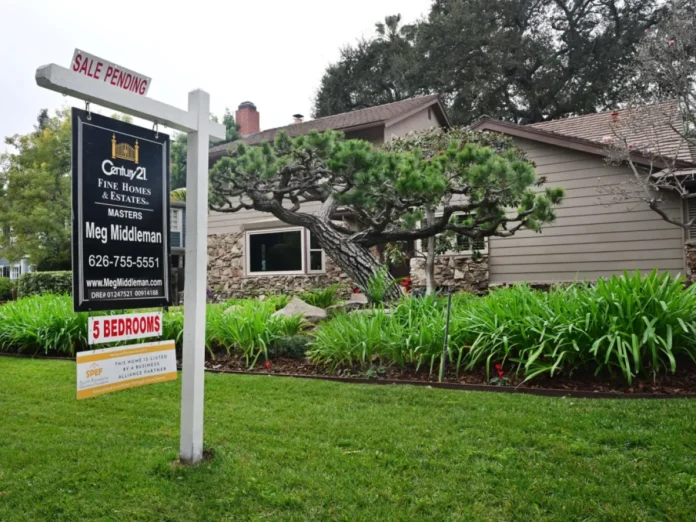
A tax designed to fund affordable housing in Los Angeles has instead suppressed the very real-estate activity it depends on, according to researchers and city officials, raising serious questions about the design of Measure ULA — a levy approved by voters in 2022 that was widely marketed as a “mansion tax” on the ultra-wealthy.
A Tax That Missed Its Target
Voters passed Measure ULA with the understanding that it would fall primarily on millionaires and billionaires selling luxury homes. The measure drew far less scrutiny for what it also covered: apartment buildings, commercial properties, and development sites — the transactions most directly tied to new housing construction in a city already facing a severe shortage.
ULA imposes a 4% tax on qualifying property sales above $5.4 million and a 5.5% levy on sales of $10.9 million or more, layered on top of the city’s existing transfer tax. Those thresholds rise automatically with inflation. Critically, once a sale crosses a threshold, the tax applies to the entire sale price, not merely the portion above the cutoff. Sell a property for just over $5.4 million and the ULA tax alone can exceed $216,000.
Proponents projected the measure could help produce more than 26,000 affordable homes over a decade. The emerging data tells a different story.
The Numbers Are Damaging
The evidence against ULA’s design is accumulating fast. Researchers Michael Manville of UCLA and Mott Smith of USC estimate that after the tax took effect, the odds of a Los Angeles property selling above the tax threshold fell by as much as 50%. Their strongest findings showed that transactions involving commercial, industrial, and multifamily properties dropped by an estimated 30% to 50%.
A 2026 econometric analysis cited by UCLA estimates that ULA cut permitting for multifamily projects of 20 units or more by 31% — a loss of roughly 1,900 housing units per year. The RAND Corporation, a non-partisan, non-profit research organization, calculated that approximately 1,000 of those lost units would have been affordable housing — precisely what the tax was supposed to create.
The mechanism is straightforward. The tax has discouraged owners from selling and made some development projects financially unviable. One developer reduced the situation to seven words: “You are taxing housing to pay for housing.”
Because California properties are generally reassessed when ownership changes, Manville and Smith also estimate that ULA initially reduces property-tax revenue to local governments by roughly $25 million annually, with losses compounding over time as fewer transactions occur.
Revenue Below Projections, Costs Running High
As of May 2026, ULA has raised $1.2 billion over three years. That figure sounds substantial. But the city’s own projections anticipated between $600 million and $1.1 billion annually — meaning actual revenue has fallen well short of what was promised to voters.
Of the funds collected, some are earmarked for the construction of 1,790 affordable apartment units at an average cost of $780,000 each. A further $55.5 million went toward preserving 3,713 existing affordable-housing units in one funding round — maintaining stock rather than expanding it.
The gap between what was promised and what has been delivered is now impossible to ignore at City Hall. Councilwoman Nithya Raman, who supported Measure ULA when it was on the ballot, has since introduced a motion calling for changes to the tax. She warned that it had produced “unintended consequences” and argued plainly that the measure “stalls housing production.”
A Cautionary Tale for Housing Policy
The ULA experience offers a pointed lesson in the economics of real-estate taxation. Transaction taxes alter behaviour. When the cost of selling a high-value property rises sharply, some owners simply hold. When development margins tighten, some projects do not proceed. The market responds — not always in the direction policymakers intend.
None of this means that taxing real-estate transactions is inherently wrong, or that the goal of expanding affordable housing is misguided. Universal access to stable, affordable shelter is a legitimate public objective, and governments at every level have a role to play in achieving it. But the design of the instrument matters enormously. A tax structured to apply to the full sale price the moment a threshold is crossed creates a sharp cliff effect that distorts decisions in predictable ways.
Los Angeles is a city with genuine, deep housing needs. The lesson of Measure ULA is not that those needs should go unaddressed — it is that poorly designed policy tools can make a difficult situation measurably worse, even when the underlying intention is sound.

