
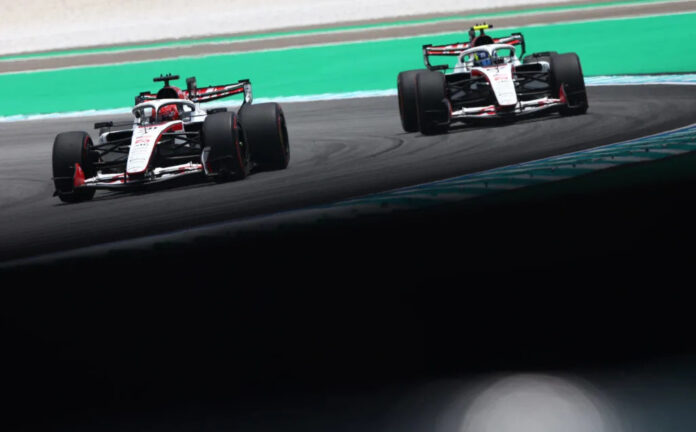
Oliver Bearman qualified 18th for the Formula 1 Grand Prix of Bahrain in Malaysia, and the Haas driver is pointing to a chain of operational failures — starting as early as Friday’s second practice session — that left him underprepared and underconfident heading into Saturday’s shootout. The weekend’s key developments paint a clear picture of a team that needs to tighten its processes.
For Bearman, the disappointing qualifying result cannot be isolated from what happened earlier in the weekend. The British driver believes valuable preparation time was lost on Friday, preventing him from building the rhythm and confidence needed to attack qualifying properly. In Formula 1, where margins in the midfield are often measured in hundredths of a second, losing even part of a practice session can have significant consequences.
The problem is particularly damaging for a young driver still accumulating experience at each circuit. Every lap provides information about braking points, tyre behaviour, balance changes and how the car reacts under different fuel loads. When that programme is interrupted, the driver enters qualifying with fewer reference points and less certainty about how aggressively the car can be pushed.
Bearman nevertheless felt he extracted considerably more from the Haas when qualifying began. His assessment that he “pulled it out the bag” reflects the feeling that his final performance represented a significant improvement compared with the level of preparation available to him beforehand.
The result, however, remained 18th on the grid. That contrast between personal execution and outright position appears to be at the heart of his frustration. Bearman does not seem to believe that qualifying itself was the primary issue. Instead, he views the starting position as the consequence of a weekend that had already been compromised before Saturday’s decisive session began.
It also places renewed attention on Haas’ operational performance. Maximising a Formula 1 weekend involves considerably more than producing a competitive car. Practice programmes must run smoothly, setup changes need to be implemented efficiently and drivers require enough representative running to understand the limits of the package before qualifying.
Small problems can quickly accumulate. A disrupted run plan can delay setup evaluation, which can then reduce the amount of time available for tyre preparation or qualifying simulations. By the time the team reaches the competitive sessions, what initially appeared to be a relatively minor Friday setback can translate directly into grid position.
Bearman’s comments are particularly significant because he sees a pattern beginning to emerge. This is not simply frustration about one difficult Friday. Two consecutive weekends affected by messy preparation suggest that Haas may need to review how its sessions are being managed and whether avoidable operational problems are preventing the team from extracting its full potential.
In a congested midfield, those weaknesses can be expensive. Several teams are often separated by only a few tenths of a second, meaning a driver who enters qualifying slightly less prepared can fall several positions even without making a major mistake. Starting near the back then creates an additional problem on Sunday, as traffic, dirty air and strategic limitations make recovering positions considerably harder.
For Bearman, consistency is therefore crucial. A young driver needs stable weekends in which he can gradually build speed rather than constantly compensating for lost track time. Regular disruption makes that development process more difficult and can force the driver to take additional risks when the competitive sessions arrive.
His criticism nevertheless remains focused on the team’s procedures rather than individual members of staff. There is no suggestion that Bearman is attempting to publicly assign blame to a particular engineer or mechanic. Instead, his comments point toward a broader concern that the overall process needs to become more reliable.
That distinction matters. Operational mistakes are rarely the responsibility of one individual in modern Formula 1. Decisions about run plans, setup, tyres and track timing involve multiple departments working together. Improving that coordination can therefore produce meaningful gains without requiring fundamental changes to the car itself.
Haas will also know that opportunities are limited over the course of a season. On weekends when the car is capable of competing with its closest rivals, failing to maximise practice or qualifying can mean leaving potentially valuable championship points on the table.
Bearman’s frustration is measured but pointed. He is not calling out individuals. He is calling out a system. Two weekends, two messy Fridays, two avoidable shortfalls — and a driver who says he “pulled it out the bag” in qualifying, only to find that his best was good enough for 18th.
That gap between effort and outcome is exactly the kind of thing that can erode momentum over a long season. For Haas, the immediate challenge is therefore not simply to find more performance from the car, but to ensure that the performance already available can be accessed consistently.
Bearman has made clear that he expects better preparation going forward. If Haas can deliver cleaner practice sessions and give him the mileage required to build confidence progressively, the team should at least give itself a better chance of converting its underlying pace into stronger qualifying positions.

