

Home Blog Page 26

ICE launches private credit platform as investors push for more transparency

0

Intercontinental Exchange, the parent company of the New York Stock Exchange, said Tuesday it has launched a new product designed to improve transparency in the private credit market, as investors scrutinize valuations and data quality across the fast-growing asset class.

ICE said the new offering, called ICE Private Credit Intelligence, is intended to help market participants share standardized deal information more securely and efficiently, addressing concerns about limited disclosure in private credit compared with public markets.

ICE private credit platform targets standardized deal data

ICE said the platform will allow firms to share deal information with approved partners using a common data set while reducing the risk that sensitive details are exposed. The company said its technology will extract key terms from deal documents and distribute the information more efficiently.

ICE added that it plans to introduce additional tools over time, including performance analysis and pricing-related insights, to support portfolio management and risk assessment.

Investor concerns have grown after high-profile bankruptcies

Sentiment toward private credit has weakened amid worries about valuations and transparency, which have been amplified by corporate failures including the 2025 bankruptcies of auto-parts supplier First Brands and car dealer Tricolor.

The launch also comes as some U.S. banks have tightened lending standards, while some private-credit funds have faced heightened redemption pressure as investors seek to withdraw capital.

Apollo backs launch as anchor partner

Apollo Global Management is supporting the launch as an anchor partner, ICE said. Eric Needleman, a partner and head of Apollo Capital Solutions, said the next phase of private credit’s development will require stronger infrastructure and more standardized data so market participants can own and transact in private credit in a way that more closely resembles public credit markets.

ICE said it expects to onboard additional originators, asset managers and other capital markets participants over the coming months as the platform expands.

Kouri Richins verdict delivers guilty fentanyl murder

0

PARK CITY, Utah — A Utah jury has convicted Kouri Richins of aggravated murder for the 2022 death of her husband, Eric Richins, finding she poisoned him with fentanyl at their home near Park City.

Jurors also found Richins guilty of fraud-related charges tied to insurance claims filed after Eric Richins died in March 2022. Richins had pleaded not guilty.

The aggravated murder conviction carries a potential sentence of 25 years to life in prison under Utah law. A sentencing hearing is scheduled for May 13.

Prosecutors said fentanyl was slipped into a cocktail

Prosecutors told jurors that Richins mixed a fatal amount of fentanyl into a drink her husband consumed on the night he died. They argued she was motivated by financial pressure, alleging she was millions of dollars in debt and believed she would gain access to her husband’s assets and insurance proceeds.

They also presented evidence they said showed Richins was planning a future with another man and wanted to leave her marriage without giving up money she expected to obtain through her husband’s death.

In closing arguments, Summit County prosecutor Brad Bloodworth told jurors that Richins “wanted to leave Eric Richins but did not want to leave his money,” according to the Associated Press.

Kouri Richins verdict and the full set of guilty findings

Along with aggravated murder, jurors convicted Richins of attempted aggravated murder based on allegations she tried to poison her husband weeks earlier. Prosecutors said the earlier incident involved fentanyl in food that left him ill.

The jury also found her guilty on additional felony counts involving alleged fraudulent insurance activity after her husband’s death. Court records and testimony presented at trial described multiple life insurance policies and financial transactions that prosecutors argued were part of a broader plan to profit from the death.

Digital evidence and witness testimony featured prominently

The state highlighted phone messages and internet searches that prosecutors said pointed to planning and awareness of the lethality of fentanyl. Investigators also testified about the defendant’s actions and statements after her husband was found unresponsive.

A key witness for the prosecution was the family’s former housekeeper, who testified about obtaining fentanyl for Richins. Defence lawyers challenged the witness’s credibility and argued she was influenced by the possibility of leniency, noting she received immunity in connection with her cooperation.

Defence argued husband had opioid dependence

Richins’ defence team argued Eric Richins had a history of painkiller use and that his death was consistent with an overdose rather than a homicide. Defence attorney Wendy Lewis urged jurors to reject what she described as weak inferences and insufficient proof.

The trial, initially expected to run about five weeks, ended sooner after Richins waived her right to testify and the defence rested without calling witnesses.

Richins remains in custody as the case moves to sentencing.

RCMP arrest brother of Tumbler Ridge shooter on Canada-wide attempted murder warrant

0

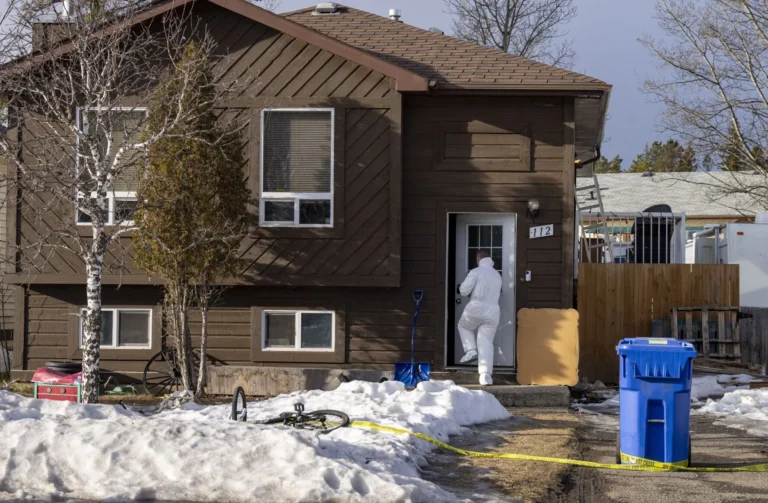
Canadian police have arrested the older brother of the Tumbler Ridge, B.C., mass shooting suspect after a Canada-wide warrant was issued for attempted murder, the RCMP said.

Police identified the man as Jacob Van Rootselaar, 22, and said he was arrested in Sylvan Lake, Alta., after being sought in connection with a 2024 incident in Fort McMurray involving an edged weapon.

Jacob Van Rootselaar arrest tied to 2024 Fort McMurray case

Wood Buffalo RCMP said Van Rootselaar was wanted on an attempted murder file dating to 2024. Police said he was located and taken into custody outside a residence in Sylvan Lake on Feb. 19.

RCMP also said he now faces additional allegations related to weapons possession and breaching court-ordered conditions, linked to the circumstances of his arrest.

Release conditions and missed residence check

After being charged, Van Rootselaar was released from custody, police said.

RCMP said he was initially approved to live in Dawson Creek, B.C., but that was later changed to Tumbler Ridge. Staff Sgt. Sabrina Clayton previously said police did not find him at the approved residence during a check earlier this month, and a Canada-wide warrant was issued afterward.

Police said they could not immediately confirm the exact date the residence check took place.

Link to Tumbler Ridge mass shooting

Clayton said Jacob Van Rootselaar is the older brother of Jesse Van Rootselaar, who killed eight people on Feb. 10 in Tumbler Ridge before dying.

The shooting has prompted broader scrutiny of safety warnings and online activity connected to the attacker, while police continue to investigate the events and circumstances leading up to the killings.

Canadian Olympic officials urge Ottawa to boost sport funding after 21-medal Winter Games

0

MILAN — Canadian Olympic officials are calling on the federal government to increase investment in grassroots and high-performance sport, warning that athletes risk being “left behind” as other countries expand spending on coaching and sports science.

The comments came as Canada wrapped the Milano-Cortina 2026 Winter Olympics with 21 medals, a total below recent Winter Games performances and short of the Canadian Olympic Committee’s stated ambition of finishing in the top five of the medal standings.

Canada sport funding at centre of closing message

Speaking at a final press conference, Canadian Olympic Committee chief sport officer Eric Myles said national sport organizations are cutting back on core activities, including training camps.

Myles cited cross-country skiing as an example, saying budget constraints prevented the team from holding a camp bringing national groups together. He said other countries are investing more heavily in coaching, sport science and support systems, while Canada is “making do.”

David Shoemaker, the Canadian Olympic Committee’s CEO and secretary general, framed the funding debate as broader than medal results, describing sport as part of national development and identity.

Canada’s 21 medals marked the fewest at a Winter Olympics in more than two decades, officials said, as they argued that a flat funding level over roughly 20 years has eroded capacity when inflation and costs of competing have risen.

Officials warn of growing “pay-to-play” pressures

Jennifer Heil, Canada’s chef de mission for the Milano-Cortina Games, said stagnant funding is pushing costs onto athletes and families and contributes to athletes leaving sport earlier than planned.

Heil said Canadian athletes were spending about $25,000 on average per individual to compete in Italy, a figure she said can force families to choose a single Olympic cycle to support. She also said some support staff at the Games were concerned about job security in the coming year.

Shoemaker said Canadian officials believe Canada is being outspent by peer nations on both per-capita and total bases, making it more difficult to remain competitive.

$144 million request, and Ottawa’s response

The Canadian Olympic Committee and Canadian Paralympic Committee have sought an additional $144 million in annual federal funding for national sport organizations, an increase they said would help offset inflation since core funding levels were set. The request was not included in the federal budget tabled in November.

A spokesperson for the Secretary of State for Sport said core funding for sport organizations has remained constant but argued Ottawa has added new funding streams, including $3.11 million for mental health initiatives, additional support through the Athlete Assistance Program, and the Community Sport for All Initiative.

Canadian Olympic officials said they intend to keep pressing the federal government, arguing that without new investment the impact will extend from elite programs down through the sport development pipeline.

“Revenge of the Nerds” and “Lizzie McGuire” actor Robert Carradine dies at 71

0

Robert Carradine, the actor known for roles in “The Long Riders,” “Revenge of the Nerds” and the television series “Lizzie McGuire,” has died at 71, his management company told CNN.

In a statement shared with Deadline, Carradine’s family said he had died, describing him as “our beloved father, grandfather, uncle, and brother.”

Robert Carradine death confirmed by family statement

The family said Carradine had faced a “nearly two-decade battle with Bipolar Disorder,” and urged greater openness around mental health.

“In a world that can feel so dark, Bobby was always a beacon on light to everyone around him,” the statement said, adding: “We hope his journey can shine a light and encourage addressing the stigma that attaches to mental illness.”

Carradine’s brother, actor Keith Carradine, told Deadline the family wanted to speak publicly about the illness. He said there was “no shame in it,” adding that he wanted to celebrate his brother’s struggle and “beautiful soul.”

A career spanning studio films and television

Born March 24, 1954, Carradine was the youngest son of late American actor John Carradine. He was the brother of actors David Carradine and Keith Carradine, and of Christopher Carradine, described as a former vice president of Walt Disney Imagineering.

Carradine made his film debut in the 1972 film “The Cowboys,” starring John Wayne and Roscoe Lee Browne, and went on to build a decades-long career across film and television.

He became widely known for playing Lewis Skolnick in the 1984 comedy “Revenge of the Nerds,” a role he reprised in sequels. He later reached a new audience as Sam McGuire in the Disney television series “Lizzie McGuire.”

Tributes from co-stars and family

Hilary Duff, who starred in “Lizzie McGuire,” posted a tribute on Instagram Tuesday, writing that the news was difficult to accept and expressing sadness that Carradine had been suffering.

Jake Thomas, another co-star from the series, described Carradine as “one of the coolest guys you could ever meet,” calling him funny, pragmatic, and “always a little eccentric.”

Carradine’s daughter, actor Ever Carradine, also shared a tribute on Instagram, describing her father as sweet and funny and writing that she always knew he loved her and had her back.

Puerto Vallarta shelter-in-place order issued as violence erupts and flights are suspended

0

The federal government has ordered Canadians in Puerto Vallarta, Mexico, to shelter in place after violence flared in the region.

The advisory comes as travellers report fires, roadblocks and heavy police activity across parts of Jalisco state. Airlines have also suspended or cancelled flights into Puerto Vallarta, leaving many tourists unsure when they can leave.

What Canadians were told to do

Global Affairs Canada said a shelter-in-place order is in effect in Puerto Vallarta. It also said taxi and rideshare services are suspended until further notice.

Canadians in Jalisco were urged to keep a low profile and follow local authorities. The department said the situation is rapidly evolving and travellers should stay alert using local and international media.

Foreign Affairs Minister Anita Anand said Canada is closely monitoring what she described as a serious and fast-moving security situation in Jalisco, including in and around Guadalajara and Puerto Vallarta. She said officials are in contact with local authorities and ready to provide consular help.

Tourists describe smoke, fires and sudden closures

Some travellers said they received alerts from resorts telling them to stay on the property due to police activity.

From areas north of Puerto Vallarta, visitors reported seeing smoke in the distance. Others described hearing gunshots and explosions and seeing vehicles and buildings on fire.

As the day unfolded, travellers also learned the airport had been shut down. That left many people effectively stranded, with luggage in hand, trying to extend hotel stays in a busy travel season.

Flights diverted and cancelled as airlines halt operations

WestJet said it diverted seven flights that were en route to Puerto Vallarta and cancelled dozens of flights to and from Puerto Vallarta, Guadalajara and Manzanillo. The airline said its flexible change policy is in effect for travellers heading to those destinations over the next two days.

WestJet said it is working with Sunwing to arrange extended stays for guests already in destination, so they can comply with local guidance.

Air Canada and Porter also suspended flight operations into Puerto Vallarta.

Why violence spiked in Jalisco and beyond

The unrest followed a major security operation targeting the leader of the Jalisco New Generation Cartel, Nemesio Rubén Oseguera Cervantes, known as “El Mencho.”

Mexican authorities said he died after being wounded in a raid in Jalisco. After the operation, armed groups set up roadblocks and burned vehicles and businesses in multiple areas, including Jalisco and other states.

Mexican President Claudia Sheinbaum urged the public to stay informed and remain calm. She said there was close coordination between levels of government as the situation developed.

How many Canadians may be in the area

Global Affairs Canada said there are thousands of Canadians registered in Mexico, including several thousand registered in Jalisco, through its voluntary Registration of Canadians Abroad system. Officials stressed the figures are estimates, since registration is optional and may not reflect current travel plans.

Canadian officials said they are providing consular assistance, but details are limited by privacy rules.

For now, travellers are being told to stay where they are, avoid unnecessary movement and monitor airline updates. Many remain focused on one question: when flights and transport links will safely reopen.

Conservatives move to review asylum seeker health coverage as costs rise

0

OTTAWA — Conservatives plan to table a House of Commons motion on Tuesday that would review how health benefits are provided to asylum seekers and tighten access to those services.

The motion targets the Interim Federal Health Program. It is a federal plan that covers medical services for asylum seekers, refugees and other protected people while they are in Canada.

What the Conservative motion would change

The text, shared with The Canadian Press, calls for a review of benefits to find savings. It also proposes limits for some people.

Under the motion, asylum seekers appealing a rejected claim would only receive emergency, life-saving care. In other words, routine and supplemental coverage would be restricted during the appeal phase.

The motion also asks for an annual report to Parliament on how the program is used. It puts special attention on supplemental benefits, which are not generally covered for Canadians.

Costs have surged since 2020, according to the PBO

Conservatives point to recent figures from the parliamentary budget officer.

The motion says the program’s cost has more than quadrupled since the 2020 fiscal year. It cites growth from $211 million to $896 million in 2024-25.

A report published earlier this month projects annual costs could reach $1.5 billion by 2028-29.

What the Interim Federal Health Program covers

The federal program provides a range of health services. These include routine medical care, hospital visits and lab work.

It also offers supplemental coverage. That includes urgent dental procedures, some vision care, psychological therapy and prescription drugs.

Supplemental benefits are often at the centre of political debate. They can cover services that many Canadians pay for through private insurance or out of pocket.

More people are using the program

The PBO report estimates about 624,000 people were beneficiaries in 2024-25. That is up from about 200,000 in 2020-21.

The report says most beneficiaries are asylum claimants. At the same time, the Immigration and Refugee Board has about 300,000 pending asylum claims.

Federal immigration data shows claims fell in 2025 compared with 2024. The number dropped by about a third, from roughly 190,000 to almost 108,000.

Ottawa is adding a co-pay for supplemental benefits

The federal government is changing how the program is funded.

Starting May 1, claimants will pay part of the cost for supplemental coverage and prescription drugs. A notice published by Immigration, Refugees and Citizenship Canada says the co-pay will be 30 per cent for services such as dental care, vision care, counselling and assistive medical devices.

The same notice says there will also be a $4 charge for each eligible prescription filled or refilled.

These measures were announced in the November federal budget. They are part of IRCC’s effort to find 15 per cent savings over the next three years.

The parliamentary budget officer did not include the co-pay changes in the cost projection. The report cited time and data limits.

A past cut and reversal still shapes the debate

Former prime minister Stephen Harper restricted supplemental coverage under the program for some groups, including privately sponsored refugee claimants and people who made claims after arriving in Canada.

That policy was reversed after the Liberals defeated the Conservatives in the 2015 election.

A separate demand on removals after serious crimes

The Conservative motion also calls on the government to immediately expel foreign nationals convicted of serious crimes in Canada.

Canada already has laws that allow deportation in certain cases. That can apply to foreign nationals and permanent residents convicted of offences with maximum sentences of 10 years, even if the sentence imposed is shorter. It can also apply to people sentenced to more than six months in prison.

People facing removal under these rules can access appeal options, which can lengthen the process. The motion signals Conservatives want tougher limits alongside a broader review of federally funded health coverage for asylum seekers.

NEXUS suspended as Canadian airports warn U.S.-bound travellers of delays

0

Canadian airports are warning travellers heading to the United States to plan for extra time after NEXUS and Global Entry pre-clearance programs were suspended.

Airports in Calgary, Montreal, Vancouver and Toronto asked passengers using U.S. Customs pre-clearance to expect slower processing on Sunday. The pause affects expedited lanes used by trusted travellers.

NEXUS is a program for pre-screened travellers that speeds up entry into the U.S. and Canada through dedicated kiosks and lanes. Global Entry is a similar U.S. program designed to reduce wait times for approved travellers.

Airports urge passengers to arrive earlier

The airports said U.S.-bound travellers should allow additional time to get through security and pre-clearance checks.

Most airports did not provide a reason for the suspension. Calgary International Airport told The Canadian Press by email that NEXUS is managed by U.S. Customs and Border Protection, and that the airport had no further details.

NEXUS suspended notice tied to partial shutdown in Vancouver

Vancouver International Airport pointed to a cause. On its website, the airport said the programs were suspended until further notice “due to the partial U.S. Government shutdown.”

That notice linked the disruption directly to federal operations south of the border, even as other airports avoided attributing the change.

What U.S. Customs says NEXUS does

The U.S. Customs and Border Protection website describes NEXUS as a trusted traveller program that allows expedited processing for approved travellers when entering the U.S. and Canada. It also notes the use of dedicated kiosks at airports.

As a result, the suspension removes one of the main time-saving options for frequent cross-border travellers.

Shutdown pressure hits Homeland Security services

A partial U.S. government shutdown began Feb. 14 after Democrats and the White House were unable to reach an agreement on legislation to fund the Department of Homeland Security.

U.S. Customs and Border Protection did not immediately respond on Sunday to a request from The Canadian Press for an explanation.

However, The Associated Press reported that the Department of Homeland Security said Sunday that the Global Entry program would be shut down as long as the partial government shutdown remains in effect.

The Department of Homeland Security website also noted that a lapse in federal funding meant the site would not be actively managed. It warned that information posted there might be out of date.

Canadian agency points questions to U.S. officials

A spokeswoman for the Canada Border Services Agency referred questions about the pre-clearance closures to American authorities.

For travellers, the message from airports is simple. If you are flying to the U.S. through pre-clearance, expect longer lines and build in extra time until the programs resume.

Stefon Diggs to be arraigned Friday on felony strangulation charge

1

Stefon Diggs is scheduled to be arraigned Friday in Massachusetts on felony strangulation and other criminal charges tied to an alleged dispute with his personal chef. The hearing will take place at Dedham District Court, after a postponement that allowed him to play in Super Bowl LX with the New England Patriots. Court records say the case stems from a Dec. 2 incident at his home.

Charges and scheduling twist

The arraignment was first set for Jan. 23. It moved to Feb. 13 to accommodate the NFL schedule, five days after the Patriots’ 29–13 loss to the Seattle Seahawks. Prosecutors allege Diggs “smacked” the woman and “tried to choke her using the crook of his elbow,” leaving her short of breath. Investigators say she reported the incident on Dec. 16, two weeks later. Police noted she initially hesitated to file charges, then chose to proceed.

Timeline of the alleged incident

According to police documents, the argument began over money the chef says she was owed. The encounter allegedly escalated inside the residence. Officers from Dedham took the report on Dec. 16. The case advanced to arraignment after review by local authorities. This week’s hearing is the first court appearance.

What happens at the Stefon Diggs arraignment

An arraignment is a first court appearance where a judge reads the charges, hears a plea, and sets bail or release conditions. The judge may also set future dates for pretrial conferences or motions. In Massachusetts, defense and prosecution can address travel, contact orders, and other terms. Friday’s session is expected to focus on those procedural steps rather than evidence.

Team and legal responses

Diggs’ attorney says he “categorically denies these allegations,” calling them unsubstantiated and rooted in a financial dispute. The Patriots issued a statement of support for the player. The league, National Football League, could review the matter under its personal conduct policy, but any disciplinary process would be separate from the criminal case.

What the charges mean in Massachusetts

Felony strangulation laws typically address pressure applied to the neck that impedes breathing or blood flow. Prosecutors often rely on victim testimony, medical findings, and any corroborating evidence. A separate assault allegation can proceed alongside a strangulation count. The court will determine next steps based on the charging documents and arguments from counsel.

What’s next in court

Friday’s hearing should set the framework for the case: bail conditions, no-contact provisions, and a schedule for filings. Further disclosures and any evidentiary challenges will come in later proceedings. For now, Diggs faces formal accusations while maintaining his denial, and the case moves into the pretrial phase in Massachusetts.

Colorectal cancer is rising in younger adults — and now leads cancer deaths under 50

0

Colorectal cancer is no longer just a disease of older age. It has become the leading cause of cancer death for Americans under 50, a shift documented by recent analyses of national data. James Van Der Beek’s death at 48 this week and the 2020 death of Chadwick Boseman at 43 put a public face on a trend oncologists have tracked for years. Researchers and clinicians say awareness, symptom checks, and earlier screening can save lives.

Colorectal cancer under 50: what the numbers show

The American Cancer Society reports that mortality under 50 has inched up about 1.1% per year since 2005, pushing colorectal cancer to the top spot for that age group. Overall cases across all ages remain high, but screening has helped older adults. Among younger adults, diagnoses and deaths have risen since the early 2000s.

High-profile losses highlight a broader shift

News of Van Der Beek’s death from colorectal cancer at 48 follows years of public attention since Boseman’s passing at 43. These cases do not explain the trend, but they have driven discussion of early symptoms and testing.

Who faces the greatest risk — and what you can change

Risk rises with age, family history, and conditions such as inflammatory bowel disease. Lifestyle factors matter: obesity, low physical activity, smoking, heavy alcohol use, and diets high in red or processed meat raise risk; eating more fruits, vegetables, and whole grains lowers it. Regular exercise has also been linked to better outcomes after treatment.

Symptoms that need prompt medical checks

Watch for blood in stool or rectal bleeding, persistent changes in bowel habits, narrow stools, unintended weight loss, or ongoing abdominal pain. Do not wait on symptoms that last more than a few days. Early diagnosis improves survival.

When to start screening — and your options

Most guidelines advise average-risk adults to begin at 45. People with higher risk — due to family history or certain diseases — should discuss earlier testing with a clinician. Options include annual stool-based tests that look for hidden blood or cancer DNA, and colonoscopy, an internal camera exam that can remove precancerous polyps and is typically repeated every 10 years if results are normal. A newer blood test is available for adults 45 and older, but it does not replace colonoscopy if results are positive.

What might be driving the rise?

Researchers do not have a single answer. Many younger patients lack classic risk factors. Scientists are probing shifts in the gut microbiome — the community of bacteria in our intestines — along with diet, antibiotics, and tumor location patterns that differ by age. These clues could point to prevention and treatment strategies, but more evidence is needed.

Why this matters now

Deaths among older adults have fallen thanks to screening and polyp removal. Younger adults have not seen the same gains, and many are diagnosed later. Public figures can raise awareness, but data drive the message: know symptoms, act early, and follow screening guidance starting at 45 or earlier if you are at higher risk.