
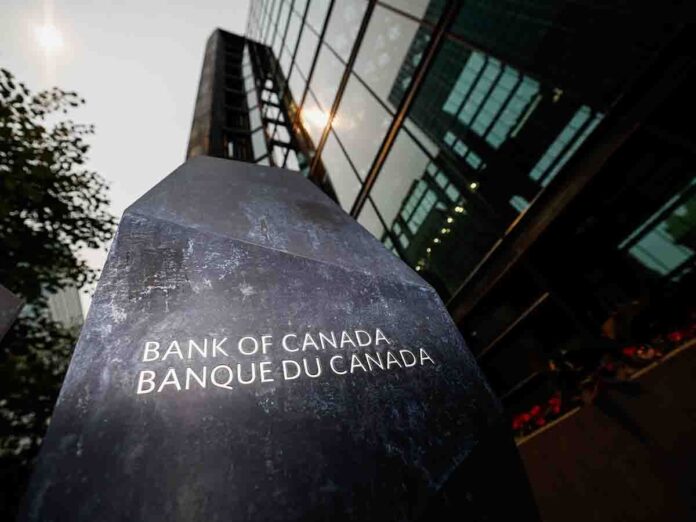
Canada’s inflation rate eased to 2.8 per cent in June, pulled lower by a sharp drop in gasoline prices, but economists are cautioning against reading too much comfort into the numbers. The relief, they warn, may be temporary — and the Bank of Canada knows it.
Analysts had forecast the June consumer price index at 2.9 per cent, itself already a meaningful step down from May’s 3.2 per cent and below the upper bound of the Bank of Canada’s target range of one to three per cent. The actual figure came in even softer than expected. More strikingly, the central bank’s two preferred core inflation measures — the trimmed mean and the weighted median — fell below the two per cent target for the first time since 2020, also undershooting analyst estimates.
The headline number moved in the right direction. But the story behind it is more complicated than a single month’s figures can tell.
The single biggest driver of the June decline was gasoline. Statistics Canada reported a 10.2 per cent month-over-month drop in pump prices, the steepest monthly fall since April 2025, when the federal consumer carbon levy was scrapped. That decline pushed the overall CPI down 0.4 per cent month-over-month — the largest such decrease since December 2024. Strip out gasoline entirely, and inflation was essentially flat from May to June.
Gas prices surged through the spring as conflict between the United States and Iran rattled global oil markets. A tentative ceasefire reached in mid-June briefly eased pressure on crude prices. But that ceasefire has since collapsed, and renewed hostilities around the strategically critical Strait of Hormuz have already begun pushing energy costs higher again. The June relief, in other words, was real — and it may not last.
“With gasoline and diesel likely to remain elevated, it is probably still too early for the Bank of Canada to lower its guard,” said Charles St-Arnaud, chief economist at Servus Credit Union. He noted that the average of the bank’s two preferred core measures sat at 1.85 per cent in June, with momentum in those measures slowing to 1.6 per cent — both encouraging signs. Yet St-Arnaud expects policymakers to hold the benchmark interest rate at its current level of 2.25 per cent through the remainder of the year, given the lingering uncertainty around energy.
Not every economist shares that caution about the broader picture. David Rosenberg, president of Rosenberg Research & Associates, described the June report as containing “nothing here for the Bank of Canada to be worried about,” calling it a validation of the central bank’s decision to remove its de facto tightening bias at its most recent rate meeting. The data, in his view, gives the bank room to breathe.
TD Bank senior economist Leslie Preston offered a similarly measured optimism. She described inflation in Canada as “benign” right now, pointing to weak consumer demand as the force holding businesses back from raising prices. “June’s inflation report reinforces our view that the Bank of Canada can remain on the sidelines for quite some time,” she said. Preston does expect July’s figures to show some uptick, given that gas prices have already climbed again since June — but she still believes inflation has peaked for 2026.
Benjamin Reitzes, BMO’s managing director of Canadian rates and macro strategist, highlighted another encouraging detail: the breadth of items seeing annual price increases above three per cent narrowed in June. That narrowing, he argued, should give the Bank of Canada additional confidence that inflationary pressure is not becoming entrenched across the economy.
Elsewhere in the consumer basket, the picture was mixed but broadly stable. Grocery prices rose 3.9 per cent annually in June, down from 4.3 per cent in May, with slower price growth for fruit — particularly grapes — contributing to the moderation. Shelter inflation eased to 1.5 per cent, continuing a trend that has kept it below two per cent since February. Traveller accommodation, however, surged 10.1 per cent year-over-year in June, up sharply from 2.5 per cent in May, a jump economists largely attributed to demand generated by the FIFA World Cup.
The central bank held its benchmark rate steady at 2.25 per cent last week. Governor Tiff Macklem acknowledged that the bank sees few signs so far that energy-driven price pressures are spreading into the broader consumer basket, but he was careful not to declare victory. He reiterated a commitment to prevent high oil prices from translating into persistent inflation — a promise that carries real weight given how quickly the geopolitical situation can shift.
“There’s still that lingering risk with those high energy costs that could transfer to other prices,” St-Arnaud said. The sector economists identify as most exposed is food. Fresh food prices are particularly sensitive to fuel and shipping costs, meaning consumers could begin to feel the effects of renewed Middle East tensions at the grocery store before they show up elsewhere.
“There’s a lot of unpredictability around what’s going to happen with the Middle East,” said Reitzes. “Energy prices could still go higher, that could re-spark more inflation.” A soft economy is currently absorbing much of that pressure, limiting businesses’ ability to pass costs on to consumers. But that buffer is not unlimited, and the Bank of Canada is watching carefully for any sign that the firewall is beginning to crack.
For now, the June inflation report offers genuine reassurance that the war’s inflationary effects have not yet spread beyond energy. Whether that remains true in July — with gas prices already rising again — is the question the Bank of Canada, and Canadians, will be watching closely.

