
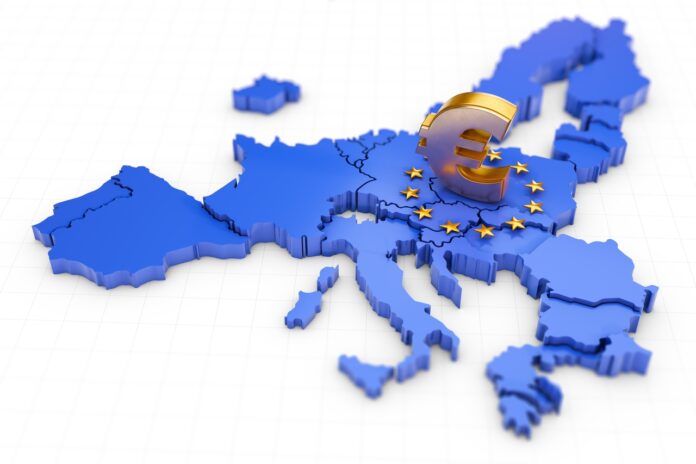
Europe has long staked its prosperity on open, cross-border trade — a model that served the continent well through decades of relative geopolitical stability. That era is visibly closing. As the United States and China lean ever more heavily on tariffs, state subsidies and policies designed to privilege domestic producers, European policymakers are responding in kind, moving toward a more active, interventionist posture on industrial strategy.
The emerging framework, broadly labelled the “Made in Europe” agenda, aims to redirect a greater share of European demand toward goods and services produced within the bloc. At its centre is the EU’s public procurement market, which turns over roughly €2 trillion annually — a figure large enough to function as a genuine policy instrument rather than a passive reflection of market forces. By attaching conditions and preferences to how that spending flows, Brussels can steer contracts toward European producers without formally abandoning its commitment to open markets.
A Manufacturing Base That Still Exists
One underappreciated dimension of this shift is that Europe is not starting from scratch. The continent retains a substantial manufacturing base — in chemicals, machinery, defence equipment, energy infrastructure and advanced materials — that was never entirely hollowed out in the way some deindustrialisation narratives suggest. What this means, practically, is that the earliest effects of the Made in Europe agenda are likely to show up not as new factories breaking ground, but as higher utilisation rates and stronger order volumes at facilities that already exist. Expansion of industrial capacity, where it comes, would follow in a second wave.
This sequencing matters for anyone trying to assess the real-economy impact of the agenda. The short-term signal is a pickup in activity at incumbent European manufacturers; the longer-term question is whether that activity is sustained at levels that justify new capital investment.
How Markets Are Pricing the Shift
Financial markets have begun constructing tools to track exposure to this policy environment. The FTSE Made in Europe 50 Index selects and weights companies according to their alignment with six distinct Made in Europe policy blocks and the share of their revenue earned within Europe — both conditions must be meaningfully satisfied for a company to carry significant weight in the index. The result is a portfolio that diverges considerably from the broader European equity market.
Industrials dominate the index at 49.6% of weight, followed by Basic Materials at 16.9% and Utilities at 15.3% — a sectoral tilt that reflects where targeted policy exposure and European revenue concentration actually intersect. Technology and consumer sectors, prominent in conventional European benchmarks, recede in this framework. The index is, in effect, a map of which parts of the European economy stand to benefit most directly if the Made in Europe agenda advances as intended.
Several forward-looking variables could alter that map. Legislative changes at the EU or member-state level, shifts in which companies derive the majority of their revenue from European customers, and evolving political priorities within the bloc all have the potential to reshuffle index composition over time. Europe’s distinct federal architecture — with meaningful power retained by member states — means that implementation will be uneven, and that the policy’s ultimate reach will depend heavily on how national governments choose to interpret and apply its provisions.
What the agenda signals, above all, is that the long-standing European preference for rules-based multilateralism is being supplemented — not yet replaced — by a willingness to use the bloc’s collective market power as an industrial tool. Whether that supplementation becomes a structural transformation remains the central open question.

