
FIFA says the 2026 World Cup will generate $80 billion in global economic output. That figure deserves a hard look.
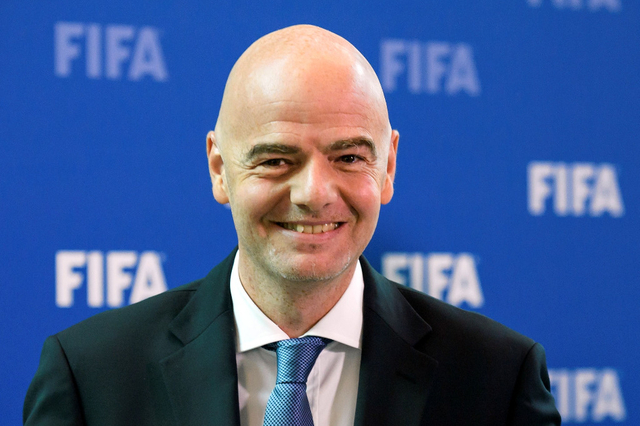
FIFA President Gianni Infantino has repeated this claim at venues as prominent as the World Economic Forum in Davos, presenting the tournament as a transformative windfall for host nations and the broader global economy. To lend the projection added credibility, he has consistently attributed the figure not to FIFA itself but to the World Trade Organization. The distinction matters — and it also obscures something important about how the estimate was produced.
The number originates from a report prepared by the consultancy OpenEconomics under a joint FIFA-WTO initiative. FIFA highlights the WTO’s involvement, but FIFA is also one of the organizations that commissioned the research in the first place. That dual role raises legitimate questions about the report’s independence. OpenEconomics, for its part, has previously produced economic analyses supporting other Infantino priorities, including a proposed biennial World Cup and the expanded Club World Cup — a pattern worth noting when evaluating the methodology and conclusions.
The report projects that the United States alone could see a $17.2 billion boost to GDP and the creation of roughly 185,000 full-time equivalent jobs. Those figures rest heavily on assumptions about international tourism: visitors are expected to stay approximately ten days and spend around $500 per day. If those assumptions hold, the numbers are plausible. If they don’t, the projections unravel quickly.
Many economists who study mega-events argue that models of this kind routinely overstate the benefits. Hotels, restaurants, and transit systems operate with finite capacity, so a surge in demand tends to push prices upward rather than generate genuinely new economic activity. The employment projections raise similar concerns. A tournament lasting just over a month is far more likely to produce seasonal hires and overtime shifts than durable, full-time positions — a distinction that matters enormously when assessing the real labour-market impact.
The report goes further still, attempting to assign monetary value to social outcomes such as improved wellbeing, healthier lifestyles, and stronger community engagement — a methodology known as Social Return on Investment. These effects may well be real. The problem is that measuring them reliably requires subjective assumptions that most economists regard with considerable skepticism, and the resulting figures can be calibrated to produce almost any result the analyst desires.
Tourism itself introduces another complication. Major sporting events attract enormous crowds, but they also deter regular visitors who prefer to avoid the congestion and inflated prices that accompany them. A portion of the spending credited to the World Cup may therefore simply substitute for tourism that would have occurred anyway — producing a displacement effect rather than a net gain.
Independent research points in a different direction. Analysis by German economist Matthias Fett, conducted for Der Spiegel, suggests the United States could actually experience a net economic loss once broader costs and opportunity costs are factored in. Long-term projections of this kind carry their own uncertainties, but they serve as a useful counterweight to the headline optimism of the commissioned report.
None of this means the 2026 World Cup will leave host cities worse off. Major tournaments generate real activity — construction, hospitality, media, logistics — and the attention they attract can have lasting reputational value for a city or region. What is far less certain is whether that activity translates into anything approaching the $80 billion figure FIFA has placed at the centre of its public case. FIFA itself expects to earn roughly $11 billion during the tournament cycle, a figure that reflects the organization’s own commercial success more than the economic fate of the communities that absorb the costs of hosting. The gap between those two numbers is worth keeping in mind.

