Alberta and Manitoba Premiers Clash Over Treaty Rights and Separation Referendum
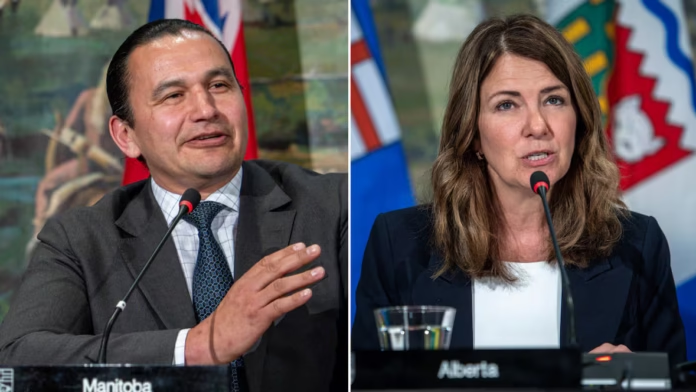
Alberta Premier Danielle Smith and Manitoba Premier Wab Kinew clashed publicly Tuesday over Indigenous treaty rights and Alberta’s planned separation referendum, trading sharp words at the close of the Western Premiers’ Conference in Kananaskis, Alberta.
Smith Questions Scope of Duty to Consult
Smith, who has called a referendum on Alberta’s future in Canada for October 19, suggested that Section 35 of the Canadian Constitution — which affirms the rights of Indigenous peoples — may require reinterpretation. She argued the duty to consult should apply to major resource projects, but expressed doubt about whether it should extend to citizen initiative petitions.
Earlier this month, an Alberta judge quashed a proposed separation question submitted by the separatist group Stay Free Alberta, ruling that the duty to consult had not been met. Smith called the decision “anti-democratic” and said her government intends to appeal.
“We want to make sure that we have a very clear understanding of what the duty to consult really means and what it doesn’t mean,” Smith told reporters. “And I think at the moment there’s a lack of clarity on that.”
Kinew Pushes Back, Defends Court Ruling
Kinew, who is himself a member of the Ojibways of Onigaming First Nation in northwestern Ontario and had met with Alberta First Nations the day before, rejected Smith’s framing directly.
“I think we know that that is not correct — a lot of what you just said there, Premier Smith,” Kinew said. “It is not up to the petition gatherers to fulfil the duty to consult. It is up to you, as the Alberta government, to fulfil the duty to consult.”
Kinew said he agreed with the judge’s ruling, arguing that establishing a new international border around Alberta would directly impede established treaty rights for Indigenous peoples to hunt and fish. The legal challenge was brought by four Alberta First Nations: the Athabasca Chipewyan First Nation, Blood Tribe, Piikani Nation, and Siksika First Nation.
Kinew said those nations deserved credit for “hitting the pause button” on the separation process, and emphasized that Section 35 “is a fact” that must be respected “the same as the rest of the Constitution.”
Kinew Urges Delay on Referendum Talk
Rather than framing the exchange as a disagreement, Kinew called on Smith and other leaders to put referendum discussions on hold for at least a year or two while Canada pursues pipeline construction.
“Why don’t we hold off on this referendum talk for a year or two, so we can get these pipelines under construction?” Kinew said. “Because at the end of the day, we want Canada to succeed.”
Smith responded by defending the appeals process. “This is why we have the courts, because you can have politicians disagree and that’s why you take it through the court, you take it through the appeals and you go to the Supreme Court,” she said, adding that she respected Kinew’s “difference of opinion.”
B.C. Premier Reiterates Concerns Over Referendum Timing
British Columbia Premier David Eby, who had already publicly criticized Smith the previous day for calling a referendum at a moment when Canadian unity is needed against U.S. pressure, reiterated those concerns Tuesday. Eby also reaffirmed his support for maintaining the tanker ban on B.C.’s north coast.
Joint Communiqué Silent on Referendum
The joint communiqué issued by western and northern leaders made no mention of the Alberta referendum. Instead, it focused on economic development, trade, energy, major projects, and Arctic sovereignty and security.
The premiers called on Ottawa to locate a planned Defence, Security and Resilience Bank in Vancouver. They also asked the federal government to amend certification rules to allow former military aircraft to be deployed in wildfire suppression efforts.

