
A Rebound After Months of Contraction
Through the final months of 2025 and into the early weeks of 2026, Canada’s economy had been struggling to find its footing. Statistics Canada had reported that real gross domestic product contracted in both the last quarter of 2025 and the first quarter of 2026 — two consecutive quarters of negative growth that prompted genuine concern, and in some quarters outright alarm, about whether the country had slipped into a technical recession. Against that backdrop, Tuesday’s release of April GDP data offered something economists had not seen in some time: a clear, broad-based gain.
Statistics Canada reported that real GDP grew 0.5 per cent in April, edging past the 0.4 per cent that analysts had forecast and reversing what had been a prolonged winter lull in economic activity. The agency did not flag any major revisions to prior figures — a point worth noting given that some economists and business leaders have recently raised concerns about the frequency with which Statistics Canada revises its GDP reports.
Energy and Oil Sands Lead the Way
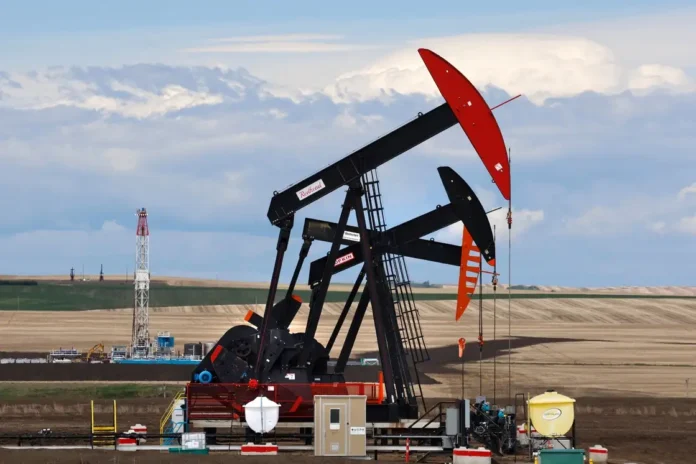
The single largest contributor to April’s growth was the mining, quarrying, and oil and gas extraction sector, which expanded 2.9 per cent during the month — its strongest monthly performance since February 2024, when it had grown 3.2 per cent. That gain more than offset the sector’s 1.4 per cent contraction in March, which had itself weighed on the broader economy.
Within that sector, oil and gas extraction rose 3.7 per cent, also the largest monthly increase since February 2024. Oil sands extraction was the primary driver: the industry expanded 6.6 per cent in April, as higher synthetic crude oil production rebounded following maintenance shutdowns that had been longer than anticipated and had suppressed output through the first three months of the year. Offshore production from Newfoundland and Labrador also contributed, reaching its highest levels since March 2020.
A separate Statistics Canada release on energy statistics added further texture to the picture. Exports of refined petroleum surged 69.7 per cent year-over-year in April, with global prices pushed higher by the ongoing war in Iran. Crude oil production rose 4.2 per cent, marking the eleventh consecutive month of year-over-year increases. Crude oil exports to the United States by pipeline climbed 8.8 per cent annually, while exports to Asia and Europe jumped 46.6 per cent — a figure that underscores how Canadian energy producers have been diversifying their export markets even as the Canada-U.S.-Mexico Agreement review looms.
Broader Gains Across the Economy
The rebound was not confined to the energy sector. Manufacturing and the public sector also posted gains, giving the April numbers a breadth that economists found encouraging. Statistics Canada’s early estimate for May suggests that momentum is continuing, albeit at a more modest pace: the agency projects 0.1 per cent growth for May, driven by activity in finance, insurance, real estate, and leasing.
“It’s a significant bounce back after a number of softer months,” said Nathan Janzen, assistant chief economist at RBC, in an interview Tuesday. “We had economic activity stall over the winter… so to see stronger activity in April to start off Q2 is encouraging.” Janzen was careful to add that monthly GDP figures are “highly volatile data points” and should be taken with “a grain of salt.” He also noted that he is watching closely how higher gasoline prices may weigh on broader consumer spending in the months ahead.
Recession Fears Recede, but Caution Remains
Several economists who commented Tuesday morning were unambiguous on one point: the April data effectively closes the debate about whether Canada is in recession. BMO chief economist Doug Porter described the earlier recession calls, based on two consecutive quarters of contraction, as a “false alarm.” The broad-based nature of the April rebound reinforced that assessment — though Porter stopped well short of declaring a full recovery underway. April’s growth, he wrote in a note to clients, “is clearly a correction from the prolonged winter lull and is unlikely to persist.”
Thomas Ryan, North America economist with Capital Economics, pointed to an additional tailwind for the second quarter: economic activity related to the FIFA World Cup. Even so, Ryan cautioned that the first-quarter shortfall means growth over the first half of 2026 could still fall short of the Bank of Canada’s projections. “While this should put a firm end to any debate about whether the economy is in recession, growth over the first half of the year is still set to average considerably below the Bank of Canada’s forecast, supporting our view that rate hikes are a long way off,” he wrote.
Andrew DiCapua, principal economist for the Canadian Chamber of Commerce, offered a similarly measured read: “April’s GDP rebound shows the economy is still chugging along, even if growth remains sluggish and not especially strong.”
What Comes Next
The April and early May figures together put the second quarter on track for annualized growth exceeding two per cent, according to Porter — a pace that would overshoot the Bank of Canada’s own forecast of 1.5 per cent for the quarter. The central bank is scheduled to announce its next interest rate decision on July 15, and the stronger-than-expected GDP data will factor into that deliberation, even as economists broadly agree that the conditions for rate increases remain distant.
Hovering over all of this is the question of U.S. trade policy. The review deadline for the Canada-U.S.-Mexico Agreement falls on Wednesday, and the uncertainty surrounding that process has been a persistent source of economic anxiety for Canadian businesses and policymakers alike. April’s numbers offer a moment of genuine relief. Whether that relief endures will depend, in no small part, on what happens next across the border.

