
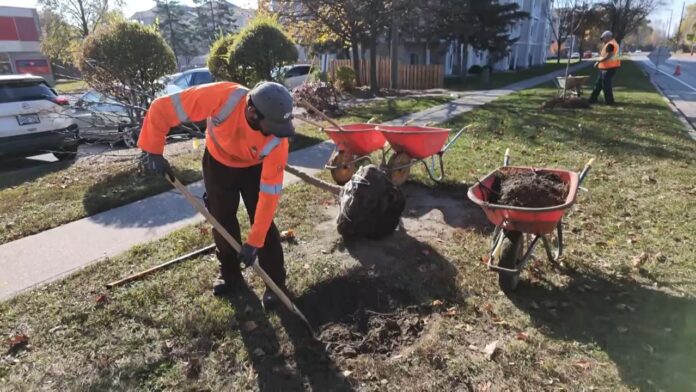
Windsor is having a banner year for trees. The city planted 2,500 in the spring, and another 2,800 are going into the ground this fall, with a supplier donation of roughly 300 additional trees pushing the total above 5,000 for 2024.
Yemi Adeyeye, the city’s forester, describes the milestone as a meaningful step forward, even if it doesn’t close the gap on Windsor’s long-term canopy target. The city is aiming to grow its tree canopy coverage from 19 to 22 per cent, a goal Adeyeye says could take anywhere from five to ten years to reach. “What we do know is that if we continue our efforts as it is right now and if we continue to optimize all our plant spaces, we will get there,” he said.
Two crews were working on Grand Marais west of Dominion on Tuesday, planting around 70 trees in a single stretch. City officials say crews will remain active until roughly mid-December, moving through neighbourhoods across Windsor as conditions allow.
Native Species and Disease Resistance
Most of the trees being planted are native species, including maples, birch and magnolia. The city deliberately mixes species so that a single disease outbreak cannot devastate an entire street, a lesson drawn from past urban forestry disasters across North America where monocultures of elms and ash were wiped out by invasive pathogens.
Adeyeye is candid that not every resident welcomes a tree in front of their property. But on city-owned land, the decision rests with the municipality, which weighs the broader public benefit. “What is important to note is that on city properties, those decisions about planting trees are in the hand of the city because the city always has to address the benefits of the public,” he said. Residents who want a tree on their street can call 311, and a certified arborist will assess the available space and select a suitable species.
Mike Koonar, who is opening a physiotherapy clinic on Grand Marais, now has a fresh row of trees around his property. “This is a beautiful neighbourhood as it is and adding some more greenery, some more nature, some more trees, it’s only going to beautify it even further,” he said.
The benefits extend well beyond aesthetics. Adeyeye points to cleaner air, reduced flooding risk and lower summer cooling costs as concrete returns on the city’s investment. “Your house is cooler than those without trees, so you’re using way more air conditioning when you don’t have trees shading your house,” he said. For a city in one of Canada’s warmest and most humid corridors, that is not a trivial consideration.

