
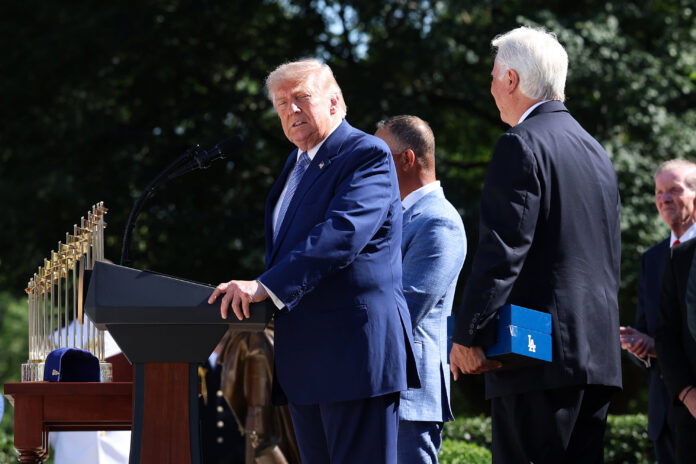
President Donald Trump has announced a new round of tariffs, and the implications extend well beyond U.S. borders — hitting Canada’s trade-dependent economy with particular force.
Yahoo Finance Washington correspondent Ben Werschkul broke down the key details of the measures in a recent appearance on Market Domination, offering an early look at what the new tariff regime entails and which sectors face the greatest exposure.
Details on the specific rates, targeted goods, and implementation timelines remain limited from the original briefing, but the announcement signals a continued escalation of the protectionist trade posture that has defined the Trump administration’s economic agenda — one with direct consequences for Canadian exporters, manufacturers, and workers who rely on open access to the American market.
Why This Matters for Canada
Canada sends roughly three-quarters of its exports to the United States, making American trade policy not a distant geopolitical concern but an immediate domestic one. When Washington moves on tariffs, the effects ripple through auto plants in Ontario, energy corridors in Alberta, forestry operations in British Columbia, and steel facilities across the country.
The federal government has historically responded to U.S. tariff actions with a combination of retaliatory measures, negotiated carve-outs, and support programs for affected industries — tools that carry real costs and real limits. Provincial governments, particularly those with export-heavy economies, have their own stakes in how Ottawa navigates the response, and regional interests do not always align neatly with a single national strategy.
Indigenous communities with resource and land rights tied to affected industries also face distinct consequences that federal and provincial trade responses do not always adequately address.
What Comes Next
Full details of the tariff package — including which Canadian goods face new barriers, whether existing trade agreement provisions offer any shelter, and what the timelines for implementation look like — are still emerging. TBPANews will continue to follow developments closely as more information becomes available from Washington and from Canadian government officials responding to the measures.
For now, the announcement is a reminder that Canadian economic sovereignty remains bound, in significant ways, to decisions made south of the border — and that the institutions Canadians rely on, from Parliament to provincial legislatures to trade tribunals, will face fresh pressure to respond effectively.

