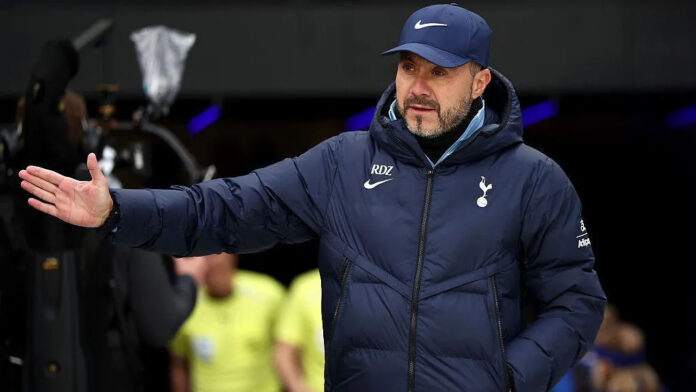
North London has acquired a distinctly Brescian character this season — and the story behind it runs deeper than a transfer fee or a managerial appointment.
Roberto De Zerbi, the manager who steered Tottenham Hotspur away from relegation last season, did not arrive at the club as a neutral technician. He was shaped, in the most formative sense, by the terraces of Stadio Mario Rigamonti. His father, Alfredo, led the Brescia supporters’ clubs — coordinating away trips, liaising with players, and organizing tifos for home matches. De Zerbi has said plainly that he was “born an ultra.” Rosanna Pedrollo, who spent fifty years working in Brescia’s administration and knew Alfredo well, describes him as “a passionate, fiery character and a wonderful father — full of energy, very polite, but never afraid to say what he thought.” She remembers a four- or five-year-old Roberto serving as mascot, trailing his father to matches home and away. Those early years, according to De Zerbi’s brother Rocco, “shaped his career.”
The Brescia thread at Spurs does not end with the manager. Several key takeaways illuminate just how tightly this northern Italian city is woven into the club’s current identity.
Salim Lamrani, who wrote Football According to Roberto de Zerbi and also served as Marcelo Bielsa’s interpreter and disciplinary coach at Leeds United, argues that De Zerbi “knows exactly which side of the barricades he stands on: with the people.” That orientation is visible in how he manages — and it surfaced literally last season, when De Zerbi flashed the Brescia ‘V’ sign toward the away end as Marseille hosted Atalanta in the Champions League. For a man who describes himself as having been born “a hundred metres from the stadium,” the gesture was not performance. It was biography. As Brescia itself enters a new chapter under Union Brescia’s banner, the football culture that city produced continues to animate one of England’s most storied clubs.

