Home Blog Page 16

Taylor Swift and Travis Kelce Wed at Madison Square Garden to the Strains of “Love Story”

Taylor Swift walked down the aisle to a string quartet rendition of her own 2008 hit “Love Story” when she married NFL star Travis Kelce at Madison Square Garden in New York City on Friday, according to Us Weekly. The venue’s extended floor plan gave the moment room to breathe — sources described “an extra long aisle” — before the couple exchanged vows in a ceremony that lasted roughly 20 minutes.

Both Swift and Kelce, each 36, were visibly emotional throughout. “Travis teared up more than Taylor,” one source told the outlet, adding that the couple shared personal details and anecdotes that even some longtime guests had never heard. The vows, according to another insider, traced the arc of their relationship from first meeting to the present.

“Taylor talked about how Travis was the guy in high school who, even though he was the star athlete, would go sit with the less-popular kids who were being bullied at lunchtime,” a source told People. “And Taylor talked about how she wished she knew someone like that when she was in high school.”

A Song That Began in a Teenage Bedroom

“Love Story” was the lead single from Swift’s second studio album, Fearless, released in September 2008. Swift has spoken candidly about writing it at 17, furious with her parents for refusing to let her date someone she later acknowledged was too old for her. In a May interview with The New York Times Magazine, she recalled it as the first song she wrote without caring whether anyone else liked it — a creative threshold she clearly crossed to lasting effect.

She joked in the same interview: “This is why you need to discipline your kids, because they might write songs that go No. 1.” Back in 2009, she called it “the most romantic song” she had ever written, even noting she never actually dated the person who inspired it.

Star-Studded Ceremony, Small Personal Touches

The wedding was officiated by comedian and actor Adam Sandler, and guests were given embroidered handkerchiefs — a nod to Swift’s 2014 track “Blank Space” — which reportedly proved useful during the ceremony. Swift wore a Christian Dior Haute Couture gown, and the couple opted against a traditional bridal party in favour of honouring two individuals with particular personal significance.

Kansas City Chiefs head coach Andy Reid, who attended the ceremony, offered a characteristically straightforward summary of the advice he gave the newlyweds: “Kiss every chance you get — every chance you have, every single day.” Reid also praised Sandler’s officiating, describing it as “simply hysterical” while noting the comedian handled the formal duties with genuine care.

Further details from the evening continue to emerge, including accounts of the top-secret invitations sent to guests and the full shape of the couple’s personal vows — a portrait of a high-profile relationship that, at least for one night, unfolded on its own carefully chosen terms.

Shared Culture Across Species: Neanderthals and Modern Humans May Have Exchanged Traditions 59,000 Years Ago in Turkey

0

A limestone cave on Turkey’s Mediterranean coast is quietly rewriting what scientists thought they knew about the relationship between Neanderthals and modern humans — and the evidence is startlingly intimate.

What the Cave Revealed

Archaeologists excavating Üçağızlı II Cave, situated on a stretch of coastline just north of Syria that once served as a prehistoric corridor between the Levant and Eurasia, have uncovered layers of human occupation spanning tens of thousands of years. The findings, published on July 6 in the journal PNAS, document two distinct periods of habitation: Neanderthals occupied the cave between approximately 77,000 and 59,000 years ago, followed by Homo sapiens from roughly 59,000 to 47,000 years ago.

The researchers identified the occupants not through complete skeletons — only teeth and a partial jawbone were recovered — but by analyzing the internal microstructure of fossilized teeth, a method precise enough to distinguish between the two species. The age of sediment layers was established through optically stimulated luminescence, a technique that measures how long buried mineral grains have been shielded from sunlight.

What the layers revealed across both periods was, in a word, consistency. Despite the biological turnover from one species to the next, the archaeological record showed what the study’s authors describe as “substantially uniform hunting-gathering strategies and lithic technology.”

The Same Tools, the Same Prey, the Same Shells

The parallels between the two occupations run deep. Both Neanderthals and modern humans sourced their raw materials — primarily flint — from the same local deposits. Both hunted the same animals: wild goat (Capra aegagrus), fallow deer (Dama mesopotamica), roe deer (Capreolus capreolus), and wild boar (Sus scrofa). The stone tools they left behind belong to the same technological tradition.

Perhaps most striking is the evidence for shared symbolic behaviour. Across multiple layers corresponding to both species, archaeologists recovered 29 shells of a small marine snail, Columbella rustica, brought into the cave not as food but apparently as personal ornaments. Some shells had been pierced, as though intended to be strung. One shell from the Neanderthal occupation bore signs of deliberate heating that altered its colour — a modification that implies intention, aesthetic awareness, and a degree of cultural meaning.

“Our findings indicate a deep level of cultural interaction,” said study co-author Naoki Morimoto, a paleoanthropologist at Kyoto University. “These two distinct but closely related human groups were not just adapting to the same environment: they were probably sharing symbolic preferences.”

A Pattern Emerging Across the Region

Üçağızlı II Cave does not stand alone. The picture it presents echoes findings from Tinshemet Cave in Israel, where researchers recently reported similar signs of shared behaviour between Neanderthals and modern humans from approximately 130,000 to 80,000 years ago — a far earlier window of interaction. Together, these two sites suggest that cultural continuity across the Neanderthal-to-modern-human transition was not an anomaly but a recurring feature of life in the Levant.

The contrast with sites elsewhere in Europe is instructive. At Mandrin Cave in France, Neanderthals and modern humans appear to have alternated occupation in distinct, separate pulses between roughly 56,800 and 41,500 years ago, without leaving evidence of a continuous shared culture. The Levantine sites point toward something qualitatively different — not mere coexistence, but active exchange.

April Nowell, a Paleolithic archaeologist at the University of Victoria who was not involved in the study, described the implications as significant. “By demonstrating cultural continuity and elevated levels of interaction, sites such as Tinshemet and Üçağızlı II are changing what we thought we knew about Neanderthals, Homo sapiens and other contemporary Homo groups,” she told Live Science. “A fascinating region just got even more so.”

The Deeper Mystery: Similarity and Extinction

Cultural overlap of this degree only sharpens the question that has long shadowed Neanderthal research: if these two groups shared so much, why did Neanderthals disappear around 40,000 years ago while modern humans did not?

Nowell notes that two species cannot occupy the same ecological niche indefinitely. Some research into Neanderthal cognition has suggested they were less cognitively flexible than modern humans — with more limited capacity for language and a narrower range of creative and self-aware behaviour — though that interpretation remains contested, and a growing body of evidence pushes back against any simple hierarchy of intelligence between the two groups.

What the archaeological record at sites like Üçağızlı II may be telling us, Nowell argues, is that the decisive differences between Neanderthals and modern humans were not the ones most visible in stone tools or shell ornaments. The real divergence may lie in dimensions the fossil record has yet to illuminate.

What Comes Next

The researchers are candid about the limits of what a single cave site can establish. Whether the cultural similarities observed at Üçağızlı II resulted from direct contact between the two groups, from parallel adaptation to the same environment, or from some combination of interbreeding and information exchange remains an open question. The site’s position along a known prehistoric migration corridor makes direct contact a plausible hypothesis, but hypothesis is not yet conclusion.

What the evidence does establish, with reasonable confidence, is that the boundary between Neanderthals and modern humans — at least in this corner of the ancient world — was far more porous than the old textbook narrative allowed. They hunted the same animals, knapped the same stone, and carried the same small shells into the same dark cave. Whether they did so together, or in succession, or in some more complicated entanglement of the two, the distance between them keeps shrinking.


Close Call in Merrimac: Tree Crashes onto Deck During Fourth of July Pool Party

0

What happened?

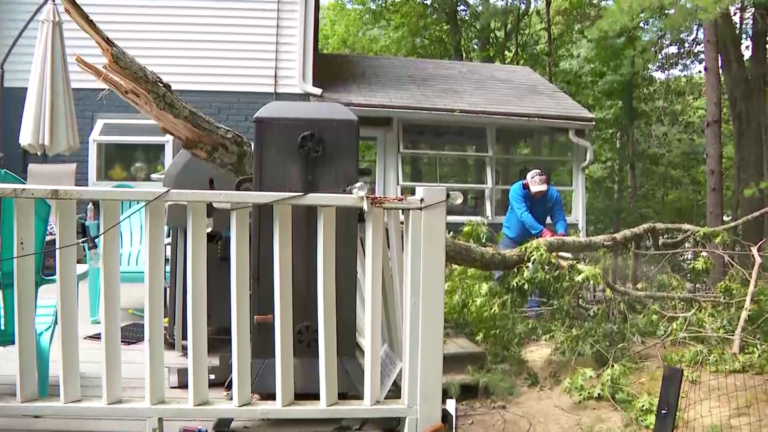
A Massachusetts family narrowly escaped injury on the Fourth of July when a large tree branch came crashing down onto their deck in the middle of a pool party. The incident happened in Merrimac, a small town in the northeastern corner of the state, during what had been a festive afternoon gathering with friends.

Surveillance camera footage captured the exact moment the limb fell. The video shows the branch coming down without warning, landing on the deck and leaving visible structural damage behind.

How did it unfold?

The family had invited friends over to celebrate the holiday. Then, abruptly, the weather changed. A sudden burst of strong wind and rain moved through Merrimac, and the tree branch gave way.

Homeowner Sara Vendshus described the shock of the impact. “It just thudded. I feel like I felt it. It was just like a loud thud. It shook me. It was just like boom,” she said. Guest Hudson Elwell was equally shaken: “It scared me because I could have died.”

Was anyone hurt?

No. Despite the force of the fall and the number of people gathered nearby, no one sustained injuries. The outcome could easily have been far worse.

The branch left behind damage to the fence, the gutters, and the barbecue grill. By Sunday, the tree limb had been cleared away, but the structural damage remained visible on the property.

What came next?

The day after the incident, the family and their friends returned to the yard to clean up and begin assessing the damage. The mood mixed relief with the lingering adrenaline of what had nearly happened.

No timeline for repairs has been publicly announced. The incident serves as a reminder of how quickly summer storm conditions can escalate — and how little warning they sometimes give.

Mexico vs. England at the 2026 FIFA World Cup: How and Where to Watch the Round of 16 Clash

0

When Mexico and England meet in the Round of 16 at the 2026 FIFA World Cup, the stakes could hardly be higher — and the atmosphere at Estadio Azteca in Mexico City promises to be electric. Thomas Tuchel’s Three Lions will need to weather a passionate home crowd if they hope to advance to the quarterfinals, while El Tri, buoyed by an unbeaten streak stretching back to November 2025, will be drawing on every ounce of that energy to push deeper into the tournament.

England’s path to this point was anything but comfortable. Harry Kane, the inspirational captain, rescued his side with a brace against DR Congo in the Round of 32, securing a nervy 2-1 victory that was far closer than most England supporters would have liked. Mexico, by contrast, arrived at this stage with considerably more composure, having dispatched Ecuador 2-0 in midweek under the steady hand of coach Javier Aguirre — a result that underlined the cohesion and confidence building within the squad.

Kickoff is set for 6 p.m. CST local time in Mexico City, which translates to 8 p.m. ET and 5 p.m. PT for viewers in the United States and Canada. Those watching in the United Kingdom will need to stay up late, with the match beginning at 1 a.m. BST, while Australian fans can catch the action at a far more civilized 10 a.m. AEST on Monday morning. FIFA confirmed the schedule would proceed as planned despite forecasts of severe thunderstorms around kickoff in Mexico City, having considered and then set aside any plans to reschedule.

For viewers in the United States watching in English, Fox holds exclusive broadcast rights for every match of the 2026 World Cup, and this Round of 16 fixture will air on Fox itself. Cord-cutters without a traditional cable subscription have several solid options. The Fox One streaming app — Fox’s direct-to-consumer service, launched last August — starts at $20 per month or $200 per year and provides access to Fox’s full portfolio, including FS1, FS2, Fox Deportes and local Fox stations; new subscribers can take advantage of a three-day free trial. Beyond that, major live TV streaming platforms carry both Fox and FS1: YouTube TV offers them as part of its $83-per-month standard plan, Fubo includes them in its $74-per-month Pro Plan, and DirecTV makes both channels available through its MySports package, currently offered to new subscribers at $50 per month for the first two months before reverting to the standard $65 monthly rate, with a five-day free trial to start.

Spanish-language viewers in the US are well served by NBCUniversal, which holds the Spanish broadcast rights through Telemundo and Universo. This particular match will air on Telemundo, and both channels are available to stream on Peacock, which offers Dolby Vision HDR and Dolby Atmos sound for an enhanced viewing experience. Peacock’s ad-supported Premium plan runs $11 per month, while the ad-free Premium Plus tier costs $17 per month.

In the United Kingdom, the BBC and ITV continue their long-standing arrangement of sharing World Cup broadcasting duties on free-to-air television, and given England’s involvement, this match will be shown on BBC One. Coverage begins at midnight BST, ahead of the 1 a.m. kickoff. The match is also fully available to stream on BBC iPlayer, accessible via Android and Apple mobile devices, most smart TVs, and a range of streaming boxes — all that is required is a valid UK television licence.

Australians following the tournament can watch every single 2026 World Cup match at no cost, as SBS holds free-to-air broadcast rights for the entire competition. The SBS On Demand streaming service carries all matches live and is available through dedicated apps for Android and iOS, as well as on Android TV, Amazon Fire TV, Apple TV and most smart televisions — no subscription required.

In Canada, broadcast rights rest with Bell Media, which is airing matches in English on TSN and CTV, and in French on RDS. Streaming is available through the TSN Plus platform, which costs CA$8 per month and also includes coverage of PGA Tour Live golf, NFL games, Formula 1, NASCAR and all four Grand Slam tennis tournaments — making it a reasonable investment for sports fans well beyond the World Cup itself.

For those travelling internationally during the tournament, a VPN can provide a meaningful layer of privacy and security when streaming on unfamiliar or public Wi-Fi networks, and can prevent internet service providers from throttling connection speeds. VPNs are legal in many countries, including Canada and the United States, though it is worth checking the terms of service of any streaming platform before using one, as some services have policies restricting VPN access to region-specific content. ExpressVPN is widely regarded as a reliable option, with its most popular annual plan normally priced at $120, currently available with a $45 discount for new subscribers.

Trump Turns on Senate Republicans as His Voter ID Bill Stalls on Capitol Hill

0

The frustration spilled onto social media on a Sunday, as it so often does with Donald Trump.

With his signature voting legislation languishing in the Senate, the president took to his platform to amplify a scathing op-ed from a conservative outlet accusing Republican Senate leadership of “sloth” — a pointed, public rebuke of the very caucus his agenda depends upon to succeed.

A Bill That Won’t Move

At the centre of the standoff is the SAVE Act, Trump’s proposed legislation that would require all Americans to provide documentary proof of citizenship before registering to vote. Supporters frame it as a safeguard against electoral fraud, but critics — including voting rights advocates and election law scholars — argue that the practical burden it would place on millions of eligible voters amounts to a form of voter suppression. Obtaining the required documents is neither simple nor equally accessible for all Americans, and the populations most likely to struggle with compliance are often those already facing systemic barriers to civic participation.

The bill has become something of an obsession for Trump in recent months. He has already disrupted the broader Senate Republican agenda in its name, engineering a surprise cancellation of a Senate confirmation hearing and, more recently, refusing to sign a bipartisan affordable housing bill — a decision that sent ripples of frustration through both sides of the aisle. The message from the White House has been consistent: the SAVE Act comes first, everything else waits.

A Public Dressing-Down of John Thune

What Trump promoted on Sunday was a piece published by the Daily Signal, authored by conservative columnist and Fox News contributor Deroy Murdock. The target was Senate Majority Leader John Thune of South Dakota, whom Murdock accused of lacking the resolve to push Trump’s priorities through the chamber.

“The GOP Senate needs such true grit. Alas, John Thune offers talcum powder,” Murdock wrote, in the passage Trump chose to amplify. “Thune is like a regional sales manager who moans to headquarters, ‘I don’t have any sales.’ Well, kid, go close some sales! If SAVE lacks the votes, get the votes!”

It is a remarkable posture — a sitting president publicly humiliating the leader of his own party’s Senate caucus, not through back-channel pressure but through open social media promotion of a piece designed to embarrass. Whether it moves votes is another matter entirely.

A Caucus Caught in the Current

The deeper problem for Senate Republicans may be structural rather than personal. According to a recent analysis by New York Times columnist Jamelle Bouie, Republican senators are only now beginning to reckon with the degree to which Trump’s demands have subsumed their own legislative priorities — and with the political costs that may follow. Bouie’s assessment was blunt: that reckoning, he suggested, may have arrived “a bit too late” to prevent meaningful losses in the upcoming midterm elections.

The dynamic playing out in Washington is one familiar to observers of Trump’s relationship with congressional Republicans — a cycle of deference, disruption, and public rebuke that leaves the caucus perpetually off-balance. Thune, who won his leadership position after years in the Senate and is not without his own political instincts, now finds himself caught between a president who demands loyalty and a legislative body that runs on consensus. The votes, as Murdock and Trump are loudly insisting, are not yet there. Whether public pressure can conjure them remains to be seen.

Canadian Soccer Fans Show Pride After Round of 16 Exit Against Morocco

0

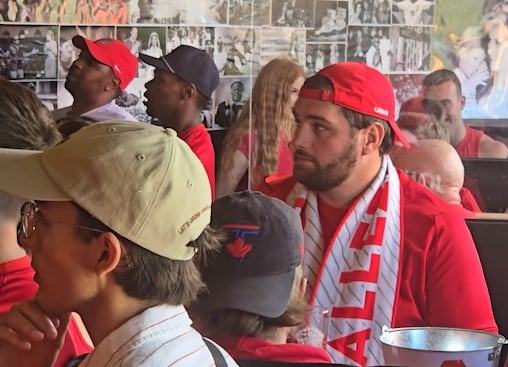
Canadian soccer supporters left the stadium with their heads held high following the national team’s elimination from the tournament at the Round of 16 stage, despite a defeat at the hands of Morocco. The loss, while disappointing, did little to dampen the enthusiasm of fans who had turned out in force to back the Canadian men’s national team in what has been a landmark period for the sport in the country.

Supporters across the country expressed a sense of collective pride in the team’s performance and overall tournament run, reflecting how far Canadian soccer has come in recent years. For many fans, simply reaching the knockout stage represented a significant milestone, and the mood among supporters remained largely celebratory even in defeat.

Morocco proved a formidable opponent, advancing on the strength of a disciplined and tactically astute display that frustrated Canada’s attacking ambitions throughout the match.

The result nonetheless leaves Canadian soccer in a stronger position than it has occupied in decades. The national program has invested heavily in player development and professional infrastructure, and the tournament run demonstrated that Canada can compete at the highest level of international football. Fans and analysts alike pointed to the depth of young talent now coming through the system as cause for genuine optimism heading into future competitions.

Reaction from coast to coast reflected the country’s growing relationship with the sport. Viewing parties drew large crowds in cities from Vancouver to Halifax, and in communities with strong soccer traditions — including many newcomer and immigrant communities for whom the game has long been central — the tournament generated exceptional engagement.

While the elimination stings, the consensus among supporters was clear: Canadian soccer is no longer an afterthought on the world stage, and this Round of 16 appearance may prove to be the foundation of something larger.

Man Charged Following Unprovoked Baseball Bat Attack in East Windsor

0

A man has been charged by the Windsor Police Service following what investigators describe as an unprovoked baseball bat attack in the city’s east end, an incident that has renewed concerns about violent assaults occurring in public spaces. While police have confirmed that charges have been laid, many aspects of the case remain under investigation and authorities have so far released only limited information about the circumstances surrounding the alleged attack.

According to investigators, the assault was unprovoked, indicating that there is currently no evidence of an altercation or confrontation immediately preceding the incident. Although police have not disclosed whether the victim and the accused were previously acquainted, the description suggests the violence was not the result of an ongoing dispute. Such cases often present particular challenges for investigators, who must reconstruct the sequence of events through witness statements, surveillance footage, forensic evidence, and any available digital records.

The incident prompted a response from officers with the Windsor Police Service, who subsequently identified and charged a suspect in connection with the investigation. The specific criminal charges have not yet been detailed publicly, nor have authorities released the identity of the accused, citing the ongoing nature of the investigation. Likewise, police have not provided an update on the victim’s medical condition or indicated whether the injuries sustained were considered life-threatening.

Violent assaults involving blunt weapons such as baseball bats are treated seriously under Canadian criminal law due to the significant risk of severe injury or death. Depending on the evidence gathered during the investigation and the findings presented before the courts, charges in cases of this nature can range from assault causing bodily harm to more serious offences if aggravating factors are established. Ultimately, any determination of criminal liability will be made through the judicial process.

The attack reportedly occurred in east Windsor, a largely residential section of Ontario’s southernmost major city. Situated along the Detroit River opposite the United States, Windsor is one of Canada’s most strategically important border communities, with strong economic ties to neighbouring Detroit and a population shaped by manufacturing, international trade, and cross-border commerce. Like many urban centres, the city periodically faces incidents of violent crime that prompt renewed discussions about public safety, community policing, and violence prevention initiatives.

Local authorities have not indicated whether the assault was captured by surveillance cameras or whether investigators are seeking additional witnesses. Police commonly encourage anyone who may have observed suspicious activity in the area or who possesses video footage from nearby homes, businesses, or vehicle dashcams to come forward, as such evidence can prove critical in establishing an accurate timeline of events.

As the investigation continues, Windsor Police have stated that further information will be released when appropriate. Until then, many questions surrounding the motive, the events leading up to the alleged assault, and the full circumstances of the attack remain unanswered.

TBPANews will continue to follow the case and provide updates as additional details are confirmed by investigators or become available through court proceedings.

Supreme Court Lets $800-a-Day Fine Stand Against Reporter Who Refuses to Name Source

0

A Journalist, a Scientist, and a Leak

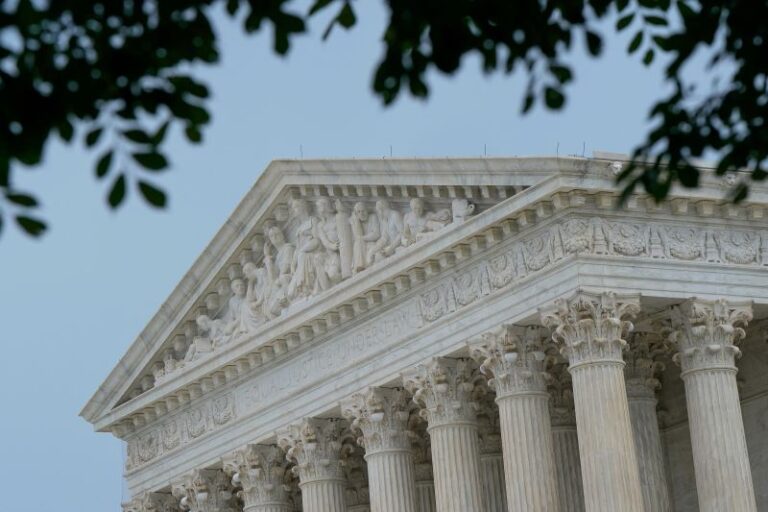
The United States Supreme Court has declined to shield a former Fox News investigative reporter from an escalating daily fine imposed because she refuses to reveal a confidential source. The decision, issued Thursday, leaves Catherine Herridge facing an $800-a-day contempt penalty with no immediate legal refuge in sight.

Herridge published a series of stories for Fox News in 2017 examining the alleged ties of Chinese American scientist Yanping Chen to the Chinese military. The reporting raised questions about whether a professional school Chen founded in Virginia served as a conduit for intelligence-gathering on American servicemembers. Chen was investigated by the FBI for six years. She was never charged.

In 2018, Chen filed suit against the FBI and the Justice Department, alleging they violated the Privacy Act by leaking private information from her file to journalists. Her lawsuit contends the media attention that followed destroyed her personal and professional life, exposing her to hate mail and death threats.

How the Case Reached the Highest Court

As part of her lawsuit, Chen’s legal team sought to identify the federal official who leaked the documents. Those materials reportedly included excerpts from an FBI interview summary, personal photographs, immigration and naturalization records, and an internal FBI PowerPoint presentation — all drawn from the investigative file.

US District Judge Christopher Cooper in Washington ordered Herridge to answer questions about her source in a deposition, ruling that Chen’s need to identify the leaker for the purposes of her Privacy Act claim outweighed the reporter’s right to protect a confidential source. Herridge appeared under oath but refused to answer. The judge held her in contempt. An appeals court upheld the ruling.

Chief Justice John Roberts briefly paused the fine while the Supreme Court considered Herridge’s emergency application for a stay. On Thursday, the court denied that application. Only Justice Brett Kavanaugh indicated support for granting the stay.

What Was Leaked — and Why It Matters

The legal dispute turns on a narrow but consequential question: did a federal official unlawfully disclose private information from a government investigation? Chen’s lawyers argue the leaked materials — pulled directly from her immigration forms and internal FBI records — are precisely the kind of private data the Privacy Act was designed to protect.

Attorney Andrew Phillips said Thursday’s ruling brings that question closer to resolution. “Dr. Chen, like any other American citizen, is entitled to discover the identity of the federal official who abused their access to an American’s private information and leaked it to cause her harm,” he said. “That type of corrupt, unlawful conduct is exactly what the Privacy Act was designed to address.”

Chen’s legal team says they have exhausted every other available avenue to identify the source. Herridge, they argue, is the only remaining path to that answer.

Press Freedom at Stake

The case has drawn intense attention from media law advocates, who warn that compelling journalists to expose sources sets a dangerous precedent. The concern is straightforward: if sources believe a reporter can be fined into compliance, they will stop talking. Whistleblowers, in particular, depend on the credible promise of confidentiality.

Bruce Brown, president of the Reporters Committee for Freedom of the Press, was direct in his criticism. “Journalists facing contempt should not have to muster large payments to the court while they seek to vindicate First Amendment rights,” he said. “And forcing them to betray source confidences always has a harmful impact on the free flow of information to the public.”

Fox News Media echoed that concern, expressing disappointment in the court’s refusal to intervene. “Protecting the confidentiality of journalistic sourcing and the integrity of the newsgathering process is fundamental to a free and functioning democracy,” the network said in a statement, adding that it would review its options to continue challenging the ruling.

A Tension Without Easy Resolution

This case does not pit press freedom against a simple government interest. It pits press freedom against the rights of a private citizen — a scientist who was investigated, never charged, and who says her life was upended by a leak she had no part in creating. That distinction matters. Chen is not seeking to suppress government criticism; she is seeking accountability for what she describes as an unlawful disclosure of her own private information.

The tension here is real and does not resolve cleanly in either direction. A strong shield for journalistic sources protects the public’s ability to learn about government misconduct. But that same shield, in this instance, may also protect the identity of a federal official who allegedly broke the law — not to expose wrongdoing, but to harm a private individual.

Herridge, who reported for both Fox News and CBS News before becoming an independent journalist, now faces an open-ended daily financial penalty. Her attorneys had not responded to requests for comment as of Thursday. The fine continues to accumulate. The source remains unnamed.

B.C. Court Rejects Bid to Reopen Cowichan Aboriginal Title Case, Calling It an Abuse of Process

0

A Line Drawn on Relitigation

The attempt by a Richmond industrial landowner to reopen the longest trial in Canadian history has failed — and the reasoning matters as much as the result.

In a decision released Monday, B.C. Supreme Court Justice Barbara Young dismissed applications by Montrose Properties and its affiliated companies to be added as defendants and reopen the Cowichan Aboriginal title proceedings. Justice Young found the request constituted an abuse of process through relitigation, drawing a firm line against what she described as a “wait-and-see” approach to constitutional litigation. The ruling reinforces both the finality of judicial proceedings and the integrity of the Aboriginal title recognition that emerged from a 513-day trial — the longest in Canadian history — that concluded in November 2023.

The underlying case is historic in scope. In August 2025, the B.C. Supreme Court recognized that the Quw’utsun (Cowichan) Nation holds Aboriginal title over approximately 300 hectares of land in Richmond, a territory historically known as Tl’uqtinus, where the Nation maintained a settlement. The court also recognized the Nation’s right to fish the south arm of the Fraser River, declared most Crown and municipal fee simple titles in the area invalid, and ordered the parties to negotiate a resolution within 18 months. All original parties — the federal government, the Province of British Columbia, and the City of Richmond — have filed notices of appeal.

Who Is Montrose, and What Did It Want?

Montrose Properties is the largest single private landowner within the recognized title area, holding approximately 120 hectares of industrial land that includes a Coca-Cola bottling plant and a Canadian Tire distribution depot. Its stake in the outcome is substantial, and its frustration is understandable on its face. The company argued that it received no formal notice of the original proceedings, that private landowners’ interests were never directly represented at trial, and that the declaration of Aboriginal title over its lands has caused concrete financial harm — including the collapse of a multi-million-dollar warehouse development after a lender and prospective tenant withdrew, and stalled negotiations with Fortis and Enbridge over a potential landfill gas facility.

Yet Justice Young was unpersuaded. While she acknowledged that Montrose received no formal notice, she found that the company was aware of the proceedings and chose not to seek party status during the trial itself. That choice, made over years of highly publicized litigation, could not be undone after the judgment landed unfavourably. “Allowing a new party to relitigate these issues, before this court, nearly two years after the conclusion of a 513-day trial, improperly interferes with the principle of finality,” she wrote in her 34-page judgment.

The concern about a “floodgate” effect was central to her reasoning. The title area encompasses land held by numerous private owners beyond Montrose. Permitting one late-arriving applicant to reopen the record, Justice Young found, would invite others to do the same — a process she described as “inefficient, disruptive to the parties, and would not enhance the integrity of the administration of justice.” The appropriate avenue, she concluded, is the appeal process already underway at the B.C. Court of Appeal, where Montrose may also apply to intervene.

The Deeper Constitutional Stakes

This ruling sits within a constitutional framework that Canadians are still learning to navigate. Aboriginal title, as affirmed by the Supreme Court of Canada in Tsilhqot’in Nation v. British Columbia (2014), is a collective right held by Indigenous peoples over lands they occupied prior to Crown sovereignty. It is not a minor administrative classification — it is a constitutionally protected interest that the Crown can infringe only if it meets a demanding justification standard. The Cowichan court found that the Crown’s granting of private titles on Tl’uqtinus lands did not meet that standard.

The Cowichan Nation has been consistent and explicit: they are not seeking to invalidate the titles held by individual private landowners, and they are not laying claim to those lands directly. Their action targets the Crown’s historical conduct — the unlawful disposition of Indigenous territory after British Columbia joined Confederation in 1871, when the province began selling Cowichan lands without legal authority, despite reserve lands having been set aside for the Nation by a colonial governor in the 1850s. The distinction between Crown responsibility and private landowner liability is legally and politically significant, even if it has not fully quieted anxiety among property holders.

That anxiety has found some political response. The B.C. government has announced up to $150 million in financial support for Montrose and other affected private landowners while the legal questions continue to work through the courts — an acknowledgment that the transition from historical wrong to practical resolution carries real costs, and that the state bears some responsibility for managing them.

What Comes Next

Montrose CEO Ken Low stated Tuesday that the company is reviewing the decision and considering its legal options, adding that “private property rights must be protected.” The company has 30 days to decide whether to appeal Monday’s ruling and may also seek intervener status in the Court of Appeal proceedings already initiated by the federal government, the Province, and the City of Richmond.

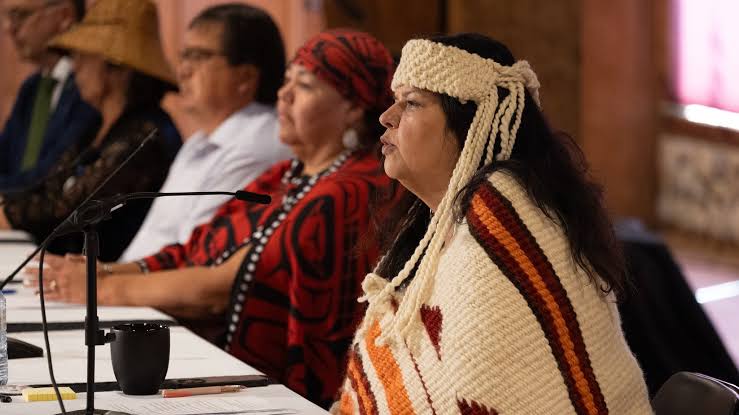
Cowichan Tribes Chief Cindy Daniels welcomed the result, saying the Nation can now focus on “respectful reconciliation work.” Shana Thomas, hereditary chief of Lyackson First Nation — part of the broader Cowichan Nation — put it plainly: “Aboriginal title cannot be treated as an afterthought.”

The implication of Justice Young’s ruling extends beyond this particular dispute. It signals that constitutional recognition of Aboriginal title, achieved through exhaustive litigation, cannot be casually undone by parties who monitored proceedings from the sidelines and found the outcome inconvenient. The proper forum for challenging the substance of the Cowichan decision is the Court of Appeal — and that is precisely where the argument will now continue. The question of how Aboriginal title, Crown responsibility, and private property rights coexist in Canadian law remains genuinely unresolved. But it will be resolved through the institutions designed for that purpose, not through procedural end-runs around a concluded trial.

Canada’s Economy Posts 0.5% Growth in April, Breaking a Winter of Stagnation

0

A Rebound After Months of Contraction

Through the final months of 2025 and into the early weeks of 2026, Canada’s economy had been struggling to find its footing. Statistics Canada had reported that real gross domestic product contracted in both the last quarter of 2025 and the first quarter of 2026 — two consecutive quarters of negative growth that prompted genuine concern, and in some quarters outright alarm, about whether the country had slipped into a technical recession. Against that backdrop, Tuesday’s release of April GDP data offered something economists had not seen in some time: a clear, broad-based gain.

Statistics Canada reported that real GDP grew 0.5 per cent in April, edging past the 0.4 per cent that analysts had forecast and reversing what had been a prolonged winter lull in economic activity. The agency did not flag any major revisions to prior figures — a point worth noting given that some economists and business leaders have recently raised concerns about the frequency with which Statistics Canada revises its GDP reports.

Energy and Oil Sands Lead the Way

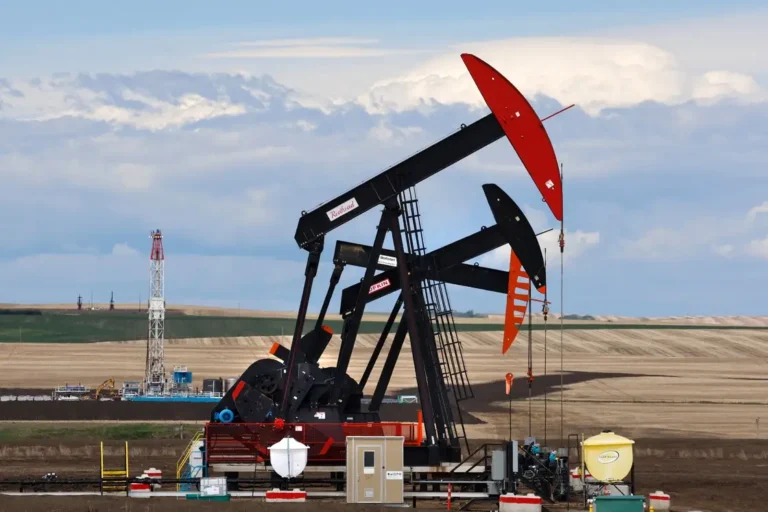
The single largest contributor to April’s growth was the mining, quarrying, and oil and gas extraction sector, which expanded 2.9 per cent during the month — its strongest monthly performance since February 2024, when it had grown 3.2 per cent. That gain more than offset the sector’s 1.4 per cent contraction in March, which had itself weighed on the broader economy.

Within that sector, oil and gas extraction rose 3.7 per cent, also the largest monthly increase since February 2024. Oil sands extraction was the primary driver: the industry expanded 6.6 per cent in April, as higher synthetic crude oil production rebounded following maintenance shutdowns that had been longer than anticipated and had suppressed output through the first three months of the year. Offshore production from Newfoundland and Labrador also contributed, reaching its highest levels since March 2020.

A separate Statistics Canada release on energy statistics added further texture to the picture. Exports of refined petroleum surged 69.7 per cent year-over-year in April, with global prices pushed higher by the ongoing war in Iran. Crude oil production rose 4.2 per cent, marking the eleventh consecutive month of year-over-year increases. Crude oil exports to the United States by pipeline climbed 8.8 per cent annually, while exports to Asia and Europe jumped 46.6 per cent — a figure that underscores how Canadian energy producers have been diversifying their export markets even as the Canada-U.S.-Mexico Agreement review looms.

Broader Gains Across the Economy

The rebound was not confined to the energy sector. Manufacturing and the public sector also posted gains, giving the April numbers a breadth that economists found encouraging. Statistics Canada’s early estimate for May suggests that momentum is continuing, albeit at a more modest pace: the agency projects 0.1 per cent growth for May, driven by activity in finance, insurance, real estate, and leasing.

“It’s a significant bounce back after a number of softer months,” said Nathan Janzen, assistant chief economist at RBC, in an interview Tuesday. “We had economic activity stall over the winter… so to see stronger activity in April to start off Q2 is encouraging.” Janzen was careful to add that monthly GDP figures are “highly volatile data points” and should be taken with “a grain of salt.” He also noted that he is watching closely how higher gasoline prices may weigh on broader consumer spending in the months ahead.

Recession Fears Recede, but Caution Remains

Several economists who commented Tuesday morning were unambiguous on one point: the April data effectively closes the debate about whether Canada is in recession. BMO chief economist Doug Porter described the earlier recession calls, based on two consecutive quarters of contraction, as a “false alarm.” The broad-based nature of the April rebound reinforced that assessment — though Porter stopped well short of declaring a full recovery underway. April’s growth, he wrote in a note to clients, “is clearly a correction from the prolonged winter lull and is unlikely to persist.”

Thomas Ryan, North America economist with Capital Economics, pointed to an additional tailwind for the second quarter: economic activity related to the FIFA World Cup. Even so, Ryan cautioned that the first-quarter shortfall means growth over the first half of 2026 could still fall short of the Bank of Canada’s projections. “While this should put a firm end to any debate about whether the economy is in recession, growth over the first half of the year is still set to average considerably below the Bank of Canada’s forecast, supporting our view that rate hikes are a long way off,” he wrote.

Andrew DiCapua, principal economist for the Canadian Chamber of Commerce, offered a similarly measured read: “April’s GDP rebound shows the economy is still chugging along, even if growth remains sluggish and not especially strong.”

What Comes Next

The April and early May figures together put the second quarter on track for annualized growth exceeding two per cent, according to Porter — a pace that would overshoot the Bank of Canada’s own forecast of 1.5 per cent for the quarter. The central bank is scheduled to announce its next interest rate decision on July 15, and the stronger-than-expected GDP data will factor into that deliberation, even as economists broadly agree that the conditions for rate increases remain distant.

Hovering over all of this is the question of U.S. trade policy. The review deadline for the Canada-U.S.-Mexico Agreement falls on Wednesday, and the uncertainty surrounding that process has been a persistent source of economic anxiety for Canadian businesses and policymakers alike. April’s numbers offer a moment of genuine relief. Whether that relief endures will depend, in no small part, on what happens next across the border.