Home Blog Page 13

Lightning Ignites Over 100 Wildfires Across British Columbia in a Single Weekend

0

A Season Upended in Hours

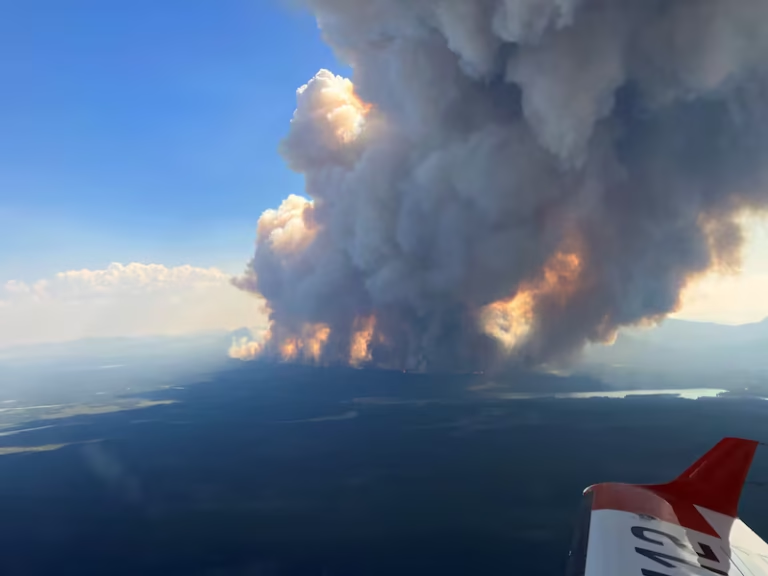
British Columbia’s wildfire season underwent a dramatic transformation this past weekend, and the speed of the change underscores a difficult truth about fire management in the province: relative calm can give way to crisis within a matter of hours. On Wednesday morning, firefighters were monitoring roughly 20 active blazes in what had been a comparatively quiet season. By Saturday morning, that number had surged past 113 — approximately 100 of them ignited since Friday alone.

The central thesis here is straightforward but sobering: a single concentrated weather event can overwhelm even a well-resourced provincial fire system, exposing the limits of preparedness when nature moves faster than institutional response. The BC Wildfire Service attributed the vast majority of new fires to approximately 4,000 lightning strikes that struck the province on Friday, a barrage that effectively reset the fire season in a single day.

Two-thirds of the active fires are burning out of control. Most of the new blazes, along with the evacuation orders and alerts that followed, are concentrated in the southern British Columbia Interior — a region that has endured repeated fire seasons with mounting intensity.

Communities Under Pressure

The human consequences of this surge are already being felt across several communities. The Thompson-Nicola Regional District ordered the evacuation of 131 properties near Big Bar Lake and Meadow Lake on Friday, driven by the Fiftynine Creek fire — a lightning-caused blaze that has grown to an estimated 4,000 hectares. Campers at the Big Bar Lake Provincial Park, a campground operating near full capacity, were among those forced to leave as smoke columns rose visibly across the lake.

Near Pemberton, a community of roughly 3,600 residents, the Signal Hill Wildfire was burning approximately one kilometre from a local bed-and-breakfast by Saturday afternoon. Parts of the area south of Pemberton faced evacuation orders while other sections remained on alert — a distinction that carries enormous practical weight for residents trying to decide whether to stay or go.

In Boston Bar, a small Fraser Canyon community of around 160 people, the situation illustrated the difficult personal calculus that evacuation orders force on residents. The Brunswick Creek fire, at 40 square kilometres, and the Ainslie Creek fire, at 160 square kilometres, both bore down on the area. An evacuation order was issued Thursday, yet a local business owner estimated that between 40 and 50 per cent of the community had remained behind — citing the need to protect property, businesses, and animals.

The Scale of Mobilization

The provincial response has been substantial. More than 500 firefighters have been deployed across British Columbia, representing a rapid and significant mobilization triggered by the weekend’s events. That number reflects the scale of the challenge: dozens of fires igniting simultaneously across a vast and rugged landscape strain coordination, equipment, and personnel in ways that a slower-building season does not.

The BC Wildfire Service issued a warning Friday that additional lightning strikes and further fire starts were expected in the coming days. As the weather system moved east into Alberta, officials anticipated that fire activity would continue to intensify. By Saturday afternoon, the tally had reached approximately 114 active fires, with roughly 72 having started in the preceding 24 hours alone.

What this weekend demonstrated is that British Columbia’s fire management infrastructure, however capable, operates under conditions that can shift with startling abruptness. The province’s geography, its climate trajectory, and the growing frequency of extreme weather events combine to ensure that seasons like this one will not be anomalies. The question is not whether such surges will recur, but whether the systems in place — evacuation infrastructure, firefighting capacity, community preparedness — are scaling to meet that reality.

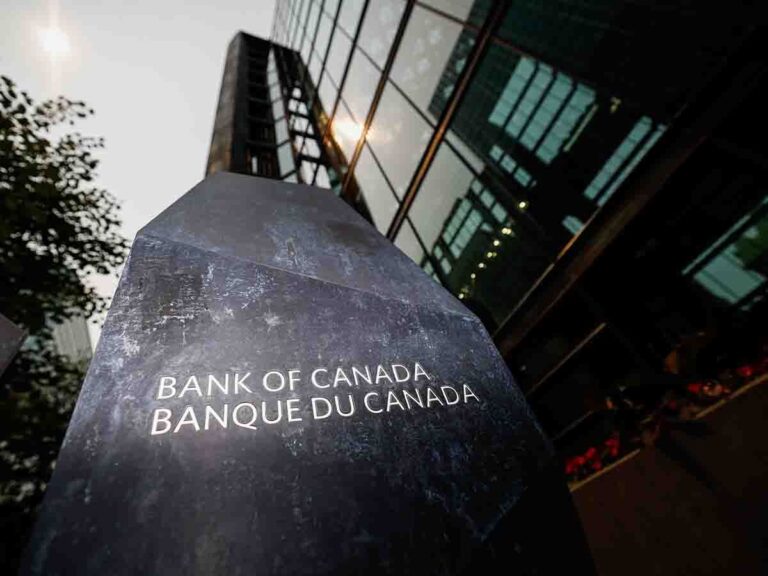
Bank of Canada Holds Steady as June Inflation Cools, but Energy Uncertainty Lingers

0

Canada’s inflation rate eased to 2.8 per cent in June, pulled lower by a sharp drop in gasoline prices, but economists are cautioning against reading too much comfort into the numbers. The relief, they warn, may be temporary — and the Bank of Canada knows it.

Analysts had forecast the June consumer price index at 2.9 per cent, itself already a meaningful step down from May’s 3.2 per cent and below the upper bound of the Bank of Canada’s target range of one to three per cent. The actual figure came in even softer than expected. More strikingly, the central bank’s two preferred core inflation measures — the trimmed mean and the weighted median — fell below the two per cent target for the first time since 2020, also undershooting analyst estimates.

The headline number moved in the right direction. But the story behind it is more complicated than a single month’s figures can tell.

The single biggest driver of the June decline was gasoline. Statistics Canada reported a 10.2 per cent month-over-month drop in pump prices, the steepest monthly fall since April 2025, when the federal consumer carbon levy was scrapped. That decline pushed the overall CPI down 0.4 per cent month-over-month — the largest such decrease since December 2024. Strip out gasoline entirely, and inflation was essentially flat from May to June.

Gas prices surged through the spring as conflict between the United States and Iran rattled global oil markets. A tentative ceasefire reached in mid-June briefly eased pressure on crude prices. But that ceasefire has since collapsed, and renewed hostilities around the strategically critical Strait of Hormuz have already begun pushing energy costs higher again. The June relief, in other words, was real — and it may not last.

“With gasoline and diesel likely to remain elevated, it is probably still too early for the Bank of Canada to lower its guard,” said Charles St-Arnaud, chief economist at Servus Credit Union. He noted that the average of the bank’s two preferred core measures sat at 1.85 per cent in June, with momentum in those measures slowing to 1.6 per cent — both encouraging signs. Yet St-Arnaud expects policymakers to hold the benchmark interest rate at its current level of 2.25 per cent through the remainder of the year, given the lingering uncertainty around energy.

Not every economist shares that caution about the broader picture. David Rosenberg, president of Rosenberg Research & Associates, described the June report as containing “nothing here for the Bank of Canada to be worried about,” calling it a validation of the central bank’s decision to remove its de facto tightening bias at its most recent rate meeting. The data, in his view, gives the bank room to breathe.

TD Bank senior economist Leslie Preston offered a similarly measured optimism. She described inflation in Canada as “benign” right now, pointing to weak consumer demand as the force holding businesses back from raising prices. “June’s inflation report reinforces our view that the Bank of Canada can remain on the sidelines for quite some time,” she said. Preston does expect July’s figures to show some uptick, given that gas prices have already climbed again since June — but she still believes inflation has peaked for 2026.

Benjamin Reitzes, BMO’s managing director of Canadian rates and macro strategist, highlighted another encouraging detail: the breadth of items seeing annual price increases above three per cent narrowed in June. That narrowing, he argued, should give the Bank of Canada additional confidence that inflationary pressure is not becoming entrenched across the economy.

Elsewhere in the consumer basket, the picture was mixed but broadly stable. Grocery prices rose 3.9 per cent annually in June, down from 4.3 per cent in May, with slower price growth for fruit — particularly grapes — contributing to the moderation. Shelter inflation eased to 1.5 per cent, continuing a trend that has kept it below two per cent since February. Traveller accommodation, however, surged 10.1 per cent year-over-year in June, up sharply from 2.5 per cent in May, a jump economists largely attributed to demand generated by the FIFA World Cup.

The central bank held its benchmark rate steady at 2.25 per cent last week. Governor Tiff Macklem acknowledged that the bank sees few signs so far that energy-driven price pressures are spreading into the broader consumer basket, but he was careful not to declare victory. He reiterated a commitment to prevent high oil prices from translating into persistent inflation — a promise that carries real weight given how quickly the geopolitical situation can shift.

“There’s still that lingering risk with those high energy costs that could transfer to other prices,” St-Arnaud said. The sector economists identify as most exposed is food. Fresh food prices are particularly sensitive to fuel and shipping costs, meaning consumers could begin to feel the effects of renewed Middle East tensions at the grocery store before they show up elsewhere.

“There’s a lot of unpredictability around what’s going to happen with the Middle East,” said Reitzes. “Energy prices could still go higher, that could re-spark more inflation.” A soft economy is currently absorbing much of that pressure, limiting businesses’ ability to pass costs on to consumers. But that buffer is not unlimited, and the Bank of Canada is watching carefully for any sign that the firewall is beginning to crack.

For now, the June inflation report offers genuine reassurance that the war’s inflationary effects have not yet spread beyond energy. Whether that remains true in July — with gas prices already rising again — is the question the Bank of Canada, and Canadians, will be watching closely.

Rick Beato’s Viral Video Exposes How Celebrity PR Machines Control the Music Narrative

0

Picture an hour-long conversation between two men dissecting the harmonic tension inside a piano ballad, pausing to marvel at a suspended chord, tracing the architecture of a song the way an engineer might read a blueprint. That is what Rick Beato’s YouTube channel offers its five million subscribers — and it is, apparently, not what Paul McCartney’s publicity team had in mind.

When McCartney launched his promotional campaign for The Boys of Dungeon Lane last month, his handlers steered him toward TikTok and the breezy, banter-driven YouTube programme Chicken Shop Date. Beato, a musicologist whose deep-dive interviews with artists such as Brian May and Sting have built one of the platform’s most engaged audiences, never received a call. The omission did not go unnoticed.

A Conversation That Started Without McCartney

The absence became conspicuous in the wake of Beato’s recent sit-down with Billy Joel — a sprawling, technically rich exchange in which the two men worked through chord progressions, song structure, and the particular dissonance that gives a song like “And So It Goes” its emotional weight. The video crossed one million views in three days. Viewers flooded the comments section with a single demand: get McCartney on next.

Beato responded not with a booking announcement but with a candid explanatory video titled “Why Paul McCartney Won’t Be On My Channel.” It reached one million views faster than the Joel interview had. In it, Beato does not simply vent frustration — he maps, with some precision, the logic of a publicity apparatus that consistently routes artists away from substantive musical conversation and toward whatever currently commands the broadest cultural attention.

“My channel is actually about music,” Beato says in the video. “The people that tune in to my channel are interested in music, they’re interested in how people write songs, how people play things.” He contrasts that with what he describes as a gravitational pull toward prestige media brands and viral formats whose actual impact on sales remains genuinely difficult to measure, but whose ability to place an artist at the centre of a cultural moment is immediate and flattering.

The Metrics No One Fully Understands

Beato’s frustration points toward something larger than one missed interview opportunity. It opens onto a question that now haunts every corner of the media landscape: in an environment saturated with content, fragmented audiences, and algorithmic unpredictability, does anyone actually know what moves the needle?

Wesley Schultz, the lead singer of The Lumineers, put it plainly in a conversation a few years ago. “Nothing’s really working anymore, quote-unquote, it’s all just everybody guessing,” he said. “You still need good ideas, you need good songs, but we should get creative with how we roll things out.” That sentiment — honest, a little bewildered, and entirely reasonable — captures the mood of an industry navigating a transition it has not yet finished making.

The confusion is compounded by the fact that prestige no longer guarantees reach. A placement in a legacy outlet with a storied masthead may generate fewer views than a YouTube channel run by a former session musician from Atlanta. Beato notes, with some wryness, that the publicists who overlook his channel seem not to have registered that virtually all media — including the television appearances and podcast episodes they do arrange — ultimately ends up on YouTube anyway. “That’s where everybody watches them,” he says.

Reach Versus the Right Audience

There is a strategic question buried inside the PR calculus that deserves to be taken seriously. When a legacy artist like McCartney releases new material, the relevant audience divides into two quite different groups: the existing fanbase, cultivated over six decades of recording, and the hypothetical new listeners who might conceivably be converted. A buzzy internet programme aimed at younger demographics makes sense if the goal is acquisition — reaching people who did not grow up with Abbey Road or Band on the Run and might be persuaded to care.

But if McCartney’s existing fanbase is, by any reasonable measure, the far larger and more commercially significant group, then the logic shifts. It becomes less about acquisition and more about what political strategists call getting out the vote — energising and deepening the commitment of people already predisposed to buy the record, stream the album, purchase the concert ticket. That audience lives, in substantial numbers, on Beato’s channel. It is older, musically literate, and deeply invested in the craft behind the songs it loves.

The failure to recognise that distinction is not unique to McCartney’s team. It reflects a broader tendency to conflate visibility with relevance, and to mistake the platform with the largest theoretical reach for the one most likely to convert attention into meaningful engagement.

The Real Wall Beato Is Up Against

And yet, for all the structural media dynamics at play, there is probably a simpler and more personal explanation for Beato’s predicament. McCartney, at eighty-four, has spent six decades constructing a public persona of considerable and carefully maintained charm. His interviews follow a recognisable pattern: warm anecdotes, familiar stories, a deflection so graceful it can pass for candour. The format works because it never truly demands that he break character.

A recent appearance on NPR’s Song Exploder — a podcast built around exactly the kind of compositional interrogation Beato practises, albeit in shorter episodes — offered a telling glimpse of what happens when an interviewer pushes past the surface. When host Hrishikesh Hirway pressed McCartney to explain the creative decisions behind his song “Ripples in a Pond,” McCartney eventually responded with theatrical exasperation: “Hey, Rishi, I’ll tell you one thing. You’re making me think more about this song than I’ve ever thought about any song ever. My gosh.” It was charming. It was also a door closing.

That is the wall Beato is genuinely up against — not simply institutional snobbery about YouTube as a platform, though that exists too, but the more fundamental reality that some PR teams are doing exactly what they are paid to do: protecting a client from a format that would require him to engage on terms he has not chosen and cannot entirely control. Beato’s channel outperforms the YouTube presence of institutions like The New York Times in raw view counts, but raw view counts have not yet convinced every gatekeeper that depth of engagement matters as much as breadth of reach. Until that argument lands, the interview will remain unmade — and the conversation will continue, loudly, in the comments section.

Ferran Torres Sends Spain to World Cup Glory, Says ‘Destiny Was Written’

0

It took 106 minutes, a man advantage, and a substitute who had spent the tournament absorbing criticism — but Spain are world champions.

Ferran Torres, introduced from the bench in a tightly contested final at MetLife Stadium in New Jersey, struck the only goal of the match to give Spain a 1-0 extra-time victory over defending champions Argentina. The win, sealed against a side reduced to ten men and unable to register a single shot in regulation, caps what has been a dominant Spanish campaign at the 2026 World Cup.

Speaking to FIFA broadcasters in the mixed zone moments after the final whistle, Torres was reflective and visibly emotional. “I think in the end the goal came from 47 million people, not just those of us that are here,” he said, invoking the population of Spain in a moment that blended individual relief with collective belonging. “Today destiny was written, it was made for us to win. We’re far from our people today but we tried to be as close as possible to them.”

A Tournament of Doubts, Resolved in Extra Time

The Barcelona forward had not scored prior to the final, and by his own admission had faced sustained scrutiny throughout the competition. That context made his decisive contribution all the more striking. “A huge relief,” he said of the goal. “I’ve been criticised throughout the whole tournament but, as I said before, destiny was written. Thanks to God, he always gives me the strength to continue and in the end he grants things to those that most deserve them.”

The path to that goal was not straightforward. Argentina, despite failing to produce a shot on target in the first 90 minutes, were kept alive largely through the extraordinary reflexes of goalkeeper Emiliano Martínez, who repeatedly denied a Spanish side that controlled the match from the opening exchanges. The contest tilted decisively just before extra time began, when midfielder Enzo Fernández received a second yellow card, leaving Argentina to defend with ten men against a Spain team that had shown no signs of fatigue.

Torres collected his opportunity when it arrived, finishing with the composure of someone who had been waiting — and waiting patiently — for exactly this moment. The goal stood. Spain had their world title.

Messi’s Shadow, and the Weight of the Occasion

No account of this final can avoid the presence of Lionel Messi, who at 37 was making what is almost certainly his last appearance at a World Cup. Torres acknowledged that shadow directly. “Finals are hard,” he said. “When you have Messi on the opposing team you do get worried, but we always backed ourselves and tried to show our football and I think we managed to do it once again.”

Messi, who had carried Argentina to the title in Qatar four years ago, was unable to replicate that feat against a Spanish side that pressed relentlessly and moved the ball with a fluency that left the South American champions struggling to establish any rhythm of their own.

Scaloni: ‘They Were Better — That’s the Truth’

Argentina coach Lionel Scaloni did not reach for excuses in his post-match remarks. His words were measured and dignified, carrying the particular weight of a man who knows how rare it is to reach a World Cup final at all. “They were better, that’s the truth,” he said plainly. “But I’ll hold on to an enormous memory of what they’ve done, of what it’s worth to get this far.”

He spoke of sadness, but also of pride — pride in a group of players who, even as the tournament slipped away from them in extra time, continued to compete. “We’re great in victory and we have to be great in defeat,” Scaloni said. “Today we’re showing that we know how to lose. We lost the match and we’re owning it. But that doesn’t mean we’ll stop remembering everything we did to get here.”

It was a gracious concession from a coach whose team had arrived in New Jersey as defending champions and left as runners-up, outplayed by a Spanish side that has now reasserted itself at the summit of the world game. For Torres, for Spain, and for the 47 million people Ferran Torres carried in his thoughts when he struck that extra-time winner, the wait is over.

Wildfires and Flooding Continue to Threaten Campgrounds Across Ontario and Manitoba

0

Campers and outdoor enthusiasts in parts of Ontario and Manitoba are facing a difficult and dangerous summer, as wildfires and flooding continue to force closures and disrupt access to campgrounds across both provinces.

For many Canadians, the summer camping season represents not merely a leisure pursuit but a meaningful connection to the country’s vast public lands — lands that are, in many cases, also the subject of ongoing Indigenous land rights and treaty obligations that governments at both levels are constitutionally bound to respect. The disruptions this season serve as a pointed reminder of how climate pressures bear down unevenly on regions that have long depended on the stability of their natural environment.

The situation remains fluid. Residents and travellers in affected areas are strongly encouraged to follow guidance from provincial emergency management agencies and to treat any official closure order as binding.

Ontario Wildfires: Communities Warn They Were Left Behind as Ford Visits Thunder Bay

0

A Crisis Arrives Without Warning

The smoke had been building for days before anyone in authority said the word “evacuate.” In late June, Robert Laforge, owner of Lac Des Mille Lodge, watched plumes rise over Byers Lake and began making calls to Ontario’s Ministry of Natural Resources. He kept calling for two weeks. Nobody called back. “They felt like they had it under control,” Laforge said on Saturday. “Not a soul attempted to get a hold of us to let us know the danger that we were possibly in.” By the time ministry officials agreed evacuation was necessary, the roaring fires had already reached the mainland where the campgrounds stood.

Laforge’s experience was not unique. Dale Wirta, owner of Cushing Lake Resort, had gone to bed unaware that fire was already creeping toward his property. A text arrived at 10:15 in the evening: the fire had jumped, and it was close. He had received, by his own account, “zero notification.” He ran from cabin to cabin, fist pounding on doors in the dark. Forty-five minutes after that first text, the neighbouring Thousand Lakes Resort was already burning. Guests who managed to flee described driving through a corridor of fire on both sides of the road, navigating entirely by the red tail lights of the vehicle ahead of them — a scene, Wirta said, that felt like something out of an apocalypse film.

Wirta had been promised that fire crews and property protection teams were on their way. They never arrived. By Wednesday morning, his resort was gone — more than fifty trailers, twelve cabins, two garages, a main lodge, a restaurant, a bar, a convenience store, living quarters. Everything. He did not hesitate to assign blame. “MNR dropped the ball,” he said. “People have lost everything. And it could have all been prevented.” His particular frustration centred on the ministry’s reluctance to order a fire ban in the days before the disaster struck.

Collins First Nation: A Community Erased

The most devastating loss of the week belonged to Collins First Nation, also known as Namaygoosisagagun, a remote community that was burnt entirely to the ground. Videos filmed by teenagers as they fled the fire — crossing a lake by boat, then driving kilometres of bush road through smoke and flames — spread rapidly across social media and brought the crisis to national attention. The images were visceral and frightening. They also raised an immediate and uncomfortable question: why had no one come to help sooner?

Linda Debassige, Grand Chief of the Anishinabek Nation, which represents thirty-nine First Nations including Collins, said the community’s leadership had warned the ministry of the rising risk well in advance, to no avail. “They had to flee this raging inferno with no notice and all by themselves,” she said. Speaking of the viral evacuation footage, Debassige used a word that carried the full weight of the community’s experience: “sacrifice.” It felt, she said, as though Collins First Nation had to burn before nearby communities received faster evacuation orders.

The situation at Collins is further complicated by a jurisdictional gap that has left the community without a safety net. Because it exists in a legal “grey area” as a so-called “near-band” awaiting official recognition from Ottawa, it receives no support from either the federal or provincial government, unlike recognized First Nations. The community built its school, its water plant, its homes and its community buildings without outside assistance over many years. All of it is now gone. Debassige’s ask was not complicated. “It would be nice for them to say, ‘We failed you. We’re sorry. Yes, we should have had early intervention, we should have been monitoring the situation a lot more closely.'”

Nishnawbe Aski Nation Grand Chief Alvin Fiddler was more direct still. In a public post on Saturday, he called on Premier Doug Ford to engage meaningfully with First Nations leadership rather than arriving for appearances. “It’s our people that are being impacted the most by these wildland fires,” Fiddler wrote. “If you are going to make the effort to come up, it can’t just be for a photo op.”

Ford Arrives in Thunder Bay

Premier Ford landed in Thunder Bay on Saturday, touching down in a city of just over 130,000 people on the shore of Lake Superior that has become a regional hub for thousands of evacuees displaced from communities across northwestern Ontario. The air was heavy with smoke. Wildfire devastation was visible as close as 150 kilometres to the west, where hundreds of metres of forest had been reduced to scorched earth and charred, broken timber. Ford stood before reporters flanked by Ontario’s natural resources, emergency response and forestry ministers, local Liberal MP Patty Hajdu, and the city’s mayor — a deliberate show of cross-jurisdictional unity.

The premier acknowledged the scale of the emergency plainly. As of Saturday morning, 191 wildfires were burning across Ontario, with 73 not under control. At least ten communities had been evacuated and three more placed on alert. Across Canada, more than 950 wildfires were burning from coast to coast. In total, 655,000 hectares were on fire across the province. “I understand it’s a terrible scenario right now,” Ford told reporters. “But we’re doing absolutely every resource we can possibly throw at this. By no means have we even stalled for a minute on this.”

On the question of spending, Ford was unequivocal, pushing back against opposition criticism that his government had been slow or insufficiently resourced. “Even though they know there’s base funding, right? And then anything over on top of that, there is no limit,” he said. He noted that Ontario spent $271 million on wildfire response last year and indicated the figure could reach $500 million this year without hesitation. “I don’t care what this costs,” he said. The premier’s visit included meetings with first responders and evacuees, though the province released few details about those conversations.

The Ministry’s Defence — and Its Limits

Natural Resources Minister Mike Harris offered a defence of the province’s conduct while leaving room for future improvement. On the specific case of Collins First Nation, he pointed to the physical conditions on the ground as the central obstacle. “Fire actually started very close to the community,” Harris said. “We did our best, obviously, to come and survey what was going on, but there was so much smoke it made it almost impossible for our teams to come in and really assess how close the fire was.” It was an explanation that acknowledged difficulty without fully engaging with the warnings that had reportedly been raised beforehand.

Harris also addressed the challenge of mutual aid between provinces. Alberta and Yukon had offered assistance, and Ontario had made requests to other jurisdictions. But British Columbia, Nova Scotia, the Northwest Territories and several American states were all managing their own active fires, leaving limited capacity to share. The minister offered cautious optimism about the days ahead, noting that fire activity had begun to slow over the previous twenty-four hours. What the province needs most, he said, is sustained rainfall without accompanying lightning — since the majority of current fires were ignited by a single storm system that passed through approximately a week ago.

Thunder Bay at the Breaking Point

Whatever optimism exists in government briefings has not yet reached the streets of Thunder Bay. Mayor Ken Boshcoff said bluntly on Saturday that his city had reached “overcapacity” and would soon need to redirect incoming evacuees to other parts of the province. As a last-resort measure before that redirection begins, the city is preparing to open a local hockey arena as an emergency shelter. “It’s a huge demand all at once, and it looks like there’ll be even more coming,” Boshcoff said. He was careful to thank the province for its support and said he had no complaints — but the arithmetic of the situation spoke for itself.

The larger question hovering over all of it — over the burned resorts, the destroyed First Nation community, the overcrowded shelter city, the ministers and the premier — is whether Ontario and Canada are genuinely prepared for what climate scientists have long described as the new normal of escalating seasonal fire. Grand Chief Debassige put it plainly. “I think it’s bleak,” she said. “I think it’s concerning.” The fires are still burning. The rains have not yet come.

What the Collapse of Trump’s Iran Deal Should Teach Mark Carney Before He Sits Down to Negotiate

0

The ink on the U.S.-Iran “memorandum of understanding” had barely dried before the whole thing fell apart.

When news outlets reported last month that Donald Trump and Iranian President Masoud Pezeshkian had reached a breakthrough agreement, commentators rushed to declare a historic moment. On paper, the pact established an immediate ceasefire framework, opened the Strait of Hormuz, and set a sixty-day countdown to curtail Iran’s nuclear program. Then both sides disputed what they had actually agreed to, and the ceasefire collapsed. Washington trumpeted what it called an unconditional nuclear surrender; Tehran claimed victory alongside a $300 billion (U.S.) reconstruction windfall. There was no binding enforcement mechanism, no fixed implementation schedule, no money committed — and, in any legally meaningful sense, no genuine meeting of the minds.

The episode offers a precise and instructive case study for Prime Minister Mark Carney as Canada prepares for renewed trade negotiations under the Canada-United States-Mexico Agreement.

The failure of the Iran deal was, in a technical sense, entirely predictable. As Queen’s University business law professor Gail Henderson explains, “the higher the level of generality, the less likely it will be that a decision maker would hold that the parties have formed a binding agreement,” with courts typically focusing on the mutual intention of the parties as evidenced by the wording of the document itself. The U.S.-Iran MOU failed that test comprehensively. It was, etymologically speaking, a memorandum — from the Latin memorandus, meaning “that which must be remembered” — that neither party chose to remember in the same way.

This is not merely a problem of geopolitics. The MOU has become a fixture of corporate and intergovernmental life precisely because it allows all parties to proclaim progress while committing to nothing enforceable. A hospital announces an MOU with a technology startup to deploy artificial intelligence in diagnostic triage; the startup issues a press release; investors respond; and then the paperwork quietly disappears into bureaucratic subcommittees, never acquiring the shared equity and mutual risk that would characterize a genuine joint venture. Generative AI compounds the illusion further, crawling news releases and synthesizing empty announcements into what reads, algorithmically, like operational momentum.

Canada is not immune to this habit, and the domestic record should give Ottawa pause. Several key examples illustrate the pattern clearly.

The lesson Carney should draw is not subtle. When Canada bargains with the Trump White House — an administration that has demonstrated both the willingness and the capacity to treat signed commitments as provisional — Ottawa cannot afford to treat loose paperwork as sacrosanct strategy while its counterparts treat the same pages as Post-it notes. The obvious objection is that Trump can break even hard contracts. That is precisely the point: a real contract, unlike a memorandum of understanding, relies on collateral, neutral arbitration, and enforceable legal remedies rather than diplomatic goodwill that evaporates under pressure.

Canada enters these negotiations from a position that demands clarity, not ceremony. Carney should insist on binding joint commitments backed by explicit legal remedies — or be prepared to walk away. In commerce and diplomacy alike, paper without consequence is theatre, and Canada has staged enough of it.

Quebec and Ottawa Commit Funding for 1,650 New Affordable Housing Units in Montreal

0

Details on this funding announcement remain limited. The federal and provincial governments have confirmed a joint commitment to finance 1,650 new affordable housing units in Montreal, but the full terms of the agreement have yet to be disclosed publicly.

Affordable housing has become one of the most pressing policy challenges facing Canadian cities. Montreal, like Vancouver and Toronto, has seen rental costs climb sharply over the past several years, squeezing low- and middle-income residents and straining the social housing infrastructure that both levels of government are constitutionally and politically responsible for supporting.

Joint federal-provincial housing agreements operate under a framework that requires both Ottawa and Quebec City to align their respective priorities — no small feat given Quebec’s historically assertive posture on jurisdictional matters. Quebec has long insisted on administering social programs, including housing, with minimal federal interference. That the two governments have reached an agreement here signals a degree of pragmatic cooperation, even if the underlying tensions over who controls what never fully disappear.

The 1,650-unit figure, if delivered, would represent a meaningful addition to Montreal’s affordable stock. Context matters, though. The city’s housing advocacy organizations have consistently argued that tens of thousands of units are needed to meaningfully address the shortfall. A commitment of this scale is a step, not a solution.

Funding mechanisms for projects like this typically blend federal money flowing through programs such as the National Housing Strategy with provincial contributions and, often, municipal land or permitting support. How the costs are divided in this specific agreement, and what affordability conditions will be attached to the units — rent ceilings, income thresholds, tenure length — will determine whether the announcement translates into genuine relief for Montrealers who need it most.

Further reporting on the breakdown of funding, the timeline for construction, and the community organizations involved will follow as more information becomes available.

Mark Carney’s Senate Reforms Don’t Go Far Enough — The Upper Chamber Still Needs to Reflect Canadians

0

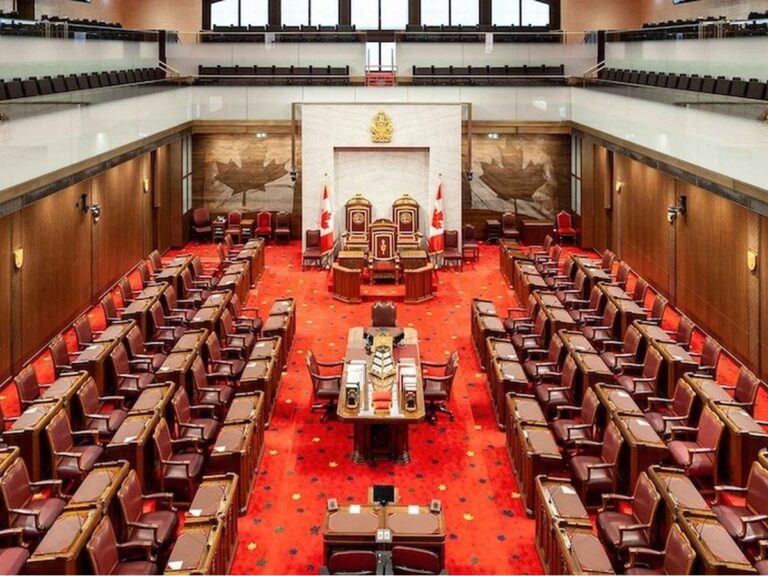
The Senate chamber sits largely out of public view, its red-carpeted halls a world removed from the constituencies and kitchen tables that define Canadian political life. Yet decisions made there shape legislation, delay bills, and carry real weight in the federal system. And in July 2026, Prime Minister Mark Carney quietly changed the rules for how its members get appointed — a move that has rekindled one of the most persistent debates in Canadian constitutional history.

A Shift in the Appointment Criteria

Carney’s changes to the Senate appointment process were substantive, if understated. His government removed the non-partisanship criterion that had defined the Independent Senators Group model championed by Justin Trudeau, replacing it with an emphasis on expertise in key Canadian strategic industries. The intent, presumably, was to make the upper chamber more useful — a body of knowledgeable voices capable of scrutinizing complex legislation on energy, technology, trade, and health.

The reform reflects a real frustration. The Senate, as it existed under the Trudeau-era model, was neither fully independent nor fully accountable. Senators appointed as nominally non-partisan often behaved in loosely ideological clusters anyway. The pretense of pure independence masked the absence of any democratic mandate. Carney’s pivot toward expertise at least acknowledges that the chamber should serve a function beyond rubber-stamping.

But the question political scientist Patrice Dutil raises — and it is a serious one — is whether expertise alone is the right answer. Canada, the argument goes, does not need a Senate of credentialed specialists. It needs a Senate that reflects the people it claims to serve.

The Democratic Deficit That Persists

This is not a new argument. Senate reform has haunted Canadian politics for decades, surfacing in constitutional negotiations, dying on the floor of the Commons, and generating royal commissions that produce reports no one reads. The Meech Lake Accord, the Charlottetown Accord, the Harper government’s incremental attempts at elected terms — all foundered on the constitutional complexity of changing an institution that touches the interests of every province, every region, and every vision of what Canada should be.

The Supreme Court’s 2014 reference on Senate reform made the terrain even clearer, and more daunting. Meaningful structural change — elected senators, fixed terms, an altered distribution of seats — requires not just a federal act of will but the consent of at least seven provinces representing fifty percent of the population. Abolition requires unanimity. The bar is deliberately high.

What Carney can do without triggering that constitutional machinery is limited but not trivial. Appointment criteria matter. The culture of the chamber shifts with the people in it. A Senate populated by industry insiders and technical experts may well produce sharper clause-by-clause analysis of legislation. But it will not resolve the deeper legitimacy problem: that senators are still appointed, still unelected, and still accountable to no one but their own conscience and the prime minister who named them.

What Representation Actually Requires

The original logic of the Senate was regional representation — a counterweight to the rep-by-pop dominance of the House of Commons, a place where the smaller provinces could find their voice. That logic has never fully worked in practice. Prince Edward Island’s four senators and Ontario’s twenty-four sit in the same chamber, but the regional balance has always been distorted by the political calculations of appointing governments. The West, historically underrepresented in federal cabinets and caucuses, has long viewed the Senate with particular skepticism — a grievance that remains alive in Alberta and Saskatchewan today.

Indigenous peoples, meanwhile, have a constitutional relationship with the federal Crown that the Senate has never adequately reflected. The ongoing work of reconciliation, treaty implementation, and the recognition of Indigenous self-governance demands institutional engagement, not merely consultation. An appointed chamber of industry experts is unlikely to fill that gap.

Quebec’s relationship to Senate reform is its own distinct thread. Sovereigntists have long argued the Senate symbolizes a federalism that serves central Canadian interests. Federalists in Quebec, including many who have defended the constitutional order vigorously, have nonetheless been skeptical of reform models that would give the upper chamber greater democratic legitimacy — fearing a more powerful Senate could constrain the National Assembly’s room to maneuver. Any reform path runs directly through that tension.

The Limits of What One Prime Minister Can Do

Carney’s government faces a structural reality that no amount of political will can fully dissolve. The tools available within the existing constitutional framework are real but narrow. Appointment criteria can be refined. The advisory board process can be strengthened or weakened. The culture of the chamber can be nudged. None of that amounts to democratic accountability.

What a serious reform agenda might look like, within those constraints, is worth spelling out clearly.

None of these steps requires reopening the Constitution. All of them would represent genuine progress beyond the current model. The question is whether the Carney government has the appetite to go further than a quiet adjustment to appointment criteria.

A Chamber That Must Earn Its Place

The Senate will not be abolished. It will not be elected anytime soon. The constitutional math makes both outcomes vanishingly unlikely in any foreseeable political environment. What remains possible is something more modest but still meaningful: an upper chamber that is more transparent, more regionally sensitive, more connected to the communities whose legislation it reviews, and less visibly a reward for the well-connected.

That is not a small thing. The Senate’s legitimacy problem is corrosive. Canadians who see it as a patronage vehicle — and polling consistently suggests many do — are less likely to trust the institutions it is part of. Democratic erosion rarely arrives as a single dramatic rupture. It accumulates, quietly, in the gap between what institutions claim to be and what people experience them as.

Mark Carney came to office with a reputation for institutional seriousness. The Senate appointment changes of July 2026 suggest he understands the chamber needs to evolve. Whether he is willing to push that evolution as far as it needs to go — past the comfort of expertise and into the harder terrain of accountability and representation — is a question his government has not yet answered. The red carpet still runs the length of that chamber. The people it serves are still waiting to recognize themselves in it.

Saskatchewan Denies Saskatoon Woman a Daycare Licence — Even as Families Struggle to Find Child Care

0

Kinza Nisar had a plan. Together with her mother, the Saskatoon resident had prepared to open a home-based daycare, ready to offer child care spaces in a city where parents routinely face long waitlists and scarce options. Then, in June, a letter arrived from the provincial government. The licence was denied. The reason given: there was not enough need for more home-based child care spaces in their area.

The decision struck many as difficult to square with the reality on the ground. Saskatoon, like most major Canadian cities, has seen persistent and well-documented shortfalls in licensed child care capacity — shortfalls that have only grown more acute as the federal-provincial child care expansion agreements have raised expectations among families hoping for affordable, accessible spaces. To be told, formally and in writing, that demand does not justify a new provider is a jarring conclusion for anyone who has spoken with parents navigating those waitlists.

Saskatchewan’s licensing framework for home-based child care gives provincial authorities the discretion to assess local need before approving new operators. That kind of regulatory gatekeeping is not inherently unreasonable — some oversight mechanism is necessary to ensure quality and safety in spaces where young children spend their days. But when that same mechanism is used to deny a licence in a context of visible, felt scarcity, it raises legitimate questions about how the province is measuring demand, and whose interests the process ultimately serves.

For Nisar and her mother, the denial is more than a bureaucratic setback. It represents a closed door on a livelihood they had prepared for, and on child care spaces that families in their neighbourhood might have filled. The gap between provincial assessment and lived experience matters here. It matters for the families left searching, and for the providers left waiting.