
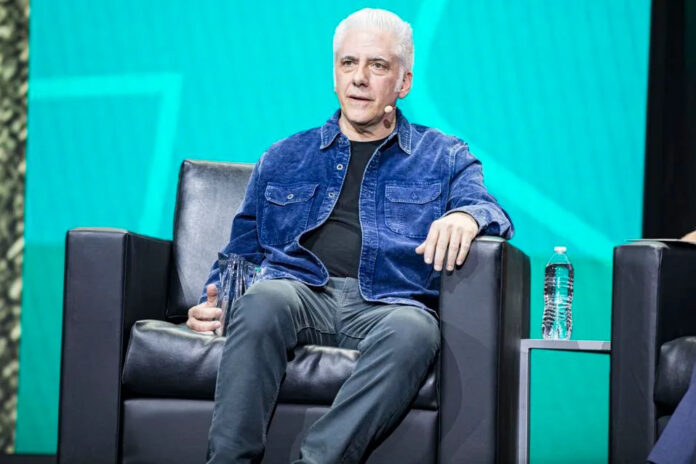
Picture an hour-long conversation between two men dissecting the harmonic tension inside a piano ballad, pausing to marvel at a suspended chord, tracing the architecture of a song the way an engineer might read a blueprint. That is what Rick Beato’s YouTube channel offers its five million subscribers — and it is, apparently, not what Paul McCartney’s publicity team had in mind.
When McCartney launched his promotional campaign for The Boys of Dungeon Lane last month, his handlers steered him toward TikTok and the breezy, banter-driven YouTube programme Chicken Shop Date. Beato, a musicologist whose deep-dive interviews with artists such as Brian May and Sting have built one of the platform’s most engaged audiences, never received a call. The omission did not go unnoticed.
A Conversation That Started Without McCartney
The absence became conspicuous in the wake of Beato’s recent sit-down with Billy Joel — a sprawling, technically rich exchange in which the two men worked through chord progressions, song structure, and the particular dissonance that gives a song like “And So It Goes” its emotional weight. The video crossed one million views in three days. Viewers flooded the comments section with a single demand: get McCartney on next.
Beato responded not with a booking announcement but with a candid explanatory video titled “Why Paul McCartney Won’t Be On My Channel.” It reached one million views faster than the Joel interview had. In it, Beato does not simply vent frustration — he maps, with some precision, the logic of a publicity apparatus that consistently routes artists away from substantive musical conversation and toward whatever currently commands the broadest cultural attention.
“My channel is actually about music,” Beato says in the video. “The people that tune in to my channel are interested in music, they’re interested in how people write songs, how people play things.” He contrasts that with what he describes as a gravitational pull toward prestige media brands and viral formats whose actual impact on sales remains genuinely difficult to measure, but whose ability to place an artist at the centre of a cultural moment is immediate and flattering.
The Metrics No One Fully Understands
Beato’s frustration points toward something larger than one missed interview opportunity. It opens onto a question that now haunts every corner of the media landscape: in an environment saturated with content, fragmented audiences, and algorithmic unpredictability, does anyone actually know what moves the needle?
Wesley Schultz, the lead singer of The Lumineers, put it plainly in a conversation a few years ago. “Nothing’s really working anymore, quote-unquote, it’s all just everybody guessing,” he said. “You still need good ideas, you need good songs, but we should get creative with how we roll things out.” That sentiment — honest, a little bewildered, and entirely reasonable — captures the mood of an industry navigating a transition it has not yet finished making.
The confusion is compounded by the fact that prestige no longer guarantees reach. A placement in a legacy outlet with a storied masthead may generate fewer views than a YouTube channel run by a former session musician from Atlanta. Beato notes, with some wryness, that the publicists who overlook his channel seem not to have registered that virtually all media — including the television appearances and podcast episodes they do arrange — ultimately ends up on YouTube anyway. “That’s where everybody watches them,” he says.
Reach Versus the Right Audience
There is a strategic question buried inside the PR calculus that deserves to be taken seriously. When a legacy artist like McCartney releases new material, the relevant audience divides into two quite different groups: the existing fanbase, cultivated over six decades of recording, and the hypothetical new listeners who might conceivably be converted. A buzzy internet programme aimed at younger demographics makes sense if the goal is acquisition — reaching people who did not grow up with Abbey Road or Band on the Run and might be persuaded to care.
But if McCartney’s existing fanbase is, by any reasonable measure, the far larger and more commercially significant group, then the logic shifts. It becomes less about acquisition and more about what political strategists call getting out the vote — energising and deepening the commitment of people already predisposed to buy the record, stream the album, purchase the concert ticket. That audience lives, in substantial numbers, on Beato’s channel. It is older, musically literate, and deeply invested in the craft behind the songs it loves.
The failure to recognise that distinction is not unique to McCartney’s team. It reflects a broader tendency to conflate visibility with relevance, and to mistake the platform with the largest theoretical reach for the one most likely to convert attention into meaningful engagement.
The Real Wall Beato Is Up Against
And yet, for all the structural media dynamics at play, there is probably a simpler and more personal explanation for Beato’s predicament. McCartney, at eighty-four, has spent six decades constructing a public persona of considerable and carefully maintained charm. His interviews follow a recognisable pattern: warm anecdotes, familiar stories, a deflection so graceful it can pass for candour. The format works because it never truly demands that he break character.
A recent appearance on NPR’s Song Exploder — a podcast built around exactly the kind of compositional interrogation Beato practises, albeit in shorter episodes — offered a telling glimpse of what happens when an interviewer pushes past the surface. When host Hrishikesh Hirway pressed McCartney to explain the creative decisions behind his song “Ripples in a Pond,” McCartney eventually responded with theatrical exasperation: “Hey, Rishi, I’ll tell you one thing. You’re making me think more about this song than I’ve ever thought about any song ever. My gosh.” It was charming. It was also a door closing.
That is the wall Beato is genuinely up against — not simply institutional snobbery about YouTube as a platform, though that exists too, but the more fundamental reality that some PR teams are doing exactly what they are paid to do: protecting a client from a format that would require him to engage on terms he has not chosen and cannot entirely control. Beato’s channel outperforms the YouTube presence of institutions like The New York Times in raw view counts, but raw view counts have not yet convinced every gatekeeper that depth of engagement matters as much as breadth of reach. Until that argument lands, the interview will remain unmade — and the conversation will continue, loudly, in the comments section.

