
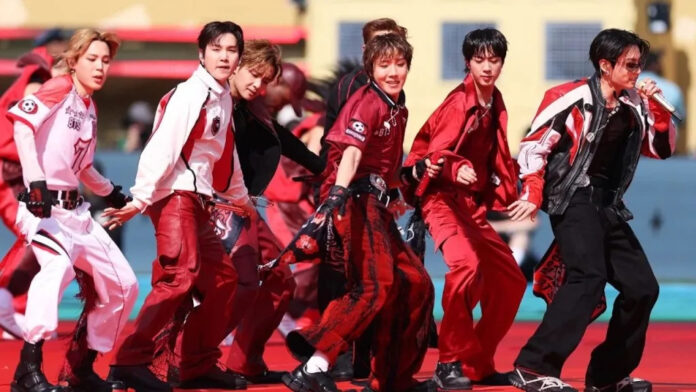
BTS Steps Back, Mason Jr. Steps Forward
Grammy Awards CEO Harvey Mason Jr. publicly defended the Recording Academy’s newly created Asian Pop category on Wednesday, after K-pop supergroup BTS announced it would not submit music for consideration at the 2027 ceremony. The statement, released on Instagram, came in direct response to the band’s decision — one that has reignited a broader debate about how major Western music institutions recognize global artists.
“I am saddened to hear that BTS has chosen not to participate in the Grammy Awards process this year, but as a music creator, I understand and respect their decision,” Mason Jr. wrote.
The Recording Academy’s Rationale
Mason Jr. framed the new category as an expansion of recognition, not a narrowing of it. The Asian Pop category, he argued, was created to “celebrate the depth, artistry coming out of Asia” — giving a dedicated spotlight to work that might otherwise compete without adequate context in broader genre fields. His core argument was direct: more categories mean more artists get recognized.
“It’s never to divide, but to expand who is recognized by our 15,000 Grammy voters,” he said.
He also moved to correct what he described as a widespread misunderstanding. Submitting to a specialized genre category — whether Asian Pop, Jazz, or Country — does not bar an artist from competing in the General Field. Record of the Year, Album of the Year, and Song of the Year remain open to any eligible submission, regardless of genre. “Recognition in a genre category and recognition in the General Field are not mutually exclusive,” Mason Jr. wrote. “An artist can absolutely pursue both.”
BTS’s Position
The seven members of BTS — Jin, Suga, J-Hope, RM, Jimin, V, and Jung Kook — announced their decision on their individual Instagram accounts roughly one month after the Asian Pop category was first unveiled. Their message was brief and pointed.
“We have decided not to submit for Grammy consideration this year,” the group wrote. “We hope our music can be heard and loved for what it is, rather than being divided by region or language. We thank Army and everyone who has always stood by us.”
The statement struck a nerve. For many fans and observers, it crystallized a longstanding tension: whether genre categories built around geography or language celebrate global music or quietly cordon it off from mainstream competition. BTS has long been one of the world’s most commercially successful acts, yet has never won a Grammy despite multiple nominations.
A Wider Conversation
The exchange between Mason Jr. and BTS points to something larger than a single awards cycle. As Asian popular music — and K-pop in particular — commands enormous global audiences, questions about institutional recognition carry real weight. The Recording Academy’s decision to create the Asian Pop category was, by its own account, an attempt to respond to that reality. Whether artists from that world see it as recognition or as segregation is, evidently, not settled.
A representative for BTS did not respond to a request for comment at the time of publication.

