
New Zealand is again confronting the legacy of the Christchurch mosque attacks after Brenton Tarrant launched an appeal to withdraw his guilty pleas. Many had hoped his 2020 admissions would spare victims a public trial and deny him a platform for extremist views. Now, his legal bid risks pulling the country back into a case it tried to close.
Why the guilty pleas mattered in the first place
Tarrant murdered 51 Muslim worshippers at two mosques in Christchurch in 2019. The case was New Zealand’s deadliest mass shooting.
When he pleaded guilty in 2020, it removed the need for a high-profile trial. Victims were spared months of testimony and the possibility that the proceedings could amplify racist ideology.
He later received a sentence of life in prison with no chance of parole, the harshest penalty available in New Zealand.
What he is asking the court to do now
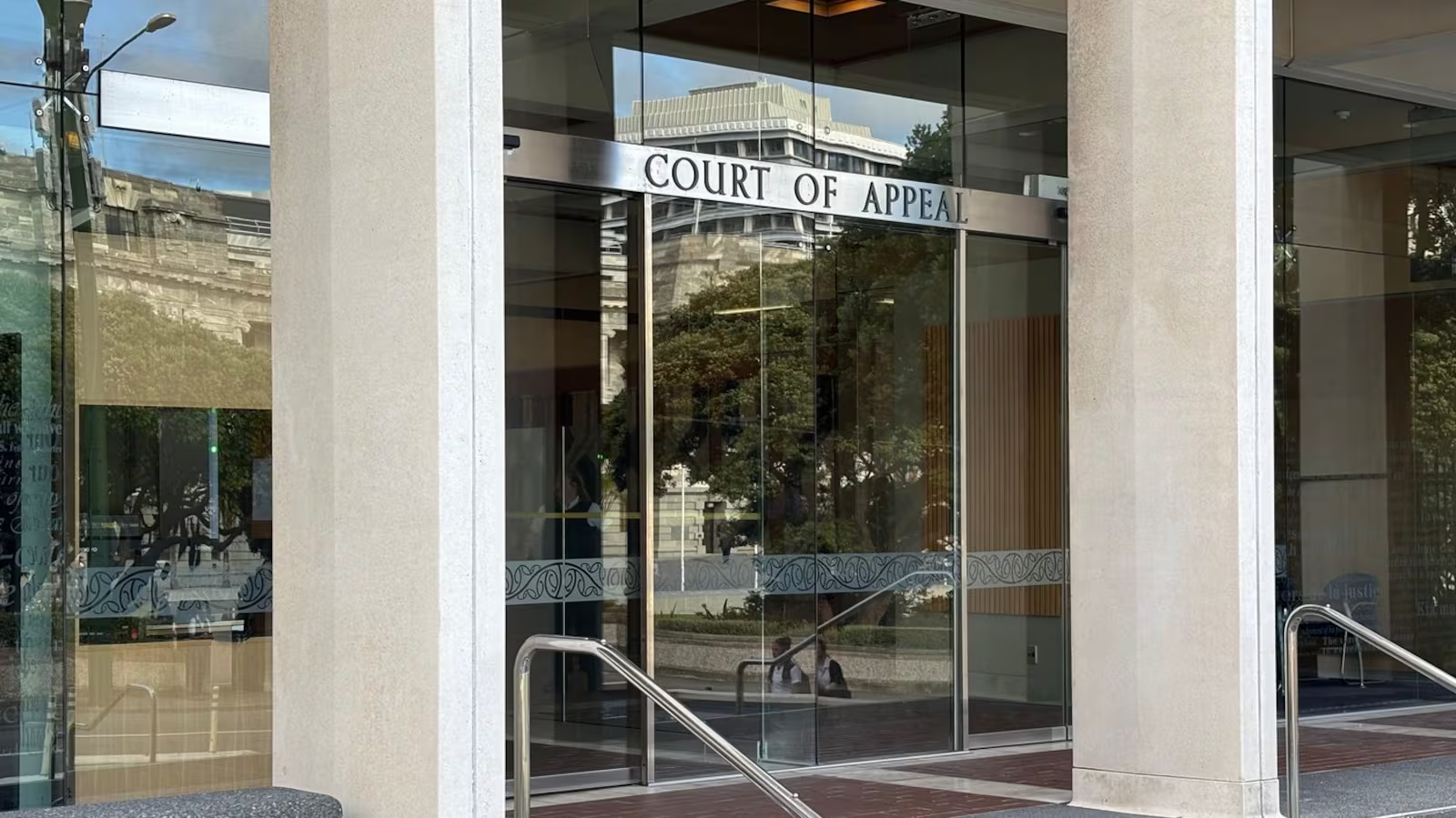
This week, the Court of Appeal in Wellington began hearing Tarrant’s challenge. He wants to recant the guilty pleas to terrorism, murder and attempted murder charges.
If the court agrees, the case could return for a full trial. That prospect is deeply unsettling for survivors and families who have worked to rebuild their lives.
The argument centered on prison conditions
Tarrant’s lawyers say he pleaded guilty during a mental collapse triggered by prison conditions. They argue he was held in unusually restrictive settings, including prolonged isolation, and that it eroded his ability to make rational decisions.
They say he felt unable to engage in the court process and that pleading guilty appeared to be a way to escape harsher restrictions.
His former lawyers, however, say the outcome was driven by the strength of the evidence and the reality that a racist “justification” defence would not be allowed under New Zealand law.
Evidence gaps and a disputed mental health claim
The appeal hinges on whether Tarrant was fit to enter guilty pleas at the time. His lawyers say he concealed symptoms of severe mental illness.
But his claims, as presented in court, are not backed by independent mental health evidence from experts, prison staff, or his former legal team, according to the details raised during the hearing.
Crown lawyers are expected to argue that he had opportunities to raise concerns, seek help, or request delays rather than abandoning a trial.
Survivors fear a new stage for notoriety
New Zealand moved quickly after the 2019 attacks to limit the spread of material linked to the killings, including banning a manifesto and footage that was shared online.
That history hangs over the appeal. Survivors have warned that renewed proceedings could hand Tarrant attention he sought from the start.
Outside court, some victims have rejected arguments that he deserves sympathy for the conditions of his imprisonment. For them, the priority remains accountability and the protection of communities targeted by hate.
What comes next for the appeal and the sentence
The three-judge panel is expected to deliver a decision at a later date. If the bid to withdraw the pleas fails, a separate hearing is expected to address Tarrant’s attempt to appeal his sentence.
For many New Zealanders, the case is not just a legal fight. It is a reminder that the harm of mass violence persists long after the headlines fade, and that the justice process can reopen wounds even years later.

