
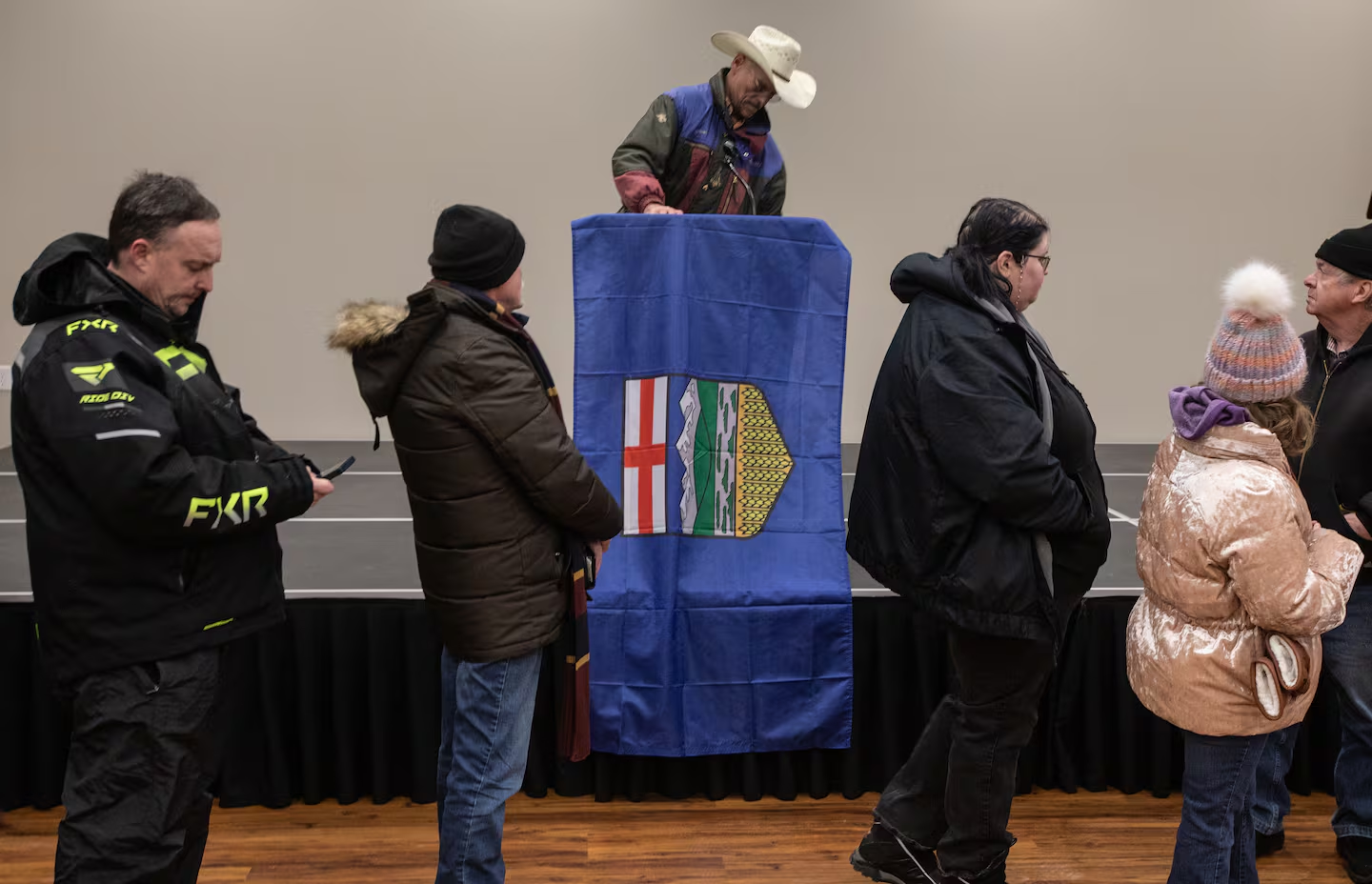
Separatists in Alberta are intensifying a petition drive that could trigger a provincial referendum on leaving Canada. Organizers say they aim to meet the legal threshold by May 2, in a campaign that adds political pressure on Ottawa as it faces U.S. tariffs and annexation talk.
How many signatures are needed
Volunteer canvassers say they are targeting about 177,000 signatures. That figure represents 10% of Alberta’s registered voters, the threshold required to launch a citizen-led referendum on separation.
If the petition succeeds, a vote could be held as early as October.
A movement fueled by long-running grievances
Alberta produces most of Canada’s oil and gas. For years, some residents have argued that federal policies have held back the sector and, by extension, the province’s economy.
Many critics point to environmental regulations they believe reduce profitability and limit expansion. That frustration has helped keep separatist sentiment alive, even when it falls short of a majority.
On the ground in High River
In High River, a town near the Rocky Mountains, residents have been stopping by a strip mall petition site to sign. Some expressed admiration for U.S. President Donald Trump, but most said statehood is not their goal.
Instead, they say they want Alberta to become its own country.
Separatists confirm talks in Washington
Jeff Rath, a spokesman for the Alberta Prosperity Project, said the movement is gaining momentum. He confirmed that he and other activists met with U.S. State Department officials in Washington in January.
Rath said he raised the idea of a new oil pipeline from Alberta into the United States. He also said their focus is independence, not joining the U.S.
A White House official said U.S. officials meet regularly with civil society groups and did not convey support or commitments. A State Department official confirmed staff-level meetings but said there would be no future meetings.
Prime Minister Mark Carney has said he expects the U.S. to respect Canadian sovereignty.
What the polls say in Alberta
Recent polling suggests most Albertans still want to remain in Canada. In a Leger poll conducted this month, 71% of respondents said they opposed independence.
However, support for Alberta becoming an independent country was close to one in five. That level, while not dominant, is enough to keep the issue politically disruptive.
Danielle Smith’s changes and the backlash
Premier Danielle Smith’s government changed provincial rules last year to make it easier to trigger a referendum. Among the changes was cutting the required number of signatures in half.
Smith told Reuters she supports a strong and sovereign Alberta within a united Canada. She said citizen-initiated referenda allow voters to express views that differ from the government’s position. She also said she has been working with Carney to ease federal-provincial tensions.
Critics say the reforms tilt the playing field toward separatists. Duane Bratt, a political science professor at Mount Royal University, called the situation “bonkers” and argued that Smith has repeatedly made it easier for a separatist vote to happen.
Why separation would be hard to deliver
Even if a referendum were held, the path to independence would be complex. Legal and political hurdles include the absence of a clear, fixed threshold that would automatically compel federal secession talks.
The broader national context could also matter. Academics note that separatist dynamics in Quebec may influence the political climate, especially with a Quebec election expected in October and renewed talk of a future referendum.
Ottawa tries to reset relations
Carney has sought to blunt separatist momentum by offering concessions to Alberta. That includes an agreement signed with Smith in November aimed at easing certain climate rules and encouraging a new oil pipeline to the West Coast.
Ottawa has also emphasized Alberta’s role in the federation. Dominic LeBlanc’s office said the province is an “essential partner” and that the federal government wants to renew the relationship based on common objectives and respect.
The petition campaign now tests how far separatist energy can go beyond protest. It also forces both provincial and federal leaders to confront a familiar question in Alberta politics: how much autonomy is enough, and who gets to decide

