
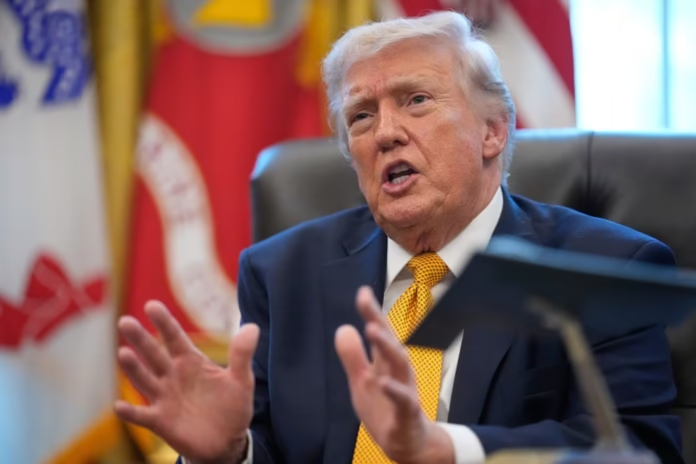
ISTANBUL, Turkiye — U.S. President Donald Trump is facing resistance from key allies after urging NATO partners and other countries to help “reopen” the Strait of Hormuz, with several governments saying they do not plan to join any military effort linked to the war involving the United States, Israel and Iran.
The strait, a strategic shipping lane between the Persian Gulf and the Gulf of Oman, is typically used for the transit of roughly a fifth of global oil and significant volumes of liquefied natural gas. Shipping disruptions and heightened security risks have pushed up energy prices and raised fears of broader economic fallout.
Strait of Hormuz help request rebuffed by Canada and others
Canada’s Defence Minister David McGuinty said on March 16 that Ottawa does not intend to take part in the conflict.
“Canada is not involved in the prosecution of this war and Canada has no intention of being involved with the prosecution of this war,” McGuinty said when asked about Trump’s request.
Germany’s Defence Minister Boris Pistorius also ruled out participation, saying, “This is not our war, we have not started it,” and questioned what European frigates could add in the waterway that the U.S. Navy could not already do.
Italy, Spain, Japan and Australia have also signaled they do not plan to take part in any operation to force open shipping lanes, citing the risk of escalation and the lack of a clear mandate.
Iran says the strait is “open” for countries not involved
Iran has rejected the claim that the strait is closed in general terms, while warning that access depends on whether a country is considered an enemy in the conflict.
Foreign Minister Abbas Araqchi said Iran views the passage as open, adding that it is “only closed” to Iran’s enemies and those allied with them. He said countries not party to the war have been able to transit with coordination and permission from Iran’s armed forces.
Britain and EU weigh options while stressing de-escalation
The United Kingdom has said it does not want to be drawn into a broader war, while leaving open the possibility of non-combat support. Prime Minister Keir Starmer said Britain was working with allies on plans to safeguard freedom of navigation but reiterated that London would not join a wider conflict.
Within the European Union, officials have discussed whether to adjust the mandate of the bloc’s existing naval mission in the region, while also exploring diplomatic channels to reduce risks to commercial shipping.
Trump links cooperation to NATO’s future
Trump has sought to increase pressure on allies by framing the issue as a test of alliance solidarity. In a weekend interview with the Financial Times, he warned NATO faced a “very bad” future if member states did not help keep the strait open.
On March 16, Trump said the United States did not need others because it was “the strongest nation in the world,” while also suggesting his outreach was, in some cases, intended to gauge who Washington could rely on.
The dispute over support for operations near the Strait of Hormuz comes as governments balance the economic stakes of disrupted energy flows against the political and military risks of expanding involvement in a widening regional conflict.

