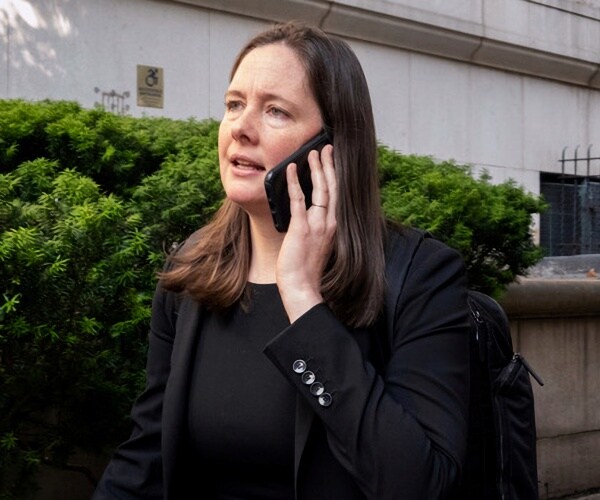
There is something almost theatrical about the case of Maurene Comey, and yet the legal questions at its core could not be more serious. A federal judge in New York ruled Monday that the Justice Department unlawfully terminated her position as an Assistant U.S. Attorney in the Southern District of New York, a decision that strikes at the heart of how far a president’s power over the federal civil service actually extends.
Comey had spent roughly a decade in one of the most demanding prosecutorial offices in the country. She built her career on high-profile, difficult cases: the prosecution of Sean “Diddy” Combs, the investigations surrounding Jeffrey Epstein and Ghislaine Maxwell. Then, in July 2025, she was abruptly let go. The only explanation her supervisor offered, she later testified, was that the order “came from Washington.”
That phrase, spare and bureaucratic, became the seed of a federal lawsuit filed on September 15, 2025. Comey argued she had been fired because of her father, former FBI Director James Comey, whom President Donald Trump dismissed during his first term and who subsequently became one of the administration’s most vocal critics. She also argued she was targeted for her perceived political beliefs. The Trump administration has since brought federal charges against James Comey himself, a fact that hangs over the entire proceeding.
District Judge Jesse Furman’s response was thorough and unsparing. His 55-page decision found that Comey’s removal violated the constitutional separation of powers, the Administrative Procedure Act, federal civil service law, and her due process rights. He specifically rejected what he characterized as the Trump administration’s “sweeping and unprecedented theory of executive authority,” writing that accepting the government’s arguments would unsettle the very equilibrium of the constitutional system. That is not a minor observation. It is a direct challenge to the legal theory the administration has been advancing across dozens of similar dismissals.
Attorney General Pam Bondi, Furman found, did not follow the law when she ordered Comey’s termination. The judge noted that Comey had received excellent performance reviews throughout her tenure. There was no documented cause. There was no process. There was only the instruction from Washington.
Furman granted Maurene Comey retroactive reinstatement and back pay covering the period from her July 2025 termination until December of that year, when she accepted a position in the private sector and effectively resigned. The practical effect is limited, but the legal significance is substantial. The ruling affirms that civil service protections are not merely administrative courtesies but enforceable constitutional constraints on executive power.
The judge stopped short of ruling on Comey’s First Amendment claim, that she was fired for constitutionally protected speech, and indicated he would hear further briefings before deciding that question. That argument, if it succeeds, would add another layer to an already consequential decision.
The Department of Justice announced it would appeal the ruling. Its position throughout the case was that the attorney general holds broad authority to dismiss federal prosecutors without cause, an argument Furman flatly rejected. The appeal will now test whether higher courts are willing to place meaningful limits on that claimed authority.
Comey’s case is not an isolated one. It is part of a pattern. The second Trump administration has dismissed scores of federal prosecutors, with particular attention paid to those who worked on investigations related to Trump or to the January 6, 2021, attack on the U.S. Capitol. Several of those former employees have filed their own lawsuits, and Furman’s ruling will almost certainly be cited as courts across the country work through the same constitutional questions.
Comey’s lawyers described Monday’s decision as a reaffirmation that the president must operate within the law, that checks and balances are not suggestions. That framing is correct as far as it goes. But the more precise point is this: the ruling forces a reckoning with what kind of civil service the United States wants to maintain. A prosecutorial corps that can be dismissed at will, for unstated reasons traceable to political relationships or perceived loyalties, is not an independent one. And an independent one, as Furman’s decision makes clear, is what the Constitution requires.

