
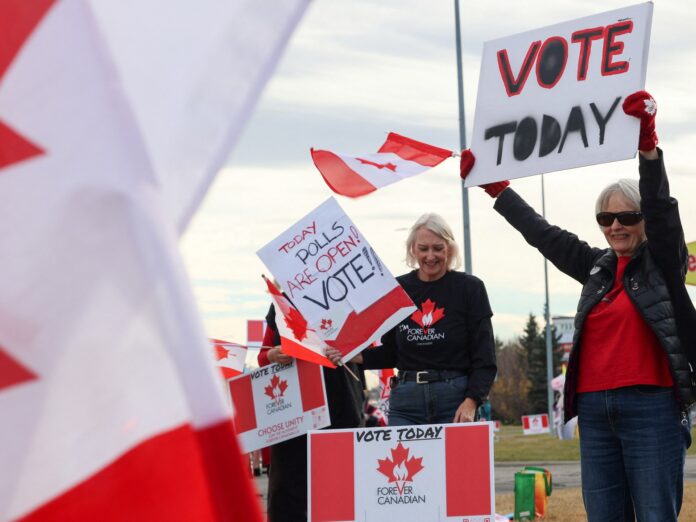
Alberta has spoken, and the answer is an unambiguous no to separation. In the province’s first-ever referendum on secession, roughly 76 percent of voters chose to remain part of Canada, with approximately 1.8 million ballots counted as of Tuesday. The result is more than a provincial verdict — it is a significant affirmation that Canadian federalism, even when strained, retains a deep hold on the electorate. The margin was not close. It was decisive.
A Referendum That Revealed the Limits of Western Alienation
The vote was not a direct declaration of independence but rather a threshold question: should Alberta begin a formal process that could ultimately lead to separation? A majority said no, and said it loudly. Premier Danielle Smith, a conservative who has spent years channelling the province’s frustration with Ottawa, called the referendum to resolve what she described as a divisive question within her own political base. She voted against independence herself, and has stated publicly that a federalist victory would effectively close the secession file. Monday’s result obliges her to honour that commitment.
The secessionist movement drew its energy from a genuine and long-standing grievance: the sense that Alberta’s oil wealth has been mismanaged, constrained, and politically weaponized by federal governments — particularly the Trudeau government — in the name of climate policy. That anger is real and should not be dismissed as mere populist noise. Alberta holds the world’s fourth-largest proven oil reserves, and the economic stakes of federal energy policy are existential for many communities in the province. What the referendum revealed, however, is that even voters who share those frustrations do not believe separation is the answer.
Jeffrey Rath, a leading figure in the Alberta Prosperity Project, told reporters after the result that the push for an independent Alberta would “absolutely” continue. That is his democratic right, and the movement will not vanish overnight. But the scale of Monday’s rejection — three-quarters of participating voters — makes it difficult to argue that separatism commands anything close to majority support in Alberta. The lesson from this vote is not that western alienation has been solved, but that it has not yet translated into a genuine desire to leave Confederation.
Carney’s Federalist Project Gets a Boost — and a Challenge
For Prime Minister Mark Carney, the result is a meaningful political victory at a moment when he needs one. Governing through an active trade dispute with the United States, Carney has worked deliberately to rebuild the relationship between Ottawa and Alberta since taking office. He grew up in the province, and that biographical connection has given him a credibility with Albertans that his predecessor Justin Trudeau never managed to establish. His partnership with Premier Smith on a new pipeline to carry Alberta bitumen to overseas markets — a project that went nowhere under Trudeau — represents a substantive shift in the federal approach to the energy file, not merely a rhetorical one.
Carney welcomed the referendum result in a statement on X, saying Albertans had made a “clear choice” and that “they chose unity, to build together, and to take care of each other.” The language is carefully calibrated: it acknowledges the province’s agency rather than treating the result as a passive endorsement of the status quo. That framing matters, because the work of federalism is never simply maintaining what exists — it requires active, ongoing negotiation between a central government and the regions it serves.
It is worth noting the external dimension of this referendum campaign. Donald Trump’s allies — including Treasury Secretary Scott Bessent, who called Alberta Washington’s “natural partner” — showed conspicuous interest in Alberta’s independence push. Elon Musk, the world’s wealthiest individual and a prominent Trump supporter, posted on X that Alberta “should separate.” That kind of foreign interference, however informal, in a Canadian constitutional question deserves scrutiny. Albertans, to their credit, appear to have made up their own minds rather than taking their cues from Washington.
What Comes Next for Alberta and the Federation
The referendum result does not dissolve the underlying tensions between Alberta and the federal government. The province’s frustrations with equalization, pipeline approvals, and energy regulation predate Trudeau and will outlast the current moment of relative goodwill between Smith and Carney. A durable federalism requires more than a shared pipeline project — it requires a structural relationship in which Alberta’s economic interests are taken seriously at the national level, and in which the federal government resists the temptation to treat the energy transition as a zero-sum contest between environmental ambition and western livelihoods.
Monday’s vote demonstrated that Albertans, given a direct choice, prefer to fight those battles from inside Confederation rather than outside it. That preference is a resource for federalists across the country, and it should be treated as such — not as a blank cheque, but as a mandate to govern with genuine attention to regional equity. The federation held. The harder work of making it function fairly, for every province and every region, continues.

