
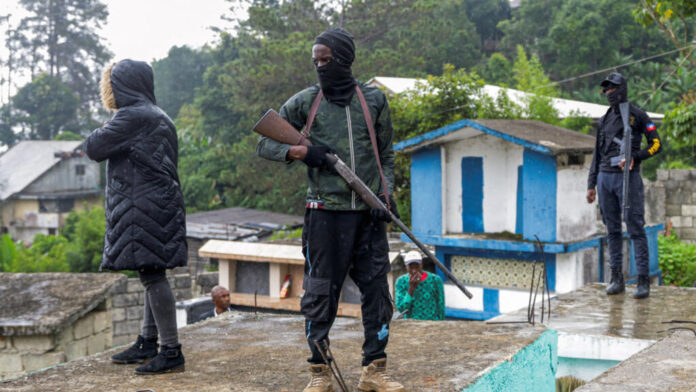
Haiti’s Provisional Electoral Council announced Tuesday that presidential and legislative elections, previously scheduled for December 13 and February 21, 2027, have been postponed indefinitely, as pervasive gang violence continues to prevent voter registration and the delivery of electoral materials across the country.
The council’s statement offered no new election date, saying only that a revised timetable “will be made public as soon as possible” and that the schedule would be updated to reflect the “technical and operational requirements of the process, as well as the conditions necessary for the proper conduct of the various stages.” A council member, speaking to AFP on the condition of anonymity, confirmed plainly that “the December 13 date no longer stands,” while stressing that work on a new timetable was underway. Voter registration, the council added, would continue in the interim.
The postponement is a significant setback for a country that has not held elections since 2016 and has been governed without a democratically elected president since the assassination of Jovenel Moïse in 2021. As of Tuesday, only 769,000 voters had been registered since the process began on July 20 — a figure that reflects the scale of the logistical and security obstacles facing organizers. Several municipalities remain under gang control and have no registration centres, while road closures imposed by armed groups have blocked the delivery of electoral materials to multiple regions of the island nation.
The human cost of Haiti’s security crisis is staggering. UN human rights chief Volker Türk reported last week that gang violence had left at least 5,700 people dead or wounded so far this year, with more than 1,000 women and girls raped and at least 230 kidnappings recorded — figures compiled by the UN mission in Haiti up to September 11. Türk cautioned that “the real figures are likely much higher.” Of Haiti’s approximately 11 million inhabitants, nearly 1.5 million have been internally displaced by violence, according to the International Organization for Migration, which noted that attacks were not confined to Port-au-Prince but spread across the country.
On the streets of the capital, the announcement surprised few. “I didn’t have high hopes about going to vote this year,” said Davidson Jean Baptiste, a taxi driver in Port-au-Prince. “Who can claim to hold elections in a country where the citizens are more concerned about insecurity and the abuses by armed groups?” Yet others expressed a deep longing for democratic participation. “The people have been long kept out of the political debate,” said Claudette Piard, speaking at a voter registration centre in the Delmas neighbourhood. “We finally want to vote for a government that will bring solutions to the masses.”
The international community has framed elections as essential to stabilizing Haiti’s fractured governance. A UN-backed Gang Suppression Force, intended to reach 5,500 personnel, is being gradually deployed to support an overwhelmed national police force, though it currently numbers only around 1,500. The force replaced the Kenya-led Multinational Security Support mission, which was widely regarded as under-equipped and underfunded. The UN Security Council approved a six-month extension of the Gang Suppression Force’s mandate late last month, with the authorizing resolution explicitly emphasizing “the importance of ensuring security conditions conducive to holding free and fair elections.” Whether those conditions can be achieved — and when — remains deeply uncertain.

