
A City on Edge Before the Parade
Toronto’s Caribbean Carnival returns this weekend under a heavier security footprint. The Toronto Police Service has announced it will deploy additional officers along the parade route on Lakeshore Boulevard — a direct response to the deadly violence that struck another summer festival just weeks ago.
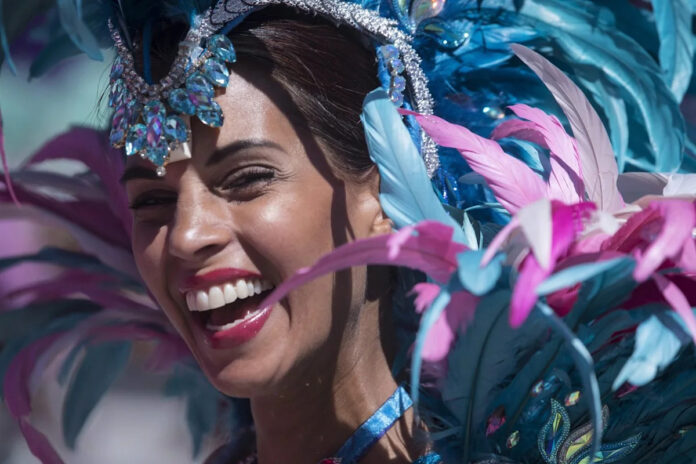
The parade, which kicks off Saturday morning and draws masqueraders, live music, and tens of thousands of spectators, is considered the centrepiece of the largest Caribbean festival in North America. This year, it arrives in a city still processing the shock of the July 11 shooting at the Salsa on St. Clair festival, which left two men dead, injured several others, and sent thousands fleeing in panic. The second day of that event was cancelled outright.
Police say public safety at large outdoor gatherings is their foremost concern this summer — and that events like Caribbean Carnival are not incidental to Toronto’s character, but central to it.
What the Enhanced Deployment Looks Like
Beyond a visible increase in uniformed officers along the parade corridor, the force is extending its presence into nearby restaurants and bars. Drone surveillance will also be used to monitor crowd conditions from above, giving commanders a broader operational picture in real time.
The layered approach reflects a broader reckoning with how Toronto — and Canadian cities more generally — manage the intersection of public celebration and public safety. Large festivals concentrate tens of thousands of people in open spaces, creating both the conditions for community and the conditions that complicate rapid police response.
No specific threat has been identified against Caribbean Carnival. The heightened deployment is precautionary, shaped by the proximity of the Salsa on St. Clair tragedy and the understandable anxiety it has generated among organizers, attendees, and city officials alike.
Caribbean Carnival’s Place in the City
Caribbean Carnival has roots stretching back decades in Toronto, drawing its traditions from the carnivals of Trinidad and Tobago and the broader Caribbean diaspora. It represents one of the most significant expressions of Afro-Caribbean culture in Canada, and its parade is a defining moment in the city’s summer calendar.
The festival carries real cultural weight for Toronto’s Caribbean communities — communities that have long contributed to the social, economic, and artistic fabric of the city. Framing additional security purely as a burden on the event misses the point; many participants and organizers have themselves called for greater safety measures in the wake of recent violence at public gatherings.
Afrofest Cancellation Adds to Cultural Community’s Concerns
The security situation at Caribbean Carnival is not the only difficult story facing Toronto’s cultural festival landscape this summer. On Friday, Toronto police confirmed they played no role in the decision to cancel Afrofest, the annual African music festival that has long called Woodbine Park home.
Organizers and the city were unable to agree on an alternative venue after a permit for Woodbine Park could not be secured, citing capacity issues. The cancellation leaves a gap in a summer season that already feels diminished by the Salsa on St. Clair shooting, and it raises broader questions about how the city supports — or fails to support — festivals rooted in Black and racialized communities.
These are not abstract policy questions. When beloved cultural events disappear or operate under duress, the communities they serve bear the cost most directly. Toronto’s obligation to these festivals goes beyond issuing permits; it includes the sustained institutional support that allows them to survive logistical and safety challenges year after year.
Looking Ahead
Saturday’s parade will be a test of whether enhanced policing can coexist with the joyful, open atmosphere that makes Caribbean Carnival what it is. The goal, as police have framed it, is presence without intrusion — enough visibility to deter violence, without transforming a celebration into something that feels like a security operation.
Whether that balance holds will matter not just for this weekend, but for how Toronto approaches the future of its outdoor festival culture — a culture that is, at its best, one of the things that makes this city genuinely worth celebrating.

