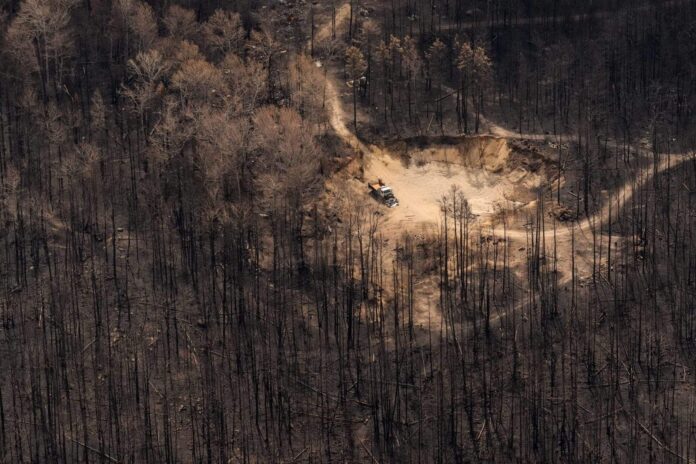
The Ontario government is describing the province’s wildfire situation as moving in a “reassuring direction,” with 80 fires extinguished over the past two weeks — a development officials attribute to cooler temperatures and timely precipitation. But the relief is fragile. As of Thursday, 159 fires continue to burn across northern Ontario, 30 of them classified as out of control, and a fresh heat warning covering large parts of the northwest threatens to reverse recent gains. Environment Canada is forecasting daytime highs of 28 to 30 degrees Celsius northwest of Thunder Bay, with humidex values climbing to 38, and a severe thunderstorm warning adds further unpredictability to an already volatile situation.
Fourteen communities have been evacuated across northern Ontario, according to Emergency Preparedness and Response Minister Jill Dunlop, and while five have since been cleared to return, approximately 2,000 people remain displaced and sheltering in host communities elsewhere in the province. The human cost of this fire season has been significant. Personnel and aircraft from Alberta, Newfoundland, New Brunswick, Yukon and Prince Edward Island have all been deployed to assist provincial crews, alongside federal teams and crews from Mexico — a scale of mutual aid that underscores just how stretched Ontario’s own resources have been.
First Nations Communities Say They Were Left Behind
The government’s cautiously optimistic framing has met sharp resistance from First Nations leaders, who held a press conference at Queen’s Park on Thursday to demand a public inquiry into the province’s wildfire response. Their core allegation is serious: that some communities were essentially left to fend for themselves during the crisis, without timely assistance from the province. Leaders said they have been unable to get meaningful answers from Premier Doug Ford, Natural Resources Minister Mike Harris, Emergency Preparedness Minister Jill Dunlop, or Indigenous Affairs Minister Greg Rickford — a list that covers the full span of ministers with direct responsibility for the emergency.
Premier Ford flatly rejected the criticism last week. When asked about the allegations, he said, “I totally disagree with that,” pointing to the province’s role in relocating roughly 2,000 people from affected First Nations communities and providing hotel accommodations, food and other support. Minister Harris acknowledged that improvements are always possible, but stopped well short of committing to a public inquiry, saying the government prefers to conduct its own internal review. “We do a very deep dive internally, and I think there’ll be lots of recommendations that will come forward,” he said, adding that the government would “see what makes sense to talk about” once those recommendations emerge — a formulation that offers communities little in the way of transparency or timeline.
When pressed directly on whether he would commit to a public inquiry, Harris deflected to the ongoing emergency. “Right now we’re very focused on direct suppression efforts and making sure that people and property are safe here in the province,” he said. He described the fire season as something “like we’ve never seen before,” and suggested the government would conduct its standard post-season review, as it does every year. That answer is unlikely to satisfy First Nations leaders who argue that an internal government review cannot credibly assess the government’s own failures — particularly when the communities most affected by those failures have Indigenous governance structures with distinct and constitutionally recognized rights that carry specific obligations for the Crown.
Indigenous Affairs Minister Greg Rickford, speaking from Kenora, offered a reminder that the situation remains unpredictable even where conditions look calm. “I’m sitting here in Kenora right now. We don’t have any smoke but by this afternoon a southeast wind could easily move into our community on a dime and put us under certain kinds of pressures,” he said. That kind of volatility — geographic, meteorological and political — defines this fire season. The fires may be calming, but the questions about how Ontario responded to its most vulnerable communities are only beginning to intensify.

