Scottish Labour has been without a permanent leader since Anas Sarwar confirmed last Wednesday that he was stepping down to become Minister of State for Trade in Prime Minister Andy Burnham’s government. Sarwar, who had led the party since 2021, said he would work with his successor to continue serving people in Scotland. His departure came in the wake of a bruising May Scottish Parliament election, in which Labour won just 17 seats out of 129 — a record low for the party.
Sarwar acknowledged his share of responsibility for that result, saying he was “disappointed and sorry” for the party’s poor showing. His exit was not without controversy: King Charles confirmed Sarwar would receive a peerage to enter the House of Lords, a prospect that drew sharp criticism from opposition politicians who called it “hypocritical,” pointing to Sarwar’s own past calls to abolish the upper chamber. Sarwar did not directly address the contradiction, saying only that it had been “an honour” to serve Glasgow and Scotland.
Within days, the contest to succeed him began to take shape. Michael Marra, Scottish Labour’s finance spokesperson, was among the first to declare his candidacy. Monica Lennon, an incoming Glasgow MSP, followed him into the race shortly after. Together, they set the early terms of a contest that would soon grow more crowded.
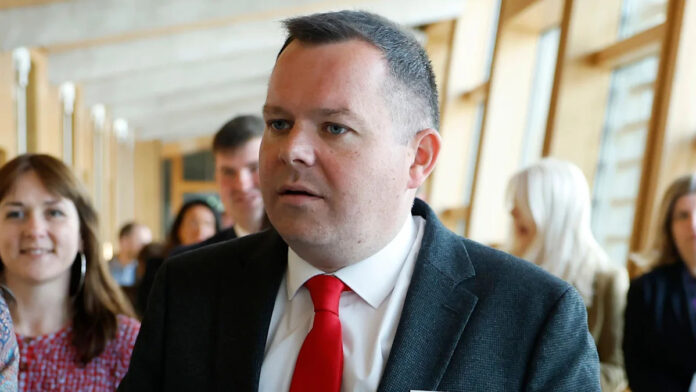
By the end of the week, Joe Fagan — the party’s public finance and local government spokesperson and MSP for South Scotland — had entered the race as the third declared candidate. Fagan brought a distinct record to his pitch: he had led South Lanarkshire Council for four years beginning in 2022, stepping down only after winning his Holyrood seat in May. During that time, he oversaw initiatives including free swimming for children under 16 and improved pay deals for the home care workforce.
In setting out his case, Fagan pointed to Burnham’s recent by-election victory in Makerfield as evidence that Labour could rebuild trust when it remained grounded in communities. “Scottish Labour needs to learn lessons from where we have won, not just where we have lost,” he said, adding that the party needed to “stop sounding like a party talking to itself and start proving that we are on their side.”
The Scottish Executive Committee, the party’s ruling body, has set a clear timetable for the contest. Nominations will formally open on Monday, 3 August, and remain open for two weeks. A membership and supporter ballot will run from 28 August until 17 September, with the new leader expected to be in place in time for the party’s conference on 19 September.
The race now moves into its formal phase with three candidates declared, a compressed timeline, and a party that must reckon seriously with its weakest Holyrood result on record.

