
How Paris Tamed Its Traffic — and What Toronto Could Learn From It
Paris has transformed itself from a gridlocked metropolis into a model of urban mobility — and transit advocates say Ontario Premier Doug Ford should be paying close attention. While the French capital has spent decades investing in public transit, cycling infrastructure, and green space, Toronto continues to wrestle with some of the worst traffic congestion in North America.
A Transit System Built for the Future
The Paris public transportation network now covers virtually every corner of the city and its suburbs, with electronic arrival displays at nearly every stop and dedicated bus lanes on major streets. The system has become the primary reason traffic gridlock — once a defining feature of the city — has dramatically improved.
In June 2025, Paris opened the latest section of its Grand Paris Express, a new metro line connecting central Paris and major train stations to Orly Airport, 14 kilometres to the south, with stops at eight suburban communities along the way. The line carries an estimated 95,000 passengers per day, with trains departing every 85 seconds during rush hour and completing the full journey in 25 minutes. When complete, the Grand Paris Express will span 200 kilometres — built beneath one of the world’s most densely populated cities.
Cycling Infrastructure and Green Space
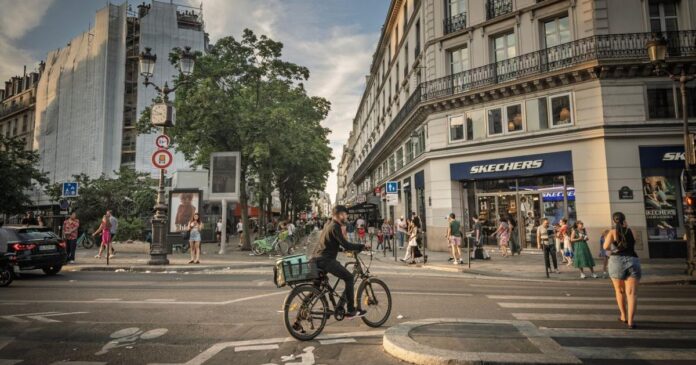
Paris has also built out an extensive cycling network, with most bike lanes physically separated from traffic by concrete dividers — even on busy inner-city streets. During morning and evening rush hours, those lanes are crowded with commuters, taking further pressure off the road network.
The city has simultaneously expanded its green space, pedestrianizing several streets and a long stretch of former highway along the Seine River, lining them with trees and vegetation. Over the past two decades, air pollution in Paris has reportedly been cut in half.
Toronto Moving in the Opposite Direction
By contrast, Toronto faces entrenched gridlock on its highways and downtown streets, limited public access to Lake Ontario, a shortage of green space, and ongoing air quality concerns. Critics argue the city is moving backward at a time when peer cities are accelerating their transitions to sustainable urban mobility.
Transit advocates say the evidence from cities like Paris is clear: the answer to gridlock is not more highways or tunnels, which tend to induce additional driving. The solution, they argue, is sustained investment in fast, reliable, and accessible public transit — both within the city and across the suburbs — alongside safe, separated cycling infrastructure.
A Different Set of Priorities
Ford’s government has prioritized highway expansion, including a controversial proposal to build a new 400-series highway through the Greenbelt. Opponents say that approach runs counter to the lessons being demonstrated in cities like Paris, where long-term investment in alternatives to the car has delivered measurable results.
The debate over Toronto’s urban future — and who gets to shape it — is unlikely to be resolved soon. But for those watching what is possible elsewhere, the contrast with Paris is difficult to ignore.

