
Canadian Conservation Network Earns Global Recognition
The Yellowstone to Yukon Conservation Initiative (Y2Y), a Canadian-led large-landscape conservation organization, was named Friday as one of fifteen global finalists for the 2026 Earthshot Prize, the world’s most prestigious environmental award. Founded by Prince William in 2020, the prize recognizes innovative solutions to the planet’s most pressing environmental challenges, and Y2Y marks the first Canadian-based organization ever to receive a nomination in the award’s history — a distinction that reflects the scale and ambition of what the initiative has built over more than three decades. The announcement places Y2Y in the “Protect and Restore Nature” category, competing alongside fourteen other finalists drawn from thousands of submissions worldwide. Winners will be announced at a ceremony in Mumbai, India, in November, attended by finalists and Prince William himself.
A Corridor Spanning 3,400 Kilometres
Y2Y was established in 1993 with a clear and ecologically urgent mission: to maintain and restore a continuous natural corridor running along the spine of the Rocky Mountain range, from Yellowstone National Park in Wyoming northward to Canada’s Yukon Territory. The corridor stretches approximately 3,400 kilometres across the United States and Canada, providing connected habitat through which wildlife can migrate, adapt to shifting climates, and sustain viable populations over the long term. The species that depend on this connectivity include grizzly bears, wolves, caribou, and wolverines — animals whose survival requires ranges far larger than any single protected area can accommodate. Without such a corridor, fragmented habitat leaves populations isolated and increasingly vulnerable to both human pressures and the accelerating effects of climate change.
A Collaborative Undertaking at Unprecedented Scale
What distinguishes Y2Y from many conservation efforts is the breadth and depth of its partnerships, which now number more than 800 and include Indigenous nations, federal and provincial governments, scientists, local communities, and private landowners. The involvement of Indigenous nations is particularly significant, given that Indigenous sovereignty and land stewardship remain live constitutional and practical questions across much of the corridor’s Canadian extent. The initiative’s model treats these relationships not as peripheral but as foundational — an acknowledgement that durable conservation at this scale cannot be achieved without the peoples who have held relationships with these landscapes for millennia. This collaborative architecture, assembled over thirty years, is precisely what the Earthshot Prize nomination recognizes.
What the Prize Means in Practice
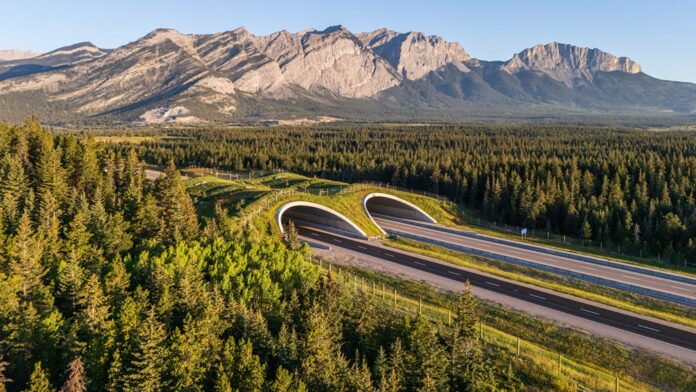
The Earthshot Prize received more than 7,000 submissions from across the globe for its 2026 cycle, making Y2Y’s selection as one of fifteen finalists a meaningful signal of international regard for the initiative’s approach. Each of the five category winners receives a $1.8 million grant to continue and scale their work, with an explicit horizon of repairing planetary systems by 2030. For Y2Y, such funding could meaningfully accelerate on-the-ground conservation measures — land acquisitions, wildlife crossing infrastructure, and stewardship programs — that require sustained capital over time. The prize also carries considerable convening power, offering finalists a platform to attract additional partners and resources beyond the grant itself.
Jodi Hilty, president and chief scientist of Y2Y, framed the nomination as both a validation and an opportunity in a statement released Friday. “For more than 30 years, Y2Y has had the privilege to work with so many people and groups passionate about nature who have shown what’s possible in landscape connectivity when people work together at the scale wildlife truly need,” she said. “This nomination is an opportunity to accelerate conservation impacts that build on decades-long work of this collaborative effort. Our collective accomplishments to date demonstrate our approach is working.” The measured confidence of that statement reflects an organization that has earned its standing through incremental, partnership-driven progress rather than grand proclamations — and that now finds itself, for the first time, on the world’s largest environmental stage.

