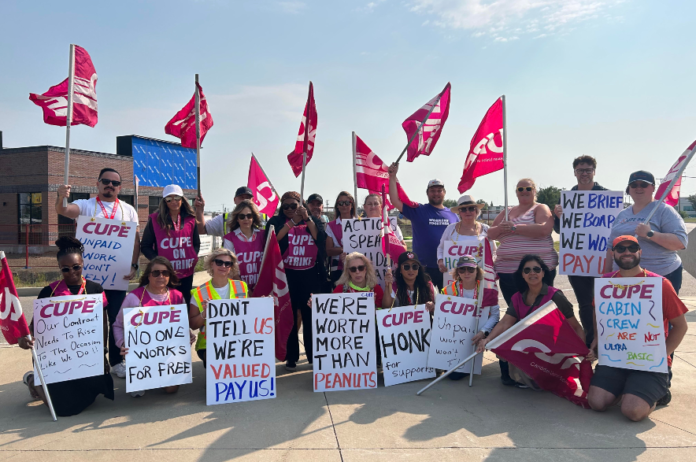
It lasted less than a day. Early Monday morning, at 4:15 a.m. Mountain time, WestJet and the Canadian Union of Public Employees reached a tentative agreement that ended a strike by the airline’s 4,400 flight attendants — a work stoppage that had rippled through the summer travel season, stranding passengers and cancelling hundreds of flights across the country.
The dispute had been building for some time. CUPE Local 8125, which represents cabin crew at the Calgary-based carrier, had pushed for a fundamental change to how flight attendants are compensated — specifically, that they be paid from the moment they check in to the moment they clock out, rather than primarily for the time their aircraft is in motion. That gap between clock-in and wheels-up, familiar to anyone who has ever watched a flight crew prepare a cabin, represents real labour that had long gone unrecognized in the existing credit system.
The tentative agreement will now go to membership for a ratification vote, which must take place within 30 days. Details remain under wraps. CUPE 8125 president Alia Hussain said at a Calgary news conference Monday that her team intends to present the agreement to union members before releasing specifics to the public — a standard and sensible sequencing that respects workers’ right to hear the terms first.
“This tentative agreement represents meaningful progress on the issues we brought to the table,” Hussain said. She added that WestJet’s longstanding flight credit system will be expanded to recognize more of the work cabin crew are required to perform, and that compensation for that work will increase. She was careful to frame it not as a victory lap, but as a step in an ongoing process.
Before the strike began, WestJet had tabled a proposal that included a 13% wage increase in October, annual increases of 2.5% each January for the following three years, retroactive pay to last January, additional compensation for all hours worked, and improvements to other benefits. Whether the tentative deal tracks closely to that offer, or reflects meaningful movement on both sides, will only become clear once members are briefed.
WestJet CEO Alexis von Hoensbroech expressed regret for the disruption. “We know this disruption has been frustrating for our guests and WestJetters and we’re sorry for that,” he said in a statement, adding that the airline’s teams are working to restore service and return passengers to their destinations as quickly as possible. The airline confirmed it has entered a “recovery phase” and is rebuilding its flight schedule, though full restoration will take time.
Minister of Jobs and Families Patty Hajdu welcomed the news, noting that the federal government was pleased the parties had reached a deal at the bargaining table — without government intervention. That matters. Collective bargaining works best when workers and employers resolve their differences themselves, and this outcome, however imperfect its details may prove, suggests that process held.
The strike touched something real. Flight attendants are among the most visible workers in Canadian aviation, yet their compensation structures have often failed to account for the full scope of their duties — the safety briefings, the boarding management, the hours of preparation that happen before a single passenger fastens a seatbelt. The core demand here was not extravagant. It was a claim for recognition of work already being done.
The agreement still needs ratification. Members may embrace it, or they may push back. Either outcome is legitimate. For now, though, the flights are returning, the passengers are moving, and a workforce that walked off the job on a Sunday morning in the middle of summer has returned to work knowing that what they do — all of it — is at least somewhat more visible than it was before.

