A Hunt Paused, a Population at Risk
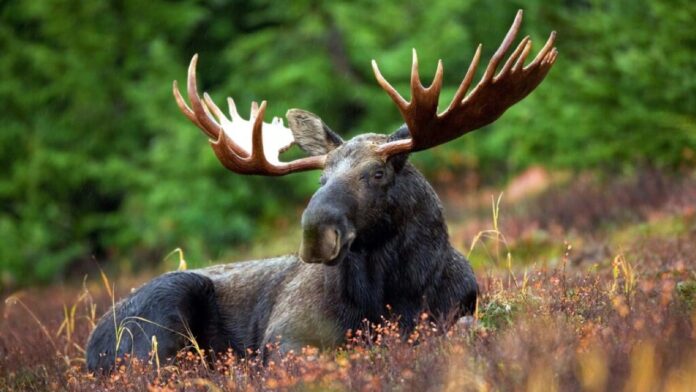
The season hasn’t even opened yet, and Misipawistik Cree Nation has already called it off. Chief Heidi Cook issued a voluntary closure of the moose hunt in Game Hunting Area 10 — a stretch of traditional territory along the northwestern shores of Lake Winnipeg — citing a provincial tag allocation she describes as reckless. The numbers behind her decision are stark. Manitoba issued 62 bull moose tags for an area where a 2025 provincial aerial survey counted just 64 bull moose in total, out of a broader population estimated at 281 animals.
Cook did not mince words. “It makes no sense,” she said, noting that the tags effectively authorize the harvest of 97 per cent of the estimated bull moose population in the area. That figure alone would alarm any wildlife biologist. What makes it more troubling, Cook argues, is that it doesn’t account for community members who hold treaty rights to hunt on their traditional territory without government-issued licences or tags.
The Province’s Position and the Gap in the Numbers
Manitoba’s government offered a different framing. A provincial spokesperson said the most recent survey shows the moose population in GHA 10 has remained stable since the last count. Of the 62 tags made available, fewer hunters applied than anticipated, and only 37 tags were ultimately allocated — producing, the province says, a projected harvest of just nine bull moose this season.
That gap between tags issued and tags allocated matters. But Cook argues it represents exactly the wrong approach to wildlife management. “They’re gambling with our moose population, and they’re counting on unsuccessful harvest to cover” for the number of tags issued, she said. Relying on hunters coming up empty-handed, she insists, is not a responsible conservation strategy.
Treaty Rights and the Arithmetic of Sustainability
The constitutional dimension of this dispute runs deeper than tag numbers. Misipawistik has told the province it requires between 17 and 19 moose annually to meet community needs, based on historical harvest data. Cook says that if the province’s sustainable harvest calculations properly accounted for those treaty rights — as she argues they must — the number of tags available for non-Indigenous licensed hunters would be zero.
Last year, the community’s bull harvest was zero. Members had to travel to Saskatchewan to obtain a moose for gatherings and ceremonies. The annual youth moose camp has not had a successful harvest since 2017, leaving the teachings that surround the hunt increasingly abstract, disconnected from the living practice they are meant to transmit.
Two Decades of Decline, Years of Warnings
Misipawistik has watched the moose population in its territory fall over roughly twenty years. Cook says the First Nation has raised these concerns with the provincial government repeatedly, receiving what she calls “expressions of goodwill” but not the substantive action the situation demands. The community is not waiting any longer.
In 2018, Misipawistik launched a Land Guardian program to monitor moose activity and record harvest numbers across the area. The program has helped reduce moose mortalities from poaching and vehicle collisions, and it tracks self-reported harvest data from both community members and licensed hunters. It is, in effect, the First Nation doing the stewardship work it believes the province has failed to do adequately.
A Voluntary Appeal, Not a Blockade
The closure is not a checkpoint. Misipawistik has made clear it will not physically block access to the land or stop any hunter from entering the area. The appeal is moral and practical — a community asking all hunters, including its own members, to recognize that the population cannot sustain the pressure this season would bring.
Ian Bushie, Manitoba’s minister of natural resources and Indigenous futures, issued a statement saying the province will continue to work with Indigenous governments, stakeholders and hunters “to support healthy moose populations and sustainable harvesting opportunities for current and future generations.” That language — collaborative, forward-looking — stands in some tension with a tag allocation that the affected First Nation considers indefensible.
More Than Food, More Than Numbers
Cook is careful to frame this not only as a conservation crisis but as a cultural one. Moose, she explains, is not simply a food source for Misipawistik Cree Nation. The fall hunt, the moose camp, the intergenerational teachings that unfold around it — these are living expressions of a culture and a relationship with the land that predates the province by millennia. When the moose disappear, so do the conditions that make those teachings real.
“For anybody who loves moose, and I believe that all Manitobans have an interest in having a healthy moose population,” Cook said, “more action is needed.” It is a remarkably generous framing from a leader whose community has been asking, for two decades, to be heard. The moose season opens Monday. The question now is whether anyone else is listening.

