
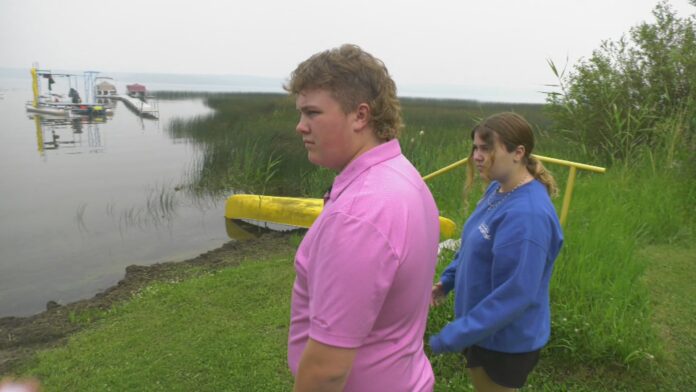
A Split-Second Decision on a Choppy Alberta Lake
Four years ago, a family outing on Wabamun Lake turned into something far more serious. Benjamin Gerber was 12 years old. His sister Amelia was 10. They were tubing with their family when the weather shifted without warning, the water turning rough and the conditions quickly deteriorating. “It got super choppy and it was rough out and it was starting to get dangerous,” Benjamin recalled in an interview with CTV News Edmonton.
As the family made their way back toward shore, the two siblings spotted a sailboat that had capsized. Two men were struggling in the water. What happened next would define the next four years of both their lives.
Training That Kicked In Before Thought Could
Both Benjamin and Amelia were enrolled in Junior Lifeguard Club at the time — a detail that proved critical. The men in the water were wearing life jackets, but the equipment was poor quality. One of the men was unresponsive by the time Benjamin reached him.
The challenge was immediate and physical. Benjamin was accustomed to hauling 40-pound training mannequins through the water during practice sessions. The man he now needed to pull to safety weighed an estimated 300 pounds. “It’s a drastic change, but if you have the right training and the right mind, you can figure it out,” Amelia said. She stayed alongside her brother as he dragged the unresponsive man approximately 50 feet through the water.
“When you see the scene with all the training that you have, you just kind of automatically go,” Amelia explained. That instinct — cultivated through hours of junior lifeguard drills — is precisely what the Lifesaving Society Canada’s youth programs are designed to build.
A National Recognition, Years in the Making
Benjamin has now been awarded the Lifesaving Medal with the Bar for Bravery and the M.G. Griffiths Certificate, the second-highest national bravery award presented by the Lifesaving Society Canada. It is a significant distinction, reserved for acts of exceptional courage in aquatic emergencies.
“It definitely feels like that save means something more than just what happened,” Benjamin said. “It’s like a physical piece that reminds you of what you did.”
Amelia, for her part, reflects on the event with a grounded sense of pride. “I think it’s a big accomplishment, especially for how little we were at the time.”
From Rescue to Vocation
The experience did not fade into memory. It shaped a direction. Benjamin has since earned his national lifeguard certification and now teaches swimming lessons — work he describes in terms that go beyond a part-time job. “It gives me an opportunity to have a job where I’m still protecting people,” he said.
Amelia must wait until she turns 15 to pursue her own certification. She is not waiting passively.
The siblings were scheduled to speak at a World Drowning Prevention Day ceremony in Edmonton on Friday — an occasion that connects their personal story to a broader public health conversation. Drowning remains one of the leading causes of accidental death in Canada, disproportionately affecting rural and remote communities where water access is common and lifeguard infrastructure is thin.
What This Story Reflects About Youth Preparedness
The Gerber siblings’ rescue is, in one sense, a remarkable individual act. In another, it is an argument for structured youth safety programs. Two children, trained through a community lifeguard club, responded effectively where adults with inadequate equipment could not save themselves. The outcome depended on preparation — not luck.
Programs like Junior Lifeguard Club operate across Canadian provinces, often quietly and without significant public attention. This case offers a concrete measure of their value. Benjamin and Amelia Gerber were ready when it mattered most.

