
What was just approved, and why does it matter?
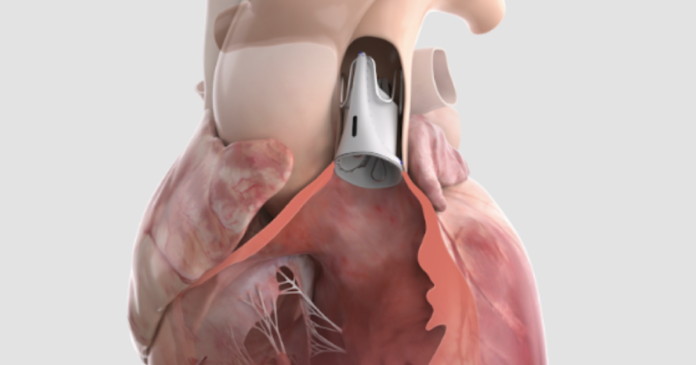
The U.S. Food and Drug Administration approved a new heart valve on Thursday that can be expanded inside a child’s chest as the child grows — the first device of its kind ever authorized in the United States. Made by Edwards Lifesciences, the Autus Size-Adjustable Valve is designed for children born with congenital pulmonary valve disease, a condition that affects the valve controlling blood flow from the heart to the lungs.
Congenital heart defects are among the most common birth defects in North America, affecting roughly one in every 100 newborns. For many of those children, the diagnosis has historically meant a life punctuated by repeated open-heart surgeries — each one carrying its own risks, recovery demands, and emotional toll on patients and families alike.
The Autus valve is designed to change that calculus. Rather than replacing the valve every time a child outgrows it, surgeons can now implant a single device early in life and expand it later using a far less invasive procedure.
How does the valve actually work?
The Autus valve is implanted starting at approximately 13 millimetres in diameter and can be widened up to 22 millimetres using a balloon catheter — a minimally invasive, transcatheter procedure that does not require opening the chest. This is a significant departure from the conventional approach, where children would undergo full open-heart surgery each time they outgrew a valve.
The device also introduces a new material to the field. Conventional prosthetic valves use tissue derived from animals, but the Autus uses synthetic polymeric leaflets, making it the first U.S.-approved heart valve built from this material. Whether that translates to better long-term durability remains an open question — one that a planned 10-year follow-up study is designed to answer.
Experience with the balloon-expansion procedure itself remains limited, and clinicians will need time and volume to develop consistent technique. That is a normal part of any new device’s integration into clinical practice, but it is worth noting as hospitals begin to adopt the technology.
What did the clinical evidence show?
The FDA granted approval based on results from a pivotal study conducted across 12 U.S. sites, enrolling 62 pediatric patients. The outcomes at the early checkpoints were encouraging: all patients had a successful implantation, 100 percent were free from device-related complications at 30 days, and no valve reinterventions were required through six months. Of the 60 patients evaluated at the six-month mark, all showed acceptable blood flow through the device.
“Children with congenital pulmonary valve disease have long needed prosthetic valves that can account for growth over time,” said Dr. Emile Bacha, surgeon-in-chief at NewYork-Presbyterian/Columbia University Irving Medical Center, who served as an investigator in the trial. His framing reflects a genuine and longstanding gap in pediatric cardiac care.
Those early results are promising, but they are also limited in scope. A study of 62 patients followed for six months cannot yet tell us how the valve performs over a decade, how many expansion procedures a single device can safely accommodate, or how its outcomes compare to existing valves over the long term. The planned 10-year follow-up will be critical.
How did the FDA evaluate this device?
The Autus valve cleared the FDA’s most rigorous review pathway: premarket approval, reserved for the highest-risk medical devices. It had previously received Breakthrough Device designation, which accelerates the review of promising technologies for serious or life-threatening conditions without lowering the evidentiary bar.
Notably, the Autus is also the first pediatric device approved through the FDA’s Total Product Life Cycle Advisory Program (TAP), a newer framework that involves the agency more continuously throughout a device’s development rather than only at the approval stage. That ongoing engagement may help regulators and manufacturers respond more quickly if post-market data raises concerns.
What does this mean for children and families going forward?
For families navigating a congenital heart diagnosis, the approval offers a meaningful new option — the prospect of fewer surgeries, shorter hospital stays, and a less disrupted childhood. That is not a small thing, and the clinical community has responded with cautious optimism.
At the same time, the honest answer is that the full picture will take years to emerge. The device’s long-term durability, its real-world expansion success rates, and its ultimate impact on cumulative surgery rates all remain to be demonstrated. The 10-year follow-up study is not a formality — it is the evidence that will determine whether the early promise holds.
What is clear right now is that the approval marks a genuine shift in how pediatric cardiac care can be approached, trading the certainty of repeated major surgeries for the possibility — still being proven — of a single, adaptable implant that grows alongside the patient.

