
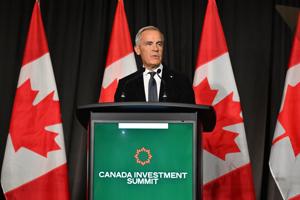
A Successful Party Is Only the Beginning
The Canada Investment Summit delivered something rare in this era of political fatigue and economic anxiety: genuine momentum. By any immediate measure, it was an unqualified success. Capital sought Canada out. Entrepreneurs found a room worth speaking into. Frank McKenna — Chair of Brookfield and Deputy Chair of TD Securities, a man not given to easy enthusiasm — called it the most interesting event he had been part of in decades. That is not nothing. But a summit is a moment, and moments pass. The harder question, the one that will actually determine whether this week matters in five years, is what Mark Carney’s government does the morning after.
The thesis here is straightforward and demands honest examination: Canada’s federal and provincial governments have spent the better part of a decade squandering investment opportunities, and a well-attended summit, however impressive, does not reverse that pattern on its own. What reverses it is disciplined, sustained follow-through — the unglamorous work of converting goodwill into regulatory clarity, into infrastructure commitments, into the kind of institutional reliability that serious capital actually requires before it moves.
The Gap Between Symbolism and Substance
Investment summits are, by their nature, exercises in brand-building as much as deal-making. Raising capital requires shots on goal, and a forum like this one gives Canadian entrepreneurs a genuinely rare chance to tell their story to a concentrated, high-calibre audience. That is real value. The presence of major international investors signals that Canada remains legible to global capital — that it is, at minimum, a place worth the conversation. In a period when Canada’s economic relationship with the United States has grown complicated and uncertain, that signal carries more weight than it might have in calmer times.
But brand-building and deal-making are not the same thing, and conflating them is precisely the mistake that has tripped up Canadian governments before. The departure of Invest in Canada CEO Laurel Broten fewer than three weeks before a summit she was helping organize is a small but telling detail. We do not know what transpired internally, and it would be unfair to read too much into a single personnel change. What it does illuminate, though, is the persistent tension between the public face of investment promotion and the institutional machinery that has to sustain it — a machinery that has, too often, been treated as an afterthought.
A Decade of Missed Openings
The structural critique of Canadian investment policy is not new, and it does not belong to any single party or government. Federal and provincial administrations across the political spectrum have struggled to translate resource wealth, technological capacity, and a highly educated workforce into the kind of sustained productivity growth that comparable economies have managed. Regulatory timelines for major projects have stretched into absurdity. Interprovincial trade barriers — an embarrassment for a federation of this size — have proven stubbornly resistant to reform despite years of first ministers’ meetings and polite communiqués. The result is a country that repeatedly finds itself explaining its potential rather than demonstrating its performance.
This is the context into which the Canada Investment Summit arrived, and it is the context that gives Carney’s next moves their real significance. The Prime Minister came to office with a credibility that few Canadian politicians carry into the job: a track record at the Bank of Canada and the Bank of England, a reputation built on managing systemic risk rather than managing optics. That credibility opened the room this week. It will not keep it open indefinitely if the policy environment does not change.
What Follow-Through Actually Requires
Serious investors — the kind who filled the Canada Investment Summit — do not move capital on the strength of a good conversation alone. They move it when they can model a regulatory environment with reasonable confidence, when they trust that approvals will arrive on a predictable timeline, and when they believe the political commitment behind an investment framework will outlast a single electoral cycle. These are institutional questions, not rhetorical ones, and they require answers that go well beyond the summit floor.
For Carney, that means making difficult choices that his predecessors deferred. It means working with provinces — respecting their constitutional jurisdiction over natural resources and economic development while pressing hard on the interprovincial barriers that fragment the national market. It means treating Indigenous economic partnership not as a box to check in an environmental assessment but as a genuine constitutional and economic priority, one that, handled seriously, actually strengthens investment cases rather than complicating them. And it means resisting the temptation, familiar to every government that hosts a successful event, to mistake the applause for the outcome.
The Federation as an Asset, Not an Obstacle
One thing the Summit may have clarified for international observers is that Canada’s federal structure, often portrayed abroad as a source of gridlock, can function as a genuine asset when governments coordinate rather than compete. Regional diversity — Alberta’s energy sector, Ontario’s financial and manufacturing base, Quebec’s aerospace and clean technology capacity, British Columbia’s Pacific gateway position — represents a portfolio that few countries can match. The challenge has never been the absence of something to offer. The challenge has been building the institutional coherence to offer it consistently and credibly.
Carney’s government has a window. It is not unlimited. The global appetite for stable, rule-of-law investment destinations is real and present, partly because alternatives have grown less predictable. Canada can meet that appetite, but only if the morning after the party looks meaningfully different from the mornings that followed previous summits, previous announcements, and previous rounds of optimism that dissolved into the familiar pattern of deferred decisions and missed targets. The summit was the easy part. Governing is what comes next.

