
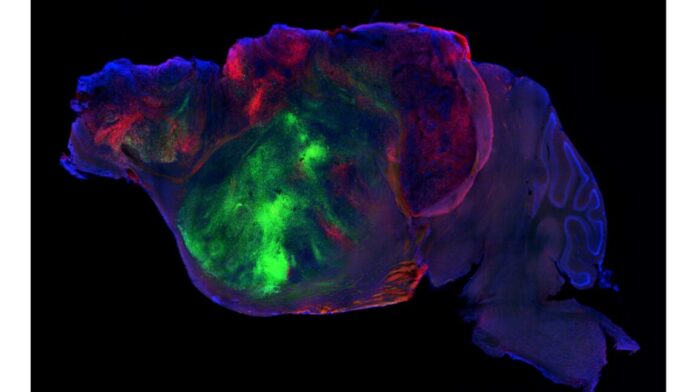
A team of researchers has found a new way to implant millions of human brain cells into living mice — a development that could meaningfully advance how scientists study neurodegenerative diseases and early brain development.
The technique combines genetic engineering and stem-cell technology to produce what researchers are calling xenocortical mice: animals whose cerebral cortex is largely composed of lab-grown human neurons. The cerebral cortex governs reasoning, memory, and consciousness, making it a critical target for understanding conditions such as Alzheimer’s and other degenerative brain diseases. The process involves breeding mice that are genetically engineered to lack most of their own cortical cells, then repopulating that region with approximately four million human cortical neurons — while removing around 14 million native mouse neurons in the process.
Several findings from the study stand out as particularly significant.
The researchers are careful to frame this as a targeted scientific tool rather than anything approaching a full brain transplant. The mice still lack several important cell types that were deliberately excluded from the experiment, and the resulting structure does not replicate a normal human cortex. What it does offer, Pașca argues, is a more biologically faithful model for studying how human brain tissue behaves in a living system — something that neither cell cultures nor conventional animal models can fully provide.
The broader field is moving quickly. Human brain organoids are already being tested as interfaces with computers, and some researchers have proposed their eventual use as therapeutic tissue for stroke recovery. This latest study adds to that momentum, demonstrating how far the combined tools of genetic engineering and stem-cell biology have come in their ability to reshape living systems — and raising questions about the ethical and regulatory frameworks that will need to keep pace.

